
China Grows 40 Million Tonnes of Mushrooms Per Year — Every Kilogram Needs Prepared Substrate
How rice straw, wheat straw, corn cobs, and agricultural residues are baled to specification for edible mushroom factories — quality protocols, weight consistency, and supply chain models.
Substrate Supply: The Hidden Demand Behind China’s Mushroom Industry
China’s edible mushroom industry produces approximately 40 million tonnes of fresh mushrooms per year — over 70% of global production — from tens of thousands of substrate-based cultivation facilities across every province. Oyster (Pleurotus spp.), shiitake (Lentinula edodes), king oyster, and enoki are the dominant species, all relying on agricultural biomass — rice straw, wheat straw, corn cobs, cotton seed hull, sugarcane bagasse — as primary growing medium.
The substrate supply chain for this industry is enormous. A single medium-sized oyster mushroom facility producing 5 tonnes of fresh mushrooms per day consumes 15 to 20 tonnes of substrate daily — roughly 5,000 to 7,000 tonnes per year. Baling is the logistics format that makes substrate supply work at scale: standardised round bales of consistent weight, moisture, and species composition allow mushroom factories to specify inputs precisely, receive them on conveyor-fed automated handling lines, and maintain production consistency across growing cycles. Our guide on how to store silage bales covers storage management principles applicable to substrate bales awaiting factory delivery.
Substrate Materials and Quality Specifications
| Mushroom Species | Primary Substrate | Secondary Substrate | Price Level |
|---|---|---|---|
| Oyster (P. ostreatus) | Rice straw, wheat straw | Cotton seed hull | Base |
| King oyster (P. eryngii) | Corn cobs, wheat straw | Cotton stalk, sawdust | Medium |
| Shiitake (L. edodes) | Hardwood sawdust | Corn cobs, wheat straw | Medium-High |
| Enoki (F. velutipes) | Corn cobs, cotton seed hull | Wheat straw | Medium |
| Straw mushroom (V. volvacea) | Rice straw (essential) | Sugarcane bagasse | Base |
Full Bale Specification for Substrate Supply
| Parameter | Specification | Rejection Threshold |
|---|---|---|
| Moisture at delivery | 12–16% | Above 18% — sterilisation failure |
| Visible surface mould | Zero tolerance | Any mould — batch rejected |
| Soil contamination | <2% of bale weight | Above 4% — bacterial contamination |
| Bale weight tolerance | ±5% of specified | Above 8% — line calibration issue |
| Delivery timing | Within 30 days of baling | Over 45 days — surface deterioration |
Baling Protocol for Substrate-Grade Production
Fungicide residues in substrate can inhibit mushroom mycelium growth during the incubation phase, reducing yield per batch.
Substrate buyers test every delivery load. Bales above 18% are rejected at the factory gate at the farmer’s transport cost. Never estimate moisture for substrate-grade production.
Higher clearance than standard prevents soil pickup. Soil contamination raises ash content and introduces competitive bacteria that increase batch contamination rates.
Substrate-grade bales require consistent diameter for automated factory handling lines. Net wrap maintains bale shape through transport and storage. Twine-tied bales deform over time and create line handling problems.
Bale weight drifts with windrow density variation and moisture changes. Chamber pressure adjustment maintains weight within ±5% of specification — recheck every 10 bales during baling sessions.
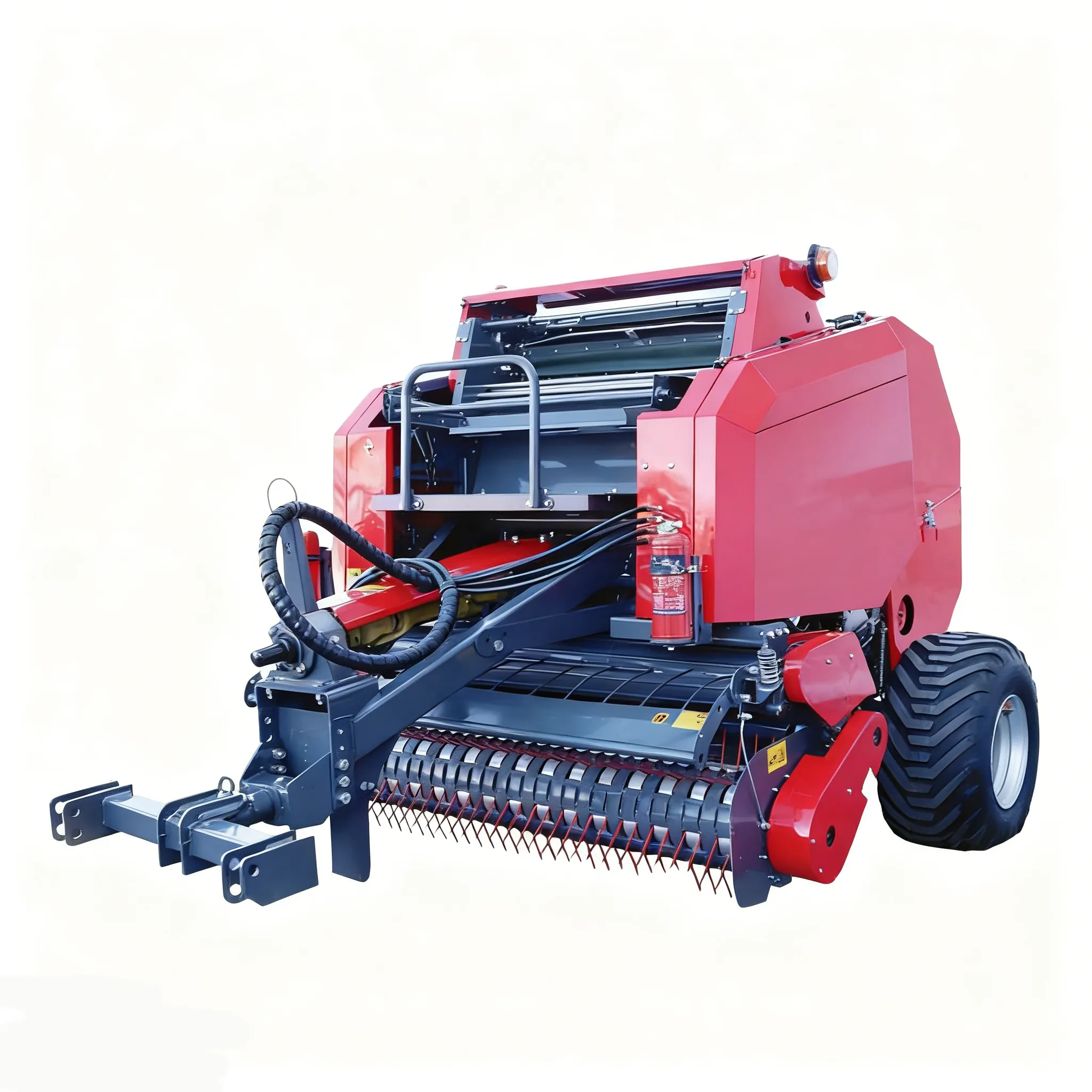
The 9YG-1.0 round baler is standard for smallholder-scale substrate supply where 1.0 m bale diameter is specified by local factories. The 9YG-1.25A variable-chamber round baler serves mid-scale supply operations and factories specifying 1.25 m bales on automated handling lines.
Common Mistakes and FAQ
Even trace surface mould is detected by experienced substrate managers who probe each delivery. A single mouldy batch can contaminate the sterilisation room environment, spreading competitive spores to subsequent clean batches from other suppliers. Suppliers with one rejection are typically excluded from programmes for 6 to 12 months.
Mushroom substrate factories calibrate their automated handling and sterilisation lines to a specific bale weight. Overweight or underweight bales disrupt the line and generate manual handling costs that buyers pass back as price penalties. Maintain weight discipline throughout every baling session.
Substrate buyers specify delivery within 30 days of baling because surface deterioration — yellowing, minor mould initiation — begins at the bale surface after 4 to 6 weeks even on properly baled material. Plan harvest and delivery scheduling to meet this window consistently.
Discuss Your Mushroom Substrate Baling Setup
Tell us your substrate material, target factory specification, and farm area — we’ll specify the right baler model for your substrate supply programme.