
귀리 사일리지 베일링: 말과 유기농 낙농업을 위한 기호성이 뛰어난 고급 사료
How to produce high-quality whole-plant oat baleage for horse farms, organic dairy herds, and mixed enterprises across North America, Europe, and Australia — harvest timing, palatability factors, and baling protocol.
Oat Silage: The Forage Farmers Are Rediscovering
Whole-plant oat (Avena sativa) silage enjoyed widespread use in North America and Europe before corn silage displaced it as the primary cereal silage crop in the 1960s and 1970s. Today it is experiencing a measured return to favour, driven by three converging trends: the growth of certified organic dairy systems that require non-GMO forage inputs, the expansion of commercial horse operations seeking high-palatability forage alternatives to timothy and alfalfa, and the recognition that oats — planted in August to September as a catch crop after spring cereal harvest — provide a winter-ready silage option that fits precisely into the gap left by summer-harvested crops.
Oat silage’s defining characteristic, compared to corn or barley silage, is palatability. The combination of lower starch content (4 to 8% of dry matter versus 25 to 35% for corn), high digestible fibre, and a mild, sweet fermented odour when well-made produces a silage that cattle and horses consume willingly at high intakes. For organic dairy herds where maintaining dry matter intake through the housing period is a constant challenge with limited concentrate supplementation, oat silage as 25 to 35% of the forage ration consistently supports intake and production better than equivalent dry matter from grass silage alone.
This guide covers oat silage baleage production from planting and harvest timing through baling, wrapping, and the specific feeding considerations relevant to horse operations. For producers considering oat silage as part of a multi-species silage baling programme, our guide on how to handle high-moisture silage crops with the right baler-wrapper covers equipment management for crops with variable moisture at harvest.
Section 1: Harvest Stage for Different Markets
1.1 Horse Hay vs. Dairy Silage — Different Windows
The optimal harvest stage for whole-plant oat silage differs meaningfully by end market. For horse feeding, the preferred stage is boot to early heading — the stage equivalent to premium timothy hay cutting — when the seed head is enclosed in the leaf sheath or just emerging. At this stage, crude protein is 12 to 16%, NDF is 45 to 52%, and the lack of visible seed heads meets the preference of equine nutritionists who specify against feeding high-starch cereal silage to horses.
For dairy cattle feeding, a slightly later harvest at early to mid-dough stage is preferred — whole-plant moisture of 60 to 65%, crude protein 10 to 13%, and starch content beginning to accumulate in the grain at 8 to 15% of dry matter. This provides more energy per tonne of silage than boot-stage oat and is the standard specification for dairy TMR inclusion.
| Market | Harvest Stage | Crude Protein | Starch | Priority |
|---|---|---|---|---|
| Horse hay/silage | Boot to early heading | 12–16% | <5% | Palatability, low starch |
| Organic dairy | Early dough | 10–13% | 8–15% | Energy + palatability |
| Beef cattle | Mid to hard dough | 8–10% | 15–20% | Cost-effective energy |
| Catch-crop cover | Full flowering | 6–9% | Variable | Soil cover + late silage |
1.2 Autumn Planting as a Catch Crop
Oats planted in late summer (August to September in the northern hemisphere, February to March in Australia and New Zealand) after an early spring cereal or canola harvest provide a winter-growing silage crop that can be baled and wrapped as baleage in November to December — filling the feed gap that most spring-calving dairy systems face at the end of their summer silage inventory. For this catch-crop application, the harvest window is more constrained by weather than by growth stage: bale and wrap whatever whole-plant moisture is achieved by early December in temperate climates, using an LAB inoculant at any moisture above 60%.
Section 2: Baling and Wrapping Protocol
2.1 Can Oats Be Direct-Baled Without Chopping?
Yes — whole-plant oats at boot to early dough stage can be baled directly with a standard round baler without prior chopping. The shorter, finer stems of oats (compared to corn or sorghum) pass through baler pickups and chambers without plugging. Mowing oats with a conditioner mower and allowing 4 to 8 hours of wilting before baling is common practice when starting from 72 to 75% boot-stage moisture and targeting 60 to 65% baling moisture. In wet conditions where wilting is insufficient, a homofermentative LAB inoculant at the baler pickup is mandatory.
2.2 Film Wrapping Specification
Oat silage baleage uses the standard 6-layer minimum of 25-micron silage stretch film. Eight layers are recommended for oat baleage intended for horse feeding — not because the fermentation is more challenging than for grass silage, but because the higher per-tonne market value of horse-feed silage justifies the additional film investment as insurance against any spoilage that would make the bale unsuitable for equine use. For dairy cattle silage, 6 layers is the standard specification in temperate climates.
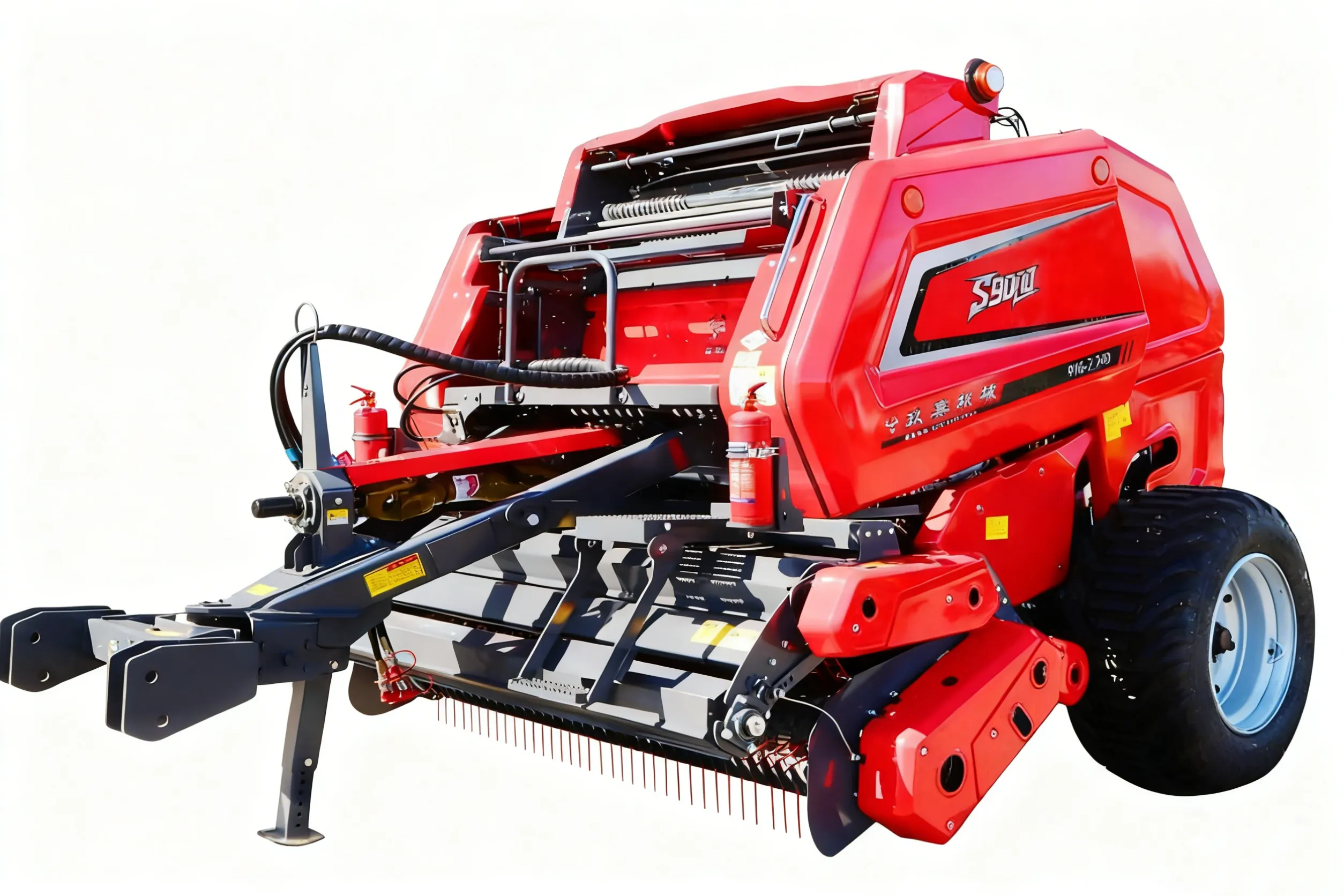
그만큼 9YG-1.25A variable-chamber round baler is well-suited to oat silage production — its variable chamber accommodates the density difference between light boot-stage oat windrows and heavier dough-stage harvest without baler adjustment. Wrapping with the 9YCM-850 번들링 필름 포장기 ensures consistent layer count and overlap regardless of the operator experience level.
Section 3: Oat Silage for Horse Feeding — Special Considerations
3.1 Safety and Palatability for Horses
Well-made oat baleage is safe and palatable for most classes of horses — including competition horses, breeding mares, and growing youngstock — when produced from boot-stage material and fermented correctly to pH 4.0 to 4.5. The primary concern for horse owners is dust and mould, which can trigger equine recurrent airway obstruction (RAO, formerly called COPD in horses). Well-fermented, properly sealed oat baleage is dust-free and mould-free at the core — superior to many dry hay alternatives from a respiratory health standpoint. This is why soaked hay and high-quality silage are increasingly recommended by equine veterinarians for horses with RAO or dusty-hay sensitivity.
The safety risk for horses is high-starch cereal silage — corn silage, hard-dough cereal silage — rather than oat silage at boot stage. High-starch forage reaching the hindgut undigested can cause hindgut acidosis and laminitis in ponies and easy-keeper horses. Boot-stage oat silage with starch below 5% of dry matter does not carry this risk and is safe for the full range of horse types and production classes.
For horse operations considering oat baleage as a substitute for soaked dry hay or steamed hay, the comparison is straightforward: oat baleage at pH 4.2 and 62% moisture provides a consistently dust-free, mould-free forage that requires no preparation before feeding, stores for 12 months without barn infrastructure, and — when made from boot-stage oats — delivers the nutrient profile most equine nutritionists specify for horses with respiratory sensitivity or weight management requirements.
자주 묻는 질문

Contact Us About Oat Silage Baling Equipment
Share your crop type, annual volume, and tractor specification — we’ll specify the right baler for your operation.