
12 to 18% Protein — the Legume Roughage Hiding in Your Peanut Field
Why peanut vine baling has become standard practice across Henan and Shandong — harvest timing, moisture management, and how to capture protein value before the vines rot on the ground.
Peanut Vines: The Legume Roughage That Most Farmers Waste
Peanut (Arachis hypogaea) harvest leaves behind a substantial quantity of above-ground vine material — stems, leaves, petioles, and empty pod shells — that carries crude protein of 12 to 18% on a dry matter basis. This protein content, derived from the same nitrogen-fixation biology that makes all legumes protein-rich, places peanut vine roughage above alfalfa hay in protein concentration in many analyses and significantly above any cereal straw. In terms of digestibility, peanut vines at the correct harvest stage and moisture management are comparable to good-quality grass-legume mixed hay.
In China’s major peanut-producing provinces — Henan, Shandong, Hebei, and Liaoning, which together account for 70% of national peanut production — the agronomic calendar delivers peanut vines in September and October in quantities that dwarf the local demand for high-protein roughage. Henan province alone produces approximately 5 million tonnes of peanut per year, generating 3 to 5 million tonnes of fresh vine material at harvest. For the intensive beef and dairy operations that dot the same agricultural landscape as the peanut fields, this vine material represents a locally abundant, low-cost, high-protein roughage that arrives precisely at the time of year when summer grass silage inventories are being used and autumn feed planning requires flexible, cost-effective options.
The barrier to more widespread baling is not economic but operational: peanut vines must be baled promptly after lifting. Unlike wheat or corn stover which can be left in the field for 5 to 10 days before baling, peanut vines left on the soil surface after lifting begin to moulder and ferment within 3 to 5 days in the warm, humid conditions of China’s autumn harvest season. Operations that lift vines and leave them unharvested for longer than 5 days typically find the protein value has dropped from 15% to 8 to 10% and palatability has declined sharply. Our guide on when is the right time to bale silage covers the moisture timing principles applicable to peanut vine baling alongside other high-protein crops.

Nutritional Profile and Market Value
| Material | Crude Protein (DM) | NDF | TDN | Best Market Application |
|---|---|---|---|---|
| Peanut vines (fresh-lifted) | 14–18% | 42–52% | 52–60% | Dairy supplement, beef growing |
| Peanut vines (5 days field) | 10–14% | 48–58% | 48–56% | Beef roughage, sheep feed |
| Peanut vines (10+ days field) | 6–10% | 55–65% | 42–50% | Low-grade roughage |
| Alfalfa hay (reference) | 18–22% | 38–46% | 56–64% | Premium forage |
| Wheat straw (reference) | 3–5% | 70–78% | 38–50% | Basic roughage |
Peanut vines’ protein content falls in the same range as good alfalfa hay at the vegetative stage — a remarkable characteristic for a crop residue. The difference from alfalfa lies in energy: peanut vines’ NDF of 42 to 52% is higher than alfalfa’s 35 to 42% and reflects the higher fibre content of the vine material compared to pure legume leaf. For dairy operations, this means peanut vine roughage serves best as a supplementary protein source in a ration where a high-energy ingredient (corn silage, grain) provides the metabolisable energy. For beef growing, the combination of moderate protein and moderate energy is well-suited to the 0.8 to 1.1 kg/day growth rate typical of yearling and two-year-old beef cattle in Chinese feedlot systems.
Market Pricing in China’s Peanut Belt
In Henan and Shandong provinces, well-made peanut vine bales (baled within 3 days of lifting, moisture 18 to 25%, crude protein confirmed above 12%) sell for ¥120 to ¥200 per standard 1.25 m round bale — a 30 to 60% premium above equivalent-weight wheat straw bales in the same region. Buyers are primarily intensive beef and dairy operations that include peanut vine bales as a protein-contributing roughage in their TMR formulations, allowing reduction of purchased soybean meal at ¥4,000 to ¥5,500 per tonne. The protein substitution economics are consistently positive in high-protein-price years.
Harvest Timing and the 3-Day Window
Why Speed Matters More Than for Any Other Residue
Peanut vines, unlike cereal straws, are still metabolically active at harvest. When the peanut plant is lifted and the below-ground nut harvested, the above-ground vine material continues cellular respiration until it dries to below 15% moisture or is sealed from oxygen in a fermented silage environment. In China’s late-September harvest conditions — air temperature 22 to 28°C, relative humidity 60 to 75% — peanut vines left on the soil surface after lifting undergo rapid proteolysis: protease enzymes in the vine tissue begin breaking down protein fractions within 12 hours of lifting, and this process accelerates sharply after 48 hours as soil microorganisms colonise the pile from the base. The practical consequence: crude protein measured from vines lifted and sampled at 0 hours, 48 hours, and 96 hours shows declines of 3 to 6 percentage points per 48-hour interval in typical post-harvest conditions.
| Hours After Lifting | Vine Condition | Crude Protein | Recommendation |
|---|---|---|---|
| 0–24 hrs | Fresh, green, aromatic | 14–18% | Ideal — bale immediately if moisture allows |
| 24–48 hrs | Slightly wilted, still green | 12–16% | Good — bale as priority |
| 48–72 hrs | Wilting, yellowing starts | 10–14% | Acceptable — bale today |
| 72–96 hrs | Yellow-brown, some heating | 8–11% | Declining — bale or discard |
| >96 hrs | Moulding, heating, foul smell | 4–8% | Low value — assess per batch |
Moisture Targets: Dry Baling vs. Baleage
Peanut vines at lifting carry 45 to 65% moisture in most conditions — too wet for dry baling but within the baleage range. Two pathways are used commercially: allowing 24 to 48 hours of field drying to reach 20 to 30% moisture for dry-baled roughage, or baling at 45 to 55% moisture and wrapping with silage stretch film for fermented baleage. The dry-baled pathway produces a product with longer shelf life and simpler storage, but the 24 to 48 hour field drying period risks protein loss and weather re-wetting. The baleage pathway preserves more protein but requires film wrapping equipment and produces a product with 6 to 12 month rather than indefinite shelf life.
In China’s peanut belt, the dry-baling pathway dominates because of the drying conditions available in September and October (warm, often sunny post-harvest weather) and the wider market for dry roughage versus baleage in the region’s livestock feeding systems. In wetter environments — West Africa’s peanut belt, India’s Gujarat during monsoon-season peanut harvests — the baleage pathway is more appropriate where drying to below 20% in 48 hours is not reliably achievable.
Equipment and Baler Configuration
The Peanut Puller Integration
In China’s mechanised peanut production areas, peanut lifting is done with a dedicated peanut harvester (花生收获机) that lifts the plant, separates pods from vines, and deposits vines in a side windrow. EverPower’s product range includes dedicated peanut pulling equipment — the 4BYH-1.3 kidney-bean puller is adaptable to peanut vine collection in single-row applications, and the 4BYH-3.25 4-ridge puller is suited to wider-scale operations — enabling an integrated harvest-to-bale workflow in a single pass or immediate-follow-up operation.
Baler Settings for Peanut Vines
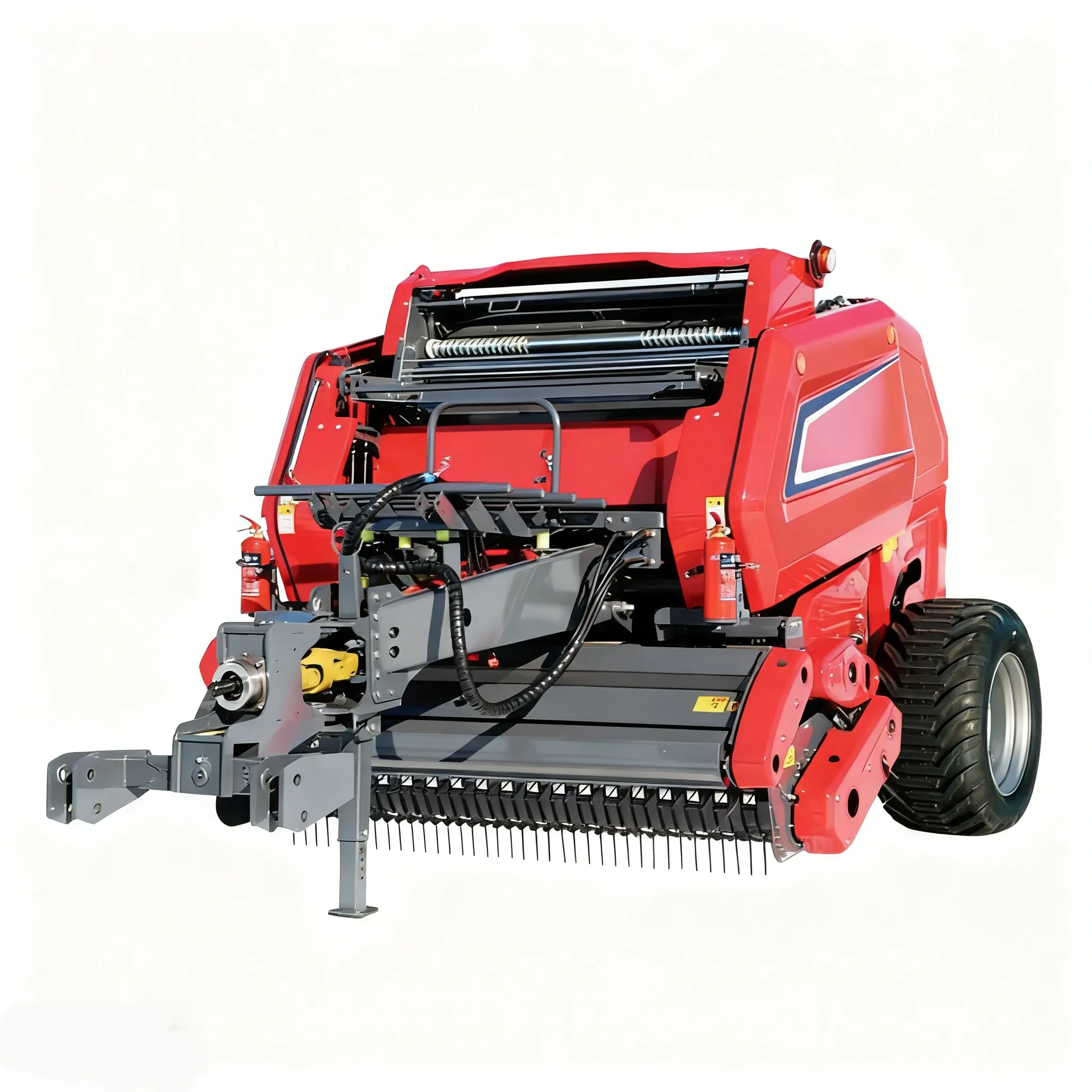
Peanut vines at 20 to 35% moisture (dry-baling target) have a tangled, matted structure that is similar to short-cut grass hay but with a higher proportion of stems relative to leaves. Key settings: pickup tine height 5 to 7 cm (to capture leaf material without excessive soil pickup from the recently tilled soil surface), forward speed 5 to 7 km/h (the tangled vine structure requires a steady, moderate feed rate to avoid chamber plugging), and net wrap rather than twine (peanut vine bales at 25% moisture are lighter than cereal straw but still benefit from net wrap’s superior shape retention). For baleage production from peanut vines at 48 to 55% moisture, increase chamber pressure to maximum to achieve the 180 to 220 kg DM/m³ density needed for complete anaerobic conditions.
Baleage vs. Dry Baling: Choosing the Right Preservation Method
| Factor | Dry Baling (20–28% moisture) | Baleage (45–55% moisture) |
|---|---|---|
| Drying time required | 24–48 hrs field drying | None — bale immediately at harvest |
| Protein preservation | Good if dried quickly | Excellent — fermentation locks in protein |
| Storage method | Outdoor or barn, indefinite | Film-sealed, 6–12 months |
| Equipment needed | Baler + net wrap | Baler + film wrapper + inoculant |
| Market acceptance | Wider — familiar format | Growing — requires buyer education |
| Best in | Dry sunny post-harvest weather | Wet season or humid climates |
For most operations in China’s peanut belt, dry baling within 48 hours of lifting is the practical optimum — capturing most of the protein value before degradation accelerates, producing a storable product in a familiar market format, and avoiding the additional equipment cost of film wrapping. In years or regions where post-harvest weather is wet or humid, baleage at 48 to 55% moisture is the more reliable quality-preserving option.
Common Mistakes
Protein degradation in peanut vines after lifting is rapid and irreversible. Every 24 hours of field exposure after 48 hours removes 2 to 4 percentage points of crude protein from the baled product. The 3-day rule — lift, wilt briefly if needed, bale within 72 hours — is not a guideline but the operational standard for preserving the premium protein value that justifies the higher sale price of peanut vine roughage.
Peanut vines at 35 to 45% moisture are too wet to store as dry roughage — they will heat and mould within 3 to 4 weeks in storage. Operations that bale at this moisture and assume the material will ‘continue drying’ in the bale are consistently disappointed. If moisture is above 30% at baling time, either extend field drying or commit to the baleage pathway with film wrapping.
Peanut vine crude protein varies enormously depending on harvest timing and field drying duration. Bales made from vines lifted 5+ days before baling may test 8 to 10% CP rather than the 14 to 18% expected by the buyer. Selling these bales at the premium protein price — without forage testing — creates buyer disputes and damages long-term commercial relationships. Test each batch before pricing.
Peanut fields are recently tilled before lifting and the soil surface is loose and fine-textured. Pickup tine height below 5 cm in these conditions scoops soil into the bale at rates of 5 to 10% of bale weight — raising ash content, reducing digestibility, and lowering palatability. Keep tines at 6 to 8 cm and accept slightly higher windrow losses rather than soil-contaminating the bale.
Frequently Asked Questions
Discuss Your Peanut Vine Baling Operation
Tell us your harvest area, available equipment, and target market — we’ll specify the right baler configuration for peanut vine roughage production.