
Whole-Plant Corn Silage: Why Round Bale Wrapping Beats Traditional Silos on Smaller Operations
Harvest stage identification, pre-chopping requirements, bale density and film specification, and the scale economics that determine when round bales make more sense than a concrete bunker.
The Highest-Energy Silage Crop — and Why Small Farms Are Choosing Round Bales
Whole-plant corn (maize) silage is the most energy-dense fermented forage commercially available for ruminant livestock. Harvested when the plant is at the late milk-to-dough grain fill stage — when starch content in the developing grain is near its maximum and the whole-plant is still at 60 to 68% moisture — corn silage delivers metabolisable energy of 10.5 to 11.5 MJ per kg dry matter, crude protein of 8 to 9%, and starch at 25 to 35% of dry matter. No other silage crop grown at commercial scale consistently achieves this energy density profile, which is why corn silage dominates the forage base of intensive dairy and beef operations from the US Midwest to the Netherlands, Germany, and the rapidly expanding dairy industry of China’s Hebei, Inner Mongolia, and Shandong provinces.
The traditional storage system for corn silage — the concrete bunker silo, horizontal clamp, or upright tower — is engineered for volume: minimum economic filling is 150 to 300 tonnes of fresh weight per structure, and face management requires feeding out several tonnes per day to prevent aerobic deterioration at the exposed silage face. These system requirements fit the 200-cow-plus dairy operation but create genuine problems at the 30 to 80 cow scale, where annual corn silage requirement is 60 to 150 tonnes — too small to fill most purpose-built bunkers efficiently and too little daily feedout to manage face deterioration at the rate a large clamp demands.
Round bale corn silage directly addresses this scale problem. A farm baling 60 to 100 tonnes of corn silage per season produces 80 to 140 bales at 550 to 750 kg per bale. Each bale is a sealed, self-contained fermentation unit — opened individually as needed, without the face management discipline that a bunker demands, without the minimum-volume capital infrastructure requirement, and without the linear relationship between capital investment and farm size that bunkers impose. For small to medium dairy operations, mixed livestock enterprises, and farms where corn is grown for silage in small paddocks unsuitable for a dedicated clamp structure, round bale corn silage represents the most practical ensiling option available.
This guide covers the complete production process: identifying the correct harvest stage, chopping specifications before baling, bale density and wrapping requirements, the comparison between round bale and bunker silage at different farm scales, and the specific quality failure modes that are more common in round bale corn silage than in bunker-stored material. For an overview of how moisture timing affects all silage crops, our article on ideal moisture content for silage baling provides foundational context.
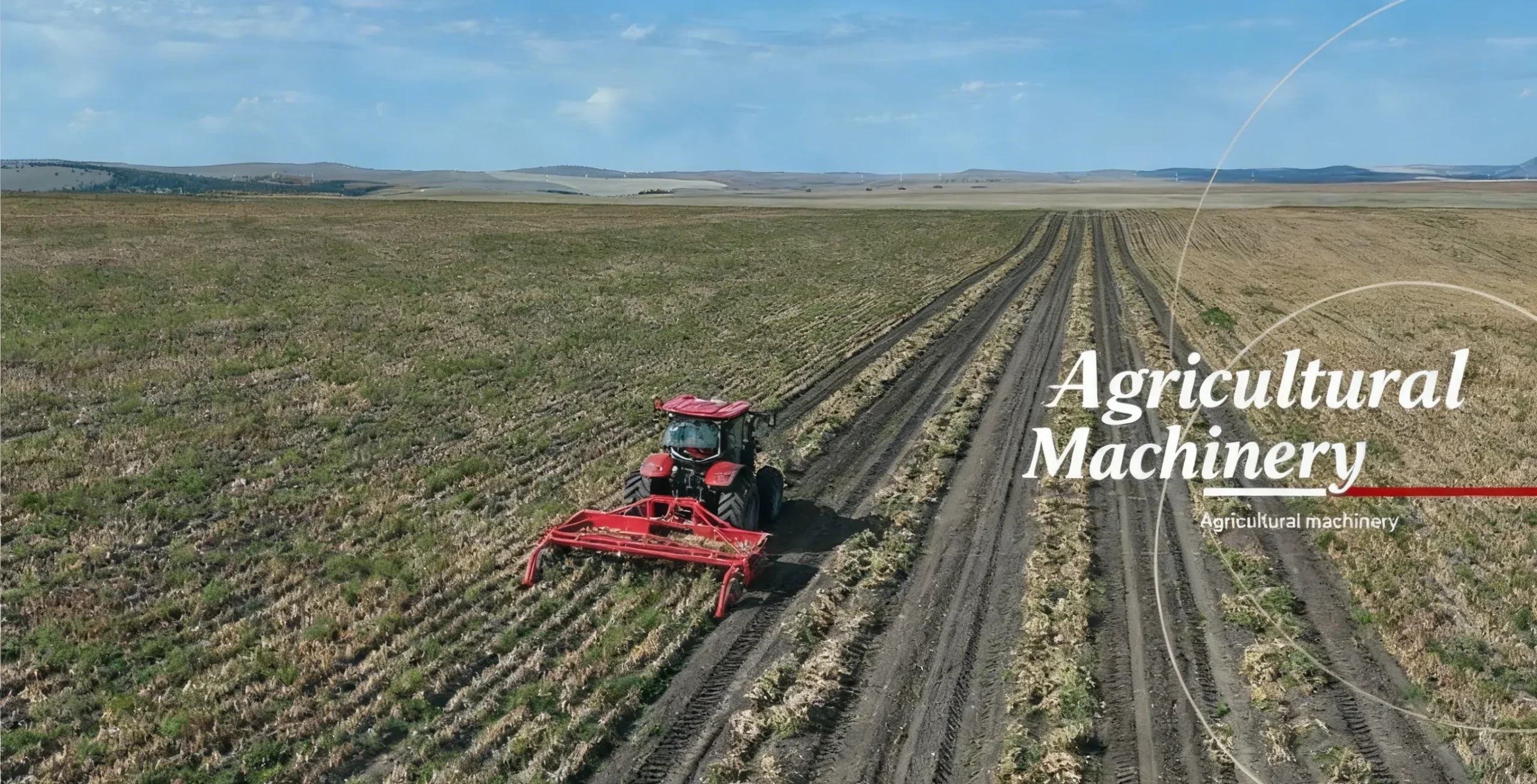
Section 1: Identifying the Correct Harvest Stage
1.1 The Whole-Plant Moisture and Grain Stage Relationship
The harvest timing for whole-plant corn silage is defined by the interaction of two variables: whole-plant moisture (which determines whether the baleage will ferment correctly) and grain development stage (which determines the starch and energy content of the finished silage). These two variables move in opposite directions through the plant’s development — as grain starch accumulates, whole-plant moisture falls — and the optimal harvest window is where the two curves intersect at the right values for both.
| Grain Stage | Whole-Plant Moisture | Starch (DM) | Fermentation Risk | Bale Silage Rating |
|---|---|---|---|---|
| Milk stage | 70–76% | Low — developing | Clostridial — very high | ❌ Do not bale |
| Mid dough | 66–71% | Середина | Elevated without inoculant | ⚠ Marginal |
| Late dough ✓ | 60–66% | Near-maximum | Low with good practice | ✓ Optimal |
| Early dent | 55–61% | Maximum but hardening | Low, higher density | ✓ Acceptable |
| Half-milk line | 50–57% | Максимум | Anaerobic stability risk | ⚠ Dense, low fermentation |
| Black layer | <50% | Maximum but indigestible | Poor fermentation | ❌ Too dry |
The sweet spot is late dough to early dent, at 60 to 65% whole-plant moisture. At this stage, the grain has completed starch fill but the starch granule matrix has not yet hardened to the degree that rumen microorganisms cannot efficiently access it. Starch digestibility is at its seasonal maximum at this stage — early-harvested corn silage (milk stage) has lower starch content; late-harvested corn silage (past half-milk line) has high starch content but lower digestibility because the hard grain matrix resists ruminal breakdown. The 60 to 65% moisture window is typically 7 to 14 days wide in most corn-growing environments.
1.2 How to Assess Whole-Plant Moisture Without Laboratory Equipment
Several field methods estimate whole-plant moisture. The most reliable is the grab-and-squeeze test on representative whole-plant samples (stalks + leaves + ear) from 5 to 10 plants across the paddock: chop the material to 2 to 5 cm, fill a closed fist, squeeze firmly for 30 seconds, then open and observe. If water drips from the fist, moisture is above 75% — too wet. If the material holds a ball shape with visible moisture on the surface, moisture is 65 to 75%. If the ball holds shape but is not visibly wet, moisture is approximately 60 to 68% — baling range. If the material falls apart immediately when released, moisture is below 55% — too dry for silage.
This test is approximate — within ±5 percentage points in most hands. Where precision matters (in a paddock of borderline maturity), a Koster tester (moisture oven) or a commercial near-infrared handheld sensor gives reliable quantitative moisture in 5 to 15 minutes in the field. Many larger corn silage contractors bring handheld NIR sensors to paddock as standard practice.
Section 2: Pre-Chopping and Baling Process
2.1 Why Whole-Plant Corn Cannot Be Directly Round-Baled
Intact whole-plant corn at 2.0 to 3.5 m height with 25 to 40 mm diameter stalks cannot be harvested directly by a standard round baler. The pickup mechanism is designed for windrowed plant material of 5 to 20 mm thickness — not for standing or fallen whole corn plants with thick, fibrous stalks. Even if physical pickup were possible, a round bale of intact whole-corn plants would have insufficient density for anaerobic fermentation — the large air spaces between intact stems would prevent the rapid oxygen exclusion needed for reliable lactic acid fermentation.
Whole-plant corn for round bale silage must be pre-chopped by a forage harvester to a theoretical length of cut (TLC) of 8 to 15 mm before the chopped mass is deposited in windrows and collected by the round baler. This two-machine operation is standard for small and medium farm corn silage production: the forage harvester (self-propelled or PTO-driven) chops the standing corn into a trailer or deposits directly in field windrows, and the round baler follows behind to collect the chopped mass into sealed bales for film wrapping.
2.2 Particle Size and Kernel Processing
The target particle size for round bale corn silage is 8 to 12 mm TLC. Particles below 8 mm create a high-density mass that can develop anaerobic hot spots, while particles above 15 mm leave too many air pockets in the bale and reduce the digestibility of the fibre fraction. Kernel processing — running the chopped corn through a processor set of counter-rotating ribbed rolls that crack open the grain kernels — significantly improves starch digestibility in corn silage. Unprocessed corn silage can exit the rumen with 10 to 25% of grain kernels intact and undigested; processed corn silage typically shows less than 3% intact kernels at feedout.
For farm-scale operations where a dedicated kernel-processing forage harvester is not available, a disc chopper without kernel processing still produces acceptable round bale corn silage — the starch digestibility is somewhat lower but remains commercially viable for beef growing operations and less demanding dairy supplementation roles. Operations targeting high-production dairy (above 25 litres/cow/day) where corn silage is the primary energy source should invest in kernel-processed chopping.
2.3 Baler Specifications for Chopped Corn Silage
Chopped corn silage at 62% moisture is the heaviest material that a standard round baler handles — significantly denser than grass silage or straw. A 1.25 m bale of chopped corn silage at 62% moisture can weigh 600 to 850 kg depending on chamber pressure and corn hybrid stover density. Key baler requirements for corn silage:
Chopped corn silage requires substantially more PTO torque than grass silage due to its higher mass per volume. Tractors below 75 hp will cavitate the bale chamber in heavy corn windrows, producing uneven bales with inconsistent density.
Corn silage windrows are significantly heavier than grass windrows. Excessive forward speed creates feed rate spikes that cause uneven chamber fill and density inconsistencies within each bale.
High chamber pressure produces the 200 to 260 kg/m³ DM density needed for complete anaerobic conditions in the bale centre. Insufficient density in the bale core (below 160 kg/m³) leaves air channels that support aerobic deterioration zones.
Net wrap provides the tensile strength to hold a 700+ kg corn silage bale together during handling with a bale spike. Twine on this bale weight frequently fails at the tie points, particularly in the bottom bales of a stacked storage row.
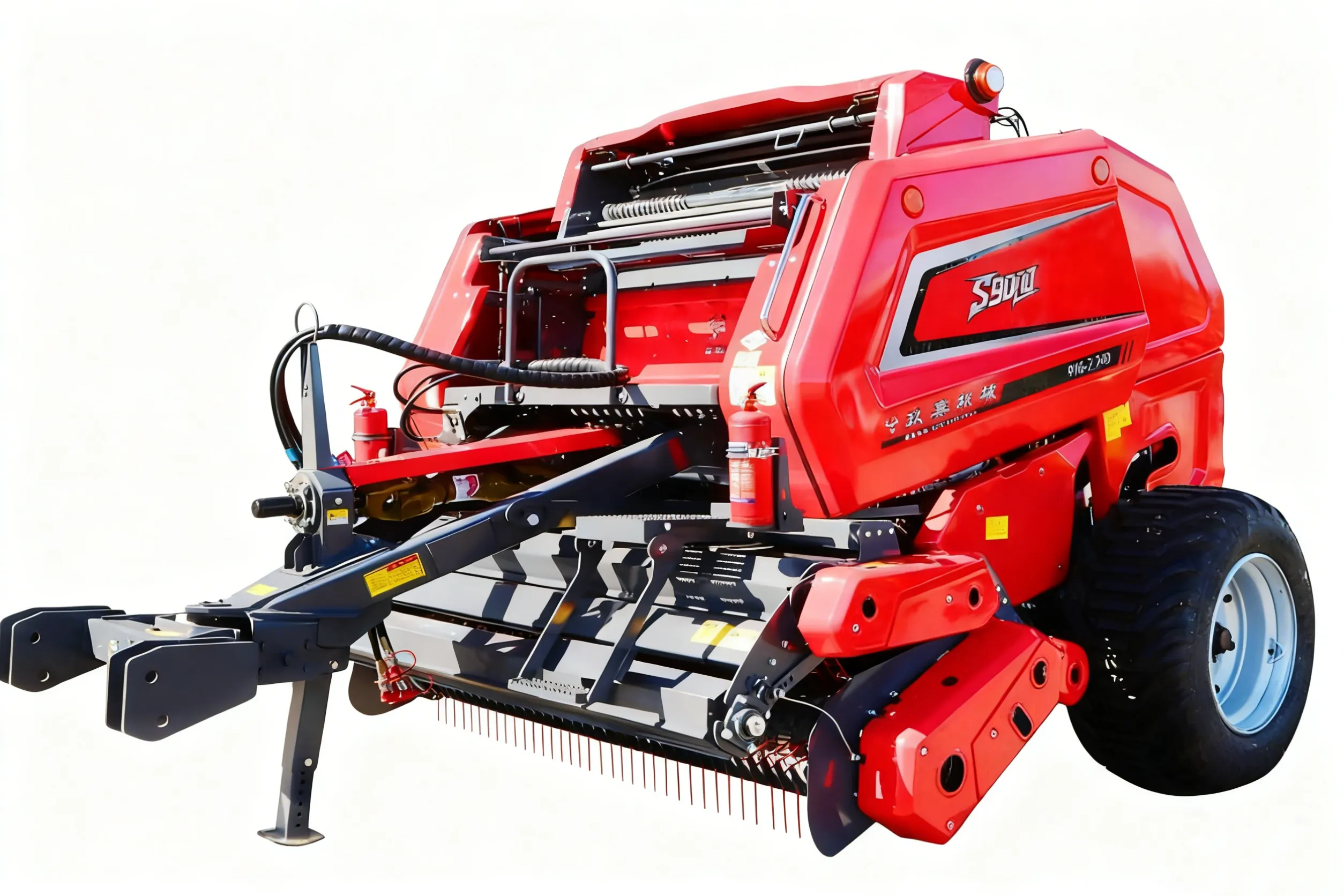
Он 9YG-2.24D S9000 Пресс-подборщик для круглых тюков is configured for high-density silage baling at the power and throughput levels appropriate for farm-scale corn silage production. Its wider pickup width and high-capacity bale chamber maintain throughput in the dense windrows typical of high-yielding corn hybrids. Pair with the упаковочная пленка 9YCM-850 for immediate on-site wrapping — corn silage bales must be wrapped within 2 hours of binding.
Section 3: Fermentation, Quality Assessment, and Round Bale vs. Bunker Comparison
3.1 Why Corn Silage Ferments Differently From Grass
Corn silage at 60 to 65% moisture has a naturally high WSC content — the water-soluble sugars from leaf tissue, the sucrose in the stem juice, and the readily fermentable carbohydrates in the developing grain provide an abundant fermentation substrate for lactic acid bacteria. This high WSC means that corn silage, unlike clover, ferments reliably without inoculant under normal conditions — pH typically falls from 6.2 to 3.8 to 4.2 within 14 to 21 days in well-sealed bales at the correct moisture range.
The primary quality failure mode in round bale corn silage is not clostridial spoilage during fermentation (as in clover silage) but aerobic deterioration after the fermentation has completed. This occurs when oxygen reaches the stabilised silage through film punctures, poor seal overlaps, or when bales are opened and exposed to air at feedout. Aerobic deterioration in corn silage is driven primarily by yeasts and moulds that metabolise lactic acid and other fermentation acids as carbon sources — they raise pH from 4.0 back toward 5.5 and above, generating visible heating (core temperatures above 50°C) and mould growth. Heterofermentative LAB inoculants containing Lactobacillus buchneri produce acetic acid alongside lactic acid during fermentation; acetic acid has antifungal properties that significantly reduce yeast-driven aerobic deterioration at feedout.
3.2 Round Bale vs. Bunker Silage — A Practical Scale Comparison
| Фактор | Bunker / Clamp Silo | Силос в круглых тюках | Verdict |
|---|---|---|---|
| Minimum viable volume | 150–300 t fresh weight | Any — 1 bale minimum | Round bale wins at small scale |
| Capital infrastructure | High — concrete structure | Low — gravel pad + wrapper | Round bale wins |
| Dry matter loss (well-managed) | 8–18% (face waste) | 6–14% (film sealed) | Comparable |
| Daily feedout requirement | Must feed face daily | Open bales as needed | Round bale wins |
| Per-tonne operating cost | Lower at 200+ t/season | Higher (film cost) | Bunker wins at large scale |
| Flexibility for small paddocks | Poor — need one large area | Отличный | Round bale wins |
| Suitable farm scale | 100+ cows | 20–120 cows | Scale-dependent |
The economic crossover point — where the per-tonne cost advantage of a bunker silo justifies its capital cost over a round bale system — occurs at approximately 100 to 150 tonnes of corn silage per season. Below this volume, the annualised capital cost of a concrete bunker (typically AUD $30,000 to $80,000 depending on size and construction) exceeds the film cost premium of round bale silage within the operational lifetime of the bunker. Above 200 tonnes per season, the bunker amortises at lower cost per tonne than the film and handling costs of an equivalent round bale programme.
Section 4: Common Quality Failures in Round Bale Corn Silage
Corn silage at 72%+ moisture in round bales consistently produces clostridial fermentation — the same fermentation pathway that destroys clover baleage. At this moisture, WSC concentration is diluted to the point where the fermentation substrate cannot overcome the osmotic dilution and oxygen displacement challenges during the first 7 days in the bale. Wait until the late-dough to early-dent stage. If time pressure forces early harvest, use double the standard LAB inoculant rate and add a separate heterofermentative strain.
The chopped corn silage surface has an enormous surface area relative to intact grass silage — every cut particle face is exposed to ambient air and airborne microorganisms. Leaving chopped corn windrows exposed during or between baling runs allows aerobic microorganism colonisation that significantly increases the yeast and mould load entering the bale. The target is: bale → wrap → onto storage pad within 2 hours of baling.
At 650 to 850 kg per bale, two-layer stacking places 1,300 to 1,700 kg of compressive load on the lower bale. High-moisture corn silage bales at 62 to 65% moisture are substantially less rigid than dry hay bales and deform significantly under this load, stretching and potentially tearing the film at the deformation zones. Single-layer storage on a well-drained gravel pad is the standard for all round bale corn silage — avoid stacking entirely unless bale moisture is below 55%.
A fully loaded trailer of round bale corn silage at 700 kg per bale carries 2 to 3 times the load per bale of equivalent hay. Road transport weight limits, tractor drawbar ratings, and front-loader hydraulic ratings must all be assessed before planning corn silage bale transport. A loader rated at 600 kg on the bale spike is unsafe for 750 kg corn silage bales — the load exceeds the rating and creates instability risk during elevation.
Часто задаваемые вопросы

Discuss Your Corn Silage Baling Requirements
Tell us your annual silage volume, available tractor horsepower, and chopping method — we’ll specify the right baler configuration for your farm-scale corn silage programme.