
Everything dairy farmers, horse operations, and export hay producers need — from cutting to fermentation — in one complete field guide.
🎯 Baling Window: 50–60% Moisture
📦 Storage up to 18 Months
🌍 USA · Australia · Middle East · China
Why Alfalfa Baleage Outperforms Sun-Dried Hay in Most Climates
Alfalfa — known as lucerne across Australia, the UK, and the Middle East — is the benchmark protein crop in commercial livestock nutrition. At cutting, fresh alfalfa carries 75 to 80% moisture and crude protein that can reach 25% of dry matter. That combination is exactly what makes conventional sun-drying so unreliable: getting moisture down to the 15–18% threshold for safe dry hay storage demands three to five consecutive days of dry, sunny weather. In most alfalfa-growing regions — the irrigated valleys of the US West, the dairy belts of Australia and Canada, the arid zones of the Middle East and Northern China — that window does not consistently exist across multiple cuts per season.
A single rainfall event on partially wilted windrows causes leaf shatter. Because alfalfa’s nutritional value is concentrated in the leaves rather than the stems, even one day’s drying time lost to rain can reduce crude protein content by 4 to 6 percentage points — the difference between premium and standard hay grade.
Baleage — round baling at 45 to 65% moisture followed immediately by silage stretch film wrapping — eliminates this exposure window entirely. The crop goes from windrow to sealed bale in a single operation, ferments anaerobically over 21 to 30 days, and can be stored outdoors for up to 18 months without measurable nutritional degradation. This guide covers every step: cut timing, wilting targets, baler setup, wrapping technique, storage layout, fermentation biology, and the most common errors that cause spoilage. For a broader overview of how this preservation method differs from conventional pit silage, see our guide on baleage vs silage.
Section 1: The Alfalfa Baleage Moisture Window
1.1 Why the 45–65% Range Is Non-Negotiable
Most silage guides state a moisture range and move on. Understanding both failure modes in detail matters, because both are expensive and both are common in the field.
The crop is too dense and fibrous to compress properly. Bale density drops. Oxygen pockets remain trapped in the bale core. Aerobic bacteria consume dry matter for 4 to 6 weeks before the bale cools — typically causing a 20–30% dry matter loss before feeding. The result looks like silage but much of the nutritional value has already been burned off as heat.
Excess free water dilutes the water-soluble carbohydrates that fuel lactic acid bacteria. Clostridial bacteria, which thrive in wet, protein-rich environments, outcompete the lactobacilli. The result is butyric acid fermentation: sharp ammonia odour, reduced palatability, 15–25% dry matter loss, and in lactating dairy cows a documented link to reduced milk fat and elevated ketosis risk. Bales also become dangerously heavy — a 1.25 m bale at 65% moisture can exceed 600 kg.
Lactic acid bacteria dominate. pH drops to 4.5 or below within 14 to 21 days. Dry matter retention reaches 92–96% of original. Bale weights are manageable at 350–450 kg for a standard 1.25 m bale. Fermentation is fast, stable, and predictable. Most experienced alfalfa producers use 55% as their working target, giving a margin in either direction before problems begin.
1.2 The Wilting Period: Hours, Not Days
The shift from dry hay to baleage is primarily a time-management change. Instead of a 3-to-5-day field cure, alfalfa for baleage is wilted in the windrow for just 4 to 12 hours, depending on solar radiation, air temperature, and relative humidity. A tedder or merge rake used within 1 to 2 hours of cutting accelerates moisture loss by inverting the windrow — useful in regions with heavy morning dew or where multiple cuts must be processed in rapid succession.
| وضعیت | دما | Humidity | Wilt Time |
|---|---|---|---|
| Hot, dry, sunny | >35°C | <40% | 4–6 hours |
| Warm, moderate humidity | 25–35°C | 40–60% | 6–8 hours |
| Cooler, overcast or humid | <25°C | >60% | 8–12 hours |
Section 2: Baling — Equipment Setup & Field Procedure
2.1 Round Baler Selection for Alfalfa
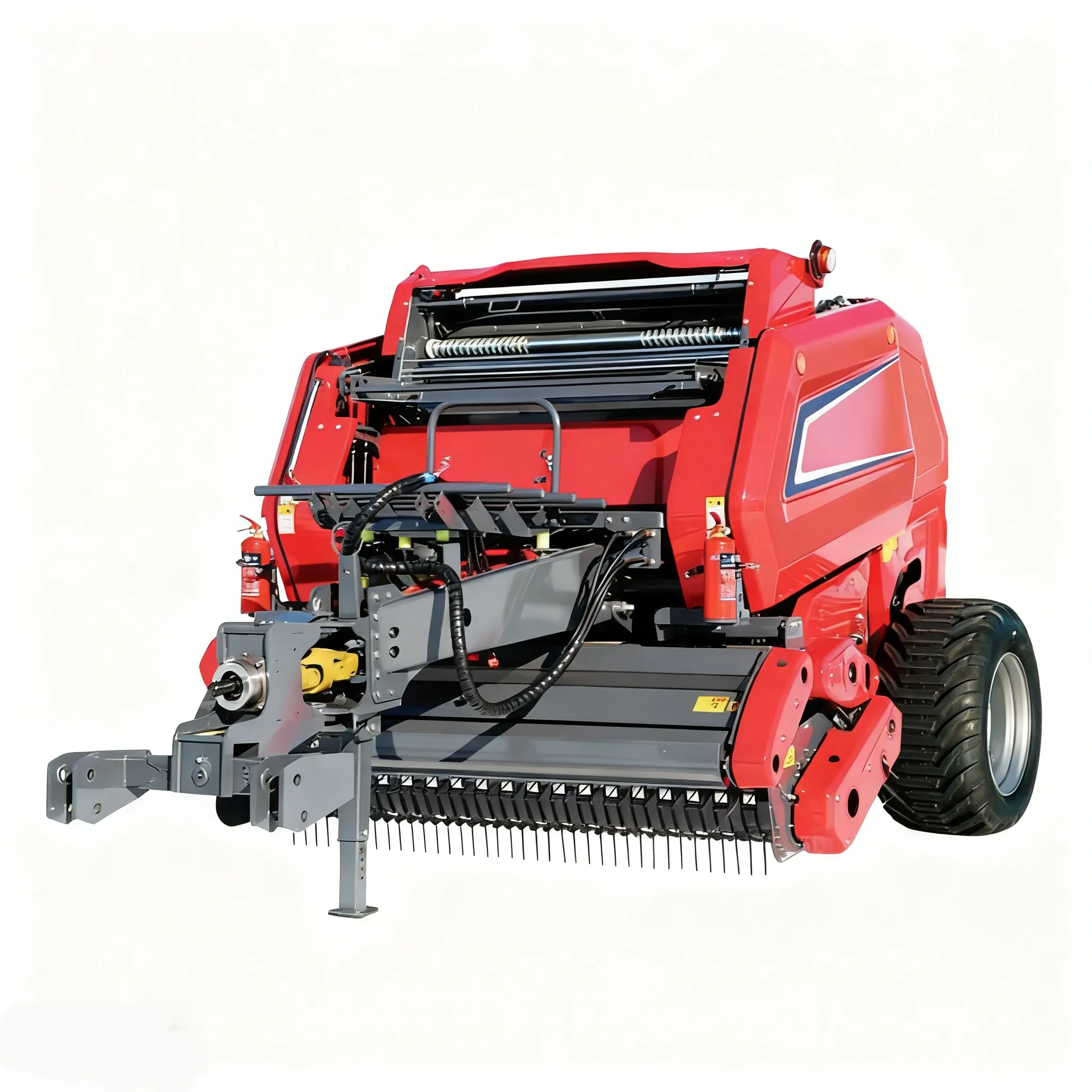
Alfalfa’s high leaf content and relatively fine stem structure make it one of the most demanding crops for round baler performance. Key specifications that determine performance in alfalfa differ from those that matter for cereal crops.
Variable-chamber balers adapt bale diameter to windrow volume — essential when managing the lighter 3rd and 4th cuts against heavy first-cut alfalfa within the same season. Fixed-chamber balers form bales of consistent size, which simplifies wrapping calibration and suits high-volume single-cut operations.
Net wrap completes binding in 3–5 seconds versus 20–30 seconds for twine. In high-moisture alfalfa, every second the chamber sits open with a completed bale allows oxygen infiltration at the bale face. Net wrap also provides better bale shape retention, which is critical for consistent film contact during wrapping.
At 50–60% moisture, a well-compressed alfalfa bale should achieve 150–180 kg/m³ dry matter density. Higher density means less surface area per unit of dry matter — reducing the proportion of the bale exposed to the film’s outer layers and the spoilage risk that comes with it.
Most alfalfa round balers require a 50–100 hp tractor with 540 RPM PTO output. In heavy first-cut conditions, the lower end of this range causes the baler to stall or produce misshapen bales. Confirm baler specification against available tractor horsepower before the season starts.
2.2 Field Procedure — Speed, Fill & First-Bale Check
Forward speed determines fill evenness. In light 3rd or 4th-cut windrows, maintain 6–8 km/h. In heavy first-cut alfalfa, slow to 4–5 km/h and allow the chamber to fill from the centre outward. Uneven fill at speed creates asymmetric bales — light on one side, dense on the other — that wrap poorly and develop oxygen pockets at the loose end.
After the first complete bale of each session, stop and inspect shape, weight, and core moisture. A pear-shaped bale indicates uneven windrow feeding. A spongy-feeling bale indicates the crop is still above 65% moisture. If either condition is present, pause and correct before continuing — 50 bales made outside the correct moisture window are 50 bales of compromised feed.

Section 3: Silage Film Wrapping — Layers, Overlap & Film Choice
3.1 How Many Layers?
The standard minimum for alfalfa baleage is 6 layers of 25-micron silage stretch film applied at 50–55% pre-stretch. Each pair of layers provides one complete airtight barrier. At 6 layers, a single puncture to the outermost layer still leaves two intact barriers. At 4 layers — the number some operators try to save film cost — a single puncture immediately compromises sealing integrity. For a detailed breakdown of how layer count affects dry matter loss, read our article on reducing dry matter loss in silage bales.
| Layers | Scenario | Risk Level |
|---|---|---|
| 4 | Dry climates only, storage under 6 months | High — one puncture = immediate risk |
| 6 | Temperate climates, 6–12 month storage | Standard — recommended minimum |
| 8 | Tropical/desert climates, 12–18 month storage, or transport before feeding | Maximum protection — recommended for Australia and Middle East |
3.2 Film Overlap, Colour & End Coverage
Overlap: Each revolution of the wrapping arm must overlap the previous pass by at least 50%. Reducing overlap to increase throughput creates linear weak points along the bale cylinder — exactly where UV degradation and mechanical contact will find them first.
Film colour: White film reflects UV radiation and keeps bale temperature lower in summer storage — recommended for Australia, the Middle East, and the southern US. Black film is acceptable in temperate climates where peak summer temperatures stay below 30°C.
End coverage: Round bale ends receive fewer wrapping passes than the cylinder surface in a standard arm-rotation cycle. For long-term alfalfa silage storage, add 1 to 2 supplementary passes across both ends after the main cycle is complete.
No freshly bound alfalfa bale should sit unwrapped for more than 4 hours in warm weather (above 20°C) or 6 hours in cooler conditions. Oxygen infiltration through the net wrap surface begins immediately after binding and accelerates with temperature. Where baler and wrapper are separate machines, run wrapping within 2 to 3 hours of each baling pass.

Section 4: Storage — Site Selection & Stacking
4.1 Site Requirements
Three criteria determine whether a storage site is appropriate for alfalfa baleage. All three matter equally — a site that scores well on two and fails the third will still produce spoilage losses.
Bales sitting in standing water or on waterlogged ground develop film degradation at the base contact points within weeks. Choose a slightly elevated, well-drained surface — compacted gravel, crushed limestone, or concrete pads all work well. Avoid any area where water pools for more than 12 hours after rainfall.
Sustained UV exposure accelerates film degradation even in UV-stabilised film. Shade from existing structures, trees, or purpose-built covers extends effective storage life by 3 to 6 months. Where no shade is available, white UV-reflective film is the practical mitigation — particularly in Australian and Middle Eastern conditions.
Plan the storage layout so the earliest-made bales are the most accessible. Do not stack fresh bales in front of older bales in a single-row layout. For large-volume operations, a two-row layout with a clear central access lane allows first-in, first-out retrieval without moving other bales.
4.2 Stacking Rules
Single-layer storage is the safest layout for alfalfa baleage. If two layers are unavoidable due to site constraints, use non-penetrating stacking equipment and place rubber mats or wooden boards between layers to prevent direct bale-on-bale contact. Never stack alfalfa baleage more than two layers high. The weight of a third layer on high-moisture bales deforms the lower bales, creating film tension stress points that split within 4 to 8 weeks of stacking.
Section 5: Fermentation — Timeline, Indicators & Inoculants
5.1 What Happens Inside the Bale
Alfalfa baleage fermentation proceeds in four distinct phases. Understanding the biology behind each phase explains why the 30-day minimum before opening is a biological requirement, not an arbitrary guideline.
| فاز | Timeframe | What Is Happening |
|---|---|---|
| Aerobic Phase | Days 1–3 | Residual oxygen consumed by plant respiration and aerobic bacteria. CO₂ levels rise. Bale may feel warm — normal at this stage only. |
| Transition | Days 4–10 | Oxygen depleted. Anaerobic conditions established. Lactic acid bacteria begin multiplying rapidly, outcompeting other microorganisms. |
| Active Fermentation | Days 10–21 | Lactic acid production peaks. pH drops from ~6.5 to 4.5–5.0. Bale cools. The majority of nutritional preservation occurs during this window. |
| Stable Preservation | Days 21–30 | Fermentation stabilises. pH reaches final value of 4.3–4.8. Bale is at its nutritional peak and ready for feeding after 30 days minimum. |
| Long-term Storage | Months 2–18 | Minimal further dry matter loss if the seal is intact. Nutritional value maintained at the level achieved at end of active fermentation. |
5.2 Quality Indicators When Opening a Bale
A well-fermented alfalfa baleage will show a clean, mildly acidic smell — similar to yogurt or pickled vegetables — indicating dominant lactic acid fermentation. Colour should be uniform green to dark green throughout the bale core. Some yellowing at the outer 5–10 cm is normal. No visible mould should appear inside the core mass, and pH should measure 4.3–5.0 when tested with a strip on expressed bale juice.
A sharp ammonia or butyric odour (rancid butter smell), dark brown or black colouration inside the bale core, a slimy wet texture, or pH above 5.5 all indicate clostridial fermentation. The primary cause is baling above 65% moisture or a compromised film seal. Butyric baleage should not be fed to lactating dairy cows.
5.3 Using Silage Inoculants
Homofermentative lactic acid bacteria inoculants — typically Lactobacillus plantarum strains — are recommended for baleage made at the upper moisture range (58–65%), in cool seasons where natural LAB populations are low, or in any year where wet weather has compromised the planned wilting window. Applied at cutting or at the baler pickup, inoculants consistently reduce pH drop time by 3 to 7 days and lower clostridial spoilage risk in marginal conditions. At AU$0.80–1.50 per bale, the cost is a fraction of the value of a single spoiled bale.
Section 6: Recommended Equipment from Ever-Power
EverPower Baling Machinery Australia Pty Ltd — Charlton Industrial Area, Australia | +61 2 9708 3322 | [email protected]
6.1 Round Balers
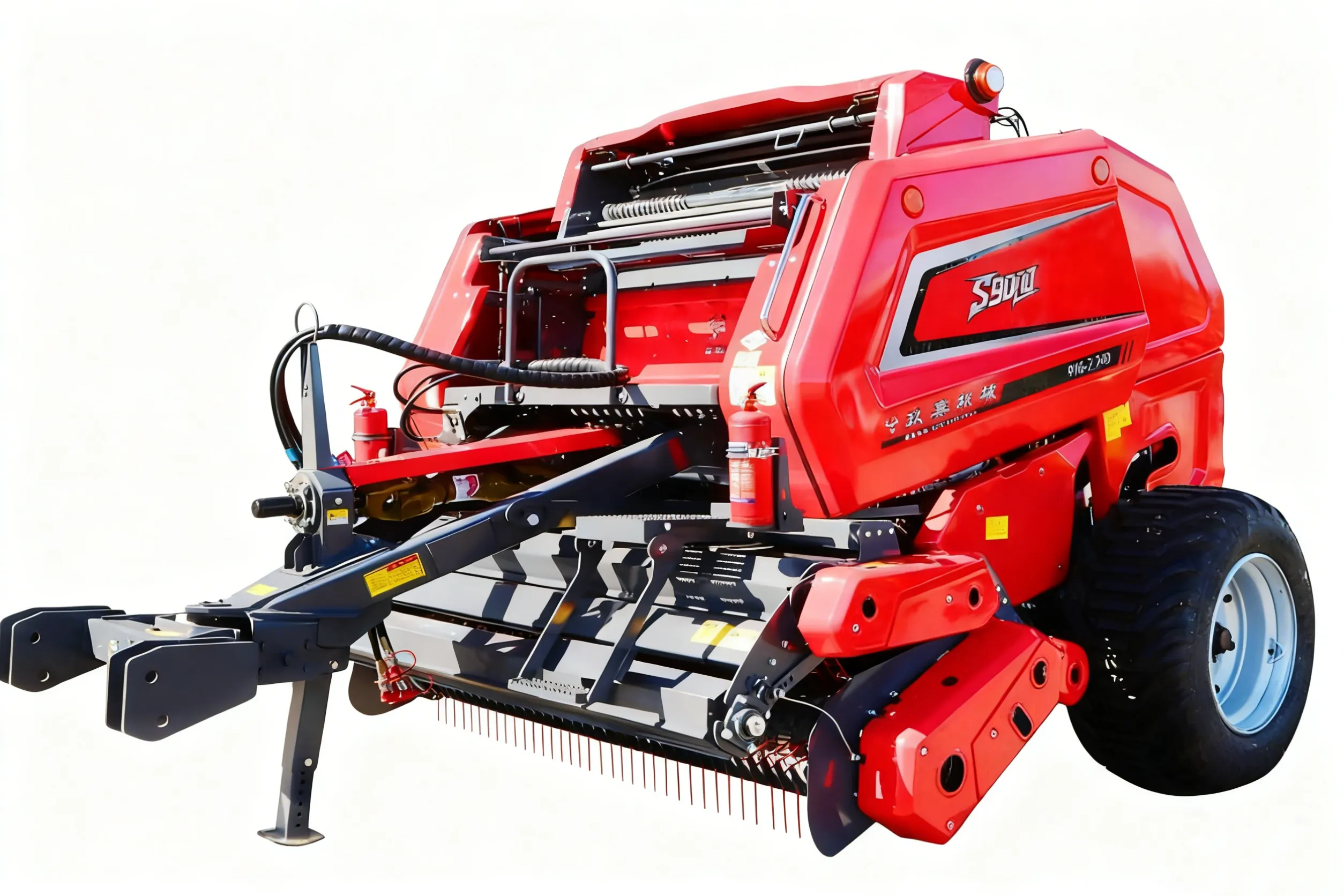
For small to mid-size dairy and hay operations processing up to 500 acres per season, the 9YG-1.25A alfalfa round baler delivers variable-chamber flexibility and high-density compression across the full range of alfalfa cut weights. For larger commercial hay export operations where per-hour throughput is critical during narrow seasonal windows, the 9YG-2.24D S9000 Beyond silage round baler provides a wider pickup width and higher-capacity bale chamber to maintain output in heavy first-cut conditions.
6.2 Film Wrapping Machine
The دستگاه بسته بندی فیلم بسته بندی 9YCM-850 pairs with either baler model for on-site wrapping. Its programmable revolution counter allows precise setting of 6 or 8 layers without manual counting, and adjustable film tension control eliminates the under-wrapping errors that are the single most common cause of spoilage in alfalfa baleage operations. Compatible with both 500 mm and 750 mm silage stretch film widths.
6.3 Bale Transport
The 9JYY-2.5 round bale collector and transporter moves freshly wrapped bales from the field to the storage site without tractor bucket contact — which is the most common cause of film puncture in the critical first 48 hours after wrapping, when fermentation is just beginning and any oxygen ingress is maximally damaging. The 4.5 m model handles multiple bales per run for high-volume operations.

Section 7: Alfalfa Baleage vs. Dry Hay — Side-by-Side
For operations in regions with unpredictable summers — Ireland, Atlantic Canada, the Australian coast, or irrigated desert zones where dew and humidity are constants — the comparison below shows why baleage is not a marginal improvement over dry hay but a fundamentally more reliable preservation system.
| عامل | Dry Hay | Alfalfa Baleage |
|---|---|---|
| Field drying time required | 3–5 days (weather-dependent) | 4–12 hours wilting only |
| Leaf loss at harvest | 15–30% | <5% |
| Crude protein retention | 14–20% (variable) | 18–24% (consistent) |
| Weather dependency | بالا | خیلی پایین |
| زیرساخت ذخیرهسازی | Barn or covered shed required | Outdoor stacking, no barn needed |
| Suitable climate | Low-humidity regions only | All climates |
| Storage duration | 12–24 months | 12–18 months (sealed film) |
Section 8: Common Mistakes & How to Avoid Them
These are the errors that appear most consistently in alfalfa baleage operations, ranked roughly by how quickly and severely they destroy feed value.
The most damaging and most common error. If the squeeze test produces flowing juice, wait another 2–4 hours regardless of scheduling pressure. If rain is genuinely imminent, bale even at slightly high moisture rather than leaving the crop exposed — butyric fermentation is a feed-quality problem that can still be managed; a rained-on wilted windrow is a total loss.
Film accounts for 8–12% of total baleage production cost per bale. A single spoiled bale represents 100% of the feed value stored in it. The film saving per bale is never worth the risk. Apply the minimum 6 layers; use 8 in high-UV climates or storage beyond 12 months.
Walk the storage area every 2–3 weeks during the first 60 days. A puncture repaired with silage repair tape costs under $1 and takes 30 seconds. A missed puncture that admits oxygen for 4 to 6 weeks spoils a 30–50 cm zone around the entry point — a loss easily 100 times the cost of the tape.
Fermentation does not stabilise until pH drops below 4.8 — typically at day 21–30. Opening a bale before this point introduces oxygen into a bale that has not yet developed enough lactic acid to suppress aerobic spoilage. Even good-quality baleage deteriorates rapidly if opened too early.
Once opened, the exposed silage face begins aerobic deterioration within 24–48 hours. Plan feeding rates to consume each opened bale within 2 to 3 days maximum. In warm weather, this window is shorter. Do not open more bales than the herd can consume in that period.
سوالات متداول
Common questions from alfalfa and lucerne producers about baleage production and equipment.
Ready to Build Your Alfalfa Baleage Operation?
Contact our team with your herd size, annual tonnage requirement, and tractor specification — we’ll match you with the right round baler and wrapper configuration for your operation and budget.