
The Bedding Business: Building a Premium Customer Base Beyond Commodity Straw
Production standards, bale weight consistency, barn storage requirements, and the customer relationships that separate premium equine bedding producers from commodity straw suppliers across Europe, North America, and Australia.
Animal Bedding as a Dedicated Business: What Changes
Most discussions of wheat straw baling treat bedding as one of three possible markets alongside roughage and biomass. This article takes a different approach: it covers animal bedding production as a dedicated specialist business — the management disciplines, equipment standards, customer relationships, and quality control protocols that command 40 to 100% above commodity straw prices consistently, season after season.
The distinction matters because bedding buyers are not purchasing a cheaper version of the same product roughage buyers want. Horse stables, livery yards, pig farrowing operations, and poultry litter managers are buying specific performance characteristics — absorbency, dust content, mould absence, colour consistency, bale-to-bale weight consistency — that are irrelevant to roughage buyers. The premium price reflects the additional production discipline required to reliably meet these characteristics across an entire season’s production. Our article on silage baler ROI — when owning pays off covers the investment decision relevant to dedicated bedding production operations.
Crop Selection: Wheat vs. Barley vs. Oat Straw
| Straw Type | Absorbency | Dust Level | Best Bedding Market | Premium Over Commodity |
|---|---|---|---|---|
| Wheat straw | High | Low-Medium | Horses, cattle, pigs | +20–40% |
| Barley straw | Very high | Low | Horses (premium equine) | +30–60% |
| Oat straw | Medium-High | Low | Horses, young stock | +25–50% |
| Rye straw | Medium | Very low | Allergy-sensitive horses | +40–80% (niche) |
Why Barley Straw Commands the Equine Premium
Barley straw’s higher absorbency — from its hollow stem structure and higher leaf sheath percentage — means a barley straw bed requires less material per day to maintain adequate moisture absorption in a stabled horse box. For commercial stables managing 20 to 50 boxes where daily mucking-out cost is a significant variable expense, reduced daily consumption of barley straw frequently justifies the higher purchase price per bale. The economics reward absorbency, not just low price.
Premium Production Protocol: The Five Non-Negotiables
Bedding straw enters direct prolonged contact with animals. Fields with late herbicide or fungicide applications may carry residues causing skin or respiratory reactions in stabled animals — a liability risk for the supplier. Maintain clear records of all field inputs for each bedding straw batch.
Higher cutting height reduces soil and debris contamination, produces longer cleaner stems, and prevents stubble from being raked into the bale windrow.
The golden colour that equine buyers pay premium for begins to fade within 5 to 7 days of harvest as UV exposure and surface mould initiation progress. Barn-storing freshly baled straw within 48 hours locks in colour and prevents dew re-wetting.
Surface moisture dries faster than stem-internal moisture. Probe the windrow base at multiple points. For barn-stored product, target below 13% to allow for minor moisture equilibration during weeks of storage before delivery.
Consistent bale weight allows buyers to calculate coverage per bale for their stable management schedules. Variable weight is the most common buyer complaint in bedding markets — it means inconsistent landscape bed or stable box coverage per bale.
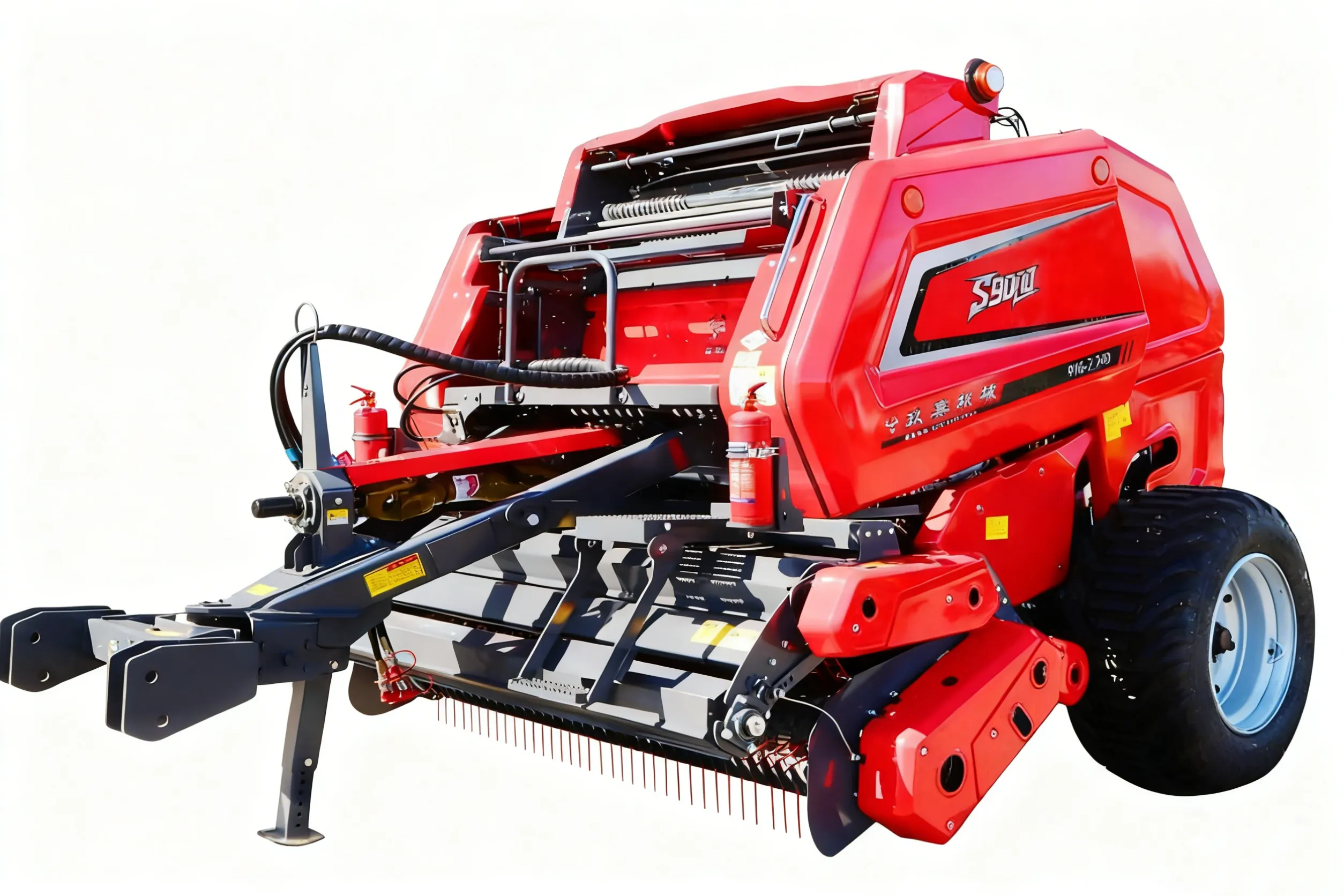
The 9YG-1.25A variable-chamber round baler provides chamber pressure control for consistent bale weight across variable windrow density. For large bedding-focused operations producing 5,000+ bales per season, the 9YG-2.24D S9000 Beyond round baler offers the throughput needed to complete baling within the critical 4-day post-harvest quality window across large fields.
Building and Retaining a Premium Customer Base
Horse Stables: The Core Market
A 30-box livery yard using barley straw at 2 bales per box per week consumes 3,120 bales per year — significant volume for a single customer with predictable, stable ordering. Building relationships with 3 to 5 livery yards within 50 km provides a contracted demand base that eliminates market price uncertainty and justifies year-round barn storage investment. Livery yard managers evaluate suppliers on four criteria: product consistency, reliability of delivery, responsiveness to quality issues, and price — in that order. Operations that perform on the first three command premium prices without constant negotiation.
Poultry and Pig Bedding: Volume Channels
A 50,000-bird broiler house requires 8 to 15 tonnes of straw bedding per 6-week crop cycle — 60 to 120 tonnes per year from a single house. Direct farm supply contracts with poultry and pig integrators can absorb full-season production from a mid-scale bedding straw operation. Price per bale is lower than for equine markets (poultry operations are more tolerant of colour variation and slightly higher moisture) but volume stability and single-customer simplicity is attractive for operations preferring contract supply over retail marketing.
Common Mistakes and FAQ
One significant rainfall event on freshly baled straw rewets the outer layer above 16% moisture, initiates chlorophyll oxidation (gold to yellow), and introduces surface spore contamination. There is no recovery from outdoor weather exposure for bedding-grade straw — once discoloured the bale cannot be re-classified upward. Barn or covered storage from baling to delivery is non-negotiable.
Late-season herbicide or fungicide applications can leave residues that cause equine respiratory or skin reactions when used as bedding. The liability risk to a bedding supplier from a horse respiratory incident is significant. Maintain spray records for all bedding production fields and supply these to buyers on request.

Discuss Your Bedding Straw Production Operation
Tell us your annual target, customer base, and storage capacity — we’ll specify the right baler for your premium bedding programme.