
Clover Silage Baling: How to Preserve Clover Nutrition with Bale Wrapping
Buffering capacity explained, mower-conditioner requirements, 8-layer film rationale, phyto-oestrogen management, and the complete wilting protocol for reliable clover baleage.
The Nitrogen-Fixing Legume That Challenges Every Silage System
Red clover (Trifolium pratense) and white clover (T. repens) are the most valuable temperate legume forages grown outside of alfalfa’s climate zone. On permanent pastures across Ireland, the UK, the Netherlands, Denmark, New Zealand, and the cooler dairy regions of southeast Australia, grass-clover mixed swards produce the most nutritionally complete and economically efficient forage possible from permanent land without bought-in nitrogen fertiliser. The clover component does the nitrogen work — fixing 100 to 200 kg N per hectare per year from the atmosphere through its root nodule symbiosis with Rhizobium bacteria — while the grass component provides the structural fibre and high dry-matter yield that makes the sward commercially productive.
As a silage crop, clover is both the most nutritionally rewarding and the most technically demanding option a round bale system can handle. The combination of very high moisture at cutting (75 to 85%), elevated protein content (15 to 25% crude protein on a dry matter basis), and high buffering capacity creates fermentation conditions that routinely defeat operations that apply grass silage management protocols directly to clover. The results of such failures — butyric, clostridial silage with pH above 5.0, ammonia nitrogen above 10% of total nitrogen, and a characteristic rancid smell — are a waste of an extraordinarily valuable crop and a significant financial loss per tonne of failed baleage.
This guide explains the specific biological reasons why clover is a fermentation challenge, the practical management steps that reliably produce good clover baleage, the 8-layer film specification that clover’s extended fermentation requires, and the phyto-oestrogen consideration that sheep farmers must understand before feeding red clover silage to breeding ewes. For producers running grass-clover mixed swards where clover management sits alongside ryegrass silage decisions, our article on how to bale ryegrass silage without clostridial spoilage covers the complementary grass side of mixed-sward management.
Section 1: The Buffering Capacity Problem — Why Clover Is Harder to Ferment Than Grass
1.1 Understanding Buffering Capacity
Buffering capacity is the fermentation property that most distinguishes clover from grass crops. Technically, it is the quantity of lactic acid (expressed in milliequivalents per 100 g dry matter) that must be produced before pH drops to 4.5 — the level at which clostridial bacteria are suppressed and fermentation becomes stable. A higher buffering capacity means more lactic acid is required, which means more fermentation substrate (water-soluble carbohydrates, WSC) must be consumed and more time passes before the silage is stable.
Clover’s buffering capacity is 2 to 3.5 times higher than ryegrass at equivalent moisture levels. The primary reason is protein: crude protein at 18 to 22% of dry matter in red clover at bud stage provides a large pool of amino acids and amides that act as pH buffers — they absorb hydrogen ions that would otherwise reduce pH, effectively blunting the acidification that the lactic acid bacteria are trying to achieve. At the moisture levels where clover is typically baled (60 to 68%), the WSC available for fermentation is also proportionally lower than in ryegrass at equivalent moisture because the large plant volume is water rather than fermentable carbohydrate.
The practical consequence: clover silage takes 30 to 50% longer to reach stable pH than ryegrass silage from the same field under the same conditions. The extended fermentation window — 28 to 35 days for clover versus 18 to 25 days for ryegrass — means a longer period during which oxygen infiltration through film damage or poor wrapping can redirect fermentation from lactic to clostridial pathways. Every hour of additional oxygen exposure during days 1 to 21 post-wrapping is more consequential for clover than for ryegrass.
1.2 The WSC-to-Buffering-Capacity Ratio
Silage fermentation success can be predicted from a simple ratio: WSC content divided by buffering capacity. For ryegrass at 65% moisture, this ratio is typically 2.5 to 4.0 — sufficient for reliable fermentation without inoculant. For red clover at 65% moisture, the same ratio is 0.8 to 1.5 — below the threshold for reliable fermentation without a lactic acid bacteria inoculant. This ratio explains, from first principles, why every piece of applied silage research recommends inoculant use for clover as a standard requirement rather than an optional insurance measure.
| Stage | Rohprotein | WSC (DM) | Moisture at cut | Ferment difficulty | Inoculant |
|---|---|---|---|---|---|
| Vegetativ | 22–26% | Low 3–5% | 83–86% | Sehr hoch | Essential |
| Early bud | 18–22% | Medium 5–8% | 80–84% | Hoch | Essential |
| Late bud / early flower ✓ | 15–20% | Medium-High 7–10% | 76–82% | Mäßig | Strongly recommended |
| 50% flower | 12–16% | Lower 5–7% | 72–78% | High (phytooestrogen) | Essential |
Section 2: Correct Cutting Stage and Wilting Protocol
2.1 Cutting Stage — Bud to Early Flower
The optimal cutting stage for red clover silage is the late bud to early flower stage — when the most advanced heads in the paddock show the first petal colour but fewer than 20% of plants have open flowers. At this stage, crude protein is in the 16 to 20% range, NDF is 32 to 40% (still well within digestible range), and WSC content is approaching its seasonal maximum, providing the best available fermentation substrate relative to the buffering capacity load.
Cutting earlier — at the vegetative or early bud stage — produces very high moisture material (83 to 86%) that is extremely difficult to wilt to safe baling moisture within a practical weather window and carries very low WSC relative to protein buffering. Cutting later — at 50% or more open flowers — increases phyto-oestrogen content to the range associated with clover disease in sheep (see Section 4) and reduces digestibility as stem lignification accelerates.
2.2 The Mower-Conditioner Is Not Optional
Red clover stems are succulent, thick-walled, and covered with a waxy cuticle that resists moisture evaporation through the stem surface. A plain disc mower cutting red clover at 80% moisture leaves intact stems that dry almost exclusively from the cut end — a process that takes 48 to 60 hours even in excellent drying conditions. A mower-conditioner (crimper-roller type or flail-conditioner type) physically crushes the stem walls and breaks the cuticle, exposing the internal moisture to direct evaporation across the entire stem length. The result is a 25 to 40% reduction in wilting time — cutting from 48 to 60 hours to 28 to 36 hours in equivalent conditions.
For clover silage production, this time saving is operationally significant. It extends the safe baling window, reduces the number of weather risk periods the wilting crop must survive, and allows the crop to reach 60 to 65% moisture with fewer mechanical handling passes (each of which causes some leaf loss and field contamination). A mower-conditioner is not an optional upgrade for red clover silage production — it is the baseline equipment requirement.
2.3 Wilting to the Target Moisture Range: 60 to 66%
Choose an afternoon with at least 4 to 6 hours of remaining drying time. Spread the cut material as wide as the conditioner discharge allows to maximise surface area exposure. Do not cut into a narrow swath — clover’s high moisture content means that a narrow windrow stays wet in the centre long after the surface appears dry.
Immediately after cutting, ted the spread material to invert the windrow and expose the underside of stems to solar radiation. The first few hours after cutting are when clover loses the most moisture per unit time — capitalise on this peak drying rate by maximising surface area exposure. Do not wait until the next morning to ted.
Clover moisture drop is not linear. Typically, moisture falls rapidly in the first 12 hours (from 80% to 68–72%) then more slowly as the remaining moisture is in the stem core. Use a handheld conductance meter rather than the squeeze test — clover at 70% moisture can feel similar to grass at 65% due to the waxy stem surface. Do not rely on time estimates alone.
Merge to a baling windrow when moisture is between 62 and 66%. Apply a homofermentative LAB inoculant (Lactobacillus plantarum strains at 1 × 10^6 cfu/g or higher) at the baler pickup, set to the application rate specified for clover on the inoculant product data sheet. The inoculant is not optional at any moisture level with clover — apply it every time, every bale.
Clover baleage must be film-sealed within 2 hours of baling. The high protein content and moisture provide ideal conditions for both lactic and clostridial bacteria, and the active phase begins immediately. Every hour of delay before wrapping is an hour of uncontrolled microbial activity in the unsealed bale.
Section 3: Film Wrapping — Why Clover Needs 8 Layers
3.1 The Extended Fermentation Window Argument
The standard recommendation for grass silage round baleage is 6 layers of 25-micron silage stretch film. This provides adequate oxygen barrier for the 18 to 25 day active fermentation period in ryegrass at 60 to 65% moisture, during which pH drops from near-neutral to 4.0 to 4.5 and the system stabilises. For red clover, the same active fermentation period runs 28 to 35 days — 10 to 17 days longer. This extended window means the bale is in an oxygen-sensitive active fermentation state for significantly longer, and the probability of a small film puncture or seal failure causing oxygen ingress during the critical pH-drop period is correspondingly higher.
Eight layers of 25-micron silage film provides an oxygen transmission rate approximately 33% lower than 6 layers from the same film stock. This additional barrier is the practical response to clover’s extended fermentation timeline — it is not precautionary excess but a calibrated increase in protection matched to the increased duration of vulnerability. Independent Irish silage research consistently shows 8-layer wrapping of clover baleage produces better fermentation quality outcomes (lower ammonia nitrogen, lower butyric acid) than 6-layer wrapping of the same material.
3.2 Normal Clover Fermentation Gas vs. Clostridial Inflation
Red clover baleage generates more CO₂ fermentation gas during the first 14 to 21 days than ryegrass silage of equivalent moisture. This is normal and causes the bale film to appear slightly inflated or balloon-shaped during this period. This CO₂ bulging should not be confused with the hard, dome-shaped gas inflation associated with active clostridial butyric acid fermentation, which produces H₂, CO₂, and CO₂ simultaneously and creates a much firmer, more resistant inflation feel with a characteristic rancid-ammonia odour at the wrap surface. Normal CO₂ fermentation gas dissipates as the active phase completes; clostridial inflation continues and worsens. A firm squeeze of the inflated bale and a close smell check are the diagnostic tools.
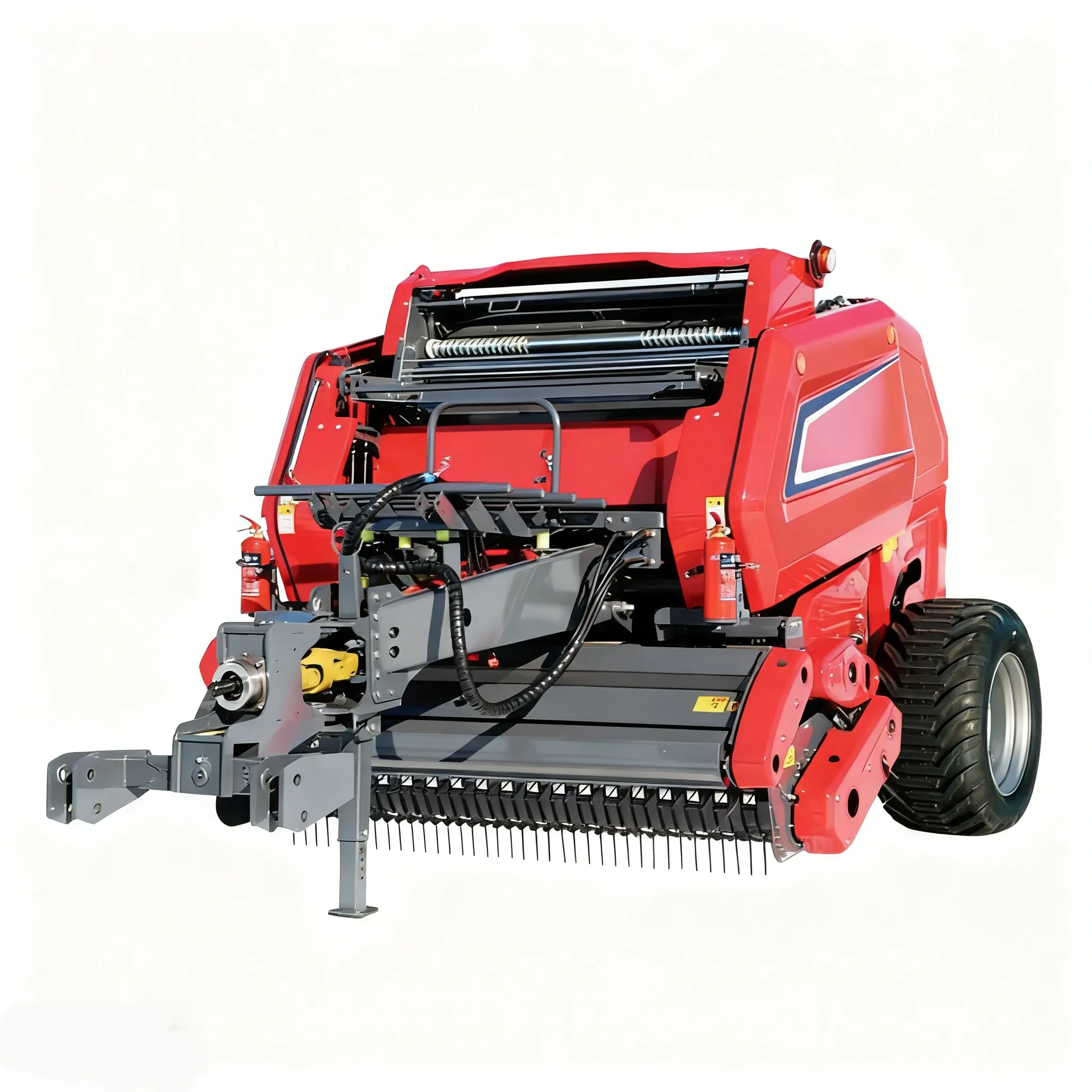
Der 9YCM-850 Bündelfolien-Verpackungsmaschine is programmable to 8 layers via its revolution counter, ensuring consistent layer count without operator counting across a high-volume clover baleage day. Pair it with the 9YG-1.25A Rundballenpresse mit variabler Kammer for the density control needed across the variable-moisture clover crop encountered through a typical cutting day.
3.3 Storage Site, Inspection Schedule, and Opening Protocol
Clover baleage requires the same storage site standards as grass silage (elevated, well-drained, rodent-managed) with two additional requirements: the 8-layer film must be inspected for punctures every 5 to 7 days during the first 35 days of storage (compared to every 10 to 14 days for grass silage), and any puncture must be repaired with silage repair tape within 24 hours of detection. The longer active fermentation window means that a puncture during day 15 of a clover baleage batch is as consequential as a puncture during day 5 of a grass batch — oxygen ingress redirects fermentation at any point before pH stabilisation.
Do not open clover baleage bales before 35 days minimum. Well-made clover baleage has a clean, sharp acidic smell — no ammonia, no rancid or sweaty notes. The colour should be uniform olive green to dark green, the texture firm and moist. Feed out each opened bale within 2 to 3 days — clover baleage aerobic stability at the exposed face is lower than grass silage due to higher yeast counts in the pre-ensiling material.
Section 4: Phyto-Oestrogens in Red Clover — What Sheep Farmers Must Know
Red clover contains isoflavone compounds — primarily formononetin, biochanin A, daidzein, and genistein — that are collectively referred to as phyto-oestrogens because they mimic the biological action of oestrogen when consumed by ruminants. In sheep, these compounds cause a condition known as clover disease (oestrogenism or clover oestrogenism): ewes exposed to high formononetin intakes over the 6 to 8 weeks before and during mating show reduced ovulation rates, impaired embryo implantation, and in severe cases permanent cystic degeneration of the cervical mucosa that causes irreversible infertility — a condition called ‘clover infertility’ in the Australian sheep industry where it was first characterised.
The risk is species-specific and dose-dependent. Dairy cattle and beef cattle metabolise isoflavones differently from sheep — cattle convert formononetin to the inactive compound equol and do not show the reproductive effects documented in sheep at equivalent intakes. Horses are intermediate in sensitivity. For dairy cattle and beef cattle operations, red clover silage at any reasonable inclusion rate in the ration carries no documented reproductive risk and can be fed without restriction through all production phases.
For sheep operations, the management guidelines are: limit red clover silage to no more than 25 to 30% of total dry matter intake in the breeding ewe ration, do not feed it as the sole roughage in the 8 weeks before mating or during mating, and prefer white clover or grass-white clover mixed silage over pure red clover silage in systems where pre-mating nutrition management is complex. White clover carries significantly lower phyto-oestrogen levels than red clover and does not carry the same documented reproductive risk at normal ration inclusion rates.
Common Mistakes in Clover Baleage Production
Plain disc mower cutting of red clover at 80 to 83% moisture leaves intact stem cuticles that restrict moisture evaporation to the cut-end pathway only. Expected wilting time in good drying conditions: 48 to 60 hours. With a mower-conditioner in the same conditions: 28 to 36 hours. The time saving is real, the quality improvement is real, and the capital cost of a mower-conditioner is recovered within 2 to 4 seasons of clover silage production at commercial scale.
The most common rationalisation for skipping LAB inoculant on clover is that the weather was good, the moisture was right, and it looked like ryegrass from a distance. Clover’s buffering capacity makes it a fundamentally different fermentation challenge regardless of weather conditions. LAB inoculant use on clover has been shown in controlled trials to reduce ammonia nitrogen, reduce pH at 21 days, and eliminate the majority of clostridial failures compared to untreated controls at equivalent moisture levels. The cost per tonne of inoculant application is 1 to 2% of the value of the silage being protected.
Six layers is the minimum for ryegrass silage with a 20 to 25 day active fermentation window. Clover’s 28 to 35 day window needs 8 layers. This is not a precautionary recommendation — it is based on documented fermentation failure rates in commercial clover baleage operations that switched from 6 to 8 layers and observed statistically significant reductions in spoilage incidence. Apply 8 layers every time on every clover baleage bale.
At 70%+ moisture, red clover’s WSC-to-buffering-capacity ratio is below 1.0 — clostridial fermentation is the expected outcome regardless of inoculant use. If weather forces baling above 68% moisture, use double the standard inoculant rate and apply 10 layers of film — and accept that this batch carries a higher failure risk than properly wilted material.
Formononetin concentration in red clover reaches its maximum at full flowering and remains elevated in ensiled material. For sheep operations where breeding ewes will be fed the silage, cutting no later than early-flower stage and limiting inclusion rates in pre-mating rations is the management protocol supported by Australian and New Zealand research in this area.
Häufig gestellte Fragen

Discuss Your Clover Silage Programme With Our Team
Tell us your herd size, clover proportion, and target cutting schedule — we’ll help specify the right baler and wrapper combination for reliable clover baleage production.