Presning af bygsilage: Det kolde klimaalternativ til majs til landbrug på højtliggende breddegrader
A practical guide for producers in Northern Europe, Canada, Mongolia, and Northern China who need a reliable silage crop where corn will not mature — harvest timing, baling protocol, and fermentation management.
The Short-Season Silage Crop That Feeds Dairy Herds Where Corn Cannot Grow
Whole-plant barley (Hordeum vulgare) is the silage crop that fills the gap left by corn in high-latitude farming systems. Above approximately 55° north — which takes in most of Finland, Sweden, Norway, the Scottish Highlands, the northern Canadian Prairies (Saskatchewan, Manitoba, northern Alberta), Mongolia, and China’s Heilongjiang province — the growing season is too short for corn to reliably reach the milk-to-dough grain stage that defines optimal corn silage quality. Barley, with its shorter growing season of 70 to 90 days from sowing to harvest stage, consistently matures 3 to 5 weeks earlier than corn under equivalent conditions, making it the cereal silage crop of choice in these regions.
As a silage crop, whole-plant barley at the heading-to-early-dough stage delivers metabolisable energy of 9.5 to 11.0 MJ per kg dry matter — below the 10.5 to 11.5 MJ of well-made corn silage but above most grass silage at equivalent fermentation quality. Crude protein of 10 to 13% is also superior to corn silage’s 8 to 9%, making barley silage particularly valuable in dairy rations where purchased protein supplement costs are a constraint. In Denmark, Sweden, and the Nordic countries, barley silage is a standard component of dairy cow TMR rations as a second silage source alongside grass silage, providing additional starch energy without the geographic limitation that corn silage would impose.
This guide covers the complete barley silage baleage process for high-latitude and short-season farming environments. For comparison between barley silage baleage and the alternative of building grain barley rations for dairy, our overview of variable chamber round balers for mixed cropping operations covers equipment flexibility across cereal crops.
Section 1: Harvest Stage and Whole-Plant Moisture
1.1 The Heading-to-Dough Harvest Window
The optimal harvest window for whole-plant barley silage is from the heading stage (when the head is fully emerged but grain is in the watery stage) through to the early dough stage (when the grain content can be moulded between fingers but is still soft). This window is approximately 14 to 21 days wide in most growing environments — significantly wider than the 7 to 14 day window typical for whole-plant corn silage, which is an operational advantage in short-season regions where machinery and labour availability can constrain harvest timing.
| Vækstfase | Fugtighed for hele planten | NDF | Starch in Grain | Quality |
|---|---|---|---|---|
| Flag leaf visible | 75–80% | 50–55% | Lav | Too wet — clostridial risk |
| Heading | 70–75% | 48–52% | Developing | Acceptable — use inoculant |
| Watery dough | 65–70% | 44–48% | Medium | God |
| Early dough ✓ | 60–65% | 40–45% | Near-peak | Ideal |
| Hard dough | 52–58% | 38–42% | Peak but drying | Acceptable, lower DM loss |
1.2 Managing the High-Moisture Early Harvest Challenge
Unlike corn silage, whole-plant barley at optimal harvest stage often still carries 60 to 68% moisture — above the ideal 55 to 65% baling target and into the zone where clostridial risk is elevated. Two management options address this. The first is to harvest slightly later — at the early-to-mid dough stage rather than the heading stage — accepting a modest reduction in protein content in exchange for more reliable fermentation at 60 to 65% moisture. The second is to harvest at heading stage and apply a homofermentative LAB inoculant at higher-than-standard rates to ensure rapid pH drop at the higher moisture level. Most Nordic dairy farmers use the second approach, as the higher protein content at heading stage is commercially valuable in their rations.
Section 2: Baling, Wrapping, and Fermentation
2.1 Does Barley Need Chopping Before Baling?
Unlike whole-plant corn, barley can be baled directly with a standard round baler without prior chopping — the shorter, finer stem structure of barley passes through baler pickups and chambers reliably at harvest moisture. However, rolling the barley through a mower-conditioner before baling improves bale density and fermentation quality by breaking the stem cuticle and allowing more rapid moisture equalisation within the bale. This is particularly valuable when baling at the heading stage at 70 to 73% moisture — the conditioning breaks stems and releases plant juice that distributes across the bale, improving lactic acid bacteria contact with all parts of the mass.
2.2 Film Wrapping and Fermentation Timeline
Barley silage baleage requires 6 layers minimum, with 8 layers recommended for storage beyond 9 months in temperate climates. Barley ferments relatively quickly due to its moderate WSC content (8 to 14% of dry matter at heading stage) — pH typically falls to 4.0 to 4.5 within 14 to 21 days at 60 to 65% moisture with LAB inoculant. Without inoculant at 68 to 72% moisture (early heading harvest), pH drop may take 28 to 35 days and clostridial fermentation is more likely. Well-fermented barley silage has a mild, slightly sweet acidic odour, uniform olive-green colour, and firm grain kernels that are intact but slightly swollen. Feed within 3 days of opening each bale.
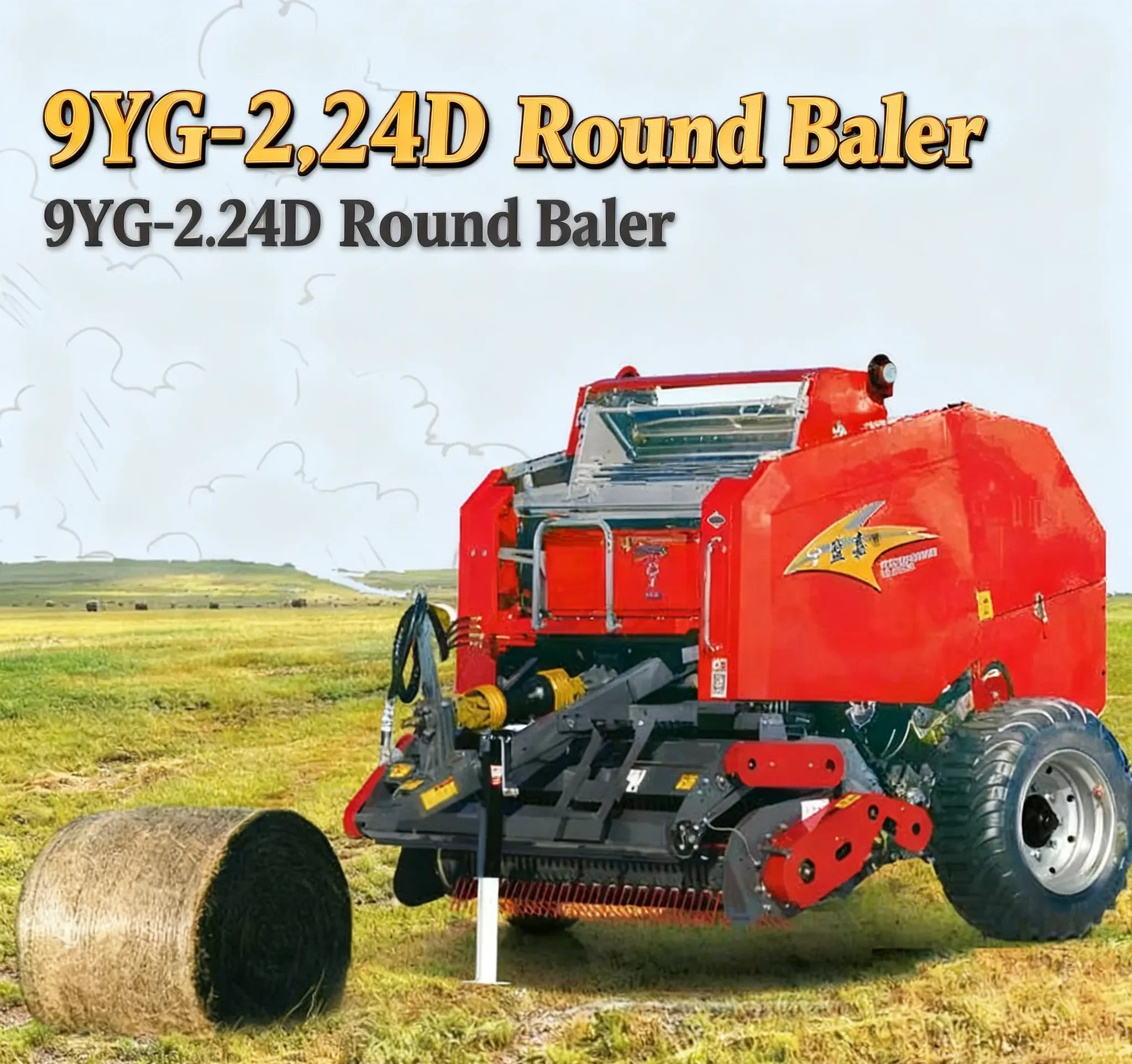
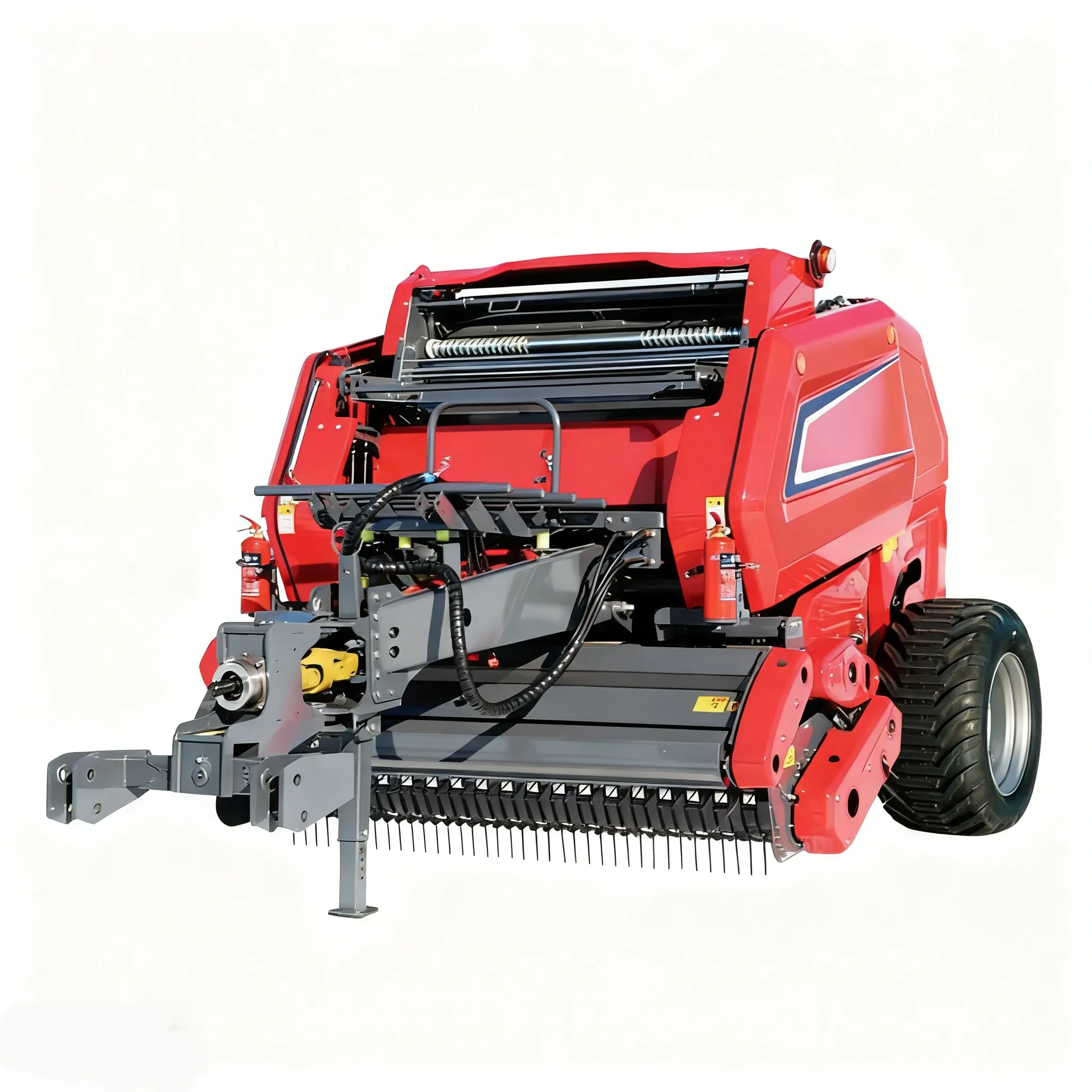
De 9YG-1.25A rundballepresser med variabelt kammer handles whole-plant barley in both direct-baled and conditioned-then-baled configurations. Its variable chamber accommodates the density variation between early heading (lower density) and early dough (higher density) barley harvests without manual adjustment.
Section 3: Barley Silage in Dairy Rations
3.1 Nutritional Role and Inclusion Rate
Barley silage works best as a secondary energy source in a dairy TMR ration where grass silage or hay provides the primary structural fibre. At 30 to 45% of the total silage dry matter, barley silage contributes starch energy without the high neutral detergent fibre that limits intake from grass-only silage diets. Nordic dairy farmers typically run 40 to 60% grass silage and 20 to 30% barley silage in the forage fraction, with concentrates making up the balance of the ration. This combination consistently outperforms grass-only silage diets in milk yield and milk protein percentage on long-day lactating cows in controlled trials.
Barley silage starch is more ruminally degradable than corn silage starch — this means faster rumen energy release but also a higher risk of subacute ruminal acidosis (SARA) if inclusion rates exceed 40% of total dry matter in high-producing cows. Work with a nutritionist to calibrate the exact barley silage inclusion rate for your herd’s production level and forage base composition.
Ofte stillede spørgsmål

Contact Us About Barley Silage Baling
Del din afgrødetype, årlige mængde og traktorspecifikationer – vi specificerer den rigtige ballepresser til din opgave.