
The Two Timing Questions: When to Cut and When to Bale
Why Getting Both Right Determines the Feed Value in the Bale
Silage timing involves two distinct decisions that are often conflated but have different governing factors. The first is the cut timing decision — when during the crop’s growth stage to mow — which determines the nutritional composition of the silage: the balance between digestible energy, crude protein, NDF (neutral detergent fibre), and the water-soluble carbohydrates that drive fermentation. The second is the bale timing decision — when after mowing the wilted crop is ready to be processed by the မြက်ခြောက်ထုပ်ပိုးစက် — which is governed almost entirely by crop moisture and weather conditions.
Both decisions matter, but in different ways. A nutritionally excellent crop cut at exactly the right growth stage but baled at 72% moisture will produce clostridial silage that animals won’t eat. A nutritionally average crop baled at a perfect 56% moisture will produce excellent silage that preserves and feeds well. The interplay between cut timing and bale timing is that cutting at the right growth stage creates a crop with high water-soluble carbohydrate (WSC) content, which is the most important factor in making the bale timing decision more forgiving — high-WSC crops ferment more reliably even at slightly non-optimal moisture conditions than low-WSC crops that are more sensitive to moisture timing.
This guide focuses primarily on the bale timing decision — when after mowing and wilting the crop is actually ready for the baler — while providing context on how cut timing sets up or constrains the bale timing options available. For more detail on the moisture window, crop-specific targets, and measurement methods, see the companion article on ideal moisture content on the foragebalers.com knowledge base.
When to Cut: Growth Stage Timing by Crop Type
The Stage at Mowing That Determines the Quality Ceiling of Your Silage
Cut timing determines the nutritional composition of the silage — an outcome that cannot be changed after mowing. Cutting too early produces high-protein, high-digestibility silage with very high moisture that may be difficult to wilt to target levels before deterioration begins in the windrow. Cutting too late produces lower-digestibility silage with lower WSC content, compromising both fermentation quality and the feed value at the animal end. The practical target for most silage crops is to capture the peak WSC period while the crop still has adequate yield — which means cutting before the crop has headed or flowered in the case of grasses, or before full flower opening in the case of legumes.
| Crop Type | Optimal Cut Stage | Too Early | Too Late |
|---|---|---|---|
| Perennial ryegrass | Early head emergence (flag leaf to first head) | Very wet, low yield | Lower digestibility, higher NDF |
| Tall fescue / cocksfoot | Boot to early head emergence | Very wet, lower yield | Rapid digestibility decline after heading |
| Lucerne (alfalfa) | 10–20% flower (first colour showing) | Very wet, high leaf loss risk in raking | Protein decline, high stem fraction |
| Mixed pasture (grass/clover) | Match to dominant species; cut before heading | Wet, low DM yield | Quality declines rapidly once grasses head |
| Maize | Hard dough stage (kernel line 1/2–3/4) | Very wet, low starch, poor bale density | Starch too hard, reduces digestibility |
| Sorghum / sudan hybrid | Boot to early head (1.0–1.2m height) | Prussic acid risk; very wet | Stemmy, lower digestibility |
The Wilt Phase: From Mowing to Baling-Ready
Managing the Hours Between Cut and Bale for Target Moisture
The period between mowing and baling — the wilt phase — is when the operator can most directly influence the bale timing outcome. The goal is to manage the crop through the wilt phase to arrive at the 50–60% moisture target window at a time that coincides with available machine capacity and good baling conditions. This sounds straightforward but in practice involves monitoring moisture at intervals, managing the physical configuration of the swath to maximise drying rate, and making contingency decisions when weather changes unexpectedly.
Day 1 After Mowing: Establishing the Drying Rate
The first measurement should be taken approximately four hours after mowing — after the crop has had the initial fast moisture loss from cut surface evaporation but before the slower cellular drying phase dominates. This first measurement establishes the starting point moisture and gives a baseline for calculating the likely wilt rate under current conditions. Typical starting moisture for well-grown temperate grass silage crops is 75–82% at mowing; tropical grasses and whole-crop cereals can start higher. The gap between the starting measurement and the 50–60% target tells you how much drying work still needs to be done and how many more hours of good conditions you need.
Accelerating the Wilt: Tedding and Conditioning
Where the weather window is narrow, accelerating the wilt rate through crop management is more reliable than hoping conditions improve. Tedding the cut crop within 2–4 hours of mowing spreads it into a wider, thinner layer that presents more surface area for solar and wind drying — typically increasing drying rate by 30–50% compared to an unspread swath. Using a mower-conditioner at cutting crimps the stems to allow faster moisture release from the interior, achieving a similar acceleration. The combination of conditioning at mowing plus tedding 2–3 hours later provides the maximum achievable wilt acceleration under Australian conditions and is standard practice in tight harvest window situations.
The Morning Check: Managing Overnight Dew Rewetting
One of the most common silage baling timing errors in Australian conditions is ignoring overnight dew rewetting. A windrow that measured 58% at dusk can read 68–72% the following morning after a heavy dew night — above the Zone 1 workable threshold. The morning check before beginning baling should always include a fresh moisture measurement, taken after the dew has visibly dried off the windrow surface. This typically means waiting until 9–10 AM in most conditions — not the earliest possible start time that operational pressure might suggest. Starting baling before dew has cleared is one of the most reliable paths to a clostridial silage batch. For the silage baler machine product range and operating support, visit our About page.
The Field Measurement Routine for Confident Bale Timing
A Practical Daily Measurement Schedule for the Wilt Period
The following measurement routine gives operators the information needed to make confident bale timing decisions without over-complicating the process. It assumes use of a handheld forage moisture meter, which provides sufficient accuracy for baling timing decisions (±2–3 percentage points) with a 2-minute measurement time. Taking three readings from different positions in the windrow and averaging is standard practice — individual readings can vary by 5 percentage points within the same paddock depending on aspect, microclimate, and crop density.
4 Hours After Mowing — Baseline Reading
Take three meter readings from representative windrow positions. Record starting moisture and conditions (temperature, wind, cloud cover). Calculate approximate hours to target at current drying rate using previous experience in similar conditions. Decide whether to ted based on the gap between current moisture and target.
Morning of Day 2 — Post-Dew Check
After dew has dried from the windrow surface (not before — typically 9–10 AM). Take three readings. If moisture is below 65%, conditions are approaching the workable zone. If above 65%, either wait for further drying or consider whether tedding will accelerate progress to the baling window before the next weather event.
Mid-Morning Check (If Approaching Target)
If the morning reading is in the 60–65% range and conditions are good, check again at 11 AM–noon. This reading confirms whether drying is continuing toward target or has plateaued. If the morning and noon readings are the same, further drying is unlikely that day and the decision is whether to bale at current moisture or wait for the following day.
Pre-Baling Confirmation (Just Before Starting)
Final reading immediately before deploying the baler. This reading is the decision gate — if it confirms 50–60%, proceed. If still above 60%, refer to the Zone 1/2/3 framework for the proceed-or-wait decision. Never skip this reading under pressure to start baling — it is the most important measurement in the sequence.
Managing the Weather Window: Timing the Bale for a Closing Window
When the Forecast Forces a Decision Before Conditions Are Perfect
The reality of Australian silage production is that weather windows are frequently shorter than the ideal wilt period requires. A 3-day window might be needed to wilt to 55% from a starting moisture of 80%, but the reliable good-weather period may only be 36 hours. In these situations, the decision is not between perfect conditions and waiting — it is between baling at a somewhat elevated moisture with mitigation, or waiting for the next window which may be days away and may result in crop quality deterioration in the windrow while waiting.
The framework for these decisions is practical and based on measured moisture rather than rules. If the best achievable moisture before the weather window closes is 62–64%, baling is worthwhile with increased wrap layers (6 minimum), inoculant application, and prompt wrapping. If the achievable moisture before the window closes is still above 66–67%, seriously consider whether a few more hours of wilting by tedding can get below that threshold — even a 3 percentage point reduction from 68% to 65% meaningfully improves the fermentation outcome. If the window closes before any significant wilting has occurred and the crop is still above 70%, leaving it in the windrow and accepting a weather delay is usually preferable to producing poor-quality silage that will underperform at feed-out.
One practical strategy for tight windows is to start baling the paddock sections that wilted earliest and fastest — typically the sections on more exposed aspects or with thinner sward density — before moving to the sections that are still wilting. This allows production of some high-quality bales before the weather closes while keeping the options open on the remaining sections that may reach target by the time the wrapper has processed the first batch. For silage baler for sale advice matched to your production scale and window management needs, contact the Ever-power team in Charlton.
Time of Day: How Diurnal Moisture Cycles Affect the Baling Window
Why the Best Baling Window Is Usually Mid-Morning to Mid-Afternoon
Moisture in a wilting windrow is not static through the day. It follows a diurnal cycle driven by solar radiation, ambient temperature, and relative humidity — reaching its daily minimum in mid-afternoon and its daily maximum in the early morning before dew dries off. Understanding this cycle allows operators to identify the hours of the day when baling is most likely to be within the target moisture window and to avoid the early morning period when dew-elevated moisture can push otherwise-ready crop back above the acceptable threshold.
🌅
Pre-dawn to 9AM
Dew-elevated moisture. Windrow at daily maximum moisture. Do not bale without fresh measurement confirming dew has dried.
🌤️
9AM – 11AM
Dew drying period. Moisture dropping rapidly. Check at 10AM and again at 11AM to confirm it’s within window before deploying baler.
☀️
11AM – 3PM
Best baling window. Moisture at daily minimum, still actively drying. Confirmed-measurement baling at target moisture most reliable in this window.
🌆
3PM – Dusk
Moisture beginning to rise again as temperature drops. Still acceptable but check moisture if baling into early evening — it rises faster than expected on high-humidity nights.
The time-of-day pattern reinforces why measurement immediately before baling — the pre-baling confirmation — is the critical step rather than relying on the previous afternoon’s reading. A windrow that was at 57% at 2 PM may be back at 64–65% the following morning. The day’s conditions change; the measurement tells you where you actually are rather than where you were yesterday.
In-Session Monitoring: Reading the Bales to Confirm Timing Was Right
The Field Feedback That Confirms or Challenges the Timing Decision
After committing to baling and deploying the machine, the bales themselves provide ongoing quality feedback that confirms whether the timing was correct or identifies an issue early enough to respond — either by adjusting the approach to the remaining bales or by stopping and waiting for further wilting. The following bale appearance indicators are the most reliable in-session timing feedback available without laboratory analysis.
| Bale Observation | What It Indicates | Response |
|---|---|---|
| Firm, round, holds shape after ejection | Moisture in target range — timing correct | Continue at current speed and settings |
| Seepage running from bale base immediately after ejection | Moisture too high — free plant juice present | Measure again — consider stopping if >65% |
| Bale settles from round to oval within 15 min | Either too wet (deformation from weight) or too dry (spring-back) | Measure crop — diagnose moisture direction |
| Belt slip or stalled bale formation | Moisture too high — belt friction overwhelmed | Reduce speed; if persists, stop and wait |
| Dimpled, springy bale surface | Moisture too low — stems spring back in chamber | Check moisture <45% — baling too late in drying cycle |
Ever-Power: Equipment for Confident, Timely Silage Decisions
Machines That Reward Good Timing — and Cope With Imperfect Timing
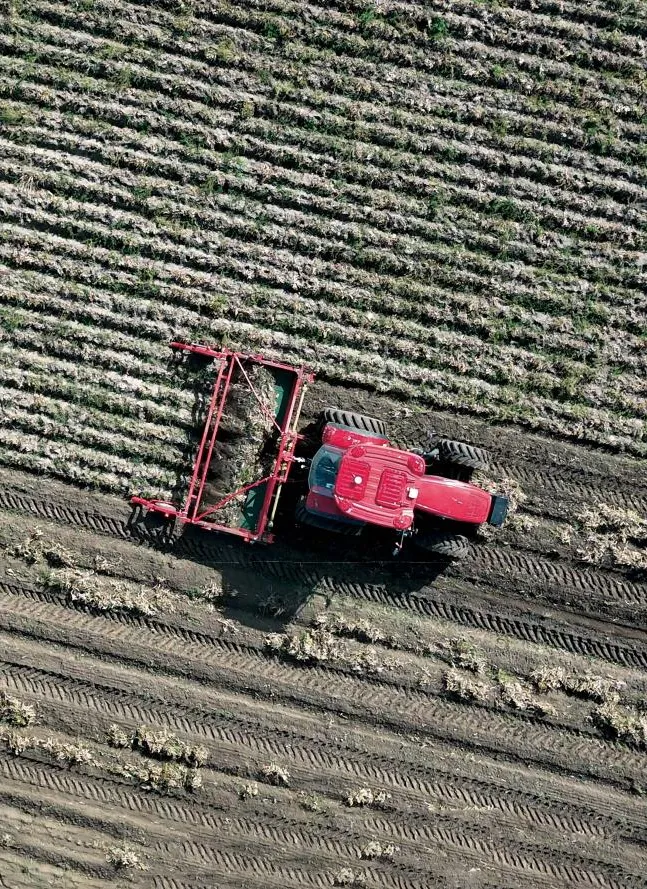
The practical benefit of a well-specified baler in the context of bale timing is operating range — the width of the moisture window within which the machine can produce quality bales without machine management problems. Ever-power’s variable chamber pressure and silage-rated belt compound extend this range at both ends compared to basic designs: the sealed bearing housings and corrosion-resistant internals maintain performance when conditions force baling at the wetter end of the acceptable zone, and the consistent belt friction maintains compression quality at the drier end where marginal belt grip can reduce effective bale density. For Australian silage operations where weather windows are frequently narrower than ideal, having a machine with genuine operating range tolerance is an operational advantage that compounds over multiple seasons of variable harvest conditions. The Charlton team is available to discuss model selection, crop-specific settings, and timing strategy for any Australian silage enterprise.
Questions About Silage Timing in Your Region?
Talk to Our Silage Specialists in Australia
Charlton Industrial Area, Australia — crop-specific timing advice, moisture management strategy, and equipment recommendations for Australian silage conditions.
အမေးများသောမေးခွန်းများ
Common Questions About Silage Baling Timing

Australia Ever-power Forage Balers Co., Ltd.
📍 Charlton Industrial Area, Australia