시스템 비교 가이드

For small dairy farms producing between 100 and 500 tonnes of silage per season, the choice between a 사일리지 베일러 and an ag bagger system is one of the most financially significant equipment decisions on the property. Both systems work — but each suits a different farm profile in ways that matter enormously over a five-to-ten-year ownership horizon.

🐄 Small Dairy
⚖️ 시스템 비교
💰 비용 분석

The Small Dairy Silage Challenge

Why the System Choice Matters More at This Scale

Small dairy farms — typically defined in the Australian context as operations milking 80 to 300 cows and producing 100 to 500 tonnes of dry matter as silage per season — occupy the most contested ground in silage system selection. They are too large for the economics of pure contractor dependence to work comfortably over the long term, yet too small for the scale efficiencies of the bunker-and-wagon system to make the infrastructure cost attractive. Both a 사일리지 베일러 system and an ag bagger system sit within financial reach, both can produce adequate silage quality, and neither is obviously wrong — which makes the decision genuinely difficult and the stakes for getting it right genuinely significant.

An ag bagger — sometimes called an ag bag or silage bagger — is a machine that compresses chopped or unchopped silage material directly into a large-diameter polyethylene tube bag (typically 1.8–2.7m diameter, up to 90m long) at very high density, using a rotor-driven compaction system. The filled tube becomes the storage unit — it sits on the ground surface and is fed from one end during feed-out. The ag bagger bridges the gap between bale silage and bunker silage in that it creates a sealed, anaerobic storage unit above ground (like bale silage) but processes and stores larger continuous volumes (like bunker silage), and achieves densities that exceed what bale silage typically reaches.

The comparison between these two systems for small dairy farms requires thinking across at least five dimensions: silage quality and fermentation outcomes, capital and operating cost, labour and logistic requirements, feed-out management, and the flexibility of each system to adapt as the farm’s scale or circumstances change. Each dimension produces a different answer, and the right system is the one that produces the best composite outcome across all five for a specific farm’s profile. For more information on the full range of 사일리지 베일러 기계 options, visit the 에버파워 제품 페이지.

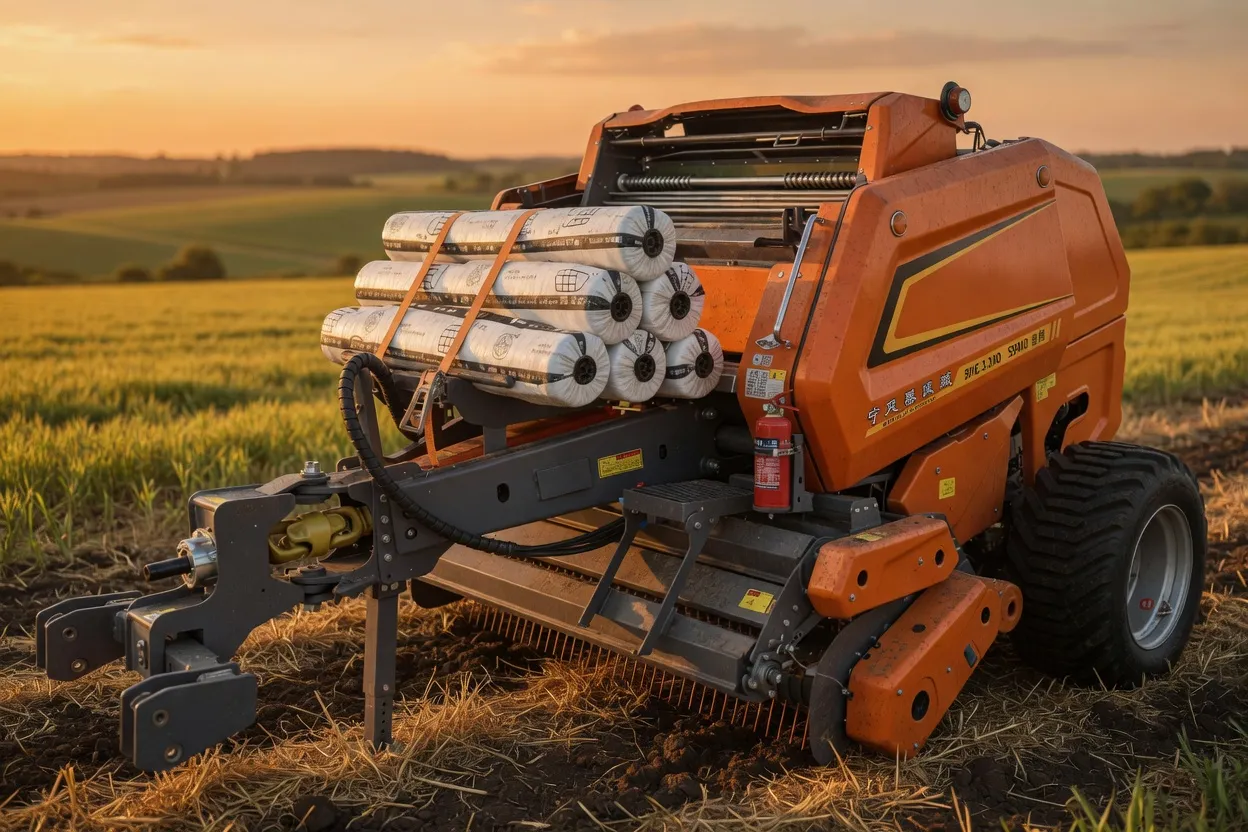
S9000 Classic silage baler for small dairy farm silage production

그만큼 9YG-2.24D S9000 클래식 — the round baler choice for small dairy farms prioritising flexibility, lower capital cost, and individual bale management

How Each System Works in Practice

The Operational Reality of Each System on a Small Dairy Farm

The Round Baler System

In a round baler system, the mowed and wilted crop is raked into windrows and processed by the baler into individual round bales, which are then individually wrapped with stretch film and deposited in the paddock. Each bale weighs 400–700 kg fresh weight at target silage moisture, and a single operator can run the baler and wrapper (either combined or separate) throughout the day’s session. The wrapped bales are then collected by loader and transported to the storage site — typically a flat, well-drained area near the dairy — where they are arranged in rows. Feed-out involves opening one or two bales per feeding event and distributing the contents directly or loading them into a TMR wagon.

The Ag Bagger System

In an ag bagger system, chopped or whole-crop silage material is delivered to the bagger machine — either directly from a precision-chop wagon or by loading pre-cut crop — and the bagger’s rotor compresses and forces the material into the plastic tube bag at very high density (typically 200–240 kg DM/m³). The tube bag sits directly on the ground surface or a prepared concrete pad, and as the bagger fills the bag it moves backward away from the inlet. When the bag is full (or the cutting is complete), the bag end is sealed and the bag sits as a continuous storage unit until feed-out begins. At feed-out, a face cutter or silage grab removes material from the open end of the bag and delivers it to the dairy.

Silage Quality: Density, Fermentation, and Feed Outcome

Where Each System Has a Genuine Advantage

Ag bagger systems have a genuine density advantage over round bale silage. The mechanical compression of a bagger’s rotor system achieves densities of 200–240 kg DM/m³ — consistently above the 175–200 kg DM/m³ typical of well-made round bale silage. Higher density means faster oxygen exclusion, a shorter aerobic phase after sealing, and lower fermentation dry matter losses. For a small dairy farm producing 200 tonnes DM per season, a 5% reduction in fermentation DM loss represents 10 additional tonnes of preserved dry matter — a meaningful feed value advantage that accumulates each season.

However, the quality advantage of ag bags also depends on how well the system is managed. A bag filled with whole-crop silage material (not chopped) may not achieve the density premium its format promises — the bagger’s density advantage is fully realised when feeding well-chopped material from a precision-chop wagon into the bagger. Farms using the ag bagger to process pre-wilted whole-crop (unchopped material from a mower-windrower without a chopper) still achieve better density than round bales from the same material but fall short of the premium density achievable with precision-chop input.

The risk containment profile of each system differs importantly. In a round baler system, a film puncture, bird damage, or storage site contamination affects one bale — the rest of the stack is unaffected. In an ag bag, a bag puncture or seal failure can affect the entire batch stored in that bag, which may represent weeks of feed supply. For small dairy farms where the silage is critical to daily milk production without redundancy, the round baler system’s per-bale containment is a genuine risk management advantage. The ag bag requires diligent site selection (level, clear of sharp objects, away from trees), regular inspection for damage, and prompt repair of any film breach. For 낙농장을 위한 사일리지 베일러 advice and the complete Ever-power range, 찰튼 팀에 연락하세요.

Capital Cost, Operating Cost, and Economics Over Time

The Full Cost Picture Across Ownership and Operation

Capital cost for the baler system is generally lower than the ag bagger for an equivalent quality setup. A round baler with wrapper represents a complete system from a single machinery purchase, and the supporting equipment (tractor, loader with bale spike) is typically already present on a small dairy farm. An ag bagger requires the bagger unit itself, but also reliable supply of chopped or whole-crop material — meaning either a precision-chop wagon (a significant additional purchase) or a reliable contractor relationship for the input supply side. The bags themselves are a substantial ongoing consumable cost: each standard-sized polyethylene tube bag for a bagger costs significantly more than the stretch film used for an equivalent volume of round bale silage, although the per-tonne-DM consumable cost is closer to parity when the higher bag density is factored into the comparison.

The operating cost comparison at scale (200–400 tonnes DM/season) begins to favour the ag bagger on a per-tonne DM basis, primarily because the higher density means each bag cubic metre contains more dry matter, reducing the consumable (bag) cost per tonne DM relative to the lower-density bale. At 300 tonnes DM per season, the annual consumable cost difference between the two systems becomes meaningful and tends to favour the bagger over a 5–10 year horizon if capital costs are comparable. However, this calculus is sensitive to the price differential between tube bags and stretch film, which fluctuates with plastic commodity prices.

Maintenance cost differences are also relevant. A round baler has well-documented and relatively affordable service requirements — bearings, belts, tines, and knotter components that are stocked locally and can be serviced by most competent operators. An ag bagger has a more complex rotor compaction mechanism with higher-wear components that may require specialist service access. For small dairy farms in remote or rural Australian locations, the ease of maintaining the round baler system locally versus potential specialist service requirements for the bagger’s rotor system is a practical consideration that affects the real operating cost over time.

Cost Factor Round Baler System Ag Bagger System
Harvesting machine cost 낮추기 ✅ Higher (+ chopper needed)
Storage infrastructure None required ✅ Level pad preferred
Consumable cost per t DM Slightly higher (film) Slightly lower at scale ✅
Local repairability 높음 ✅ May need specialist
Total system entry cost 낮추기 ✅ 더 높은

Labour, Logistics, and Operational Complexity

How Each System Fits the Labour Reality of a Small Dairy Farm

Labour is one of the most important practical factors for small dairy farms, where the harvest crew is typically the owner-operator plus one or two family members or part-time workers. The round baler system can be operated by a single person — one operator drives the baler and wrapper through the day’s session, with bales collected and moved at the end of the day or the following morning. The ag bagger requires a more coordinated approach: someone must supply chopped or whole-crop material to the bagger continuously, and ideally a second person manages the bagger unit itself and monitors the bag filling quality. If the input supply side requires a precision-chop contractor, coordinating the contractor’s schedule with the farm’s preparation and the bagger operation adds another logistic layer.

The round baler system also has significantly better harvest pause flexibility for small dairy farms. A single bale system operator can stop baling at any point — for milking, for weather, for other farm tasks — and resume without consequence. The completed bales are protected the moment wrapping is finished. The ag bagger must fill the bag to a natural sealing point before stopping; leaving a partially filled, partially sealed bag creates a quality risk at the unsealed end. For small dairy farms where the harvest window competes directly with the twice-daily milking routine, the ability to start and stop the baler session without quality penalty is a genuine operational advantage that the bagger system cannot replicate as easily.

Feed-Out: Daily Management Differences

How Each System Works on the Day the Cows Are Fed

Feed-out from ag bags is generally more efficient per tonne of silage delivered than from round bales at the volumes typical of small dairy farms. Removing silage from a bag face is a continuous, low-labour process — a loader with a silage grab or block cutter removes the day’s allocation in one or two movements from the bag face, and the entire daily ration can be loaded in 10–15 minutes. This is more time-efficient than opening and handling multiple round bales, particularly if a TMR mixer wagon is part of the feeding system. The ag bag silage is also already chopped (if chopped input was used), which loads into a TMR mixer with less sorting and better mix consistency than long-stem bale silage.

Round bale feed-out has its own practical advantages for smaller herds. For a 100-cow herd requiring two to three bales per day, the system is simple and requires no specialist equipment beyond the loader already on the farm. Each bale opened represents a fresh portion with limited face exposure to the atmosphere — a new bale is opened as the previous one is consumed, so no single silage face sits exposed for more than a day. This is in contrast to an ag bag face, which is progressively uncovered over weeks or months of daily removal — poor face management allows air to penetrate behind the current removal face, creating deterioration zones. For information about the full Ever-power silage system range, visit the About page.

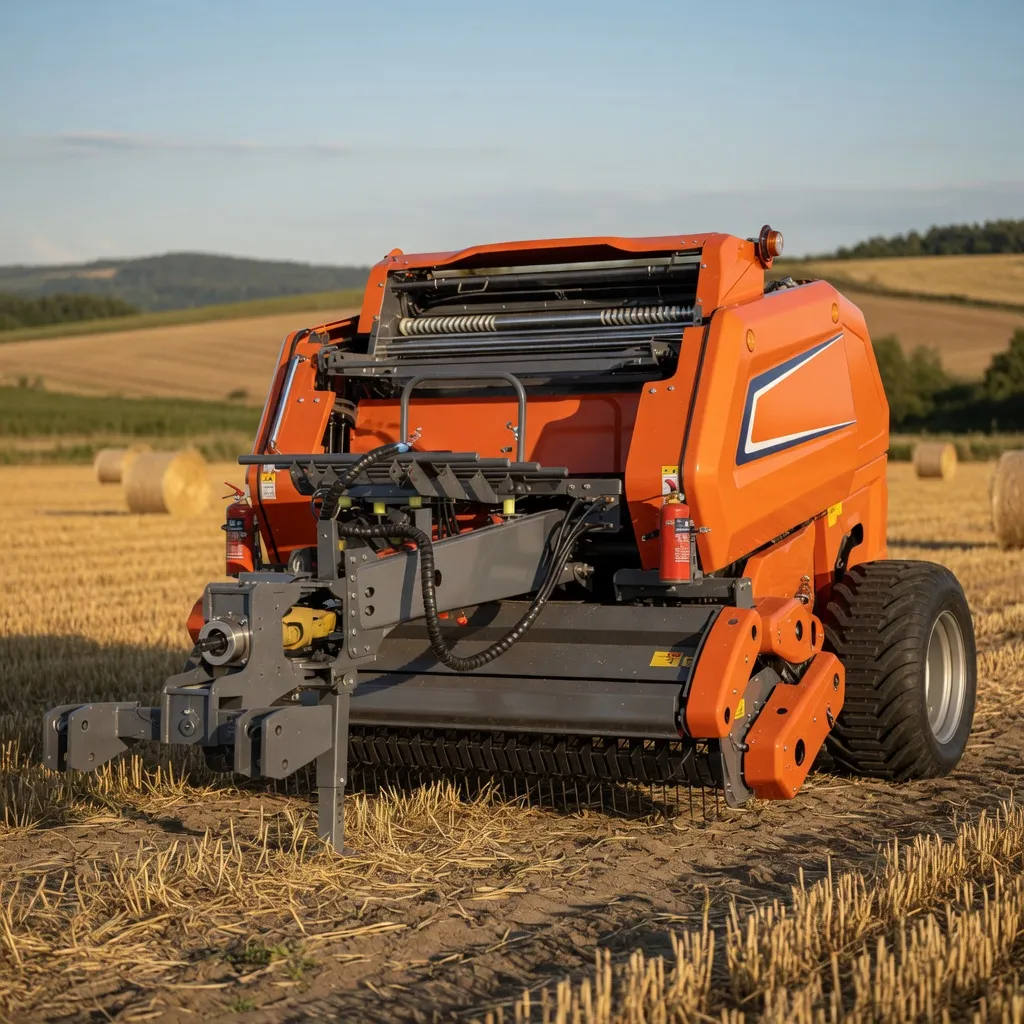
9YG-1.25A round baler for dairy farm silage production

그만큼 9YG-1.25A 원형 압축기 — a high-performance 1.25m silage baler suited to the harvest volume and tractor requirements of Australian small dairy operations

Scale Thresholds: Where Each System Makes Most Sense

The Volume Range Where the Economics Shift Between Systems

The economic and practical balance between the two systems shifts at different production volumes. Below approximately 150 tonnes DM per season, the round baler system is clearly more cost-effective — the capital cost advantage is decisive and the operational simplicity suits the scale. The ag bagger’s per-tonne-DM consumable cost advantage cannot offset the higher system entry cost at low volumes. Between 150 and 400 tonnes DM per season, both systems are competitive and the choice should be made primarily on operational fit — labour availability, farm layout, feed-out system, and willingness to invest in the coordinated harvest logistics the bagger requires.

Above 400 tonnes DM per season, the ag bagger begins to show genuine economic advantage if the farm has the labour and input supply chain to operate it efficiently — the density advantage and consumable cost efficiency compound at scale, and the throughput per hour of bagging exceeds what the baler system can achieve in the same timeframe. At this volume, the round baler system may also struggle with the physical bale handling logistics — managing 1,000+ individual bales per season involves significant loader time in bale transport and stacking that the bag system avoids.

<150 t DM

Round Baler Clearly Better

Capital advantage decisive. Ag bagger consumable saving cannot offset higher entry cost at this volume.

150–400 t DM

Decision Based on Operational Fit

Both systems competitive. Labour availability, feed-out system, and farm layout determine the better choice.

>400 t DM

Ag Bagger Gains Advantage

Density efficiency and consumable cost savings compound at scale. Baler system bale handling logistics become burdensome.

Which System Is Right for Your Small Dairy?

A Practical Decision Framework for the Australian Small Dairy Context

✅ Choose Round Baler If:

  • Producing under 300 tonnes DM/season
  • Operating with 1–2 person crew (harvest competing with milking)
  • Milking 80–180 cows (2–4 bales/day feed rate)
  • No precision-chop input supply chain available
  • Prefer portability for drought contingency or surplus sales
  • Want to start and stop harvest without quality penalty
  • Lower upfront capital is a priority

✅ Consider Ag Bagger If:

  • Producing 300–500+ tonnes DM/season
  • Have reliable precision-chop input supply
  • Milking 200–300+ cows (daily TMR feeding system)
  • Have 3–4 person harvest crew available
  • TMR feeding where chopped silage mixes better
  • Storage site allows a level, clear bag pad
  • Density and DM preservation are the top priority

Why Ever-Power Round Balers Are the Right Choice for Most Small Dairy Farms

The Baler System That Fits the Operational Reality of Australian Small Dairies

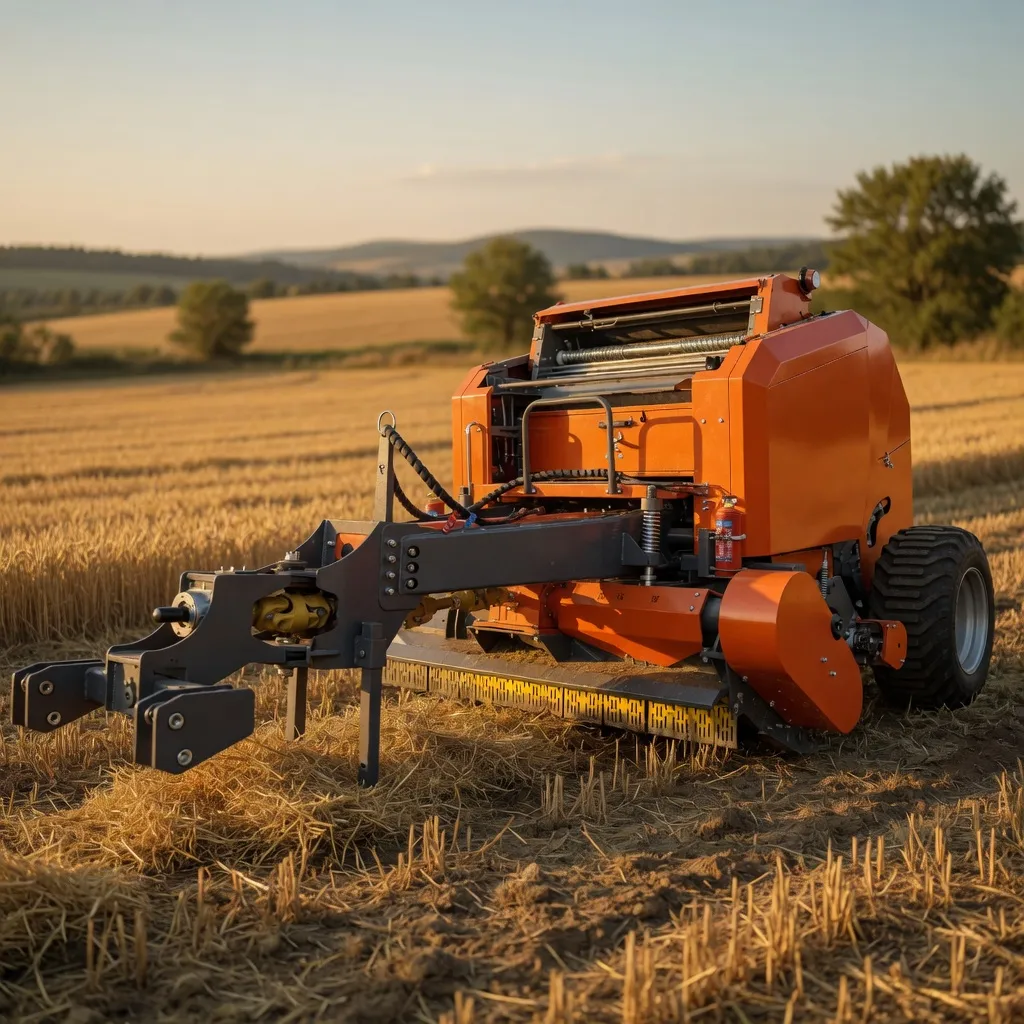
Ever-Power Forage Balers engineering and manufacturing quality

호주 Ever-power 사료 베일러 — the silage baler range that matches the scale, labour profile, and operational flexibility requirements of Australian small dairy farms

The majority of Australian small dairy farms — milking 80–250 cows, producing 100–350 tonnes DM of silage per season, operating with 1–2 family members as the regular harvest crew — are better suited to the round baler system than to the ag bagger, primarily because of its operational simplicity, flexibility, and lower total system cost. Ever-power’s silage baler range is calibrated for exactly this scale: the 1.25m and 1.25A models deliver the density and quality performance of a commercial silage baler within the tractor HP and operational constraints of a typical Australian small dairy setup. The sealed bearing specification and silage-rated belt compound ensure reliability through multiple cuttings per season without the intensive maintenance demands that wear the operator down during what is already a demanding harvest period. For a 사일리지 베일러 판매합니다 matched to your dairy operation, the 찰튼 팀 provides personalised recommendations.

Choosing Your Small Dairy Silage System?

Get Advice Matched to Your Farm Scale

Charlton Industrial Area, Australia — silage system advice for small dairy farms, matched to herd size, annual volume, and harvest crew availability.

저희 팀에 문의하세요 →


9YG-1.25 Round Baler for small dairy farm silage

추천 상품

9YG-1.25형 원형 베일러

For small dairy farms in the 80–200 cow range producing 100–300 tonnes DM per season, the 9YG-1.25형 원형 베일러 is the most broadly appropriate silage baler in the Ever-power range. It operates reliably with the 70–90 HP tractors common on Australian small dairies, produces 1.25m bales at 2–4 bales per day feed-out rate for herds in this size range, and can be operated by a single person during the harvest window.

Its sealed bearing specification resists the plant juice contamination that makes silage baling harder on bearings than hay, and its silage-rated belt compound maintains reliable bale formation across the full moisture range encountered in Australian small dairy silage production — from well-wilted early afternoon sessions to the slightly wetter conditions of morning baling after overnight dew. The 9YG-1.25 gives small dairy farms the round baler quality and reliability that makes the bale silage system the right choice at this scale.

9YG-1.25 상세 정보 보기 →

자주 묻는 질문

Common Questions from Small Dairy Farms on the Baler vs Bagger Decision

1. Can I use an ag bagger without a precision-chop wagon?+
Yes — some ag baggers are designed to process whole-crop (unchopped) silage material directly, without a precision-chop wagon input. Whole-crop bagging produces a lower density than chopped material (because unchopped stems don’t pack as tightly under the rotor pressure) and a less uniform fermentation (because whole stems have limited surface area for microbial activity). However, for farms that mow and wilt to target moisture and then run whole-crop material through a whole-crop bagger, the system can work at above-bale-silage density and with adequate fermentation quality for most livestock applications. The key is to use a bagger designed for whole-crop input rather than trying to force long-stem material through a machine optimised for chopped input.
2. How long does an ag bag last in Australian UV conditions?+
Standard ag tube bags are formulated with UV stabiliser packages typically rated for 12–18 months of outdoor storage in Australian conditions. Beyond this period, the UV-exposed top surface of the bag begins to degrade, becoming brittle and developing small cracks that eventually penetrate through the film — creating oxygen infiltration pathways that cause top-surface spoilage. For small dairy farms feeding continuously throughout the year, the bag is usually fully consumed within 12 months — within the UV rating. For farms with seasonal feeding patterns where bags might sit in paddocks for 18–24 months, UV degradation becomes a genuine concern and additional shade protection (shadecloth over the bags) significantly extends effective storage life.
3. Can I sell or transport silage from ag bags the way I can with bales?+
No — this is one of the most significant practical limitations of the ag bag system compared to wrapped bale silage. Once the material is in the bag and fermented, it can only be removed by opening the bag at the feed-out end. The bag itself cannot be transported to another location intact, and the contents cannot be economically repackaged for sale as a product. Wrapped bale silage is a genuinely portable, tradable commodity — each bale is a complete unit that can be loaded, transported, and sold. For small dairy farms in regions where drought contingency planning involves purchasing or selling silage as needed, this portability difference makes the round baler system a significantly better fit for the business flexibility that Australian conditions demand.
4. My neighbour’s ag bags always seem to heat at the face. Is this a system problem?+
Face heating in ag bags is almost always a face management problem rather than a fundamental system problem. The usual causes are: removing too little silage per day (leaving a large exposed face area that re-heats overnight before it’s consumed), not removing silage cleanly to the face (leaving loose material that heats on the exposed surface), or feeding too slowly relative to the consumption rate such that the exposed face sits for more than 24 hours between removals. The solution is to ensure the daily removal rate matches at least 15–20 cm face progression per day, to keep the face clean and vertical, and to feed from the bag end promptly — not to let removal get behind the fermentation-complete material that advances through the bag. Face heating is manageable with correct technique but requires daily attention that round bale feed-out doesn’t demand.
5. What tractor HP does the ag bagger require compared to the round baler?+
An ag bagger typically requires 80–120 HP at the PTO to drive the rotor compaction system at the correct operating speed, which overlaps significantly with the tractor HP already required for a commercial round baler. A small dairy farm already operating a 90–100 HP tractor for baling would have adequate PTO output for most farm-scale ag baggers. However, the same tractor cannot simultaneously run the bagger and perform other harvest tasks — in a bale system, the baler tractor is the only dedicated machine needed. In a bagger system, the tractor attached to the bagger is dedicated to the bagger while the bagging is underway, meaning other tasks (raking, transport) require additional equipment or must be scheduled around the bagging operation. This is a practical logistics consideration for small farms with limited tractor fleet size.

호주 Ever-power 사료 베일러

호주 에버파워 사료 베일러 주식회사

📍 호주 찰튼 산업 지역

✉️ [email protected]