
Wild-Harvested Roughage from Wetlands, Riverbanks, and Lake Margins
How pastoral communities in Xinjiang, Central Asia, and Eastern Europe turn Phragmites reed into baled winter cattle and camel feed — harvest season, quality variation, and equipment choices for wild-stand baling.
Common Reed as a Roughage Resource: Scale and Significance
Common reed (Phragmites australis) is the most widely distributed flowering plant on Earth, occupying wetland margins, irrigation canal banks, lake shores, and seasonally flooded lowlands across every continent except Antarctica. It is not a cultivated crop — it is a wild-growing perennial that requires no planting, no fertilisation, and no irrigation, producing 5 to 15 tonnes of dry matter per hectare per year from natural stands in productive wetland environments. In the pastoral regions of Xinjiang, Inner Mongolia, Kazakhstan, Uzbekistan, and the Danube Delta of Romania and Ukraine, reed stands of thousands of hectares are harvested annually as a zero-cost roughage crop, requiring only the labour and equipment to cut, dry, and bale the material.
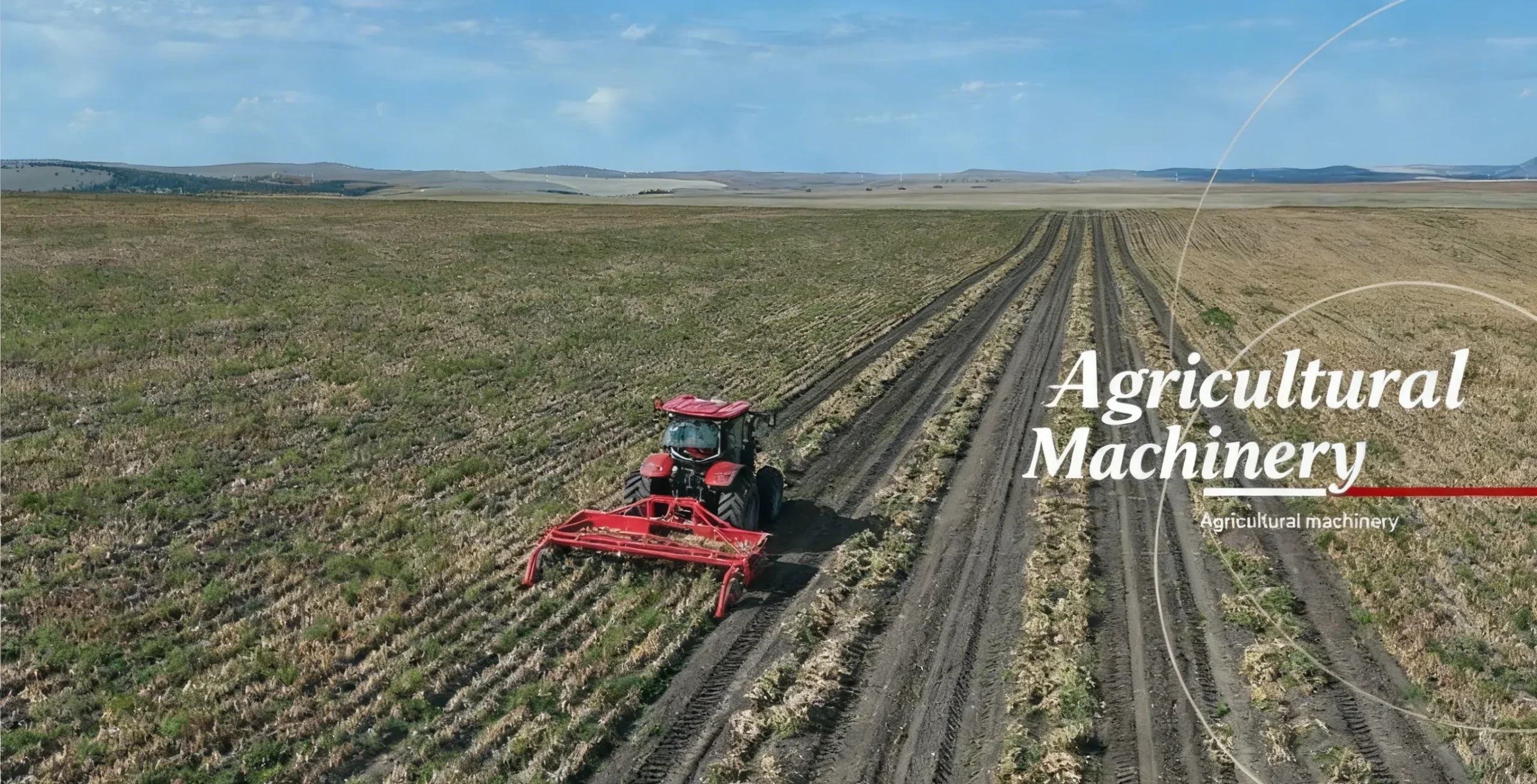
Reed baling is not a modern innovation — it has been practised in pastoral Central Asia for decades as the primary method for converting abundant wetland biomass into a transportable and storable winter feed reserve for cattle, sheep, goats, and camels. What has changed is the mechanisation of the process: where reed was previously cut by hand with scythes and stacked manually, tractor-mounted disc mowers and round balers have made it possible to harvest and bale 10 to 50 hectares of reed stand per day, transforming a labour-intensive subsistence practice into a commercially viable roughage production operation. In Xinjiang’s Tarim Basin and the reed-fringed shores of Bosten Lake — China’s largest inland freshwater lake — commercial reed baling operations produce millions of bales annually for trade across the region’s cattle and sheep farming communities.
This guide covers the specific management considerations for reed baling: the seasonal harvest window that determines both quality and access, the drying requirements for material that is nutritionally poor but structurally dense, equipment choices for the challenging terrain of wetland margins, and the feeding applications that make baled reed a viable roughage option despite its low nutritional specification. For context on how reed baling fits within the broader range of dry hay baling operations, our complete guide on best forage balers for dry hay production covers equipment selection principles applicable to wild-stand harvesting.
Nutritional Profile and Realistic Expectations
| Harvest Timing | Crude Protein (DM) | NDF | TDN | Best Use |
|---|---|---|---|---|
| Pre-heading (July–Aug) | 8–12% | 55–65% | 50–58% | Moderate roughage — cattle, sheep |
| Post-heading (Sept–Oct) ✓ | 5–8% | 65–72% | 44–52% | Standard roughage — cattle, camels |
| Late season (Nov–Dec) | 3–6% | 70–78% | 40–48% | Winter emergency feed only |
| Overwintered (Feb–Mar) | 2–4% | 75–82% | 35–44% | Very low value |
Reed is a structural roughage with limited nutritional density. Its value in pastoral livestock systems is not as a nutritious feed but as a fill roughage — a bulky, fibrous material that maintains rumen function, prevents hay belly from nutritional deficiency, and keeps animals from losing excessive condition during periods when higher-quality feeds are unavailable or unaffordable. Camels, being the most fibre-efficient ruminant, utilise reed roughage more effectively than cattle or sheep; they can maintain body condition on reed at inclusion rates that would cause significant body weight loss in cattle.
Reed vs. Other Low-Quality Roughages
Comparing reed to wheat straw and rice straw — the other low-quality roughages it competes with in Xinjiang and Central Asian markets — reed cut at the post-heading stage (September to October) typically has 1 to 3 percentage points higher crude protein than wheat straw from the same season, and comparable NDF and TDN. Its advantage over straw is abundance and cost: reed is a wild crop with no production cost beyond harvesting, while wheat and rice straw require purchasing from grain farmers at market prices. In pastoral regions where grain production is limited, reed is often the only local roughage available at any price during winter months.
The Harvest Season: Why Autumn is the Only Practical Window
Accessibility and Frost — The Two Controlling Factors
Reed stands grow in wetland margins and seasonally flooded areas that are inaccessible to wheeled machinery from spring melt through to late summer due to saturated or flooded ground conditions. In Xinjiang’s Tarim Basin and Bosten Lake margins, the ground around reed stands becomes accessible to tractors and round balers typically from late September through December — after the summer flood period has receded and before deep winter frost makes the ground impassable again. This 8 to 12 week autumn window is the only practical mechanical harvest period for most reed baling operations.
Within this window, the optimal harvest is September to early October: reed at this stage is at full height (2.0 to 3.5 m), seed heads have matured and the material is drying naturally, moisture content is falling from 55 to 65% at full maturity toward 20 to 30% by mid-October. Waiting until November produces drier, easier-to-bale material but at the cost of 2 to 4 percentage points of crude protein as the leaf fraction deteriorates further from autumn frosts and wind-driven defoliation.
A heavy-duty disc mower rated for tall, dense material is needed for established reed stands — standard hay mowers with thin blades will suffer accelerated blade wear or fracture in dense multi-year reed. Cut at 10 to 15 cm stubble height to protect the rhizome and maintain the stand for subsequent seasons.
Reed at September cutting carries 35 to 55% moisture depending on wetland water table proximity. In Xinjiang’s dry autumn conditions (30 to 40% relative humidity, 15 to 22°C), reed dries from 45% to below 18% in 3 to 5 days in the windrow without any active management. Turn the windrow once at 36 to 48 hours if moisture above 25% is expected to persist beyond day 4.
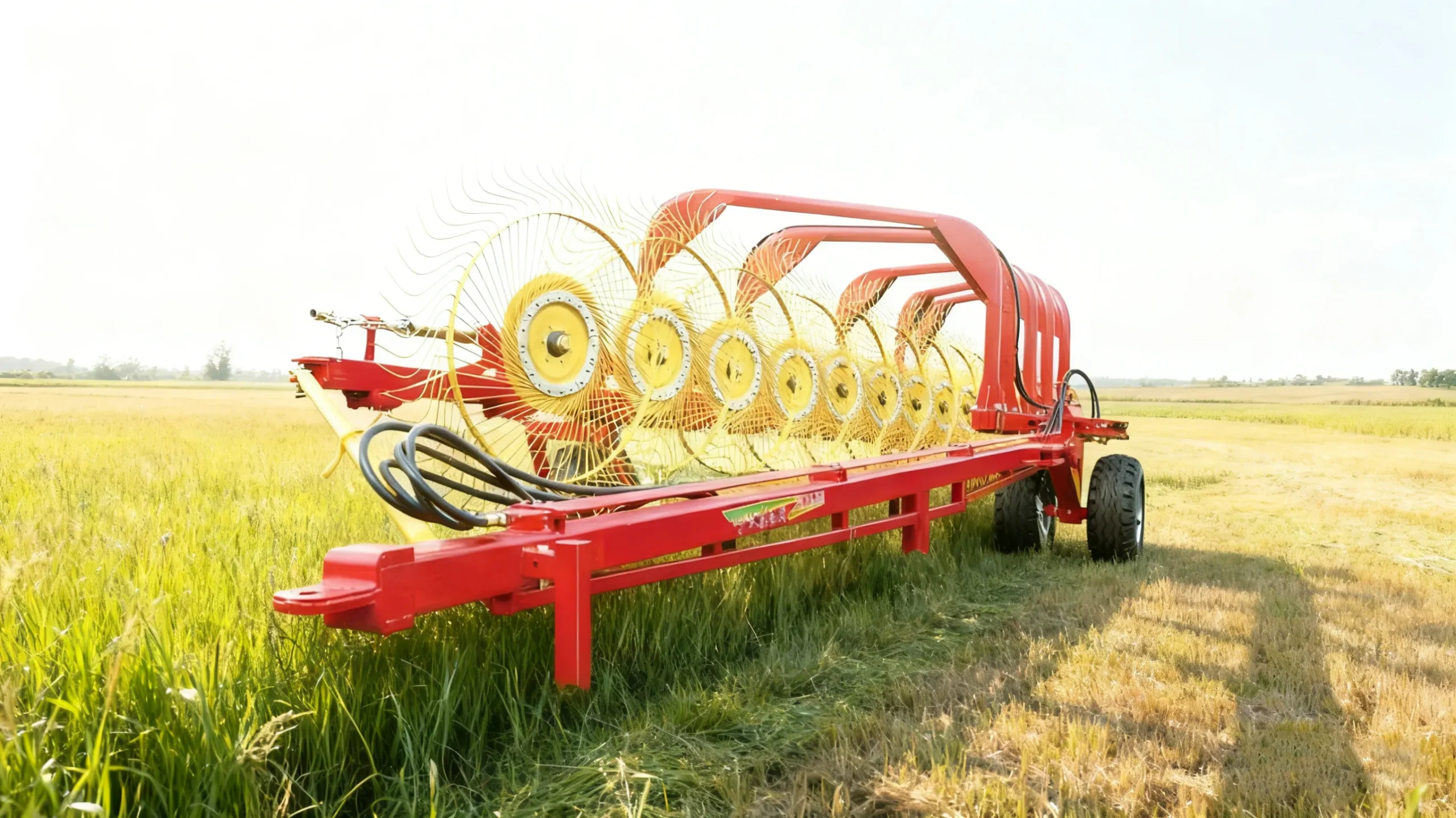
Reed stems are rigid and do not consolidate naturally as they dry. A single rake pass to form a tight baling windrow is needed for efficient baler pickup. Use a finger-wheel rake rather than a rotary rake — the rigid reed stems can damage rotary rake tines at normal operating speeds.
Target baling moisture is 12 to 18%. Reed below 10% becomes excessively brittle and stem breakage during pickup wastes significant material. Above 20%, bale heating in the core is possible, particularly in large-diameter bales where the dense, poorly ventilated centre retains moisture. Use net wrap over twine — reed bales are structurally rigid and tend to maintain shape, but net wrap provides better weathering protection for outdoor-stored bales in the freeze-thaw conditions of Xinjiang winters.
Equipment for Wetland-Margin Operations
Ground Conditions and Tractor Requirements
Reed stand harvesting frequently involves marginal ground conditions — firm but potentially soft or uneven terrain near water margins, reed rhizome mats that create irregular surface textures, and in some operations, transport across shallow seasonal water courses. Wide flotation tyres (or tracked undercarriages for the most challenging sites) reduce the risk of tractor bogging in soft marginal ground. A minimum of 50 hp four-wheel-drive tractor is recommended for cutting operations; the baler tractor can be two-wheel-drive where the baling ground is firm.
For compact operations in tight wetland margins or narrow irrigation canal strips, the 9YG-1.0 round baler produces 0.8 to 1.0 m bales that are manageable without heavy lifting equipment and can be transported on standard farm trailers. For large-scale commercial operations covering 50 to 500 hectares of reed per season, the 9YG-1.25A variable-chamber round baler provides higher throughput and produces a bale size (250 to 350 kg) that is economically efficient for transport over the longer distances typical of commercial reed roughage distribution in Xinjiang.
Wear Considerations for Reed Baling
Reed stems are hard and slightly abrasive compared to grass hay crops — not at the silica-damage level of corn stover, but meaningfully more wear-inducing than ryegrass or wheat straw. Pickup tine wear is the primary maintenance concern: expect tine replacement at 60 to 70% of the interval typical for grass hay baling in the same machine. Check and replace worn tines before each season’s reed harvest rather than mid-harvest, as tine failure in dense reed can cause chamber plugging and bale ejection failures in difficult terrain.
Feeding Reed to Cattle, Sheep, and Camels
Reed is most successfully fed to cattle and sheep as a supplementary roughage — not as a sole feed — at inclusion rates of 30 to 50% of total dry matter intake, alongside a higher-quality energy or protein source. For cattle maintained through winter on minimal body condition loss, a ration of 60% reed roughage + 40% corn grain or oilseed cake concentrate supports an acceptable nutritional baseline. For sheep in late pregnancy or early lactation, reduce reed to no more than 30% of DMI and supplement with alfalfa or peanut vine roughage to meet protein requirements.
Camels utilise reed most effectively of any ruminant species. Their efficient hindgut fermentation of high-NDF material allows maintenance-level nutrition from 70 to 80% reed roughage in the ration — a feeding regime that is simply not possible for cattle or sheep on the same material. For commercial camel operations in Xinjiang and Kazakhstan, baled reed is the primary winter roughage and the feeding rate is typically 8 to 12 kg DM per camel per day from December through March.
자주 묻는 질문

Discuss Your Reed Baling Operation
Tell us your stand area, accessible season, and available tractor — we’ll help specify the right baler for your wetland roughage harvesting programme.