Grass Clippings, Fallen Leaves, Pruned Branches — the Waste Stream That Balers Can Process
How European and North American cities cut landfill costs by baling mixed green waste for composting and biogas — logistics, contamination control, and the gate-price economics that make it work.
Urban Green Waste: Scale, Cost, and the Baling Solution
Municipal green waste — grass clippings from parks and roadside verges, fallen leaves from street trees, lightly pruned branches from urban arborist operations, and turf divots from sports fields — is the fastest-growing non-recyclable waste stream in developed-country cities. London generates approximately 300,000 tonnes per year from municipal sources alone. EU member states collectively produce 35 to 50 million tonnes of municipal green waste annually, of which 60 to 70% still goes to landfill or incineration despite Waste Framework Directive targets.
Landfill gate fees in England reached £110 to £130 per tonne in 2024 (landfill tax £103/tonne plus gate fee). For a medium-sized UK local authority managing 15,000 tonnes of green waste per year, annual landfill cost approaches £1.5 to £2 million. Commercial composting at £25 to £50 per tonne and biogas at £10 to £30 per tonne offer substantial savings — but only if green waste reaches those facilities economically. Without baling, loose green waste transported more than 30 to 50 km frequently costs more per tonne in transport than the processing facility saves over landfill. Baling compresses material to 30 to 50% of its loose volume, flipping this transport equation. Our article on silage baler cost per bale covers the cost framework applicable to green waste baling economics.

Green Waste Types and Baling Suitability
| 材料 | 水分 | Baling Suitability | Best End Market | キー制約 |
|---|---|---|---|---|
| Fresh grass clippings | 75–85% | Poor — too wet as dry bale | Biogas (baleage+film) | Needs wilting or film wrapping |
| Grass clippings (wilted 48h) | 45–65% | Silage baleage ✓ | Biogas, compost | LAB inoculant + 6-layer film |
| Autumn leaves (fresh fall) | 45–65% | Good — dry bale | Compost feedstock | Variable density |
| Autumn leaves (air-dried) | 15–30% | 素晴らしい | Compost, biomass | Low density — poor transport economics |
| Mixed prunings <50mm | 20–35% | Good after shredding | Biomass, compost | Pre-shred required |
| Mixed green waste | 35–65% | 変数 | Composting | Contamination screening needed |
Grass Clippings: The Volume Leader and the Moisture Problem
Grass clippings are the largest component by volume but the most difficult to dry-bale at 75 to 85% fresh moisture. Two practical pathways exist: allow 48 hours of wilting on a hard surface then bale with silage film as grass baleage for biogas delivery, or deliver directly to an anaerobic digestion facility without baling where volume justifies direct-haul transport economics. On-site baleage at large facilities (sports complexes, university campuses, golf courses) produces a storable intermediate product for weekly rather than daily biogas deliveries.
Autumn Leaves: The Easiest Urban Biomass to Bale
Fallen leaves dry rapidly — from 50 to 60% at fall to 20 to 30% after 5 to 7 days on the ground in autumn conditions. They can be dry-baled for composting delivery at 18 to 25% moisture with no film wrapping required. The primary challenge is very low bulk density: a leaf bale at 25% moisture can weigh only 100 to 150 kg versus 250 to 350 kg for an equivalent grass bale, reducing transport efficiency per bale.
Municipal Operations: Two Models
On-Site Baling at Large Parks and Complexes
Large municipal parks (50+ hectares), sports complexes with multiple grass pitches, and golf courses generate sufficient green waste volume to justify dedicated on-site baling equipment. A single parks department baler processing 20 to 50 tonnes per week during peak growth season reduces collection truck trips from daily to weekly and creates a storable bale inventory for flexible scheduling with composting or biogas facilities.
Contractor Baling Services for Smaller Municipalities
Most smaller cities cannot justify a dedicated green waste baler. Regional contractors who provide mobile baling services — driving a baler tractor-unit to each municipal site on a scheduled rotation — are the standard model in the UK, Netherlands, and Germany. Several such contractors serve 15 to 30 municipal clients on weekly or fortnightly schedules, producing economies of scale that single-facility ownership cannot achieve.
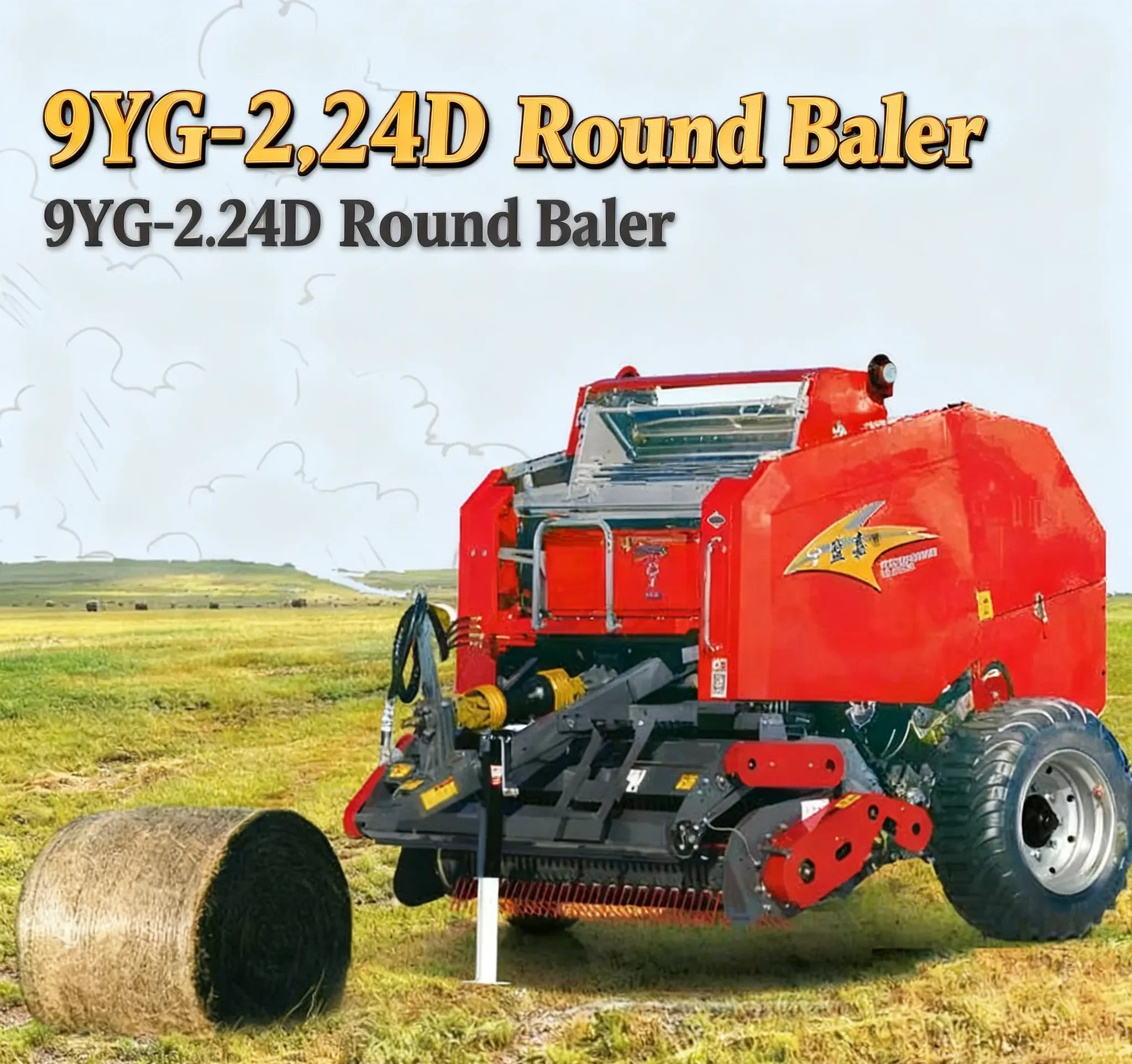
その 9YG-1.25A 可変チャンバー式丸型ベーラー handles the variable moisture and density of mixed municipal green waste. Pair with the 9YCM-850 結束フィルム包装機 for any grass clipping baleage component baled above 40% moisture for biogas delivery.
よくある間違いとよくある質問
The single biggest quality problem in municipal green waste baling. Composting and biogas facilities specify zero plastic contamination — a single plastic bag in a bale can trigger rejection of an entire load. Screen windrows visually before baling, or use a trommel screen prior to forming baling windrows.
Fresh urban pruning chip at 45 to 65% moisture baled and film-sealed produces anaerobic conditions but does not ferment reliably — wood chip’s high lignin content makes it a poor silage substrate. Direct delivery to biomass processors or composting without baling is better for coarse woody material; baling is most justified for leaf and grass fractions.
Municipal parks grass baled for biogas use must be assessed for dog faeces contamination before any feed application. Biogas facilities accept parks grass for anaerobic digestion (the process destroys pathogens) without restriction. Any animal feed application requires assessment under food safety regulations — label parks grass bales clearly and separately from sports pitch grass.
Discuss Your Green Waste Baling Programme
Tell us your waste stream composition, monthly volume, and target outlet — we’ll specify the right baler and wrapper for your municipal green waste operation.