40 Tonnes Per Hectare, Zero Dry Season — Napier Grass Baleage Solves Tropical Feed Security
Harvest timing, the thick-stem moisture problem, chopping before baling, fermentation management in 30°C+ conditions, and why smallholder dairy across Africa and Southeast Asia depends on this crop.
Napier Grass: The Tropical Forage That Changes the Feed Security Equation
Napier-gras (Pennisetum purpureum), also called elephant grass, is the highest-yielding perennial forage crop grown in the tropics. Under good rainfall, irrigation, and nitrogen fertilisation in Kenya, Uganda, Nigeria, Thailand, Vietnam, and southern China’s Yunnan and Guangdong provinces, established Napier grass stands produce 30 to 60 tonnes of fresh matter per hectare per year — more biomass per unit land area than any other commonly cultivated forage species. It regrows from the crown after each cut, produces ratoon harvests every 6 to 8 weeks, and persists productively for 5 to 10 years without replanting.
The challenge that limits Napier grass to fresh-cut feeding on most African and Southeast Asian smallholder farms is its moisture content at cutting: 78 to 85% at the optimal 4 to 6 week cutting stage. Sun-drying Napier grass to below 20% moisture for hay production requires 5 to 8 days of intense tropical sunshine with no rainfall — a weather window that occurs reliably only in the peak dry season, which is exactly when there is no shortage of standing grass and no urgency to make hay. During the rains — when biomass production peaks, feed supply is abundant, and the surplus should be stored — hay-making is impractical.
Baleage solves this directly. Napier grass at 55 to 68% moisture after 24 to 36 hours of wilting can be baled and wrapped with silage stretch film, producing fermented silage that stores for 6 to 12 months at ambient tropical temperatures. The dry season feed gap — the most costly single production constraint for smallholder dairy in sub-Saharan Africa and the wet tropics of Southeast Asia — is eliminated by making Napier baleage in the surplus season and feeding it when nothing else is available. Our guide on Napier grass baleage harvest timing and fermentation provides detailed tropical climate management guidance for smallholder operations.
Why Napier Grass Is Harder to Bale Than Temperate Grasses
The Thick Stem Problem
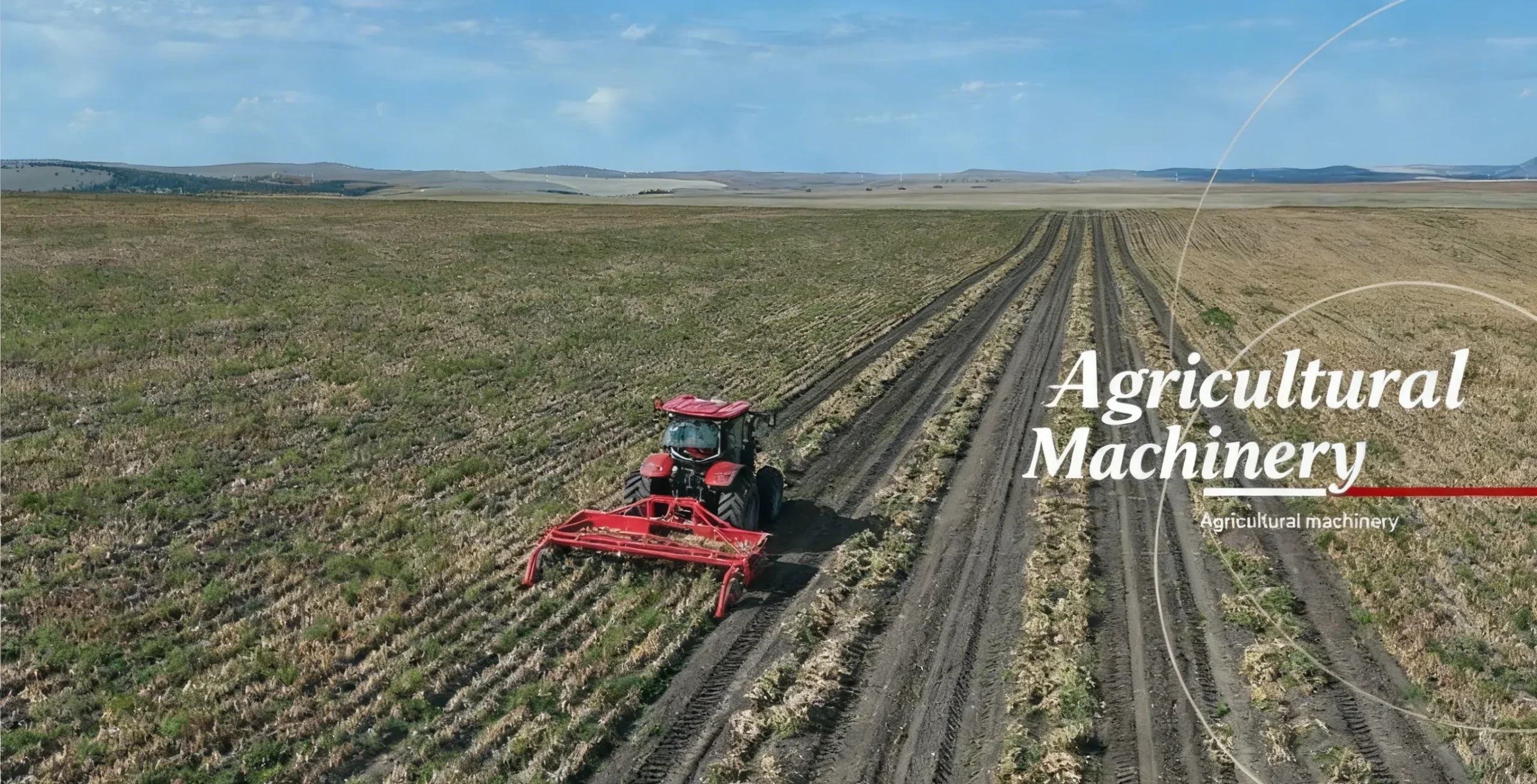
Napier grass at the 4 to 6 week cutting stage carries stems of 15 to 30 mm diameter and plant heights of 1.5 to 2.5 m. These dimensions are fundamentally incompatible with a standard round baler pickup — the thick, fibrous stems lie in dense, tangled mats that resist pickup tine penetration and jam in the bale chamber at high forward speeds. The traditional management on Napier grass farms that have attempted direct baling is plugged chambers, broken tines, and highly variable bale density that results in incomplete anaerobic conditions and unreliable fermentation.
The solution that has been successfully adopted by commercial Napier grass silage operations in Kenya (particularly in the Central Highlands around Nakuru and Nyeri), in Vietnam’s Mekong Delta, and in China’s Guangdong and Fujian provinces is pre-chopping before baling: running the harvested Napier grass through a forage chopper or silage chopper to reduce particle size to 30 to 60 mm before the chopped material is formed into bales. Chopped Napier grass at 30 to 50 mm particle length is easily handled by standard round baler pickups, achieves consistent bale density (160 to 200 kg DM/m³), and ferments more reliably because the chopping action releases plant cell sap and distributes LAB inoculant evenly through the mass.
| Method | Afhaalgeskiktheid | Baaldigtheid | Ferment Quality | Recommended? |
|---|---|---|---|---|
| Direct baling (whole stems) | Poor — frequent plugging | Low, variable | Unreliable | ❌ Not recommended |
| Pre-chopped 30–60 mm | Uitstekend | Good, consistent | Reliable with inoculant | ✓ Standard method |
| Pre-chopped 10–20 mm | Goed | Hoog | Good but loses structure | ✓ For TMR operations |
High Moisture at Cutting — The Fermentation Risk
Fresh Napier grass at 78 to 85% moisture is too wet to bale reliably even after chopping. At this moisture level, the WSC-to-buffering-capacity ratio is below 1.0, and without a 12 to 24 hour wilt period, clostridial fermentation is the most likely outcome regardless of inoculant use. In tropical conditions (28 to 35°C, 70 to 90% relative humidity), wilting Napier grass below 65% moisture within a 24 to 36 hour window requires active management — cutting into thin swathes on cleared ground with good solar exposure and raking or turning once at 12 hours.
Harvest Stage, Wilting, and Pre-Chopping Protocol
Cutting at 4 to 8 Weeks: The Feed Quality Window
Napier grass cut at 4 to 5 weeks after the previous cutting produces the most nutritious silage. At this stage, crude protein runs 10 to 14% DM, NDF is 55 to 65%, and the plant is predominantly leaf material with relatively thin stems. By 7 to 8 weeks, the stem dominates, crude protein drops to 6 to 9%, and NDF rises to 68 to 75% as the lignin fraction of the stem increases. For dairy-focused operations where milk production rather than biomass volume is the goal, the 4 to 6 week cutting interval delivers 2 to 3 times the nutritional value per tonne of silage compared to 8 to 10 week cuts — even though yield per cut is lower.
For beef cattle or smallholder mixed livestock operations where feed volume is more important than quality, the 7 to 9 week cutting interval maximises biomass yield and reduces the number of harvests per year, lowering labour cost per tonne of silage produced.
Cut to a stubble height of 10 to 15 cm above soil — high enough to protect the crown growth points that drive regrowth rate, low enough to capture the majority of the edible biomass. Cutting lower than 8 cm delays regrowth by 7 to 14 days and is not compensated by the marginal additional biomass from the basal stem.
Feed the cut Napier through a forage chopper before forming the material into windrows for wilting. Chopping before wilting (rather than after) exposes the internal stem sap to evaporation, accelerating the moisture drop significantly. A simple PTO-driven stationary chopper (widely available in smallholder equipment markets in East Africa and Southeast Asia) is adequate for operations up to 2 to 3 ha per harvest.
Spread the chopped Napier no deeper than 20 to 25 cm on firm, dry ground (a concrete pad, compacted red-earth yard, or tarpaulin on bare ground). Turn once at 10 to 14 hours to invert the lower layer. Target baling moisture: 58 to 68%. In hot, low-humidity tropical dry-season conditions, this is achievable in 18 to 22 hours. In wet-season conditions, 28 to 36 hours may be needed.
Gather the wilted chopped material into windrows 60 to 80 cm wide. Apply homofermentative LAB inoculant at the baler pickup. Form bales immediately — do not leave raked windrows exposed overnight in humid conditions. Wrap within 2 hours of baling.

Fermentation in Tropical Conditions: Managing the Heat
Temperature and Its Effect on Fermentation Rate
Tropical ambient temperatures (28 to 38°C) accelerate all microbial processes — both the beneficial lactic acid fermentation and the harmful clostridial and aerobic spoilage pathways. In temperate conditions (12 to 20°C), ryegrass silage takes 14 to 21 days to reach stable pH; in tropical conditions, the same material would stabilise in 7 to 12 days. For Napier baleage, the accelerated fermentation rate is mostly advantageous — pH drops faster and the clostridial window is shorter — but the risk is that initial aerobic heating in the unsealed bale or at the bale surface reaches temperatures that kill the LAB population before they can acidify the mass.
Two management rules for tropical Napier baleage: first, wrap within 1 hour of baling rather than the 2-hour standard applied in temperate conditions — the surface of a Napier baleage bale at 35°C ambient temperature reaches aerobic deterioration threshold faster than in European conditions. Second, store bales in shade wherever possible. Direct solar radiation on the dark-coloured outer film surface can raise the bale core temperature by 8 to 15°C above ambient, accelerating fermentation gas production and film stress. Shade structures made from tarpaulins or palm leaf roofing are standard storage practice for commercial Napier baleage operations in Kenya and Vietnam.
Film Wrapping Specification for Tropical Storage
Use 6 layers of 25-micron white or silver silage film (not black) for Napier grass baleage stored in tropical ambient temperatures. White or silver film reflects solar radiation and reduces bale core temperature by 6 to 12°C compared to standard green or black film — significantly reducing the risk of film stress failure and internal overheating. Some commercial Napier baleage operators in Vietnam add an outer tarpaulin cover over stacked bales as a secondary heat management measure.
Napier Grass in African and Southeast Asian Smallholder Systems
The smallholder dairy systems of East Africa’s Central and Rift Valley highlands — where 1 to 3 grade dairy cows produce 8 to 18 litres per day for household income — are the primary market context for Napier grass baleage at scale. In Kenya, the government’s dairy development programmes have supported Napier grass planting on millions of smallholder farm plots as a zero-grazing feed crop. The typical East African smallholder dairy farmer cuts Napier grass daily by hand, chops it with a hand chopper, and feeds it fresh to stall-housed cows. Baleage represents an upgrade to this system: instead of daily fresh-cut feeding, surpluses from the long-rain season are made into baleage and fed during the October to January short-dry-season feed gap when fresh grass is insufficient.
In Vietnam’s Mekong Delta and Thailand’s Central Plain, Napier grass baleage serves a similar role for smallholder buffalo and cattle operations, replacing purchased commercial roughage (expensive) or rice straw (low quality) as the primary dry-season roughage source. Vietnamese agricultural extension programmes have actively promoted Napier baleage since 2018, with equipment co-operatives purchasing shared balers and wrappers that service multiple farms during the peak harvest season.
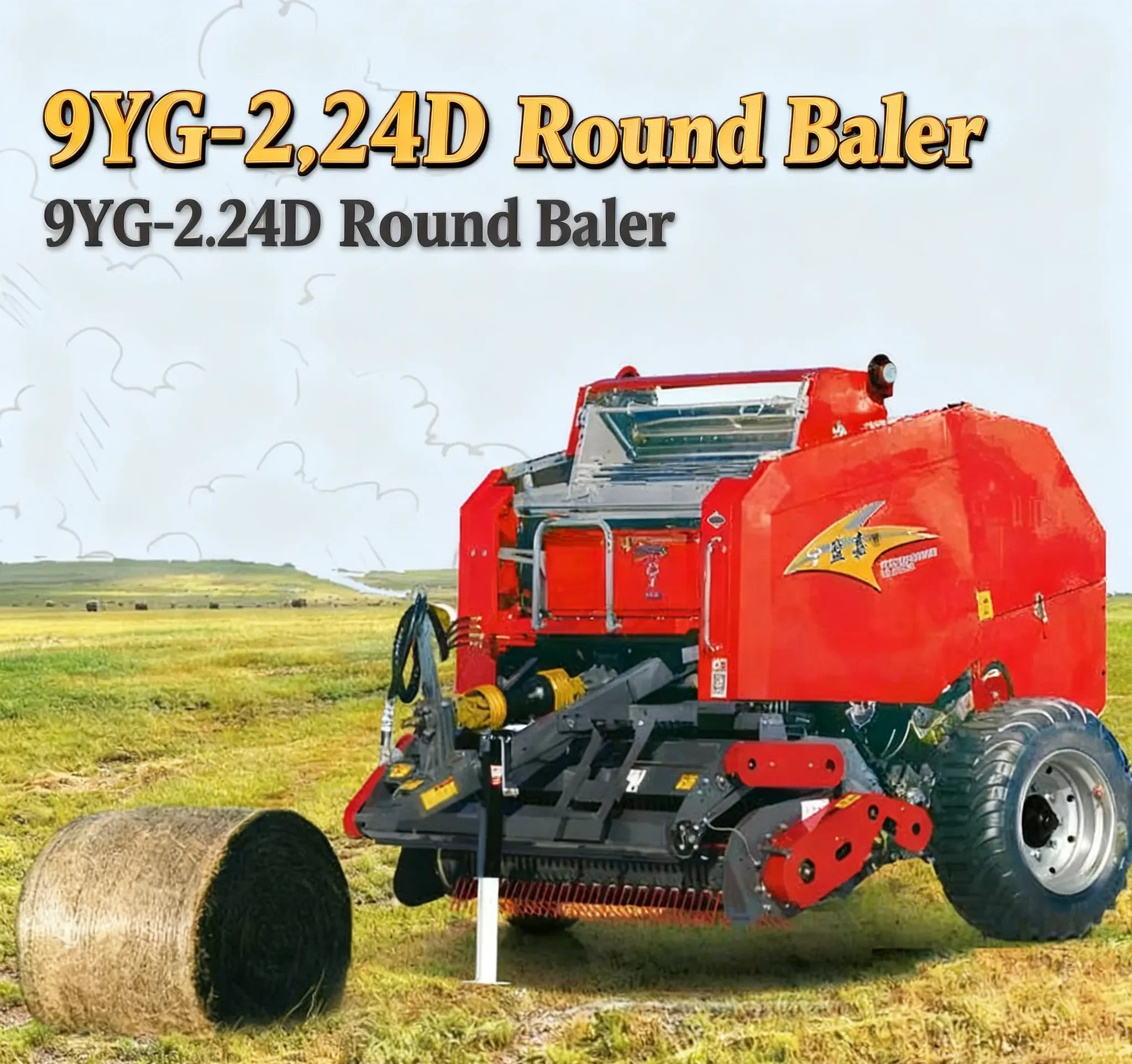
Die 9YG-1.0 ronde baler is the most appropriate machine for smallholder and small cooperative Napier baleage operations — compact enough for transport between farm plots, operable from 35 to 50 hp tractors common in Southeast Asian and East African smallholder systems, and producing bales of 0.8 to 1.0 m diameter that are manageable with simple farm equipment. For larger commercial operations and agricultural cooperatives, the 9YG-1.25A ronde baler met veranderlike kamer provides higher throughput and greater bale density consistency across the variable particle sizes produced by different chopper settings.
Common Mistakes in Napier Grass Baleage
Whole Napier grass stems at 1.5 to 2.5 m length and 20 mm diameter cannot be reliably baled with a standard round baler. The result is jammed chambers, damaged pickup tines, low and uneven bale density, and fermentation failure due to air pockets between intact stems. Always chop to 30 to 60 mm before baling.
Napier grass at fresh-cut moisture (78 to 85%) has a WSC-to-buffering-capacity ratio below 0.8 even with inoculant — reliable lactic acid fermentation is not achievable at this moisture level. The minimum wilt target is 65% moisture; 58 to 62% is optimal. In tropical conditions, this requires 18 to 28 hours of active drying on spread material.
Black or green silage film on Napier baleage bales in direct tropical sun reaches surface temperatures of 55 to 70°C. This heat transfers to the bale interior, killing LAB populations that have not yet completed fermentation and causing film stress cracking that allows oxygen infiltration. Use white or silver film and provide shade storage wherever possible.
Napier grass at 10 to 12 weeks post-cutting has thick, heavily lignified stems with crude protein below 6% and NDF above 78%. The silage produced has so little nutritional value per tonne that it cannot adequately supplement dry-season livestock nutrition even when fed at maximum intake. The 4 to 6 week cutting interval is the correct choice for silage production — higher volume per year with meaningfully better nutritional value per tonne.
Gereelde vrae
Discuss Your Napier Grass Baleage Setup
Tell us your farm area, cutting frequency, and available equipment — we’ll help specify the right baler model and wrapping machine for your tropical silage operation.