
Two Fundamentally Different Preservation Systems
Understanding What Each System Does — and What It Requires
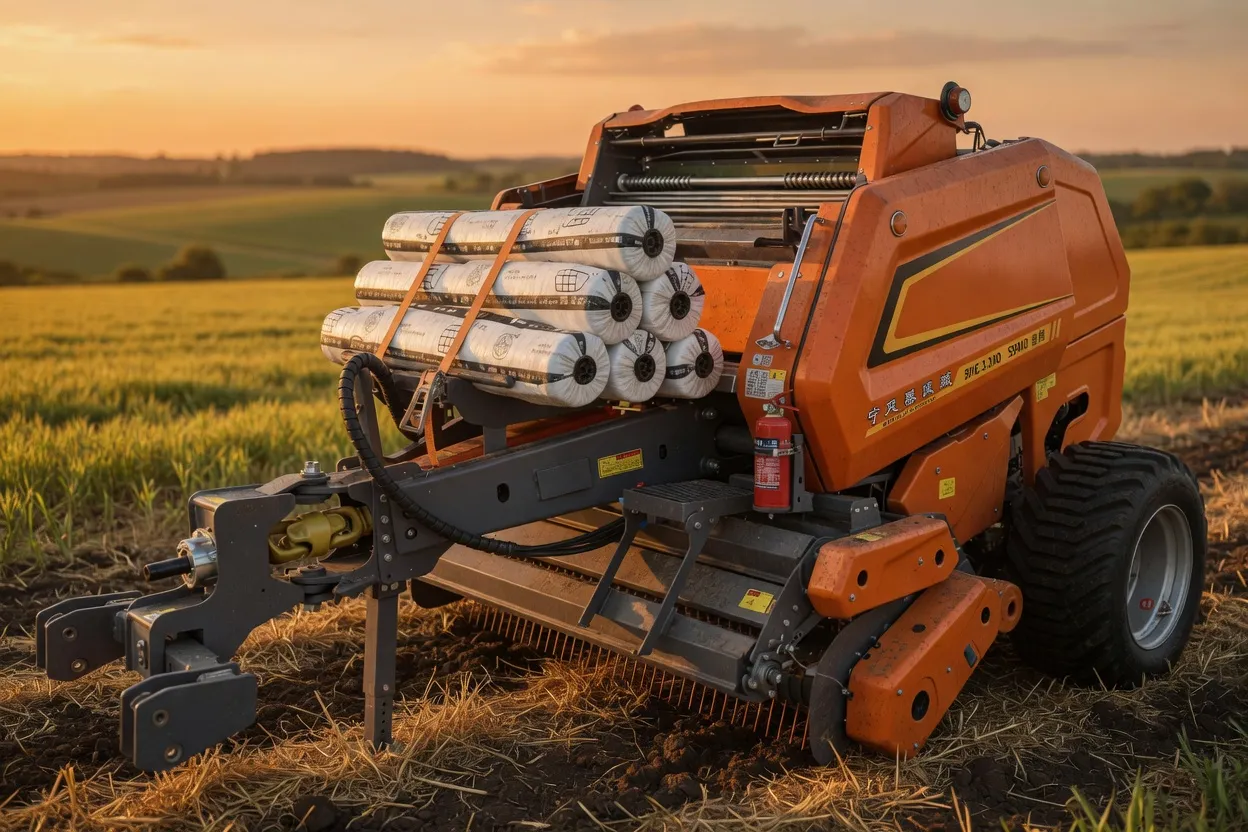
A wrapped bale silage system using a пресс-подборщик силоса produces discrete, portable, individually wrapped bales that are stored above ground and opened one at a time for feed-out. Each bale is a self-contained anaerobic preservation unit, independent of every other bale — a damaged bale affects only that bale, not the rest of the stack. The system requires a round baler (or large square baler), a wrapper, a loader for handling, and a storage site. It produces bales that can be transported, sold, stored in different locations, and managed individually.
A precision-chop silage wagon system collects and chops standing or swathed crop at the point of harvest, transports it directly to a storage structure, and consolidates it into a pit, bunker, or bag where it ferments as a continuous mass. The wagon collects crop from the windrow, chops it to a consistent theoretical length of cut (typically 6–20mm), blows it into a transport vehicle, and the chopped material is then compacted by tractors in the storage structure. There are no individual bales — the entire cutting becomes a single mass of preserved material that must be managed as a unit, with feed-out beginning from one face and progressing through the stored mass.
These two systems produce silage with genuinely different physical and nutritional characteristics, suit different enterprise scales, require different infrastructure investments, and involve different labour and equipment logistics. The decision is not simply about which machine to buy — it is about which preservation system architecture to build your forage management around. Once committed to either system, the infrastructure, equipment, and operational patterns are relatively locked in, so the choice deserves careful analysis.
Silage Quality: Where the Two Systems Genuinely Differ
Feed Quality, Digestibility, and Animal Performance Differences
Precision-chop silage (from a wagon system) has several genuine quality advantages over wrapped bale silage at the feed quality level. The chopping action of the wagon’s knife system cuts plant cells to expose more surface area for fermentation, producing a shorter particle length that is more rapidly accessible to rumen microorganisms. Shorter theoretical length of cut (TLC) is consistently associated with higher in-sacco dry matter degradation rates — a measure of how quickly the silage becomes available to the animal. For high-production dairy cows where feed conversion efficiency is closely monitored, precision-chop silage typically produces better total mixed ration (TMR) results than an equivalent-quality whole-crop wrapped bale silage.
The density achievable in well-managed pit or bunker silage using a wagon system is also higher than bale silage — well-compacted bunker silage at 220–250 kg DM/m³ represents a denser pack than most bale silage formats. Higher density means less oxygen per unit of dry matter, faster anaerobic establishment, and lower fermentation losses. Properly managed bunker silage can achieve dry matter losses of 5–8% total, while wrapped bale silage typically runs at 8–12% total losses when production, wrapping, and storage are all managed to a good standard. For operations where minimising fermentation losses is a genuine economic priority, the bunker/wagon system has a quality and efficiency advantage.
Wrapped bale silage, however, has one significant quality advantage: containment. Each bale is individually sealed — a film puncture or management failure affects that bale only, not the entire batch. A bunker face that is poorly managed, exposed to extended air access, or contaminated by soil or poor compaction produces poor silage across a large volume of the stored batch. The consequence of a management mistake is scaled to the size of the batch in a bunker system; in a bale system, it is scaled to the individual bale. For operations where consistent management quality cannot be guaranteed across the entire storage event, the bale system’s inherent containment advantage is a genuine risk management benefit.
Infrastructure Requirements and Enterprise Scale
What Each System Requires to Operate — Beyond the Harvesting Machine
The infrastructure difference between the two systems is one of the most significant practical distinctions. A wrapped bale silage system requires minimal fixed infrastructure — the bales themselves are the storage unit, they can be stored on any flat, well-drained site without a constructed pad or structure, and the handling equipment (loader with bale spike) is typically already present on Australian beef and dairy farms. The bale system scales in proportion to the harvesting volume — producing more bales requires more baling time, not more storage infrastructure. This scalability makes the bale system appropriate for a wide range of enterprise sizes without proportional fixed infrastructure investment.
The wagon system requires purpose-built storage structures: either a concrete bunker with walls and a compacted base, a concrete pit, or silage bags with an appropriate anchor system. These structures have significant capital costs — a properly engineered bunker for 1,000 tonnes DM has a construction cost well above the capital cost of a complete bale silage system for the same volume. The structures also fix the scale of the system — a bunker built for 1,000 tonnes is inefficient if only 400 tonnes are stored and creates a management problem if 1,500 tonnes need to be stored. The bale system has no such fixed-capacity constraint. For Australian dairy farms where production volumes fluctuate between years due to seasonal variability, the flexible capacity of a bale system is a genuine operational advantage.
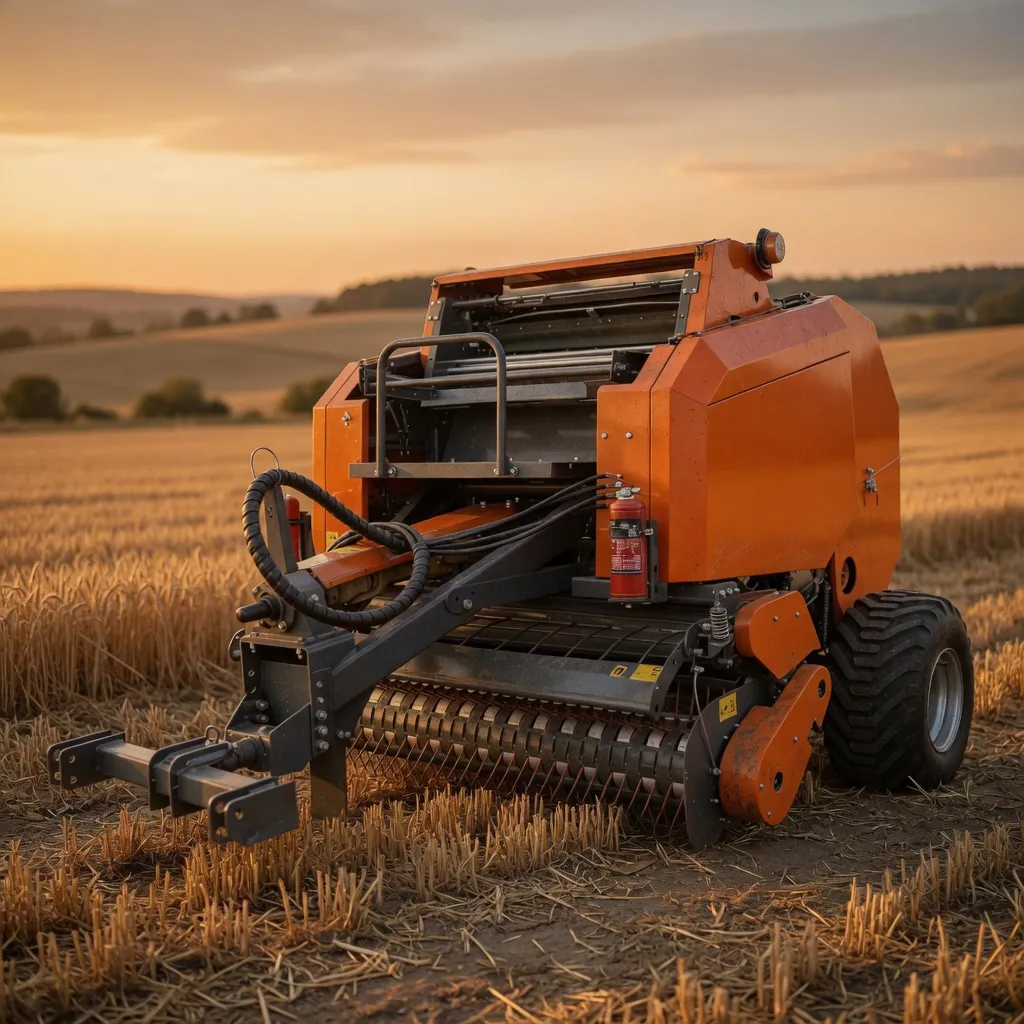
The harvesting equipment investment also differs substantially. A precision-chop wagon typically requires a higher capital investment per machine than a round baler of equivalent throughput capacity, plus the transport infrastructure (chaser bins, trucks, tractors) to move chopped material from the field to the storage structure. The round baler plus wrapper is a self-contained field system that deposits fully wrapped bales in the paddock without requiring a supply chain between harvest and storage. For Australian farms without the transport infrastructure for chopped silage delivery, the bale system entry cost is significantly lower. For the complete silage baler for small farm range, visit the Ever-power product pages.
Labour, Throughput, and Harvest Logistics
How Each System Performs Under Australian Farm Labour Conditions
The precision-chop wagon system has a significant throughput advantage for large-area harvesting. A modern self-propelled forage harvester (SPFH) used in the most intensive commercial silage operations can harvest 100+ tonnes DM per hour — a throughput rate that round baling cannot approach. For commercial feedlot supply chains producing thousands of tonnes per season, the wagon/SPFH system is the only practical choice. For smaller towed precision-chop wagons on farm tractors, throughput is still typically 3–5× higher than a round baler system on an hourly DM basis, though this advantage narrows when the full logistics of chasing, transporting, and consolidating the chopped material are included.
The labour model of each system differs significantly. A bale system typically requires 1–2 operators for baling and wrapping, and the harvested material goes directly from the paddock to its final storage position with minimal intermediate handling. A precision-chop system requires coordinated teams — the chopper operator, chaser bin drivers, transport operators, and compaction tractor operators must all work simultaneously at the storage site. A four-person team is the minimum for an efficient wagon-based system, and the coordination requirement is higher than for bale systems. For Australian farms that regularly struggle to assemble a multi-person silage crew, the simpler labour logistics of the bale system is a practical advantage that affects whether the harvest actually happens smoothly.
Weather-window risk management also differs between systems. In a bale system, every bale that has been wrapped and deposited is preserved — the harvest can be interrupted by weather at any point and the completed bales are protected. In a wagon system, the storage event must be completed in a single continuous operation — a half-filled bunker that is left open during a rain event loses significant quality across the exposed face. The bale system’s pause-and-resume capability is a meaningful advantage in regions with unpredictable weather during harvest windows. For silage baler parts and support for the bale silage system, contact our Charlton team.
Feed-Out: Daily Practicalities of Each System
How Each System Works on the Day Livestock Are Fed
Feed-out management is one of the clearest practical differences between the two systems. Wrapped bale silage feed-out is simple and flexible: open one bale (or as many as needed), distribute with a loader or on a feed pad, and each bale is an independent feeding event with no implications for the remaining stored bales. Herds from 10 to 200+ head can be fed from round bales with standard farm equipment — a tractor with a front-end loader and bale spike is all that’s required. The portion size is one bale at a time, with any unconsumed silage remaining in the opened bale until the next feeding.
Pit and bunker silage feed-out is a daily management operation requiring dedicated face management. Each day, a shear grab, silage block cutter, or face scraper removes the next day’s feed allocation from the face of the stored mass. The face must be kept vertical and as smooth as possible to minimise the re-exposed surface area that causes aerobic deterioration between daily removals. This is particularly important in warm weather where face heating can be rapid — if the face is poorly managed, significant quantities of silage deteriorate daily before the livestock can consume it. The management skill required for good bunker face management is higher than for bale silage feed-out, and it requires daily attention throughout the feed-out period.
For high-production dairy operations with TMR (total mixed ration) feeding systems, precision-chop silage is the preferred format because the uniform short particle length mixes more consistently with other ration ingredients in a TMR mixer wagon. Long-stem bale silage can cause sorting behaviour in TMR feeding situations, where animals preferentially eat some ration components while leaving others — an issue that is much less common with precision-chop silage at 8–12mm theoretical length of cut. If your operation uses TMR feeding and feed quality consistency is a priority, this is an important consideration in the system choice. For more information about the Ever-power range and system advice, visit our About page.
Complete System Comparison at a Glance
Every Key Decision Factor in One Reference Table
| Factor | Wrapped Bale (Silage Baler) | Precision Chop (Silage Wagon) |
|---|---|---|
| Capital cost — harvesting | Lower ✅ | Higher |
| Infrastructure required | Minimal ✅ | Bunker/pit essential |
| Operators required | 1–2 ✅ | 4–6+ |
| Throughput (t DM/hr) | 5–10 | 25–100+ ✅ |
| Particle length | Long (unchopped) | Short (6–20mm) ✅ |
| TMR mixing suitability | Less consistent | Better ✅ |
| Risk containment (failure) | Per bale ✅ | Whole batch |
| Harvest pause flexibility | Any time ✅ | Must complete filling |
| Portability/tradability | High ✅ | Fixed location |
| Best suited enterprise scale | Farm-scale: 20–1,000 t/yr ✅ | Commercial: 500–10,000+ t/yr |
Portability, Flexibility, and the Bale System’s Unique Advantages
What Pit Silage Cannot Do That Bale Silage Can
One of the most practically important distinctions between the two systems is often overlooked in quality-focused comparisons: bales are portable and tradable, and bunker silage is not. A farmer with wrapped bale silage can sell surplus bales to a neighbour, transport bales to a secondary property, deliver bales to livestock at an agistment location, or use bales as a tradable commodity in drought contingency planning. Each of these actions is impossible with pit or bunker silage, which is fixed to the storage structure and cannot be transported without converting it back into a different product (which would compromise its preservation).
For Australian farms managing drought risk — a category that includes most beef and dairy properties in variable-rainfall regions — the tradability and portability of wrapped bale silage is not an incidental feature but a genuine risk management tool. The ability to purchase bales from producers who have surplus in a given year, or to sell excess production in a good year, makes bale silage a flexible commodity that fits Australian farm business models in ways that pit silage cannot match.
Bale silage also allows variable volume production without penalty. A farm that produces 200 bales in a good season and only 80 in a drought year experiences no waste and no infrastructure under-utilisation — the system simply operates at a different scale. A bunker system designed for 200-tonne capacity that is filled to only 80 tonnes has a partially filled bunker that is harder to manage, creates a larger proportional face area per unit of stored DM, and represents fixed infrastructure sitting substantially under-utilised. The bale system’s variable-capacity nature is a structural advantage for Australian farms where year-to-year production variability is a fact of life rather than an exception.
Which System Is Right for Your Operation?
The Farm Profiles That Match Each System
✅ Wrapped Bale Silage Suits:
- Farm-scale dairy, beef, and mixed enterprises
- Operations producing under 1,000 tonnes DM/year
- Farms without bunker infrastructure
- Operations in variable-rainfall regions (drought tradability)
- 1–2 person operations (labour flexibility)
- Farms with multiple storage locations or remote paddocks
- Operations selling or purchasing surplus silage
✅ Precision Chop Wagon Suits:
- Large commercial dairies with TMR feeding systems
- Intensive feedlot silage supply chains
- Operations producing 500+ tonnes DM per season
- Farms with existing bunker infrastructure
- Operations with reliable multi-person harvest crews
- Large irrigation-based forage production enterprises
- Custom silage contractors serving large clients
Why the Wrapped Bale System Is Right for Most Australian Operations
Ever-Power’s Range Covers Every Scale of Farm-Based Bale Silage
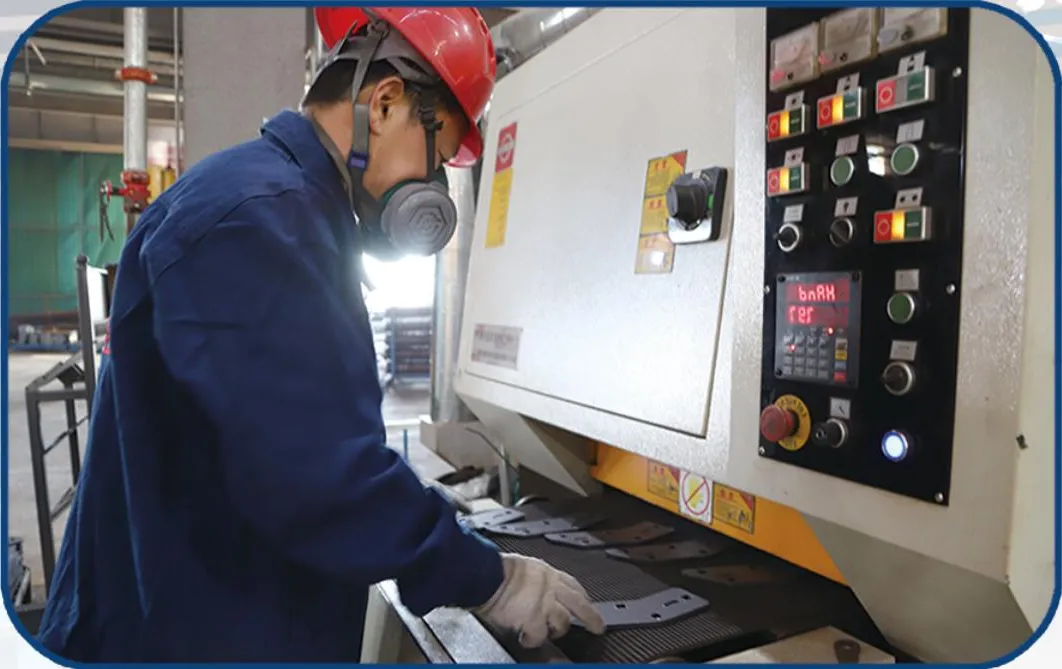
For the vast majority of Australian silage-producing farms — operations with 50–1,000 head of livestock, annual production volumes of 50–500 tonnes DM, and farm labour structures of one to three people — the wrapped bale system with an Ever-power round baler is the more practical, more flexible, and more cost-effective choice. The range spans from the Рулонный пресс-подборщик 9YG-1.0 for small operations needing modest production with a compact tractor, to the S9000 Beyond for commercial operations prioritising maximum bale density and quality. The Charlton team provides system design advice for any combination of enterprise scale, crop type, tractor capability, and quality target.
Designing Your Silage System?
Get System Design Advice from Australia’s Silage Baler Specialists
Charlton Industrial Area, Australia — bale silage system advice for every scale of Australian livestock enterprise.
Часто задаваемые вопросы
Common Questions About the Bale vs Wagon Silage Choice

Австралийская компания Ever-power Forage Balers Co., Ltd.
📍 Charlton Industrial Area, Australia