
What Actually Consumes Tractor Power During Silage Baling
Understanding Power Demand Before Choosing a Number
Tractor horsepower for a enfardadeira de silagem is consumed through two completely separate pathways — PTO power delivered to the baler’s mechanical systems, and drawbar power required to pull the baler across the field. Understanding how each pathway consumes power, and how that changes between silage and hay service, is the foundation for making a correct HP assessment rather than using an industry rule of thumb that may not apply to your specific situation.
PTO power drives the pickup reel, the drive chains, the stuffer mechanism, and most critically, the bale chamber belt system against the resistance of the forming bale. In silage service, the PTO power demand peaks when the bale reaches maximum chamber pressure at full size — a wet silage bale at 55–60% moisture is 30–45% heavier than an equivalent hay bale from the same chamber, and the belt tension required to form it against that weight is proportionally higher. The PTO power peak in heavy first-cut silage can be 40–60% higher than the average demand earlier in the bale cycle — which means a tractor that can sustain average silage baling power must also have enough reserve not to bog down at the peak demand point.
Drawbar power is the force needed to pull the loaded baler across the field, accelerating and decelerating at headlands, and towing the increasing weight of the bale being formed. On level paddocks with firm ground, drawbar demand is modest. On soft, wet, or hilly ground, drawbar demand can increase dramatically — and the combination of high PTO demand at peak bale pressure with high drawbar demand on an uphill run is where undersized tractors are most exposed. The correct HP specification must account for the worst-case combination of PTO and drawbar demand in the actual field conditions of your property, not average conditions on flat, firm ground.
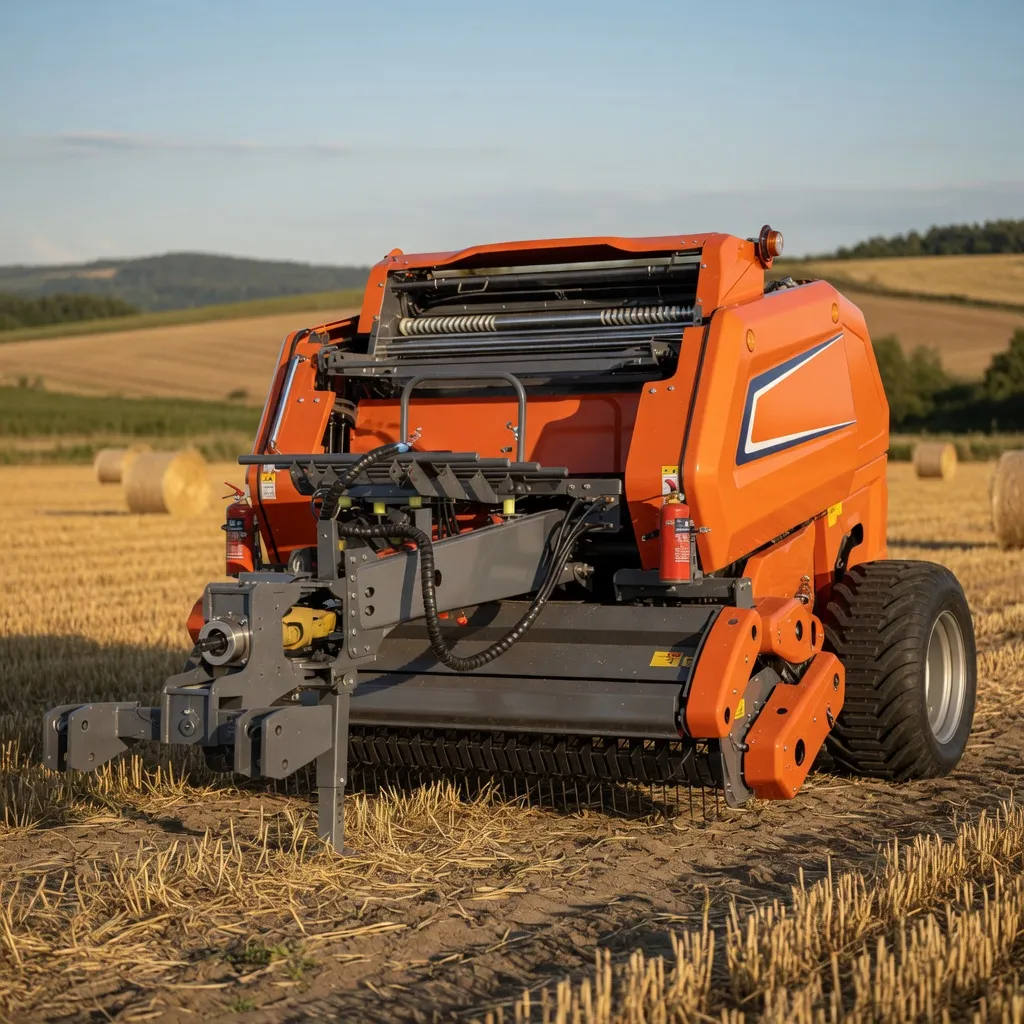
Why Silage Baling Demands More HP Than Hay on the Same Machine
The Specific Reasons the Same Baler Needs a More Powerful Tractor for Silage
A baler’s rated horsepower requirement on the manufacturer’s specifications page typically references standard hay baling conditions. Using this figure as the HP requirement for silage service underestimates the actual demand by a meaningful margin. There are four distinct reasons why silage baling consumes more tractor power than hay baling on the same machine, and understanding each one helps operators assess whether their current tractor is genuinely adequate for silage service or whether the specifications were achieved by working around the tractor’s limitations.
1. Heavier Bale Weight
A silage bale at 55% moisture weighs 30–45% more than an equivalent hay bale. The bale chamber must form this heavier mass against the belt resistance — requiring proportionally higher belt tension and PTO power at the peak compression phase.
2. Wetter, Denser Crop Flow
Silage crop at baling moisture is significantly denser per volume unit than dry hay. The stuffer mechanism moves more mass per cycle, and the pickup must process heavier material per metre of windrow — both increasing the sustained PTO load throughout the bale build cycle.
3. Higher Required Belt Tension
Silage requires higher belt tension than hay to prevent slip from plant juice contamination. This higher tension increases the mechanical load on the drive system throughout the session — the drive rollers must transmit higher force, consuming proportionally more PTO torque.
4. Higher Towed Weight
The heavier bale weight means the loaded baler is heavier than when baling hay, increasing both rolling resistance across the paddock and the inertial load during acceleration from headlands. On soft or wet ground, the drawbar load increase is amplified further by the higher ground pressure of the heavier baler.
The combined effect of these four factors typically means that silage baling on a given machine requires 15–30% more tractor HP than the same machine requires for hay baling. A baler that specifies a minimum of 45 kW (60 HP) for hay operation realistically needs 55–60 kW (75–80 HP) for reliable silage service at adequate travel speeds and without compromising PTO speed at the critical peak-pressure phase of each bale cycle.
Recommended Tractor HP by Silage Baler Size
Practical HP Ranges for the Full Ever-Power Silage Baler Range
The HP recommendations below reflect silage-specific power requirements — not hay baling specifications — for each model in the Ever-power range. The minimum figure is the lowest HP at which the tractor can complete the silage baling task in standard conditions without PTO speed loss at peak bale pressure. The recommended figure provides the operating reserve needed for heavy first-cut crops, hilly terrain, soft ground, and the combination of high PTO and drawbar demand. The figures assume standard 540 PTO operation unless otherwise specified. For model-specific verification, always consult the operator manual and Entre em contato com nossa equipe for your specific crop and terrain conditions.
| Baler Model | Min HP (Silage) | Recommended HP | Best Suited For |
|---|---|---|---|
| Enfardadeira redonda 9YG-1.0 | 40 HP | 50–65 HP | Small farms, hobby farms, compact paddocks with smaller tractors |
| Enfardadeira redonda 9YG-1.0C | 45 HP | 55–70 HP | Small–medium operations, suited to lighter tractors on mixed enterprises |
| Enfardadeira redonda 9YG-1.25 | 55 HP | 70–90 HP | Medium operations, dairy and beef farms, most common Australian silage size |
| Enfardadeira redonda 9YG-1.25A | 60 HP | 75–95 HP | Medium–large operations, higher-volume silage production, heavier crops |
| S9000 (2.24D) | 75 HP | 90–115 HP | Commercial dairy and beef, large-volume production, high-density silage priority |
| S9000 Classic | 80 HP | 95–120 HP | Commercial operations requiring high throughput and consistent bale density |
| S9000 Beyond | 85 HP | 100–130 HP | Maximum performance operations, heavy first-cut crops, demanding terrain |
⚠️ Note on PTO vs Engine HP
The figures above reference tractor engine HP (the figure quoted in tractor advertising). PTO HP is typically 10–15% lower than engine HP due to drivetrain losses. Ensure the tractor’s rated PTO output — not just the engine specification — meets the baler’s PTO requirement. A 90 HP tractor may deliver only 76–81 HP at the PTO. Always verify actual PTO HP in the tractor specification sheet, not estimated from the engine HP figure.
HP Modifiers: When Standard Recommendations Need Adjustment
The Conditions That Push the Required HP Above the Standard Range
The recommended HP ranges in the table above assume standard conditions: level to gently undulating ground, firm paddocks, average silage moisture (55–60%), and windrow densities typical for mixed-pasture silage crops. When any of these assumptions don’t hold for your property, the practical HP requirement moves toward the upper end of the recommended range or beyond it. The following modifiers help operators assess which end of the HP range — or which end plus a buffer — applies to their specific situation.
| Condition Modifier | HP Impact | Adjustment |
|---|---|---|
| Heavy first-cut ryegrass / high DM yield | High peak PTO demand | Use upper end of recommended range |
| Hilly or undulating terrain (>10% grade) | High combined PTO + drawbar demand on uphill runs | Add 10–15 HP above standard recommendation |
| Soft or wet paddock conditions | Higher rolling resistance, potential wheel slip | 4WD engagement standard; add 10 HP for sustained soft ground |
| Very wet crop (>65% moisture) | Heavier bale weight, higher belt tension demand | Use upper end of recommended range; reduce travel speed |
| Baler-wrapper combination (integrated unit) | Wrapper adds 5–10 HP draw during wrapping cycle | Add 10–15 HP above baler-only recommendation |
| Maize / whole-crop silage | Very high mass per windrow metre, long stems | Add 15–20 HP above standard recommendation |
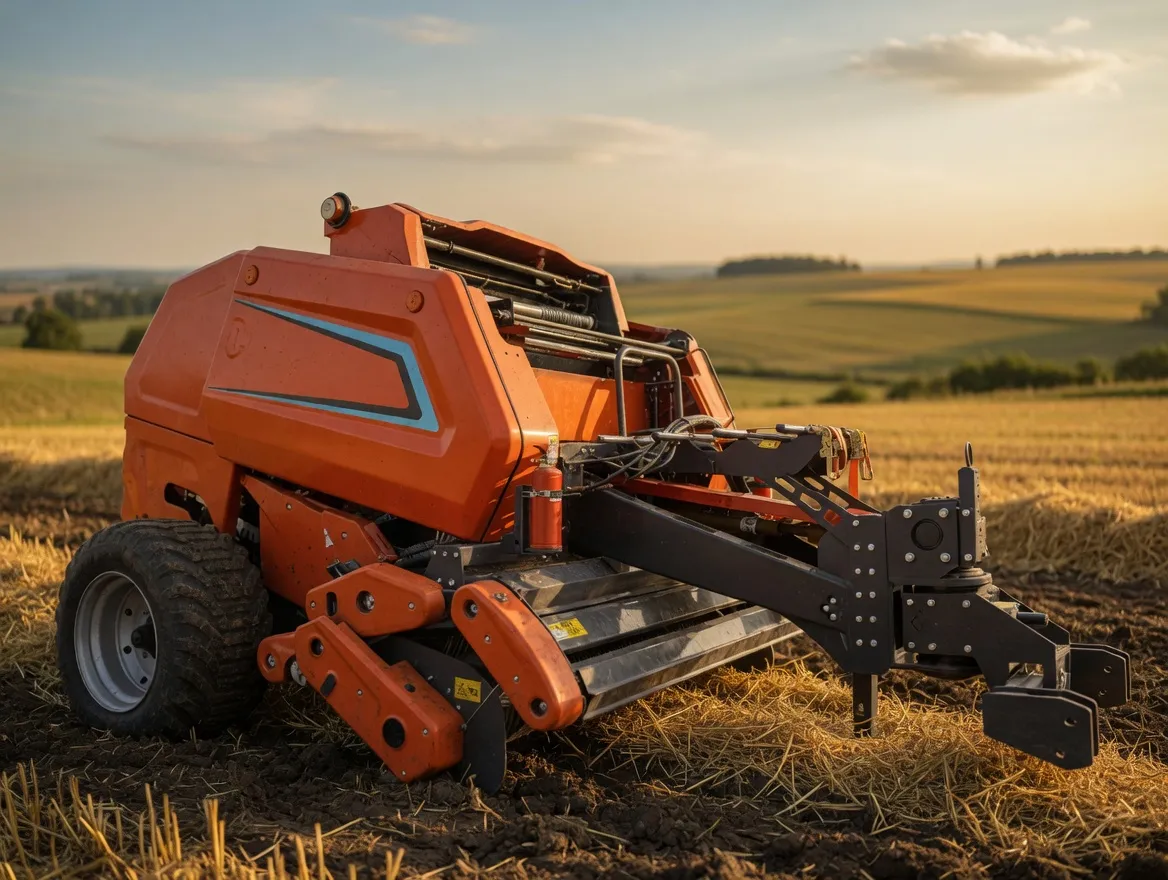
Signs Your Tractor Is Under-Powered for the Baler in Silage Conditions
Recognising the Symptoms Before They Become Mechanical Problems
An under-powered tractor rarely fails to complete a silage baling session — instead, it degrades quality and accelerates machine wear while appearing to function. The symptoms are subtle enough that many operators attribute them to baler issues rather than tractor capacity. Recognising these signs and understanding their cause allows operators to correctly attribute the problem and make the right decision — whether that’s reducing travel speed, reducing windrow density by using lighter windrows, or upgrading the tractor.
PTO speed drops audibly when bale reaches peak pressure
The most direct indicator of an under-powered tractor. Engine lugging at peak bale pressure means the stuffer is delivering below-rated force, reducing the final-stage compaction that determines maximum achievable bale density. The tractor is working at the limit of its power envelope and has no reserve.
Belt slip consistently in heavy windrow sections despite correct tension
When the tractor cannot maintain rated PTO speed, the belt drive system runs at below-rated tension relative to the bale resistance. This manifests as belt slip that appears to be a tension problem but is actually a tractor power problem — re-tensioning is not the fix; reducing the intake load (travel speed) is.
Maximum travel speed limited to very low values to avoid lugging
If keeping the tractor running smoothly requires travel speeds below 4–5 km/h in standard conditions, the tractor is under-powered for the baler size and crop conditions. Very low travel speeds may allow the session to complete but significantly reduce throughput and may not be economically viable for large-area operations.
Wheel slip on uphill runs when bale is near full
A near-full silage bale at the top of a gentle hill stretch represents the simultaneous peak of PTO demand and drawbar demand. Wheel slip at this point indicates the tractor has reached the combined limit of its power output. Using 4WD and adding ballast can partially address this, but fundamental HP shortage remains the root cause.
Setting Up the Tractor Correctly for Silage Baling
Maximising the Power That Is Available — Regardless of HP
Correct tractor setup for silage baling maximises the usable power of whatever HP is available. Even a well-matched tractor can underperform in silage service if basic setup is incorrect. The following checklist addresses the setup factors that most commonly limit effective power delivery in Australian silage baling operations — for more information about our silage baler range, visit the About Us page.
⚡ Set Full Throttle Before Engaging PTO
Engine must be at rated RPM before PTO engagement. Starting the PTO from reduced throttle means the first bale cycle runs at sub-rated PTO speed, producing reduced stuffer force and lower initial bale density.
🔗 Engage 4WD for Silage Sessions
4WD should be engaged as standard for silage baling on all but the firmest paddocks. The combination of heavy bale load and potential wheel slip from soft silage paddocks means 2WD operation leaves significant traction margin unused.
⚖️ Check Front Ballasting
A heavy baler with a full bale shifts the tractor’s effective balance rearward, reducing front axle loading and front traction. Adequate front ballasting maintains steering authority and ensures the front axle contributes to 4WD performance.
📐 Verify PTO Shaft Angle
Excessive PTO shaft angle at the tractor-to-baler connection increases power loss in the universal joints and creates vibration that transfers into the baler drive train. Set hitch height to keep the PTO shaft angle below 15° at operating level.
Ever-Power: The Right Baler for the Tractor You Have
A Range Wide Enough to Match Every Australian Farm Tractor Capability

One of the practical advantages of the Ever-power range is its breadth: from the compact Enfardadeira redonda 9YG-1.0 that operates reliably with tractors from 50 HP in silage service, to the S9000 Beyond for commercial operations with 100+ HP tractors, there is a model matched to virtually every Australian farm tractor capability. For operators choosing a silage baler for sale whose primary concern is fitting the baler to an existing tractor rather than buying a new tractor, the Ever-power range allows this selection to be made precisely rather than accepting a mismatch. The team in Charlton can match the right model to your tractor’s actual PTO output, crop type, and terrain — a matching conversation that takes 15 minutes and prevents years of frustration from an incorrect pairing.
Not Sure Which Baler Matches Your Tractor?
Get a Model Recommendation from Our Team
Charlton Industrial Area, Australia — tractor-to-baler matching advice for Australian farms, from compact operations to commercial silage producers.
Perguntas frequentes
Common Questions About Tractor HP for Silage Balers

Austrália Ever-power Forage Balers Co., Ltd.
📍 Charlton Industrial Area, Australia