
Understanding the Spoilage Chain: Where Each Failure Begins
Tracing Every Type of Spoilage Back to Its Preventable Root Cause
Silage bale spoilage always begins with the same factor: oxygen. Whether the spoilage takes the form of aerobic heating at the feed face, surface mould on the film, or the more insidious internal clostridial fermentation that produces butyric acid and ammonia throughout the stored mass, the common thread is oxygen access at some point in the system. Aerobic spoilage organisms — yeasts, moulds, and aerobic bacteria — require oxygen to grow. Clostridial bacteria, paradoxically, are themselves anaerobic — but they thrive in the early post-wrapping period when insufficient bale density or inadequate wrapping allows an extended aerobic phase before anaerobic conditions are established, giving the anaerobic clostridia a chance to establish before lactic acid bacteria can acidify the mass to preservation level.
The spoilage chain has three distinct phases, each with its own prevention approach. Phase one is the baling and wrapping event itself — the decisions made here determine the starting conditions for fermentation: bale density, moisture level, wrapping interval, and wrap layer count. Phase two is the storage period — the weeks and months during which the film barrier must remain intact to maintain the anaerobic environment. Phase three is the feed-out period — when the bale is opened and the newly exposed face must be consumed fast enough to prevent re-establishment of aerobic organisms in the opened material. Effective spoilage prevention requires attention at all three phases; addressing only one while neglecting the others is the most common reason a silage operation produces inconsistent quality results year to year.
The following sections address each phase of the spoilage prevention chain systematically — the specific actions, the correct sequence, and the indicators that confirm each action has been taken correctly. For information about the enfardadeira de silagem equipment that underlies this system, visit the product pages. For silage baler parts and technical support, contact the Charlton team.
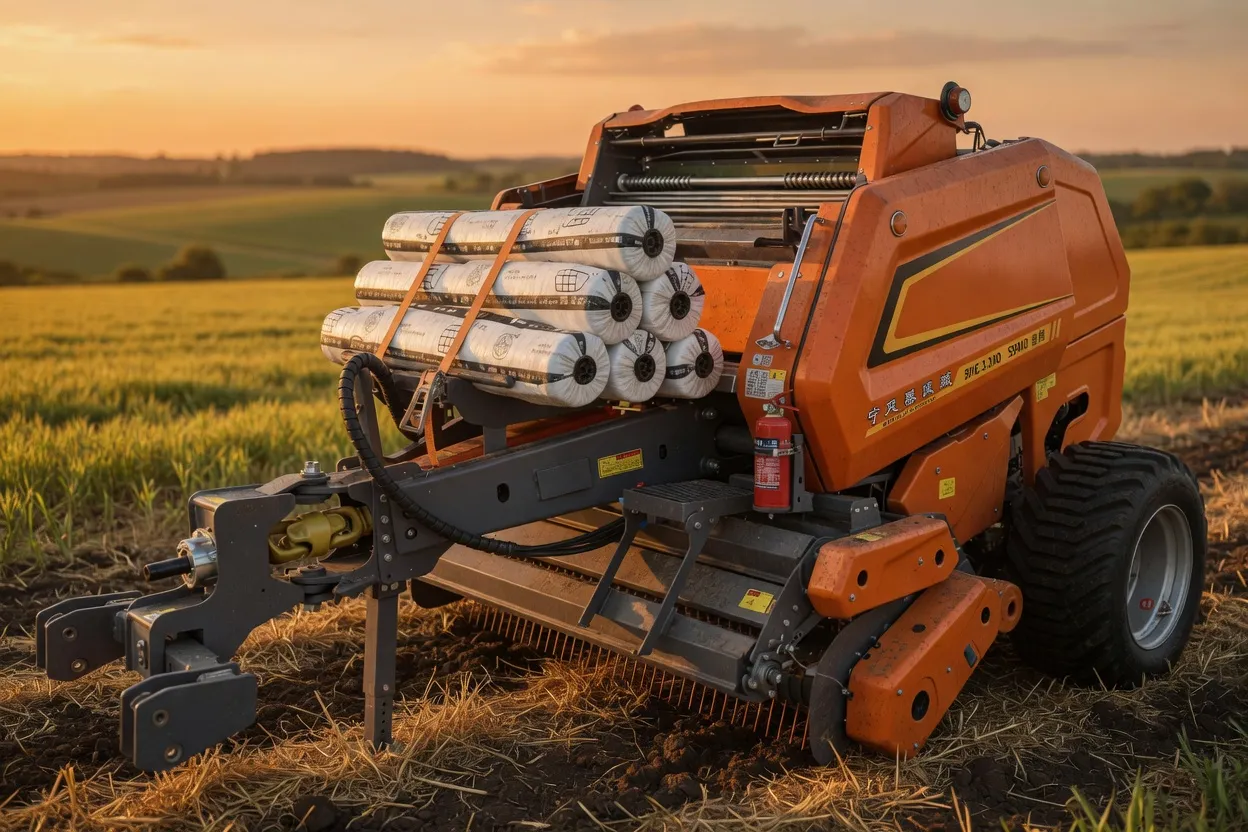
Phase 1 Prevention: Baling Decisions That Determine Fermentation Outcome
The Production-Stage Actions That Set the Spoilage Risk Level
Get Moisture Right Before Baling
Crop moisture is the single most important determinant of clostridial spoilage risk. Above 67–70% moisture, the diluted sugar concentration slows lactic acid fermentation and gives clostridial bacteria — which have lower acid tolerance than lactic acid bacteria — a prolonged window in which to establish. The difference between baling at 63% and baling at 72% is not a minor quality variation; it is the difference between well-preserved silage and a high probability of butyric acid contamination throughout the bale. Measure with a forage moisture meter before every session and wait until moisture is below 65% before beginning baling. This is the most powerful single spoilage prevention action available and costs nothing except the discipline to wait.
Maximise Bale Density
High bale density is the most effective mechanical spoilage prevention tool. A dense bale has less interstitial air per unit of dry matter — after wrapping, this smaller air reserve is exhausted more quickly by residual microbial respiration, establishing anaerobic conditions faster and giving lactic acid bacteria less competition time from aerobic organisms. The correct chamber pressure setting for the current crop moisture is the primary density control on a variable chamber baler. Set pressure according to the manufacturer’s silage-specific recommendation, adjust for moisture conditions, and confirm with the firmness test on the first three bales of each session. Slower travel speed and consistent windrow width also increase density by ensuring even stuffer charges — these two practices together can increase average bale density by 10–15% without changing any equipment setting.
Use a Silage Inoculant When Conditions Are Non-Optimal
When baling conditions are at the wetter end of the acceptable range (60–67% moisture), when the crop is a low-sugar species (tropical grasses, legume-dominant pastures), or when there has been a weather delay that may have reduced crop sugar levels through respiration in the windrow, a silage inoculant provides a meaningful spoilage prevention benefit. A good inoculant delivers 100,000 to 1,000,000 colony-forming units of selected lactic acid bacteria per gram of fresh crop, dominating the fermentation population from the start and accelerating the pH drop toward the preservation threshold before spoilage organisms can establish. Inoculant is not a substitute for correct moisture management — it cannot overcome the clostridial risk of baling above 70% moisture — but at 62–67% moisture it provides a genuine fermentation quality improvement. Apply at baling via a spray system or pre-treatment of the windrow.
Ensure Correct Bale Shape
A round, firm, symmetrical bale provides the best surface geometry for stretch film adhesion. Every surface irregularity — a lump, a flat spot, a concave area from uneven chamber filling — is a point where the film spans rather than conforms to the bale surface, leaving an air pocket under the film that maintains a residual oxygen supply to the bale surface adjacent to that point. These air pockets are the starting points for the mould colonies that show up on the bale surface during storage and at the feed face at feed-out. Correct travel speed (slow enough for even stuffer charges), centred windrow pickup, and correct chamber pressure all contribute to producing the round, smooth bale shape that gives wrapping film its best chance of achieving a reliable anaerobic seal.
Phase 2 Prevention: Wrapping Practices That Seal the Bale Correctly
The Four Wrapping Variables That Determine Whether the Anaerobic Seal Holds
Wrap Immediately After Baling
Time between baling and wrapping is one of the most directly controllable spoilage risk factors. Every minute a freshly baled, unwrapped bale sits in the paddock, aerobic microorganisms in the crop are consuming dry matter and producing CO₂ and heat. At Australian summer temperatures (25–35°C), dry matter losses of 1–2% per hour are possible in the fastest-respiring crops. The standard recommendation is to wrap within four hours of baling; for high-moisture crops (above 63%) in warm conditions, two hours is the better target. The single most effective organisational change that many Australian operators can make to reduce spoilage is to ensure the wrapper capacity matches the baler output — if the baler produces bales faster than the wrapper can process them, the growing queue of unwrapped bales accumulates hours of pre-wrap aerobic activity that no subsequent management can recover.
Use the Correct Number of Layers
Four layers of 25-micron film is the absolute minimum for silage preservation under standard conditions — and in Australian conditions with high UV, bird pressure, and long storage periods, six layers should be the default. Increasing to eight layers for bales at the high-moisture end of the range, for high-value crops where spoilage loss is most costly, or for bales intended for storage beyond 12 months is a straightforward investment with reliable returns. The cost difference between four-layer and six-layer wrapping is approximately $1.00–1.50 AUD per bale — a fraction of the feed value at risk from spoilage. Choosing the minimum possible layers to reduce consumable cost is one of the most common and most counterproductive economics in silage management.
Maintain Correct Film Overlap
Film overlap of 50–55% means each point on the bale surface is covered by two film passes per specified layer — doubling the effective thickness at each coverage point. Reducing overlap to 33% to extend a roll of film effectively reduces the barrier thickness by 25%, significantly increasing the oxygen transmission rate per nominal layer count. Check the wrapper overlap setting before the start of each session and verify it hasn’t drifted by measuring the overlap directly on the first bale of the session. Consistent 50% overlap is worth more than an extra layer of film applied at incorrect overlap — maintain the setting, not the roll economy.
Use Quality UV-Stabilised Film
The film applied to a bale at wrapping must maintain its oxygen barrier properties for the entire storage period — in Australian conditions, this typically means 12–18 months of UV exposure. Standard-grade film without an Australian-specification UV stabiliser package may degrade significantly within 9–12 months, losing barrier performance before the bale has been fed. Specify film with UV stabiliser rated for at least 18 months outdoor storage in Australian conditions and from suppliers who can confirm this specification — not just “UV stabilised” without a duration qualifier. The price difference between budget and quality film is typically modest; the difference in storage performance over a 15-month storage period is not modest. For information about the 9YCM-850 wrapping unit that pairs with Ever-power balers, visit the product page.
✅ Wrapping Spoilage Prevention Checklist
- Wrap within 4 hours of baling — 2 hours for crops above 63% moisture or in temperatures above 28°C.
- Use minimum 6 layers as the default for all Australian silage conditions.
- Set wrapper to 50–55% overlap — check the setting at the start of every session.
- Use UV-stabilised film rated for 18+ months outdoor Australian storage.
- Inspect the first wrapped bale of each session for film evenness and end-seal quality.
- Never apply film over a wet bale surface — moisture under the first film layer reduces adhesion and creates micro-gap oxygen pathways.
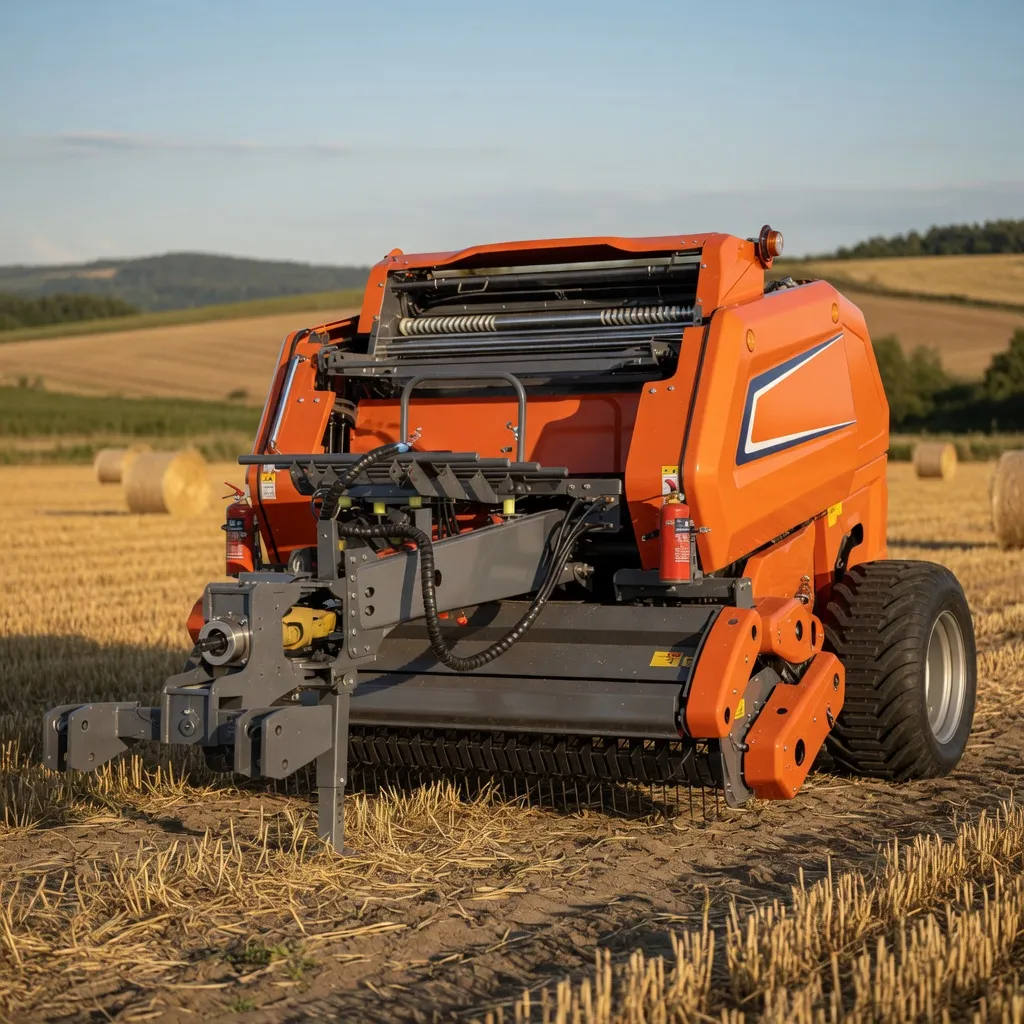
Phase 3 Prevention: Storage Management That Protects the Film Barrier
The Ongoing Practices That Prevent Film Damage During the Storage Period
A correctly wrapped bale on a poorly selected site under inadequate inspection management will spoil despite correct production and wrapping. The storage phase is where many of the quality gains from production are either preserved or eroded — it is not a passive waiting period but an active management phase that requires specific actions and regular attention.
Site Free of Sharp Material
Clear all stubble, stones, wire, and debris from the storage area before the first bale arrives. A single sharp fragment under a bale creates a film puncture that cannot be repaired from the outside after the bale is positioned. Do the site preparation before the season, not after spoilage is discovered.
Active Bird Deterrence
Bird netting over bale rows is the most reliable physical protection. For sites where netting is impractical, rotate deterrent types (reflective tape, raptor decoys, gas guns) every 2–3 weeks — birds habituate to static deterrents within days. Eight-layer wrapping on high-bird-pressure sites provides additional puncture resistance.
Livestock Exclusion
A secure fence with an electrified top strand around the entire bale storage site is non-negotiable. Cattle rubbing on wrapped bales creates film damage across many bales in a single event — more damaging than months of UV exposure. Check fence integrity at the start of each season.
Regular Inspection and Immediate Repair
Monthly minimum inspection of every bale, fortnightly during Oct–Mar. Carry silage repair tape on every inspection. Repair any breach immediately — not at the end of the inspection walk. Use silage-specific UV-resistant tape, not general-purpose adhesive tape.
UV Protection for Long-Term Storage
For bales expected to be stored beyond 12 months, covered storage under a shed roof or agricultural shadecloth extends effective film life by 30–50%. This is particularly important for drought reserve stocks that may be held for 18–24 months. Prioritise these bales for early cover if resources are limited.
Drainage Management
Store bales on a 1–2% slope away from bale bases. Water pooling under bales is the most reliable cause of base-layer film deterioration — invisible from above until the bale is opened. Check drainage after heavy rain events — if water pools near bales, prioritise those bales for early feed-out.
Phase 4 Prevention: Feed-Out Practices That Prevent Re-Spoilage
What Happens When the Film Is Removed — and How to Manage It
Opening a bale reintroduces oxygen to the silage face, triggering the aerobic activity of yeasts and moulds that have been dormant in the anaerobic environment. The speed at which aerobic deterioration progresses depends on the population of aerobic organisms present (higher after a prolonged aerobic phase during storage), the ambient temperature (faster at 25–35°C than at 10–15°C), and the oxygen concentration at the feed face (higher if the face is large and the removal rate is slow). The objective of feed-out management is to consume the opened bale faster than aerobic deterioration can compromise a significant quantity.
The single most effective feed-out spoilage prevention practice is to open only as many bales as will be completely consumed within 24 hours. An opened bale that has not been fully consumed within 24 hours is already experiencing aerobic activity at the exposed face. Livestock fed from an open bale for 48 or 72 hours progressively consume silage that has been deteriorating for the full exposure period — the last portions of a bale opened two days ago are lower quality than the first portions were when the bale was opened. Open fresh bales more frequently for high-production livestock rather than opening large numbers and allowing individual bales to sit open.
When distributing bale silage into a TMR mixer or feeder wagon, minimise the time between bale opening and distribution to livestock. Silage that is loaded into a mixer, driven across the property, and left in the feeder for several hours before all livestock have finished eating has experienced a significant aerobic activity period compared to silage distributed and immediately consumed. In hot weather, feed bale silage in the cooler parts of the day — early morning or evening — to reduce the temperature-driven rate of aerobic deterioration during distribution. For technical guidance across the full Ever-power silage range, visit our About page.
Complete Spoilage Prevention: The Master Reference
Every Action, Every Phase — in One Printable Reference
| Prevention Action | Phase | Spoilage Type Prevented |
|---|---|---|
| Bale at 40–65% moisture (measure, don’t estimate) | Enfardamento | Clostridial fermentation |
| Maximise bale density (correct pressure, slower speed) | Enfardamento | All spoilage types — fewer air pockets |
| Apply inoculant in non-optimal conditions | Enfardamento | Clostridial fermentation, face heating |
| Wrap within 4 hours (2 hours for wet/warm conditions) | Embrulho | Aerobic spoilage, face heating |
| Use 6+ film layers (8 for wet, high-UV, long storage) | Embrulho | Storage-period oxygen infiltration |
| Maintain 50–55% film overlap | Embrulho | Reduced barrier effectiveness |
| Store on clean, sharp-free, well-drained site | Armazenar | Base-layer film puncture, moisture damage |
| Active bird deterrence + livestock exclusion fencing | Armazenar | Film puncture from bird/animal damage |
| Monthly inspection + immediate repair of breaches | Armazenar | Undetected oxygen infiltration points |
| UV protection for 12+ month storage | Armazenar | Film UV degradation barrier failure |
| Open only bales consumed within 24 hours; feed promptly | Feed-out | Feed-face aerobic deterioration |
Ever-Power: Equipment That Builds Spoilage Prevention Into the Bale
Density Control, Silage-Rated Specification, and Local Support

The management actions described in this guide are all more effective when applied to a bale that was produced at high density with good shape consistency — and high density with consistent shape is exactly what the Ever-power variable chamber silage baler range produces when correctly operated. The variable pressure control that allows density optimisation across the full silage moisture range, the silage-rated belt compound that maintains the compression performance needed to achieve target density, and the precision roller specification that produces the smooth, round bale surface that gives film its best adhesion conditions — these design elements collectively make the bale more resistant to spoilage throughout its storage life. For a silage baler for sale that builds spoilage resistance into every bale at the production stage, the Charlton team can match the right model to your operation’s scale and quality targets.
Struggling With Silage Spoilage?
Get Targeted Advice From Our Silage Specialists
Charlton Industrial Area, Australia — spoilage diagnosis, wrapping system advice, and equipment recommendations for Australian dairy and beef operations.

Perguntas frequentes
Common Questions About Silage Bale Spoilage Prevention

Austrália Ever-power Forage Balers Co., Ltd.
📍 Charlton Industrial Area, Australia