
Rijststrobalen: van ruwvoer voor vee tot substraat voor champignonteelt
How rice farmers in China, Vietnam, Thailand, and India are turning post-harvest field waste into baled product for two separate markets — the practical guide from baling timing to buyer specifications.
Two Markets, One Machine: Why Rice Straw Baling Is Growing Fast
Rice straw has historically been the world’s most abundant and least utilised crop residue. Global rice production generates approximately 600 to 900 million tonnes of straw annually — more than the total biomass produced by any other cereal crop. The traditional disposal method, open-field burning, produces PM2.5 particulate emissions at a scale that has triggered regional air quality crises in Thailand’s Chiang Mai valley, India’s Punjab-Haryana belt, China’s Pearl River Delta, and Vietnam’s Mekong Delta. Anti-burning regulations are now enforced across all major rice-producing countries, creating both a compliance incentive and a commercial opportunity for baling.
The commercial opportunity has two distinct channels. The first is livestock roughage — rice straw’s low nutritional value (2 to 4% crude protein, 55 to 65% NDF) limits its role in ruminant rations to structural fibre and rumen fill, but for smallholder beef and buffalo operations in Southeast Asia and India, even low-quality roughage has tangible value when purchased feed is expensive. The second channel is mushroom cultivation substrate — the most profitable market for baled rice straw, where oyster mushroom, shiitake, and king oyster mushroom factories in China, South Korea, Japan, and Vietnam require standardised straw bales as growing medium, and pay prices that are 2 to 4 times higher than the roughage market for the same volume of material.
This guide covers both markets in detail and explains how the same baler setup and baling operation serves both, with minimal adjustment. For context on the broader range of materials that can be baled for commercial use, our overview of types of balers and baling machines covers the full equipment landscape.
Section 1: Post-Harvest Timing and Drying
1.1 The Baling Window After Rice Harvest
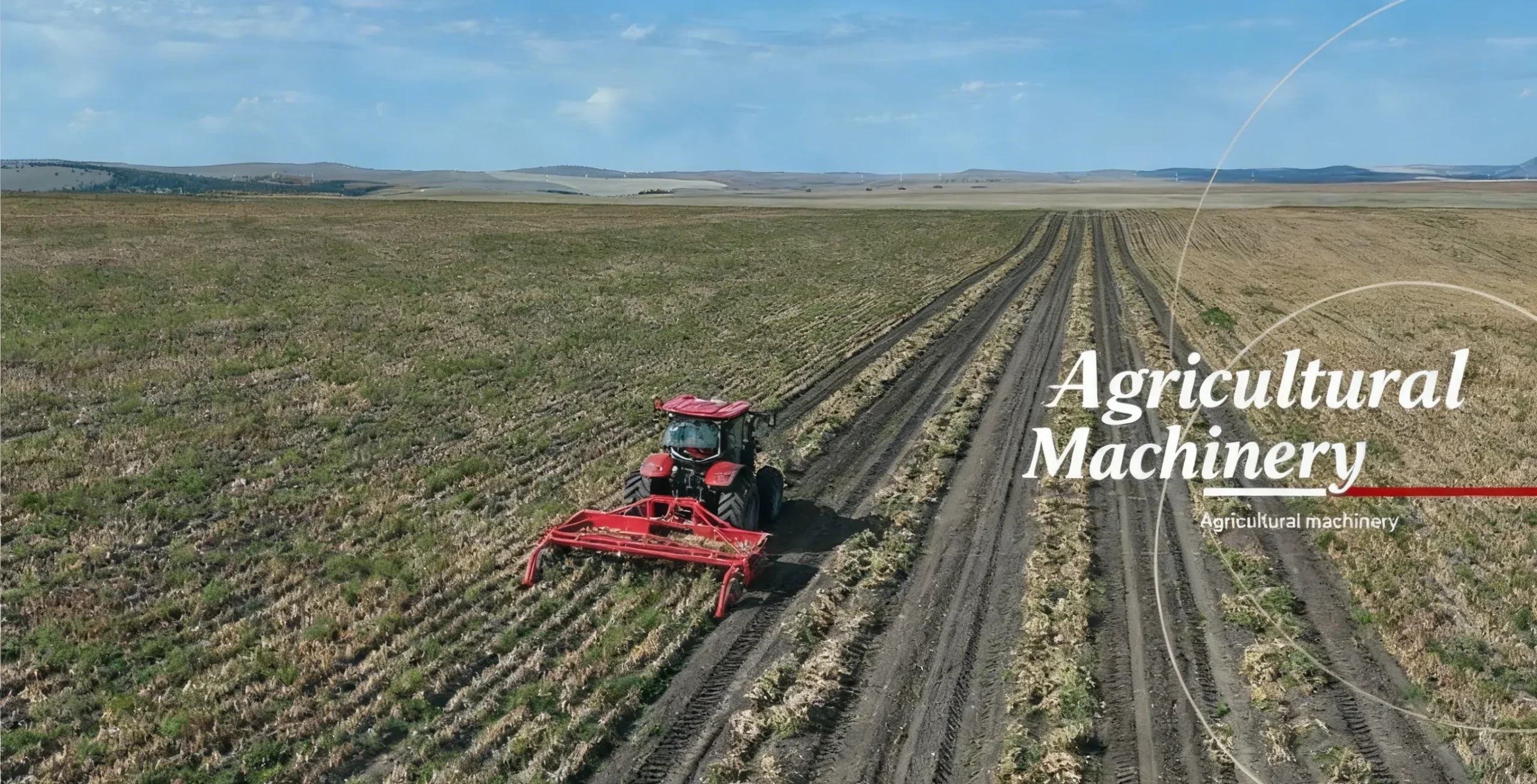
Rice straw at cutting carries 60 to 75% moisture — too wet for dry baling and problematic even for wrapped silage baleage due to the low WSC content of rice straw (typically 2 to 5% of dry matter). Unlike corn or wheat straw where the grain is harvested before the straw, rice straw in combine harvesting is deposited in the field at 60 to 70% moisture and must be field-dried before baling.
The ideal baling window is 3 to 7 days after combine harvest in most tropical and subtropical rice-growing regions, when field drying has reduced moisture to 15 to 22%. In wet-season harvest conditions (October-November second-crop harvest in Vietnam, Thailand, and south China’s Guangdong), reaching below 18% moisture within 7 days can be challenging due to high humidity and sporadic rainfall. In these conditions, baling at 20 to 22% moisture is acceptable for cattle roughage but may require kiln drying to 12 to 15% before delivery to mushroom substrate buyers.
| Dagen na de oogst | Moisture | Suitable For | Risk |
|---|---|---|---|
| 1–2 days | 55–70% | Silage baleage only (rare) | High clostridial risk without inoculant |
| 3-5 dagen | 25–35% | Neither — too wet for dry, too dry for silage | Quality loss window — bale quickly |
| 5–8 days ✓ | 15–22% | Roughage baling, substrate supply | Good window |
| >10 days | <15% | All dry uses | Leaf shattering increasing |
1.2 Combining and Windrow Formation
Modern combine harvesters equipped with straw spreaders distribute rice straw evenly across the field width — unsuitable for direct pickup baling. A rake or merger is required to consolidate spread straw into a baling windrow. In fields where straw has been spread thinly and is partially embedded in standing water from wet-season harvests, a windrow turner or tedder used 24 hours after harvest to lift the straw off the waterlogged soil surface significantly accelerates drying and reduces soil contamination in the baled product.
Section 2: Market 1 — Livestock Roughage
2.1 Rice Straw in Ruminant Rations
Rice straw is the lowest-nutritional-value roughage in mainstream livestock use. Crude protein of 2 to 4%, NDF of 60 to 70%, and an ADF of 40 to 50% make it suitable only as a structural fibre source for cattle and buffalo. Its primary use in ruminant rations is to provide rumen fill and dietary fibre in operations where higher-quality roughage is unavailable or cost-prohibitive. In Thailand and Vietnam, rice straw is commonly provided as free-choice roughage to smallholder dairy buffalo alongside a small concentrate allowance — the animals eat what they need for rumen function and the concentrate provides the nutrient density for milk production.
Urea treatment improves rice straw significantly: 3% urea solution applied at 40 litres per tonne and sealed for 21 days raises crude protein to 6 to 8% and improves organic matter digestibility by 8 to 12 percentage points. This treatment can be applied to bales by injection or surface spraying before sealing with silage film — a common practice in progressive smallholder operations in Vietnam and India.
Section 3: Market 2 — Mushroom Cultivation Substrate
3.1 What Mushroom Factories Buy
The mushroom substrate market pays 2 to 4 times the roughage price for the same volume of rice straw because substrate quality directly controls mushroom yield per batch. Oyster mushroom factories in China’s Zhejiang, Fujian, and Jiangsu provinces — collectively the world’s largest mushroom production region — consume millions of tonnes of straw substrate annually. Vietnamese mushroom operations are growing rapidly in the Mekong Delta, directly adjacent to the country’s most productive rice-growing areas.
| Specificatie | Mushroom Substrate Grade | Roughage Grade |
|---|---|---|
| Moisture at delivery | 12–15% | Up to 20% |
| Mould presence | Zero tolerance | Trace acceptable |
| Soil contamination | <2% | <5% |
| Bale weight tolerance | ±5% | ±15% |
| Price premium | 100–200% above roughage | Base price |
3.2 Production Requirements for Substrate-Grade Straw
Producing substrate-grade rice straw bales requires stricter field management than roughage baling. Straw must be picked up cleanly without soil contamination — a strict minimum 8 cm pickup tine height and avoidance of baling in wet field conditions. Moisture at baling should be 15 to 18% rather than the 20 to 22% acceptable for roughage. Bale weight must be consistent — most mushroom factory automated substrate lines are calibrated to a specific bale weight, and overweight or underweight bales disrupt the line. Net wrap is required over twine for consistent bale density and shape. Many substrate buyers also specify that bales must be delivered within 30 days of baling to prevent any surface deterioration.
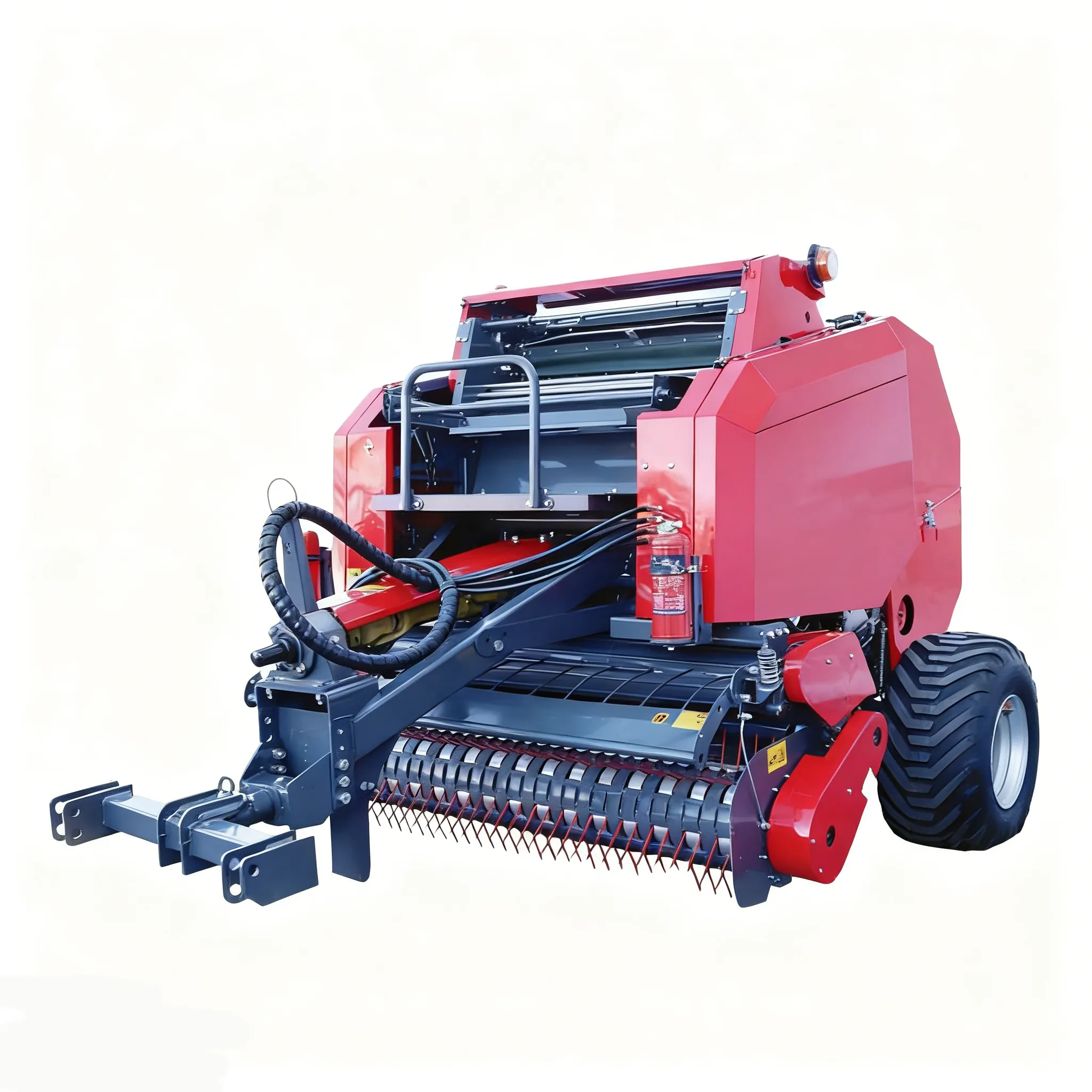
For farms targeting both markets simultaneously, the recommended approach is to prioritise the cleanest, earliest-window straw (days 5 to 7 post-harvest) for substrate-grade bales and the later-window or wet-field straw (days 8 to 12) for roughage-grade bales. The same baler — such as the 9YG-1.0 ronde balenpers for smaller-scale operations — handles both without modification, with substrate-grade production requiring simply higher attention to pickup height and field conditions.
Veelgestelde vragen
Contact Us About Rice Straw Baling Equipment
Share your crop type, annual volume, and tractor specification — we’ll specify the right baler for your operation.