
Why Bale Shape Is a System Decision, Not Just a Shape Preference
How Round and Square Bales Differ in Every Downstream Process
The choice between a round baler and a large square baler for silage production ripples through every stage of the silage system — production, wrapping, transport, storage, and feed-out. A farmer who chooses round bales because the round baler is cheaper to buy will subsequently discover that all their existing handling equipment, feed-out infrastructure, and transport logistics are now organised around a bale format that may not fit their system optimally. Evaluating this decision correctly requires thinking through the complete downstream consequence of each format choice.
In Australian silage production, round bale silage represents the dominant format — particularly for operations under 500 bales per year — primarily because of the lower capital cost of round balers, the wider availability of round bale handling equipment, and the suitability of round bale silage for one or two head of livestock per bale feed-out. Large square bale silage (typically 0.9m × 1.2m × 2.4m format) has a strong position in commercial feedlot, large dairy, and intensive beef operations where the higher throughput, better transport density, and improved stacking efficiency of square bales justify the significantly higher equipment cost.
Neither format is universally superior — but for any given operation, one format will fit substantially better than the other once the complete system is analysed. This guide works through each dimension of the comparison systematically to enable that analysis. For the full range of round baler options from Ever-power, including models suited to all scales of Australian silage production, visit the product pages or contact the Charlton team.
Equipment Cost: The Biggest Difference Between the Two Systems
Capital Investment Comparison Across the Complete System
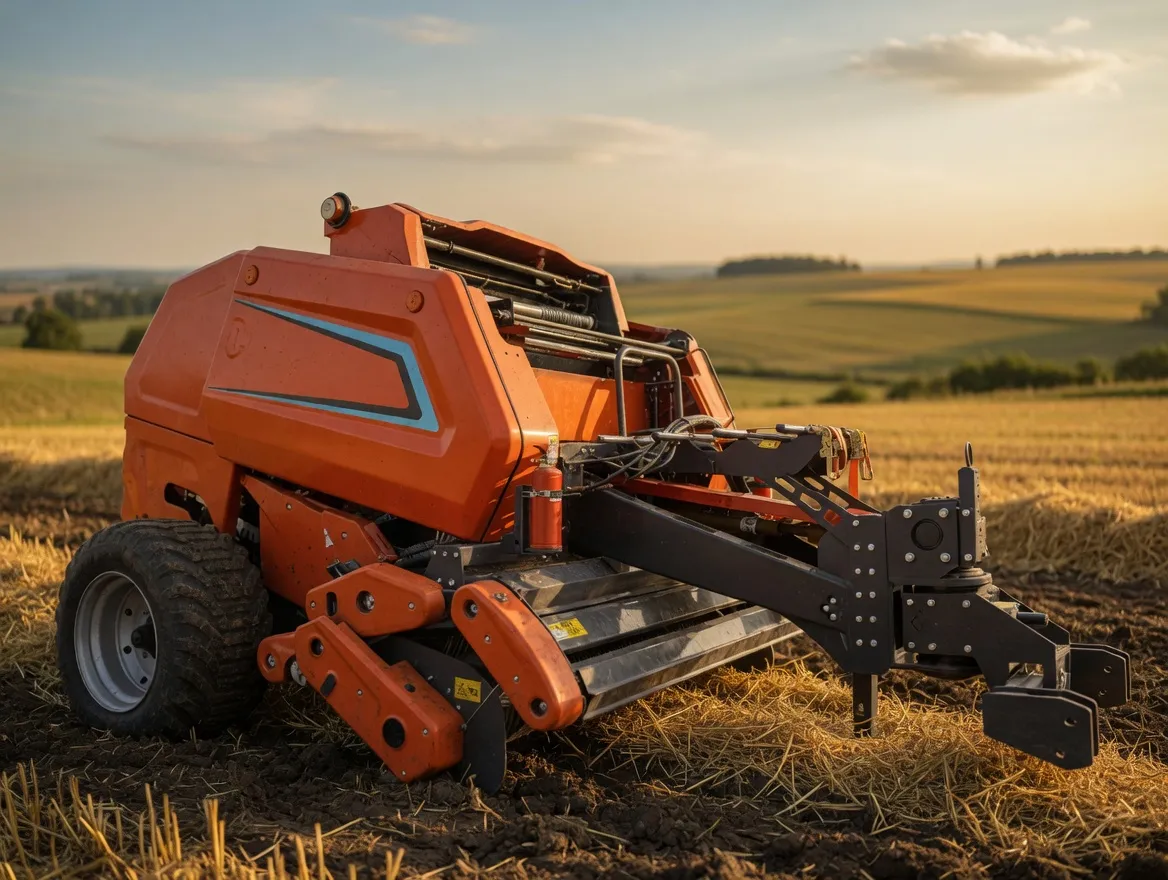
The capital cost difference between round bale and large square bale silage systems is substantial and represents the dominant practical reason why round bale silage is the default choice for most Australian operations up to a certain scale. A quality round baler in the 1.25m class — the most common Australian silage baler size — has a significantly lower purchase price than a large square baler of equivalent production quality. Adding the respective wrapping or baling costs to both systems, the round bale system entry cost is typically 40–60% lower than an equivalent-quality large square bale silage system.
The capital cost picture extends beyond the baling machine itself. Large square bale silage requires a large square baler (which typically requires a higher-horsepower tractor than equivalent round balers), specialised in-field wrapping equipment for the square bale format, heavy-duty stacker or loader capacity to handle 400–600 kg square bales, and purpose-built storage structures or pads sized for square bale dimensions. The round bale system, by contrast, uses a baler that most Australian farm tractors can handle, requires relatively simple satellite wrappers or combination units, and can be stored without purpose-built infrastructure in simple single-layer rows on a flat site. For the complete Ever-power round baler range, the capital investment range is broad enough to match nearly every Australian farm scale.
| Cost Element | Round Bale System | Large Square Bale System |
|---|---|---|
| Baler purchase price | Lower ✅ | Significantly higher |
| Required tractor HP | 55–100 HP ✅ | 130–180+ HP |
| Film cost per tonne DM | Higher (more surface area) | Lower ✅ |
| Handling equipment investment | Standard bale spike ✅ | Heavy-duty loader essential |
| Total system cost (complete) | Substantially lower ✅ | Substantially higher |
Silage Quality: How Bale Format Affects Fermentation
Density, Oxygen Exclusion, and Fermentation Profile Differences
Large square bales have a genuine density advantage over round bales from the same crop at the same moisture. The square bale chamber compresses crop from all four sides simultaneously, producing a more uniform and typically higher average density than a round bale chamber where compression is applied by belt or roller pressure against a rotating mass. A large square silage bale at 200–220 kg DM/m³ achieves a density premium of approximately 10–15% over a good round bale at 180–195 kg DM/m³ from the same crop. This higher density means less interstitial air per unit of dry matter, faster oxygen exhaustion after wrapping, and a slightly shorter aerobic phase before anaerobic fermentation is established.
The wrapping geometry also favours the square format in terms of film efficiency. A square bale has a lower surface-area-to-volume ratio than a round bale of equivalent volume — meaning less film is needed per tonne of DM to achieve equivalent oxygen barrier thickness. The flat faces of a square bale also allow the stretch film to achieve better adhesion without the spanning that occurs over surface irregularities on round bales, reducing the micro-gap oxygen infiltration risk at the film-to-crop interface. For large commercial operations where film cost is a significant operating expense, the per-tonne film cost difference between formats is meaningful.
However, the quality difference between formats is achievable rather than guaranteed — a poorly made large square bale with inadequate wrapping can produce worse silage than a well-made, densely compacted round bale with excellent wrapping management. The format establishes the quality ceiling; the management determines whether it is reached. For Australian operations where round bale management is well-established and consistently executed, the format quality difference is smaller in practice than the theoretical comparison might suggest. For more information about the Ever-power silage baler range, visit our About page.
Throughput, Labour, and the Scale Where Each Format Makes Sense
Production Rates and the Annual Volume That Justifies Each System
Large square balers have a significant throughput advantage over round balers in terms of dry matter production per hour. A large square baler in good conditions can produce 15–25 tonne DM per hour in heavy silage crops. A round baler in the 1.25m class produces approximately 5–10 tonne DM per hour in equivalent conditions. This three-to-one throughput ratio reflects the larger bale size and faster cycle time of the square baler relative to the round baler for equivalent crop input rates. For very large operations producing thousands of tonnes of silage per season, this throughput ratio determines whether the harvesting window is achievable — and it is the primary argument for large square balers in commercial feedlot and large commercial dairy operations.
For the majority of Australian farm-scale silage operations — producing 50–500 wrapped bales per year — round baler throughput is entirely adequate. The typical Australian mixed-enterprise dairy farm producing 200–300 round bales of silage per season can complete the cutting within a two to three-day weather window with a single 1.25m round baler and wrapper combination. The scale at which round baler throughput becomes a genuine constraint rather than simply a factor to manage is generally above 1,000 bales per year or above 400 tonnes DM per cutting — thresholds that most smaller operations don’t approach. For a silage baler for dairy farm operation in this typical Australian scale range, the round baler represents the appropriate system choice on both throughput and cost grounds.
Storage Efficiency, Transport, and Feed-Out
How Each Format Performs After the Bale Leaves the Paddock
Storage efficiency strongly favours large square bales. Because square bales stack uniformly and completely fill the available storage footprint, large square bale silage systems can achieve approximately 30–40% better storage density (tonnes DM per square metre of storage area) compared to round bales, which have irregular contact areas between bales in a stack and cannot fill the space between rounded surfaces. For operations with limited storage area — a common constraint on smaller Australian properties — this storage density difference can determine whether silage can be stored on-farm or whether off-farm storage is required.
Transport efficiency also favours large square bales significantly. A standard semi-trailer can carry substantially more tonnes DM of large square bale silage than round bale silage for the same load length because square bales stack and interlace with no wasted space between bale surfaces. For commercial operations that transport silage — from farm to feedlot, between farm blocks, or to custom feeding operations — the transport cost per tonne DM is meaningfully lower for large square bales than for round bales of equivalent quality.
Feed-out flexibility is one area where round bales have a significant practical advantage for smaller operations. A single round bale opened for feeding provides approximately 250–300 kg DM per bale — a practical feed-out unit for small herds (5–15 cattle) that can be fed out over 2–3 days without excessive face exposure. Large square bales, at 500–700 kg DM per bale, are more appropriate for larger herds where the entire bale is consumed within 1–2 days — their larger size makes feed wastage from face deterioration less of a concern. For operations with smaller mob sizes or requiring flexible daily feeding quantities, round bales provide practical feed-out control that large square bales cannot match.
Complete Comparison: Round Bale vs Large Square Bale Silage
A Structured Reference Across All Key Dimensions
| Dimension | Round Bale Silage | Large Square Bale Silage |
|---|---|---|
| Equipment capital cost | Low–Medium ✅ | High |
| Bale density (kg DM/m³) | 175–200 | 190–225 ✅ |
| Throughput (t DM/hr) | 5–10 | 15–25 ✅ |
| Film cost per tonne DM | Higher | Lower ✅ |
| Storage density | Lower | Higher ✅ |
| Transport efficiency | Lower | Higher ✅ |
| Feed-out flexibility (small herds) | High ✅ | Lower |
| Tractor HP required | 55–100 HP ✅ | 130–180+ HP |
| Suitable scale (bales/year) | 50–1,000+ ✅ | 300–5,000+ |
| Dominant Australian format | Yes ✅ | Commercial/feedlot only |
Which Format Is Right for Your Operation?
The Profile That Fits Each System
✅ Round Bale Silage Suits:
- Farm-scale operations: dairy, beef, mixed enterprise
- Annual volumes under 1,000 bales/year
- Tractors under 120 HP
- Smaller mob sizes requiring flexible feed-out
- Operations without purpose-built storage infrastructure
- Owner-operators with standard farm loaders
- Multi-use balers (silage and hay)
✅ Large Square Bale Suits:
- Commercial feedlots and large intensive dairies
- Annual volumes above 500–1,000 tonnes DM
- Operations with 150+ HP tractors
- Large mob sizes consuming a full bale per day
- Operations requiring transport efficiency (contracted supply)
- Large format storage with good site infrastructure
- Custom operators or large contractors
Ever-Power Round Balers: The Right Choice for Australian Farm-Scale Silage
Purpose-Built for the Scale and Conditions of Australian Silage Production

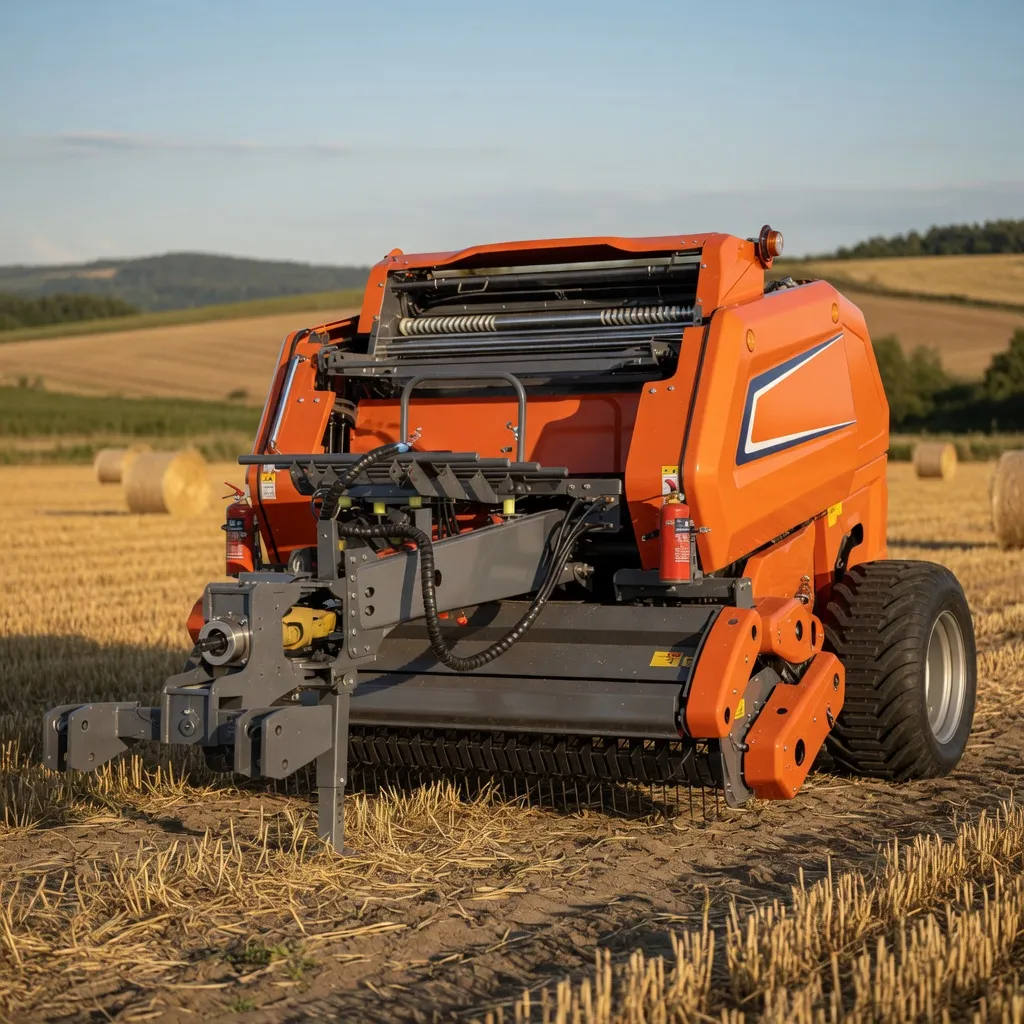
For the dairy farms, beef operations, and mixed enterprises that represent the bulk of Australian silage production, the round bale format remains the right choice — and within that format, the correct model from the Ever-power range matches the specific scale, crop type, and quality priorities of each operation. From the compact 9YG-1.0 ronde balenpers for smaller farms to the high-density S9000 Beyond for maximum quality commercial operations, the range covers Australian farm-scale silage needs comprehensively. The Charlton team provides model selection advice matched to your annual volume, tractor, crop types, and quality targets.
Choosing Your Silage Baling System?
Get a Personalised Model Recommendation
Charlton Industrial Area, Australia — round baler advice for every scale of Australian silage operation, from small farms to commercial production.
Veelgestelde vragen
Common Questions About Round vs Square Bale Silage

Australië Ever-power Forage Balers Co., Ltd.
📍 Charlton Industrial Area, Australia