
Why Bale Shape Directly Affects Silage Quality
More Than a Cosmetic Problem
A lumpy or misshapen bale from your မြက်ခြောက်ထုပ်ပိုးစက် is not simply an inconvenience. Bale shape determines how uniformly stretch film wraps around the circumference — a bale with prominent lumps or flat sides creates air pockets under the film at every surface irregularity. Those air pockets are entry points for oxygen, and oxygen in a silage bale triggers aerobic spoilage. The feed value lost to a spoiled outer layer on a lumpy bale can run to 10–15% of the total bale, multiplied across every bale produced during a cutting. For dairy operations relying on consistent dry matter intake from silage, the variation that comes with irregular bale density also affects ration formulation accuracy.
Beyond feed quality, lumpy bales create practical problems at every handling stage. They don’t stack evenly — a lumpy base bale causes the stack above it to lean, creating a collapse risk during storage. They roll unpredictably when moved with a bale spike, and the irregular contact surface means the wrapping film experiences higher point loads that increase puncture risk during transport. Understanding what causes lumpy bales in a silage baler machine is therefore a feed quality, safety, and farm efficiency matter all at once.
The causes of lumpy bale formation fall into four broad categories: inconsistent crop feed into the chamber, belt and roller mechanical issues, incorrect bale chamber pressure settings, and crop moisture problems. Each produces a distinct lump pattern that can be read diagnostically — knowing which pattern you’re seeing points directly to the root cause before you open a single access panel.
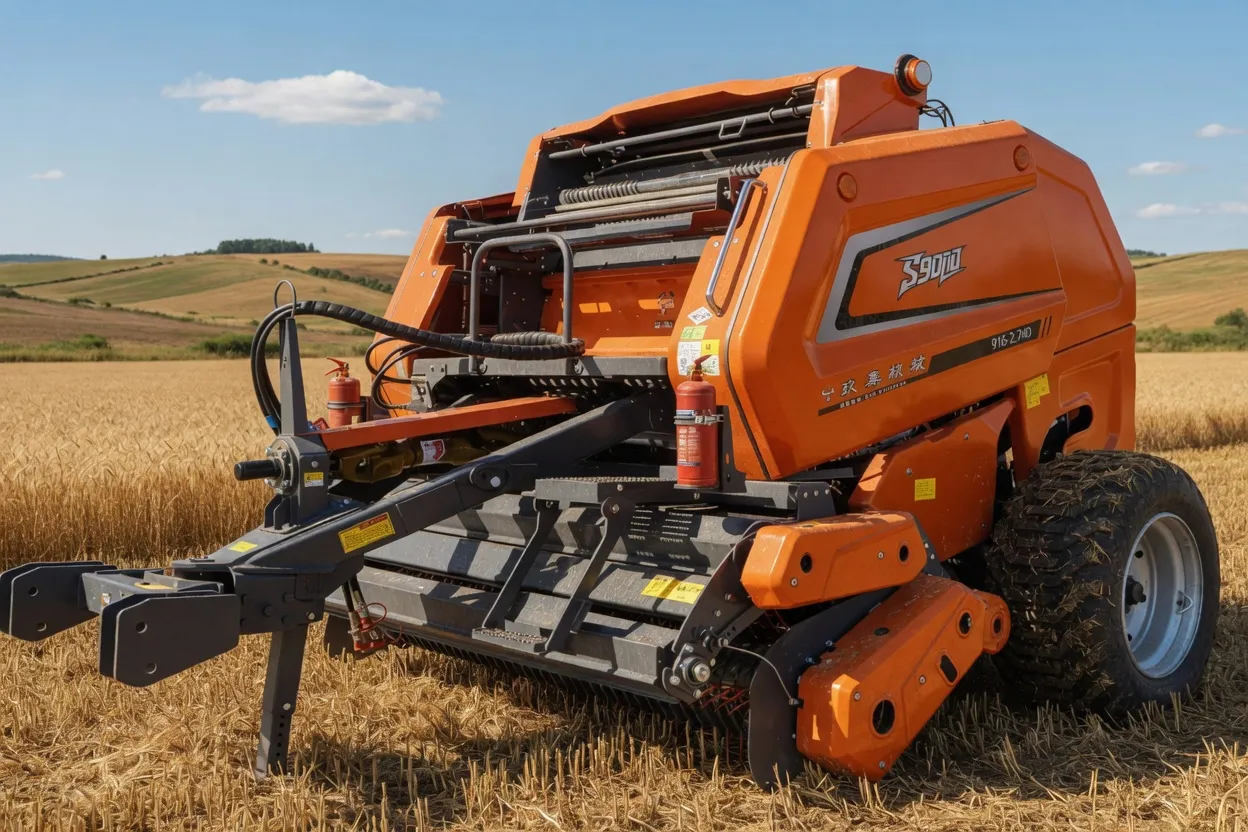
Cause #1 — Uneven Crop Feed into the Bale Chamber
The Most Common Source of Lumpy Silage Bales
Round bale formation requires a continuous, even flow of crop material entering the bale chamber from the full width of the pickup head. When material enters in surges — alternating between dense slugs and thin patches — the bale core builds unevenly. Dense slugs create high-pressure zones in the forming bale that push outward, while thin patches allow the bale surface to sink inward before the next slug arrives. The cumulative effect of repeated surge-and-gap feeding is a bale with a circumference that has ridges and depressions corresponding to the timing of each feed surge — the classic “lumpy bale” that operators recognise in the field.
Windrow Density Variation
Windrow density is the upstream cause of most surge-feed events. A windrow formed by a rake that was accelerating or decelerating at intervals — common when turning at headlands — has sections of high density where material piled during the slow turn and sections of low density in the straight run. The baler processes these density changes as sudden load spikes followed by underfeed periods, and the bale records each event as a surface irregularity. Using a finger wheel rake သို့မဟုတ် towed lateral rake at a consistent travel speed produces a more uniform windrow density that feeds into the baler without the surge pattern.
Off-Centre Pickup Alignment
When the baler isn’t tracking directly over the windrow centreline, material enters the pickup asymmetrically — more from one side than the other. The bale chamber then receives a skewed feed, building denser material on one side and leaving the opposite side soft. The result is a bale that is higher on one face and lower on the other — a distinct “D-shape” profile rather than the circular cross-section it should have. Check baler tracking by observing the pickup’s position relative to the windrow centreline from the tractor cab, and adjust tractor line or windrow position to achieve symmetric feed across the full pickup width.
✅ Fix: Crop Feed Consistency
- Rake at a consistent, continuous speed — avoid stops and starts that create density variation in the windrow.
- Track the baler centreline directly over the windrow — adjust tractor line to maintain symmetrical pickup feed.
- Set windrow width to 80–90% of pickup head width for even distribution across the full intake zone.
- Reduce travel speed in heavy first-cut crops — allow the intake rate to match the windrow density.
- Use a mower-conditioner to produce a more uniform crop layer before raking — conditioned stems flow more evenly.
Cause #2 — Belt Tension Imbalance and Tracking Problems
When the Chamber Drive Stops Compressing Uniformly
In a belt-drive silage baler, the bale forms against the surface of multiple parallel belts running over a series of rollers. Each belt applies compression force to the forming bale, and the quality of that compression — its uniformity across the bale width — depends entirely on all belts carrying equal tension. When one or more belts stretches more than others, loses tension, or begins tracking off-centre on the rollers, its contribution to bale compression drops. The bale develops lower density in the zone covered by the slack belt and higher density where the remaining belts maintain full tension. This creates a lumpy, ridged bale surface that maps directly to the belt positions within the chamber.
Diagnosing Belt Tension Imbalance
With the machine stopped and safely isolated, manually push on each belt at the midpoint between two rollers. Correct tension should produce minimal deflection — typically 10–15mm under moderate hand pressure as specified in the operator manual. A belt that deflects significantly more than its neighbours has either stretched or has a failed tensioner. Because silage-grade belts are under higher sustained loads than dry hay equivalents, uneven stretching across a set is common — the belts exposed to the highest bale weight (typically the lower rollers) stretch faster than those in upper positions.
Belt Tracking and Edge Wear
A belt that tracks off-centre on its rollers gradually shifts toward one edge, creating uneven width compression across that belt’s zone. Left uncorrected, the belt edge begins to contact the adjacent belt or the roller end flange, causing accelerated edge wear and eventual delamination. Check belt tracking by observing belt position on the rollers during a slow PTO-engaged run with no crop in the machine — each belt should run centred on all its rollers throughout the full rotation cycle. Tracking adjustment is typically made via the roller alignment adjustment bolts on the rear frame; refer to the operator manual for the specific sequence.
✅ Fix: Belt Tension and Tracking
- Test belt tension individually at mid-span — replace as a full set if any belt deflects significantly more than its neighbours.
- Never mix old and new belts — tension differential across a mixed set causes the same lumpy bale pattern as a worn belt.
- Observe belt tracking during a slow no-crop PTO run — adjust roller alignment if any belt drifts off-centre.
- Clean belt surfaces and all rollers at the end of each day — silage residue reduces belt grip and creates uneven compression.
- Check idler tensioner spring rates — a weakened spring reduces belt tension progressively without any visible indicator.
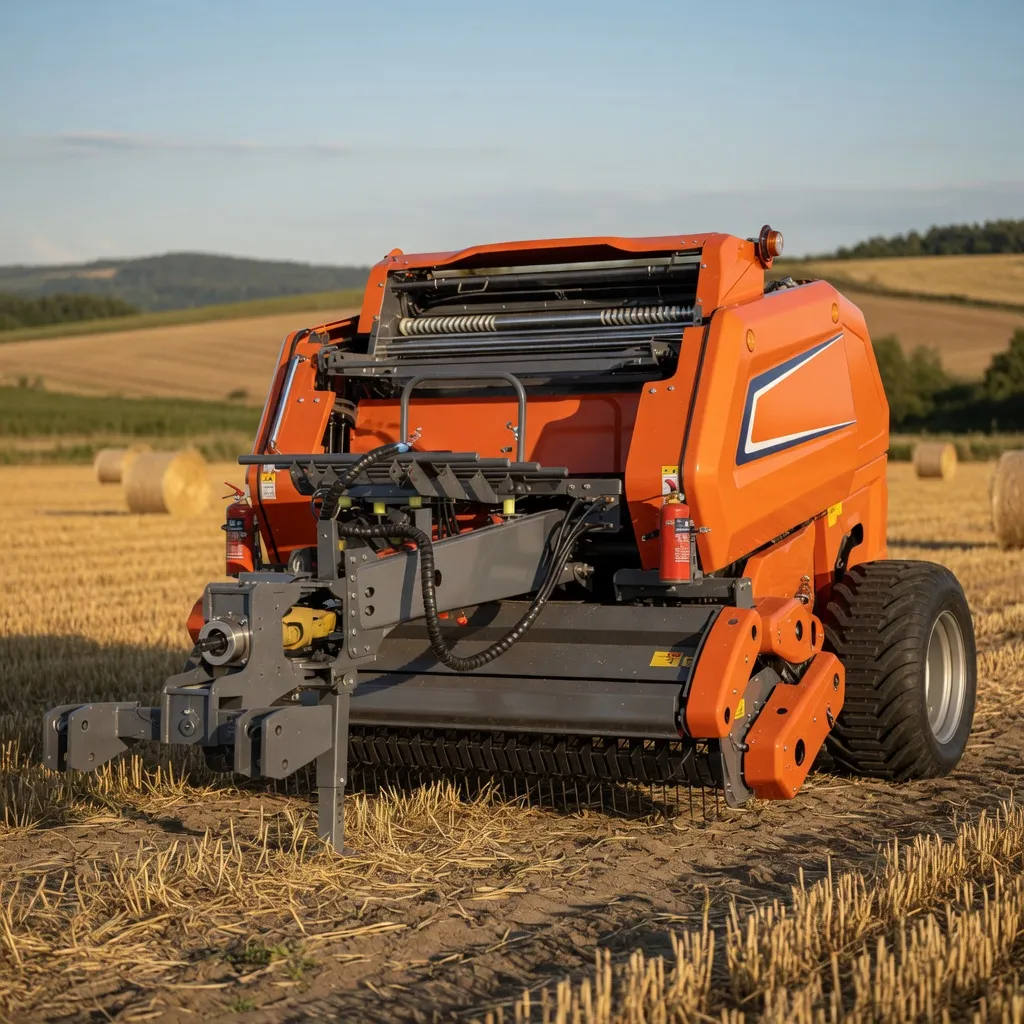
Cause #3 — Crop Moisture Outside the Optimal Range
Too Wet or Too Dry — Both Produce Lumpy Bales for Different Reasons
Crop moisture is the single most influential variable in bale shape quality. Silage crops at the correct moisture range — 50 to 65% — compress predictably under chamber pressure: the material is pliable enough to conform to the chamber geometry without springing back, and dense enough to build a firm, well-rounded bale core. Outside this window, the physical behaviour of the crop under compression changes in ways that directly produce lumpy or irregular bales, regardless of the mechanical condition of the machine itself.
Too Wet: Above 70% Moisture
Crop above 70% moisture is too heavy and too slick to rotate cleanly in the bale chamber. Rather than building into a firm cylinder, it tends to flatten at the bottom of the chamber under its own weight, creating a bale with a flattened base and rounded top — the characteristic “D-shape” or “pear shape” that operators in high-rainfall regions see frequently after wet cutting windows. The excess free moisture also lubricates the belt surfaces, reducing compression friction and allowing crop to slip rather than compact uniformly, which adds further surface irregularities to the forming bale.
Too Dry: Below 40% Moisture
Dry crop at below 40% moisture presents the opposite problem. The stems are brittle rather than pliable, and they don’t conform to the chamber geometry — they spring back after compression, leaving irregular density pockets throughout the bale. The lack of moisture also means there is no cohesion between stems, so the forming bale tends to develop loose zones that the belts cannot compact further. These loose zones show up as soft depressions on the bale surface — a dimpled or irregular bale profile that is genuinely a moisture problem, not a mechanical one. Checking moisture with a handheld forage meter before starting takes two minutes and removes the guesswork from this diagnosis entirely.
⚠️ Too Wet (>70%)
- D-shaped or pear-shaped bale
- Belt slip, reduced chamber rotation
- Seepage from bale during ejection
- Fix: Wilt crop — delay baling
⚠️ Too Dry (<40%)
- Dimpled, springy bale surface
- Loose zones in bale cross-section
- Bale spring-back after ejection
- Fix: Bale at higher moisture or early morning
Cause #4 — Incorrect Bale Chamber Pressure Settings
Variable Chamber Settings That Affect Final Bale Shape
Variable chamber silage balers allow the operator to set the target bale pressure — the point at which the chamber triggers the net wrap or twine sequence and opens for ejection. Running at too low a pressure setting produces a bale that is underfilled at ejection: the chamber opens before the crop has been compacted into a true round shape, resulting in a bale that is oval rather than cylindrical. The material hasn’t had sufficient time under compression to consolidate, and when the chamber releases, the bale settles into an irregular shape under its own weight. Running too high a pressure setting, conversely, over-compresses the outer layers while the core may still be loose, creating a hard outer surface with soft internal zones — a bale that looks round but dents under handling pressure.
For grass silage baler operation specifically, the correct pressure setting typically needs to be lower than the equivalent setting for hay, because the higher moisture content of silage crops means they are already denser per unit volume — less compression pressure is needed to achieve the same bale density. Operators who carry dry hay settings across to silage operations without adjustment frequently over-compress wet silage, which squeezes free moisture out of the bale during the compression phase and creates a wet, irregular surface that doesn’t wrap evenly.
✅ Fix: Chamber Pressure Calibration
- Start at the manufacturer’s recommended silage pressure setting — not the hay setting — at the beginning of each silage season.
- Produce three trial bales and measure diameter consistency and surface uniformity before adjusting.
- Reduce pressure by 10% increments if bales are showing seepage or excessive moisture squeeze-out at ejection.
- Increase pressure by 10% increments if ejected bales spring back to an oval cross-section after leaving the chamber.
- Record the setting that produces round, firm bales for each crop type and moisture level — conditions vary between cuttings.
Cause #5 — Worn or Damaged Drive Rollers
When the Rollers That Shape the Bale Are No Longer Round
The drive rollers in a belt-type silage baler serve two functions: they drive the belts under tension, and they act as the outer constraint that defines the bale’s circular cross-section. When a roller develops wear grooves, flat spots from a seized bearing, or surface corrosion pitting, it no longer presents a perfectly cylindrical contact surface to the belt. The belt tracks unevenly over the worn area, and the bale is compressed with a slightly different force profile on each revolution — building irregular layers into the bale that show up as ridges on the bale surface corresponding to the position of the damaged roller.
Roller damage in silage service is most commonly caused by a seized bearing that forces the roller to slide rather than rotate under the belt. A sliding roller generates enormous friction heat, which scores the roller surface and glazes the belt in a matter of minutes. The symptom is a distinctive burnt rubber smell during operation, followed by the appearance of a scored or flat-spotted roller when inspected. Replacing the bearing immediately when the first heat signs appear prevents the roller surface damage that creates the lumpy bale pattern. For operators looking for silage baler parts including replacement rollers and bearings, our team in Charlton Industrial Area stocks these components for the full Ever-power range.
✅ Fix: Drive Roller Inspection
- Spin each roller by hand with the machine stopped — any resistance or roughness indicates a bearing needing replacement.
- Check roller surface visually and by running a finger across — grooves or flat spots require roller replacement.
- Act on burning rubber smells immediately — they signal a seized bearing before the roller surface is damaged.
- Grease all roller bearings on the daily schedule during silage season — wet environment accelerates bearing wear.
- Pre-season: measure roller diameter at three points along the length — more than 2mm variation indicates uneven wear.
Cause #6 — Stuffer Mechanism Timing and Wear
When the Feed Delivery Cycle Is Out of Sync with the Chamber
On fixed-chamber silage balers and many variable-chamber designs, a stuffer mechanism delivers crop from the pickup feed channel into the bale chamber in timed charges. The stuffer moves a bundle of material into the chamber at a specific point in the bale rotation cycle — ideally when the chamber geometry is most receptive to receiving new material. When the stuffer timing drifts out of calibration — typically from worn drive components or a mis-set timing mark after a major service — the charges arrive at the wrong phase of the chamber rotation. The result is material being pushed in when the chamber is already in a high-pressure phase, creating density spikes that show up as hard lumps in the finished bale.
Stuffer arm wear is a related issue that produces slightly different symptoms. A stuffer arm that has lost its original profile from repeated contact with the crop charge delivers smaller volumes per stroke — the bale receives less material per stuffer cycle, building more slowly and with more variation between cycles. The bale is technically round but has a noticeably lighter, less dense feel and irregular surface texture that reflects the variability in per-cycle delivery. This type of lumpy bale is particularly common on high-hour machines that haven’t had a stuffer arm inspection as part of their မြက်ခြောက်ထုပ်ပိုးစက် maintenance routine. More information about our full silage equipment range is available at the About Us page.
✅ Fix: Stuffer Timing and Wear
- After any major service involving the stuffer drive, verify timing mark alignment before restarting — refer to the operator manual.
- Measure stuffer arm profile pre-season against the manufacturer’s new-part dimension specification.
- Observe bale density consistency: if bales are light with irregular texture, stuffer arm wear is the primary suspect on high-hour machines.
- Check stuffer drive chain tension — a stretched chain changes effective stuffer timing progressively as it wears.
- Lubricate stuffer pivot bearings on the daily maintenance schedule — tight pivots reduce stuffer stroke length.
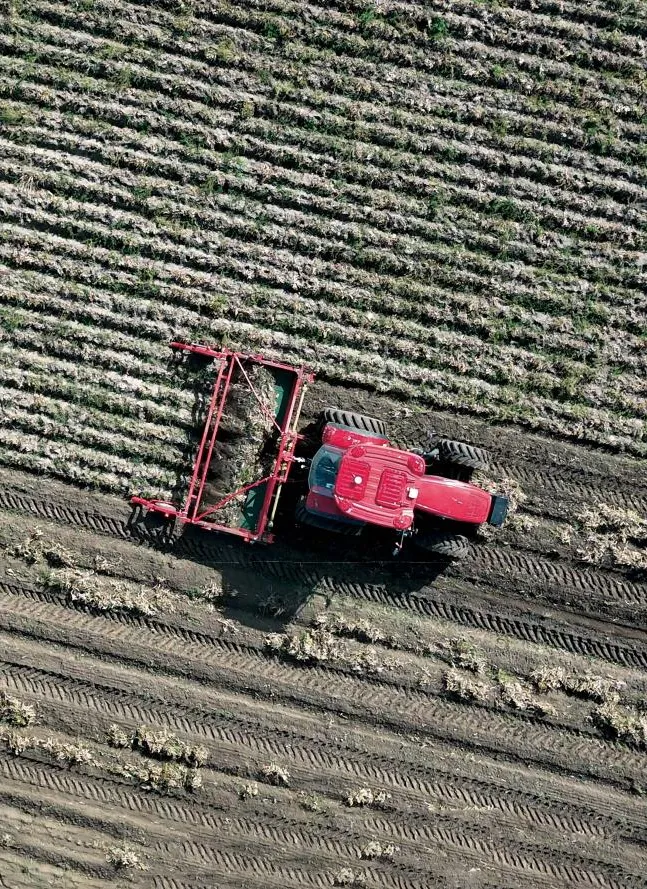
Read the Bale Shape — Match It to the Root Cause
Visual Diagnosis Guide for Lumpy Silage Bales
| Bale Shape / Symptom | Root Cause | First Action |
|---|---|---|
| Ridges along bale circumference at regular intervals | Surge feed — uneven windrow density | Check windrow uniformity; reduce travel speed |
| One side of bale higher / D-shaped cross-section | Off-centre pickup alignment or belt tension imbalance | Check tractor tracking; test individual belt tension |
| Flattened base, round top — pear shape | Crop too wet (>70% moisture) | Measure crop moisture; wilt before baling |
| Dimpled surface, springs back after ejection | Crop too dry (<40%) or pressure too low | Check moisture; increase chamber pressure setting |
| Hard ridge at consistent belt position around circumference | One belt over-tensioned or roller flat-spotted | Test all belt tensions individually; inspect rollers |
| Soft, light bale with uneven texture throughout | Stuffer arm wear or timing drift | Measure stuffer arm profile; check stuffer timing marks |
Why Ever-Power Silage Balers Produce Consistently Round Bales
Design Choices That Prevent the Causes of Lumpy Bales
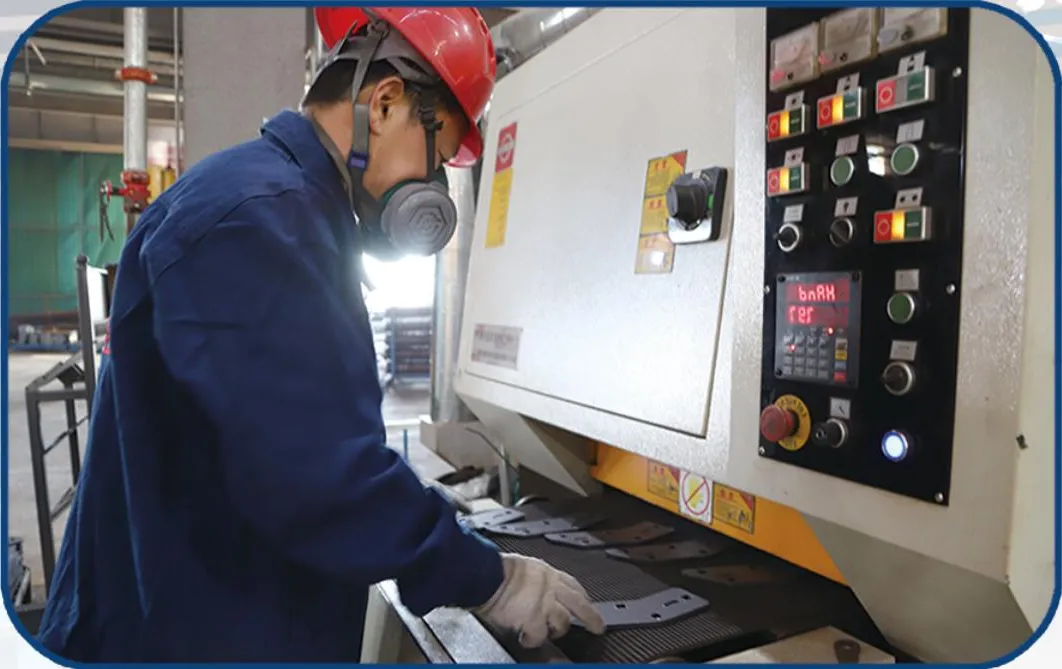
When evaluating a silage baler for sale, bale shape consistency is one of the most meaningful performance indicators to ask about — and it is directly influenced by the design and manufacturing tolerances of the chamber components. Ever-power balers use roller surface profiles machined to tighter cylindricity tolerances than standard agricultural specifications, which maintains the circular bale geometry across the full range of operating conditions. Belt sets are individually tension-tested before assembly to ensure all belts in a set have matched elongation characteristics — preventing the differential stretch that is the most common cause of bale shape irregularity in the field. For operators considering an upgrade from equipment that consistently produces lumpy bales, the Ever-power team can match the right model from the range to your specific crop type, property size, and moisture conditions.
Precision Roller Profiles
Rollers machined to cylindricity tolerances that maintain circular bale shape across the full operating range.
Matched Belt Sets
Belts individually tension-tested before assembly — matched elongation across all belts prevents differential tension.
Silage Pressure Calibration
Variable chamber pressure calibrated for silage moisture range, not carried over from dry hay specifications.
Local Parts & Support
Replacement rollers and belt sets stocked in Australia for fast turnaround during silage season.
Struggling with Lumpy Bales?
Talk to Our Silage Baler Technical Team
Charlton Industrial Area, Australia — diagnostic support, replacement parts, and equipment upgrade guidance for Australian operators.
အမေးများသောမေးခွန်းများ
Common Questions About Lumpy Silage Bales

Australia Ever-power Forage Balers Co., Ltd.
📍 Charlton Industrial Area, Australia