Buyer’s Guide
A used silage baler can be excellent value — or an expensive mistake. The difference is almost entirely determined by what you check before the transaction is finalised. This guide covers every critical inspection point: the worn components that reveal true machine condition, the service history questions that expose hidden problems, and the practical tests that no vendor should refuse.
🔍 Used Baler Inspection
✅ 10-Point Checklist
💰 Value Assessment
Why Used Silage Baler Purchases Go Wrong — and How to Avoid It
The Three Failure Modes of Used Baler Purchases
Used ເຄື່ອງບັນຈຸພັນຫຍ້າ purchases that go wrong typically follow one of three patterns. The first is discovering immediate mechanical failure during the first season — a problem that was already present at purchase but not identified in the pre-purchase inspection. The second is discovering progressive failure across the first 12–18 months as deferred maintenance reveals itself in accelerating component wear. The third is discovering that the machine is fundamentally unsuitable for the intended use — wrong chamber type, insufficient HP requirement, incompatible wrapping arrangement — because the purchase decision focused on price rather than specification.
All three failure modes are preventable with a structured pre-purchase inspection process that covers mechanical condition, service history, specification suitability, and a practical baling test. The ten inspection points in this guide cover each of these dimensions systematically. They are organised from the most revealing (the points that most reliably identify machines with hidden problems) to the most operational (the points that confirm the machine is fit for the specific farm’s use). Every point should be completed before any purchase commitment is made — a vendor who resists any part of this inspection process is telling you something important about the machine’s condition.
If the pre-purchase inspection of a specific machine cannot be completed — because it’s not available for inspection, the vendor won’t allow it, or it’s too far away to inspect practically — the correct response is to walk away rather than proceed on trust. The cost of travel to inspect a machine properly is trivial relative to the cost of purchasing one that fails in its first season. For the range of new Ever-power balers that offer known condition, warranty, and specification guarantee, see the product pages ຫຼື contact the Charlton team.
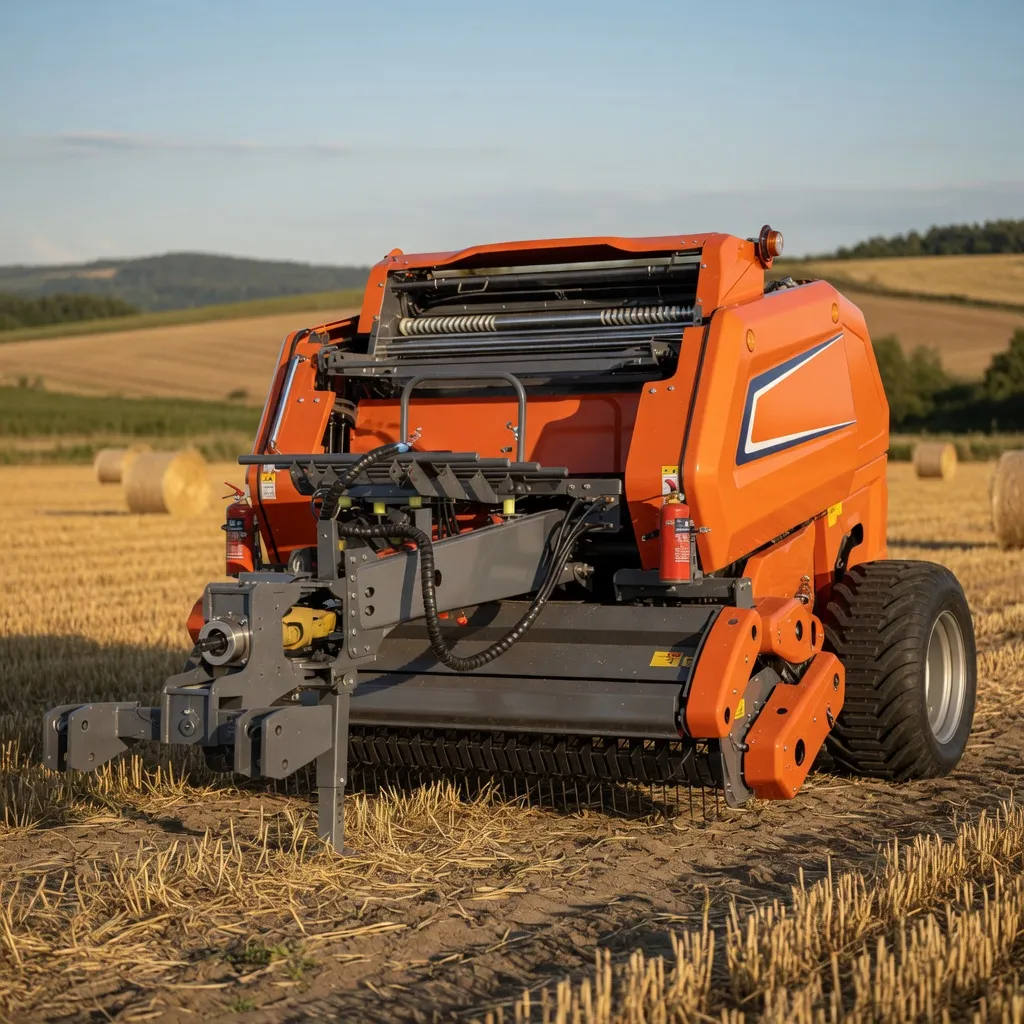
ເທ 9YG-1.25A ຮອບ Baler — this is the standard to compare any used machine against: known specification, warranty, and condition rather than the uncertainty of unknown service history
The 10 Pre-Purchase Checks — In Order of Priority
Start at Check 1 — a Failure Here Ends the Inspection
1
Service History and Hours
Ask for the service record or logbook before looking at anything else. A machine with documented service history — at minimum showing annual oil changes, greasing records, and belt/chain inspections — is significantly lower risk than one with no documentation. The vendor’s response to this request tells you a great deal: “here it is, let me show you” indicates an owner who maintained the machine properly; “I don’t have records but it’s been well looked after” is a red flag that the claim cannot be verified.
Silage balers are hours-intensive machines — a machine used exclusively for silage baling 250 bales per year runs approximately 100–150 hours per year including preparation and transport time. After 1,000 hours, most major wear-rate components (belt sets, pickup tines, drive chains, knotter components) will have been replaced at least once in a well-maintained machine; in a poorly maintained machine, they will be significantly overdue. Ask specifically: “What major components have been replaced and when?” and request receipts or parts invoices if available.
⚠️ Walk Away If: No service history exists AND the vendor cannot name any specific maintenance events (belt replacement year, bearing replacement location, last full service date). Complete absence of both documentation and recollection is a reliable indicator of deferred maintenance.
2
Belt Condition and Age
Belts are the most expensive regular wear component in a round baler and the one most often in deferred replacement. A full belt set for a commercial round baler costs $500–1,500 installed, and belts typically last 3–6 seasons of normal use in silage service (shorter in wet conditions or high-moisture crops that accelerate glazing and cracking). Inspect all belts individually — not just the most visible ones. Run a hand along the inside of each belt, feeling for cracking, fraying, join separation, or surface glazing. Look for: visible cracking across the belt width, fraying at belt edges, join areas that are bulging or lifting, and glazed (shiny) inner surfaces where the drive friction has been lost.
Ask when the belts were last replaced. If the vendor says “last season” and they look new, that’s consistent. If they say “last season” and you can see significant wear, either the usage was very heavy, the conditions were very wet, or the dates are inaccurate. Budget for belt replacement in your purchase cost calculation if belts are more than 50% worn — and negotiate the purchase price to reflect the replacement cost.
✅ Good Sign: Belt set replaced within the last 2 seasons with documentation or receipts. Factory-original belt appearance on a machine of stated age indicates either very light use or recent replacement — both worth clarifying.
3
Pickup Head and Tines
The pickup head is the first point of contact with the crop and the component most exposed to ground debris, soil contact, and impact damage. Inspect each individual pickup tine for straightness — bent or twisted tines reduce pickup efficiency and increase soil contamination risk. Check the tine carrier fingers for cracks, bends, or broken carrier welds. Rotate the pickup reel by hand with the machine off — it should turn smoothly and evenly with no binding points, rough spots, or sections that feel heavier than others (indicating debris accumulation inside the reel shaft).
Check the pickup height adjustment mechanism — it should move freely through its full range without binding, and the height should hold its set position without drifting under load. A pickup that won’t hold its height setting will drop too low during operation, risking soil contamination of the silage. Individual tines cost relatively little to replace, but a complete pickup reel replacement or major tine carrier repair is an expensive item that should be reflected in price negotiation.
⚠️ Flag: More than 3–4 missing or significantly bent tines, any cracked carrier fingers, or a pickup reel that binds or has rough spots in rotation. Count and document exactly which tines need replacement so you can estimate the repair cost.
4
Rollers and Bearings
Bearing condition is one of the most important and most difficult aspects of a used silage baler inspection because failed bearings typically give little visible warning before they cause serious damage. The standard inspection approach is to spin each accessible roller by hand — with the machine off and PTO disengaged — and listen and feel for bearing noise. A healthy bearing spins freely and silently with no roughness, clicking, or grinding. A bearing approaching failure produces grinding, roughness, or a metallic clicking sound that is unmistakeable once heard. Check all accessible rollers: the bottom rollers that carry the belt load are the highest-stress bearings and the ones most likely to show early wear.
After spinning by hand, try to detect radial play in accessible roller bearings by grasping the roller shaft and applying gentle lateral force in multiple directions — any perceptible movement beyond the manufacturer’s specified tolerance (typically 0.1–0.2mm) indicates a worn bearing that needs replacement. Budget $200–600 per bearing event including labour; multiple bearing replacements can equal the cost of a new machine’s depreciation for a full year. For silage baler parts from the Ever-power range, contact the Charlton team.
✅ Best Practice: Have a qualified mechanic run the roller spin and play tests — their trained ear and feel for bearing condition is significantly more reliable than an untrained assessment. A pre-purchase inspection by a trusted mechanic is worth the cost for any machine above $15,000.
5
Drive Chains and Sprockets
Drive chains and sprockets are wear items that should be assessed for elongation (chain stretch) and tooth wear. A correctly tensioned chain that has elongated beyond specification will skip under load — the failure mode that causes the dramatic bale formation failures and potential mechanical damage events during operation. To check for chain stretch: with the machine off, lift the chain away from a sprocket tooth midway between the chain’s two ends. A healthy chain lifts less than 25% of the sprocket tooth height; a worn chain lifts more than 50% and needs replacement. Sprocket teeth should be uniform — worn sprockets show pointed, hooked, or asymmetric tooth profiles that accelerate chain wear and produce skipping.
⚠️ Note: Chain and sprocket replacement is typically done as a set — replacing worn chains on worn sprockets accelerates the new chain’s wear. A machine with multiple chain-and-sprocket sets due for replacement has a significant parts cost ahead of it that should be priced into the negotiation.
6
Knotter or Net/Twine System
The knotter or binding system is one of the most complex mechanical assemblies on the baler and the source of the most common mid-season operational failures. For twine knotters: inspect the bill hook face for wear and edge sharpness (worn bill hooks skip ties), the knife edge for chips or blunting (a dull knife leaves long twine tails that cause tailgate jams), and the twine disc bearing for smooth rotation. Check all cam timing positions by manually rotating the knotter cycle with a bar — the mechanism should complete a full cycle without binding or rough spots.
For net wrap systems: check the net roll holder for smooth feed of the test roll (bring a roll of correct-spec net for this test), verify the cut knife makes a clean straight cut, and check the net feed rollers for wear or damage. Request a demonstration of a complete net wrap cycle with the vendor supplying the material. A knotter that hasn’t been properly maintained is difficult and expensive to rebuild — and a baler that misses every 5th tie is a significant operational problem during a time-sensitive harvest window. For ເຄື່ອງບັນຈຸພັນຫຍ້າ knotter and binding system advice, the Ever-power team can assist.
7
Frame, Welds, and Structural Integrity
Structural damage to the main frame is the most serious finding in a used baler inspection — in most cases it makes the machine not worth purchasing regardless of price, because frame repairs never fully restore original strength and the repaired area is prone to cracking at adjacent points under the cyclical loading of baling. Inspect all frame welds systematically by cleaning the frame surface and looking for: cracks running from weld heat-affected zones, previous repair welds over original factory welds (indicates a previous failure), peeling or bubbling paint at stress concentration points (indicates micro-cracking underneath), and any visible bending or deformation of frame members.
Pay particular attention to: the drawbar hitch attachment point (highest shock load zone), the tailgate hinge mounts (cyclic fatigue location), and the pickup attachment frame (impact load zone from ground strike). A machine with one repaired weld in a low-stress location is a different risk level from a machine with multiple repairs in high-stress locations — use judgment about severity and location rather than treating all weld repairs as equivalent disqualifiers.
🔴 Walk Away If: Cracks at the drawbar hitch, tailgate hinge mounts, or main chamber frame welds — these are high-stress, high-consequence failure points. Do not purchase a machine with unrepaired structural cracks in these locations regardless of how attractive the price appears.
8
PTO Shaft and Driveline
The PTO shaft transfers all the engine power from the tractor to the baler — it is a safety-critical component and a significant wear point in silage service where high-density baling creates peak torque loads. Inspect the PTO shaft by extending it fully to check the inner and outer telescoping sections move freely without binding. Check the universal joints at both ends by manually wiggling the shaft — any perceptible axial or radial play beyond 2–3mm indicates worn universal joints that need replacement. Check the guarding is complete and in good condition — PTO shaft guarding is a legal requirement in Australian agricultural workplaces and missing guards must be replaced before the machine can be legally operated.
✅ Check also: Confirm the PTO shaft stub diameter matches your tractor’s PTO output (1-3/8″ 6-spline for 540 RPM is standard for most Australian farm tractors; 1-3/4″ 20-spline for 1000 RPM is less common but present on some larger machines). A mismatch means the PTO shaft requires replacement before the machine can be connected.
9
Tyres, Wheels, and Running Gear
Tyres and wheel hubs are easy to inspect and easy to price — which makes them a straightforward negotiating point when they need attention. Inspect tyre tread depth and sidewall condition on both sides of the machine. Agricultural silage baler tyres typically carry heavy loads on soft ground and develop sidewall cracking from UV exposure and age even when tread depth is adequate — a tyre with deep cracking that reaches the cord layer is a blowout risk regardless of remaining tread. Check wheel hub bearing play by rocking each wheel radially — any perceptible looseness indicates worn wheel bearings that need replacement.
If the machine has hydraulic brakes (present on some larger round balers), test the brake actuation by connecting to the tractor hydraulics with a hitch line — the brakes should apply smoothly and hold without drifting. Check all tyre inflation pressures against the specification on the tyre sidewall before the operational test — under-inflated tyres on a heavy silage baler compress significantly under load and can cause instability on slopes.
10
The Operational Test — Bale a Test Windrow
The operational test is the non-negotiable final check that reveals problems invisible to any static inspection. Request the vendor set up a test windrow — or bring your own crop material — and run the machine through at least 3–5 complete bale cycles. During the test, observe: whether the pickup feeds consistently without missing or bunching, whether the bale builds evenly and symmetrically in the chamber, whether the pressure indicator (on variable chamber machines) operates consistently through the build cycle, whether the knotter or net wrap system completes a clean tie or wrap on each bale, and whether the tailgate opens and closes cleanly without binding.
After each bale is ejected, examine it for roundness and firmness — an inconsistently shaped or soft bale indicates either chamber issues or belt problems that the static inspection may have missed. Listen throughout the test for abnormal mechanical sounds: knocking, metallic rattling, squealing, or rhythmic clicking during the bale build cycle that is absent from the start-up phase (these rhythmic sounds typically indicate bearing damage that only manifests under load). A vendor who refuses an operational test on a machine claimed to be in working order is raising a serious red flag about machine condition.
✅ The Standard: A machine in the condition represented by the vendor should complete 5 bale cycles without any adjustment intervention or mechanical complaint. If the vendor or their operator has to make adjustments or intervention during the test, ask what they’re adjusting and why — it may indicate a chronic operational issue rather than a simple setting.
After the Inspection: How to Price the Machine
Translating Inspection Findings Into a Fair Offer
After completing the inspection, compile every identified deficiency with an estimated repair cost. Obtain quotes from a local machinery dealer or agricultural engineer for any items you cannot price confidently yourself — belt sets, bearing replacements, knotter rebuilds, and tyre replacements all have straightforward market prices that can be confirmed with a phone call. Add these costs to the asking price to calculate the effective total cost of the machine in serviceable condition. Compare this effective total cost against the current market price for the same model in good condition — the difference is the legitimate discount you should negotiate from the asking price.
Do not allow the vendor to pressure you into accepting identified deficiencies without price reduction on the grounds that “they’re only small things” or “you can fix that easily.” Every identified deficiency that is not corrected before purchase is a known future cost — it should either be repaired by the vendor before settlement or deducted from the purchase price so you can arrange the repairs yourself. For a silage baler for sale in new condition with known specification and warranty, the Ever-power Charlton team provides an alternative to the used market uncertainty.
When a New Ever-Power Baler Makes More Sense Than a Used Machine
The Cases Where Unknown Condition Risk Makes New the Better Value

Australia Ever-power Forage Balers — new machines from this range offer the known condition, warranty protection, and full service life that eliminate the condition uncertainty of the used machine market
A used machine at 60% of new price is not automatically better value than a new machine — because the 40% discount must be weighed against unknown remaining service life, potentially high near-term maintenance requirements, and the absence of warranty protection during the critical first operating season. Ever-power’s new silage baler range is priced competitively enough that the used-versus-new price gap in Australia is smaller than for premium European brands — meaning the additional cost of new is often justified by the peace of mind of known condition, documented specifications, warranty, and full remaining service life. For a specific price comparison between a target used machine and the equivalent new Ever-power model, the Charlton team is available to provide current pricing and help you make a genuinely informed comparison.
Comparing Used vs New Silage Baler Options?
Get Current New Machine Pricing From Our Team
Charlton Industrial Area, Australia — new machine pricing, specification comparisons, and honest advice on whether used or new makes better sense for your situation.
Contact Our Team →
Recommended Product
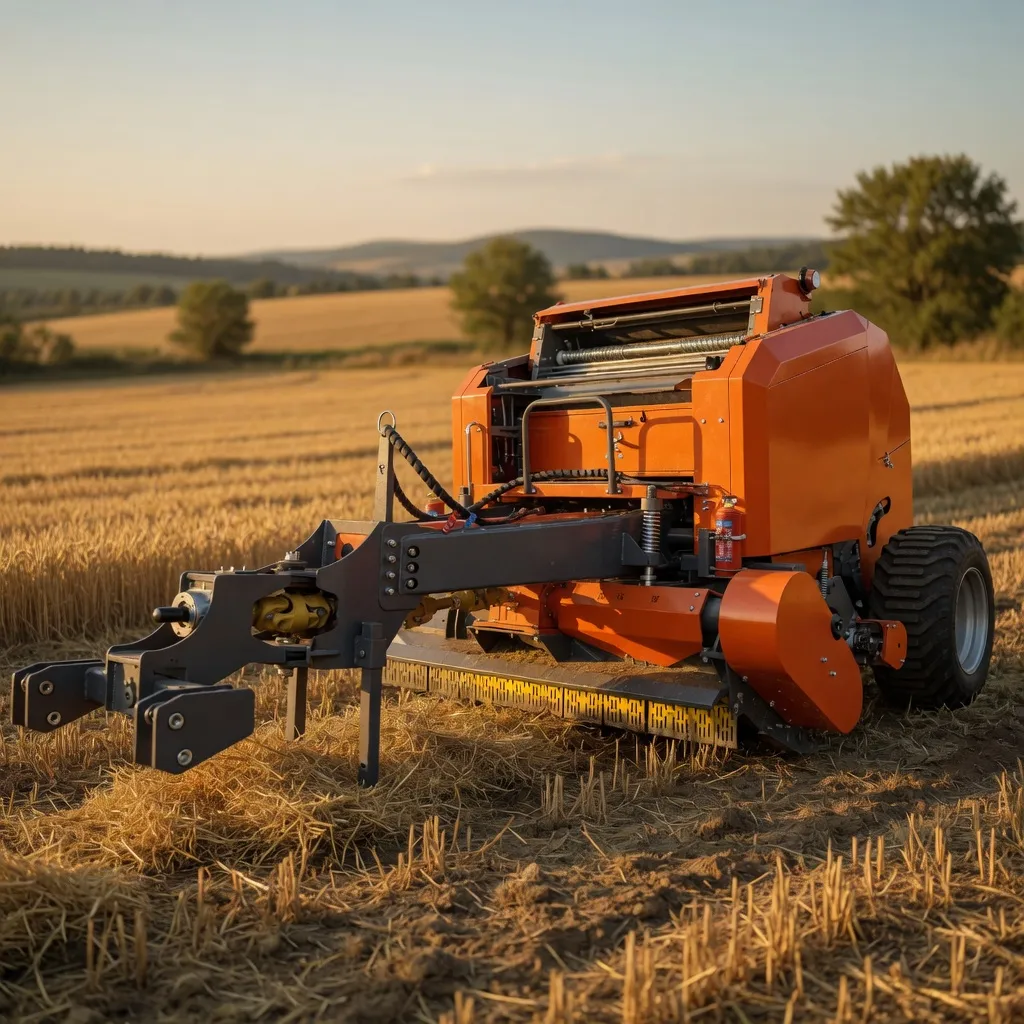
9YG-1.25 Type Round Baler
For buyers who are considering used silage balers in the 1.25m class — the most common size in the Australian used market — the 9YG-1.25 Type Round Baler new from Ever-power is worth comparing directly before committing to a used purchase. Its competitive purchase price means the used-versus-new cost gap in the 1.25m class is narrower than many buyers expect, and the new machine delivers known specification, warranty, sealed bearing specification, and full silage-rated belt compound — none of which can be guaranteed in a used machine of unknown service history.
For farms making their first silage baler purchase and using this checklist to evaluate used options, running the new 9YG-1.25 price alongside used market options ensures the purchase decision is genuinely informed — not simply defaulting to used because it feels cheaper without accounting for condition risk and remaining service life.
View 9YG-1.25 New Machine Price →
ຄໍາຖາມທີ່ຖາມເລື້ອຍໆ
Common Questions About Buying a Used Silage Baler
1. How many hours on a used silage baler is too many?+
There is no universal “too many hours” threshold — the relevant question is condition relative to hours, which is determined by the maintenance history and operating conditions. A well-maintained machine at 2,000 hours may be in better practical condition than a poorly maintained machine at 800 hours. That said, as a general guide: under 500 hours with documented service history represents a machine that should have most of its service life remaining; 500–1,500 hours is the typical range for competitively priced used machines where condition varies most widely; above 1,500 hours on a machine without documentation of major component replacements (belts, bearings, chains) warrants very careful inspection because multiple wear items will be at or beyond service limit. High-hour machines can still be good value if the price reflects the service investment they’ll need — but require more thorough inspection and more accurate cost estimation of upcoming maintenance.
2. Should I use a machinery inspection service for a used baler purchase?+
Yes — for any used baler purchase above approximately $12,000–15,000, a professional pre-purchase inspection by a qualified agricultural machinery mechanic is money very well spent. A competent mechanic can assess bearing condition, chain elongation, and structural integrity with significantly more accuracy than a non-specialist buyer, and their written inspection report provides both confidence in a good machine and leverage in negotiating price adjustments on an imperfect one. The inspection cost of $200–400 is trivial relative to the purchase price and the cost of discovering a concealed problem after purchase. Many Australian agricultural machinery dealers and rural mechanics offer pre-purchase inspection services — if the vendor refuses to allow a third-party inspection, treat that refusal as a serious red flag about the machine’s condition.
3. What is a fair price for a 5-year-old used round baler in good condition?+
A 5-year-old round baler in genuinely good condition — with documented service history, correct wear items (belts, chains) in usable condition, and a clean operational test — typically trades at 50–65% of its original purchase price in the Australian market. A machine in above-average condition with recent major service items (new belts, recent bearing replacement) may trade at the higher end of this range; a machine with deferred maintenance visible in the inspection may be priced at 35–50% of original value by an informed buyer. These percentages are guidelines — specific prices vary significantly by brand, region, season, and local supply/demand. The most reliable price reference is checking current listings on Australian rural machinery platforms (AgDealer, Farmmachinery.com.au, TradeMe for NZ reference) for similar models at similar age and condition.
4. Can I buy parts for any brand of used silage baler from Ever-power?+
Ever-power stocks parts specifically for the Ever-power range of silage balers — belts, bearings, tines, knotter components, and drive parts for the models in the current and recent product range. For other brands, Ever-power is not a general parts distributor, though some generic components (bearings to standard specifications, common chain sizes, agricultural tine patterns) may be compatible across brands. If you are considering purchasing a used baler of a different brand, parts availability from the original manufacturer or their Australian distributor is an important pre-purchase question — balers from brands without local Australian parts support can have extended downtime during critical harvest periods when parts must be imported. Always confirm parts availability and lead time before purchasing any used baler that is more than a few years old.
5. Is it worth buying a used baler that needs new belts immediately?+
Buying a used baler that needs immediate belt replacement is not a deal-breaker — provided the purchase price reflects the cost of the belt replacement. A machine priced $1,200 below market because it needs a belt set that costs $1,200 to replace is not a bargain — it’s a break-even. A machine priced $2,000 below market with only a belt set needed is genuinely good value. The calculation is simple: market price for a good-condition equivalent machine, minus the cost to bring this machine to equivalent condition (belts plus any other required work), equals the fair price for this machine. If the vendor’s asking price is above this number, negotiate it down or walk away. The key is to price all required work before finalising the offer, not to discover the costs after purchase.

ບໍລິສັດ Ever-power Forage Fibreers ອົດສະຕຣາລີ ຈຳກັດ
📍 Charlton Industrial Area, Australia
✉️ [email protected]