
Why Crop Moisture Controls Every Aspect of Silage Quality
The Variable That Determines Whether Everything Else Works
When operators ask why their サイレージベーラー is producing poor-quality feed, the answer very frequently comes back to crop moisture. Moisture at baling time sits at the intersection of every downstream quality factor: the fermentation chemistry that determines whether the silage preserves correctly, the physical bale formation process that determines whether the bale is firm and round, the wrapping adhesion that determines whether the anaerobic seal holds, and the storage stability that determines how long the bale maintains its nutritional value after wrapping. Getting moisture right doesn’t guarantee perfect silage, but getting it wrong almost certainly guarantees problems with at least two or three of these downstream factors simultaneously.
The biochemistry behind this is relatively straightforward. Silage preservation is fundamentally an anaerobic fermentation process: lactic acid bacteria present on the crop produce lactic acid from soluble sugars, which rapidly lowers the pH of the ensiled material to a point where spoilage organisms can no longer survive. The speed and completeness of this acidification depends on the ratio of soluble sugars to water in the crop — and water content is the denominator of that ratio. Too much water dilutes the sugar concentration, slows the pH drop, and gives unwanted organisms a longer window to establish. Too little water reduces microbial activity below the threshold needed for effective fermentation while also creating physical problems for the サイレージベーラーマシン trying to compact the dry, springy stems into a dense bale.
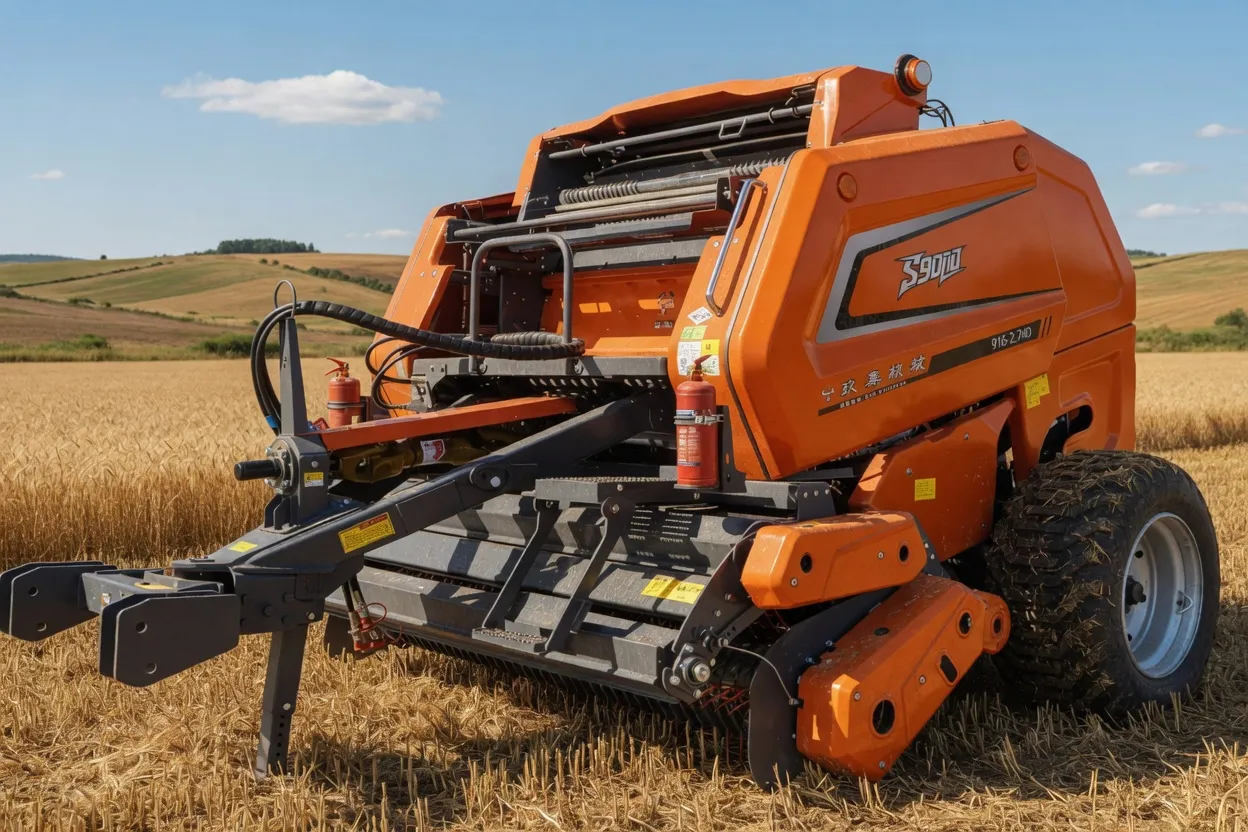
The 40–65% moisture window represents the range within which these competing requirements are simultaneously satisfied: enough moisture for active lactic acid fermentation, little enough to avoid the dilution and effluent problems of very wet silage, and a physical consistency that allows the round baler to form dense, well-shaped bales. Within this range, the ideal sub-window is 50–60% — the practical target for most Australian silage crops. Understanding why the boundaries of this range exist, and what specifically goes wrong when you’re outside them, equips you to make better timing decisions and respond effectively when conditions force you to bale at non-ideal moisture levels. For the full Ever-power range of silage baler machines, visit our product pages.
The 40–65% Moisture Window: What Each Zone Means
Breaking Down the Range Into Practical Operating Zones
The 40–65% figure is often quoted as a single range, but experienced operators understand it as a spectrum of different outcomes. The optimal zone, the workable margins, and the problem zones each have distinct characteristics that affect silage quality, baler performance, and wrapping effectiveness in different ways. Understanding which sub-zone you are actually in helps you make the right decisions about whether to bale, wait, or adjust your approach.
40%
50%
60%
65%
75%
The Ideal Zone: 50–60% Moisture
Within this sub-range, all the key silage quality requirements converge. The soluble sugar concentration in the crop water is high enough to support rapid, complete lactic acid fermentation — pH drop to the preservation threshold typically occurs within 48–72 hours of wrapping in well-managed bales. The crop physical properties allow the bale chamber to compact material into a firm, round bale without belt slip or chamber pressure problems. The bale surface is consistent enough for stretch film to achieve the intimate contact needed for a reliable anaerobic seal. Effluent production is minimal, so nutrient leaching from the bale is low and the storage site remains clean.
For most Australian grass silage crops — ryegrass, tall fescue, cocksfoot, kikuyu, and mixed pastures — reaching the 50–60% target typically requires wilting the cut crop for 12–24 hours under good drying conditions after mowing. Legume-dominant crops (lucerne, clover) wilt faster in the first hours after cutting but can also lose moisture below the lower limit more rapidly in hot, dry Australian conditions — requiring closer monitoring than pure grass crops. The exact wilting period varies significantly between seasons, regions, and cutting windows, which is why measuring rather than estimating is the correct approach.
The Low Margin Zone: 40–50% Moisture
Silage baled at 40–50% moisture ferments successfully but requires more careful management than the ideal zone. The reduced moisture means a lower initial pH and a drier bale surface — fermentation still proceeds, but more slowly and with less buffer against aerobic infiltration through minor wrapping defects. Bale formation is generally good at this moisture range; the slightly drier material compacts well and holds its round shape without the spring-back tendency of very dry material. The most significant quality risk at the lower margin is incomplete fermentation in very dry conditions (below 45%), where microbial activity slows to the point that pH may not drop fully to the preservation threshold in the bale centre.
The High Margin Zone: 60–65% Moisture
Between 60 and 65% moisture, silage quality can still be good if wrapping is completed promptly and the number of wrap layers is adequate (minimum 6 layers rather than the 4 layers that may be sufficient at 50–60%). The fermentation is rapid and the bale core acidifies quickly. The bale shape quality begins to decline — heavier bales are more susceptible to deformation on the wrapping table and in the stack. Effluent production starts to become noticeable, particularly in the first week after wrapping, with some nutrient leaching at the bale base. Baler belt slip risk increases, especially later in the day when cumulative belt surface contamination from plant juice is highest.
Below 40% Moisture: Why Baling Too Dry Creates Problems
Dry Crop, Poor Fermentation, and a Baler Under Stress
Crop moisture below 40% is genuinely below the lower limit of reliable silage fermentation, not just the lower limit of the preferred range. At this moisture level, the water activity in the crop material is insufficient to support the rapid anaerobic fermentation that silage preservation depends on. Lactic acid bacteria require a minimum moisture level to metabolise the crop’s soluble sugars into lactic acid — in very dry material, microbial activity is so slow that the bale pH may remain elevated for weeks, giving spoilage moulds and yeasts a prolonged window in which to establish before the preservation chemistry takes effect. The resulting silage can appear structurally intact but has poor fermentation profile and elevated mycotoxin risk from mould activity during the slow-fermentation period.
The baler itself also struggles with very dry crop. Stems below 40% moisture are brittle and stiff — they don’t conform to the bale chamber geometry under compression the way correctly wilted material does. Instead of packing into a dense, cohesive cylinder, they spring back after each compression event, leaving the bale with uneven density zones and a surface that dimples or deforms under handling pressure. The bale ejected from a silage baler working on over-wilted crop often looks round at ejection but settles into an irregular oval shape within minutes as the springy stems find their equilibrium position after release from chamber pressure. This irregular shape is particularly problematic for wrapped bale storage, where an uneven surface contact allows air infiltration at every surface irregularity.
⚠️ Specific Problems at <40% Moisture
Silage Quality:
- Incomplete lactic acid fermentation
- Slow or failed pH drop to preservation level
- Elevated mould and yeast risk
- Increased mycotoxin potential
Baler Performance:
- Irregular, springy bale shape
- Bale deformation after ejection
- Poor film adhesion on wrapping
- Increased bale breakage risk in stack
Above 65% Moisture: Why Baling Too Wet Is Worse
Effluent, Clostridial Risk, and a Baler That Struggles to Form Bales
Very wet silage above 65–70% moisture is generally regarded as the higher-risk end of the range for both feed quality and machine performance reasons. On the feed quality side, the excess water dilutes the soluble sugar concentration, which slows the rate of pH drop. This extended high-pH window creates the conditions for clostridial bacteria — anaerobic spoilage organisms — to establish before lactic acid bacteria can dominate. Clostridial silage is nutritionally poor, has high butyric acid content (which livestock typically refuse), and generates significant dry matter loss through the fermentation process itself. Wet silage also produces substantial effluent drainage from the bale base — the drained liquid carries soluble nutrients, reduces the bale’s dry matter concentration, and contaminates the storage site with organic leachate.
For the grass silage baler, baling above 65–70% moisture causes belt slip, deformed bales, and excessive wear on the machine interior. The weight of a very wet bale — which can exceed the dry design load by 40% or more — stresses every loaded component: belt tensions, roller bearings, PTO driveline, and the tailgate hydraulics that have to hold and release the bale on every ejection cycle. Operators who consistently bale at high moisture levels see proportionally shorter component life — not because the machine is defective but because it is operating outside its design load envelope for more of its service hours than operators who manage wilting to hit the optimal window.
⚠️ Specific Problems at >65% Moisture
Silage Quality:
- Clostridial fermentation risk
- High butyric acid — livestock refusal
- Significant effluent and nutrient loss
- High dry matter losses in fermentation
Baler Performance:
- Belt slip from plant juice lubrication
- Pear-shaped or flattened bales
- Overloaded bearings and driveline
- Film stretching and puncture on wrapper
Moisture Targets by Crop Type for Australian Conditions
Not All Silage Crops Wilt the Same — or Ferment the Same
The 40–65% range applies to all silage crops, but the recommended target within that range, the time required to reach it, and the risk of over- or under-wilting vary considerably between crop types. Australian silage operators work with a wider range of crop species than many other regions — from high-sugar temperate grasses in the southern states to tropical grasses and legume-dominant pastures in subtropical and northern regions — each with different wilting characteristics and fermentation chemistry.
| Crop Type | Target at Baling | Wilting Notes |
|---|---|---|
| Perennial ryegrass / tall fescue | 50–60% | High sugar content supports rapid fermentation. 12–24 hrs wilting typically sufficient in good drying conditions. |
| Lucerne (alfalfa) | 55–65% | Low WSC — wilt to slightly higher moisture than grass to maintain microbial activity. Over-wilting risk in hot, dry conditions. Consider inoculant. |
| Mixed grass/clover pasture | 50–60% | Clover content buffers fermentation — inoculant beneficial if legume fraction >30%. Monitor wilting carefully; clover loses moisture rapidly. |
| Tropical grasses (kikuyu, setaria) | 55–65% | Lower WSC than temperate grasses — inoculant is strongly recommended. Higher target moisture to support fermentation. Watch for clostridial risk above 68%. |
| Maize / whole-crop cereal | 60–68% | High starch content supports fermentation at higher moisture. Typically direct-cut, not wilted. Stage of maturity (hard dough) is the primary timing indicator. |
| Sorghum / sudan grass | 55–65% | High buffering capacity — inoculant recommended. Wilting reduces prussic acid risk if applicable. Monitor carefully to stay within range in hot conditions. |
How to Measure Crop Moisture Before Baling
The Four Methods Compared — from Quick Field Estimate to Lab Accuracy
The fundamental error in most silage moisture problems is relying on visual or tactile estimates rather than measurement. Experienced operators develop a reasonable sense of crop moisture from handling and field observation, but even experienced operators misjudge by 5–10 percentage points in conditions they’re less familiar with — and a 10-point error at 60% (putting you at 70%) is the difference between a good bale and a clostridial risk. Measuring takes two minutes; the cost of a measurement device is recovered in a single cutting campaign by avoiding one bad batch of bales.
1. Handheld Forage Moisture Meter
⭐ Recommended Field Method
Insert probe into a representative grab of crop material for an instant moisture reading. Accuracy typically ±2–3 percentage points on calibrated meters — sufficient for practical baling decisions. Cost: $150–400 AUD. Takes under 2 minutes per reading. Take 3 readings from different windrow positions and average them. Best value-for-accuracy tool available for field use.
2. Microwave Oven Dry Weight Method
High Accuracy — 15 min
Weigh a sample of fresh crop (approximately 100g), microwave on medium power in 30-second increments until stable weight is reached, re-weigh. Moisture % = ((fresh weight − dry weight) / fresh weight) × 100. Accuracy comparable to lab methods. Practical for shed-based decisions before deploying to the field.
3. Hand Squeeze / Twist Test
Quick Estimate — ±8%
Grab a handful of crop, squeeze tightly in fist for 30 seconds. If juice runs freely: >70%. If hand is wet but no free juice: 60–70%. If hand is moist and crop holds a ball that slowly falls apart: 50–60%. If no moisture on hand: <50%. Useful for rapid yes/no field decisions but not reliable enough for precise threshold calls.
4. Laboratory Analysis
Highest Accuracy — 24–48 hrs
Send fresh crop sample to a forage analysis laboratory — reports moisture plus full nutritional profile. Most accurate method available, but the 24–48 hour turnaround makes it unsuitable for baling timing decisions. Best used for seasonal baseline calibration: measuring the moisture of a sample when the squeeze test indicates “ready,” then adjusting your field sense based on the lab result.
Managing the Wilt to Hit the Target Window
Practical Strategies for Controlling Moisture Drop After Mowing
The cut-to-bale window is the period during which the operator can actively influence crop moisture. Once the crop is mown, moisture drops under the combined effects of solar radiation, ambient temperature, wind, and the rate of stomatal opening — all environmental variables the operator cannot control. What the operator can control are the physical configuration of the swath (width, density, whether to ted or merge) and the timing of baling relative to the mowing operation. Getting these decisions right is what consistently hitting the moisture target is about.
Mowing Time and Swath Management
Mowing in the morning (after dew has dried but before midday heat) produces the fastest initial wilt rate in most Australian conditions. The afternoon and early evening hours when solar radiation is declining represent the slowest wilting period — crop mown late in the afternoon in hot conditions may sweat under its own heat rather than drying efficiently. Using a mower-conditioner rather than a plain disc mower accelerates wilting by 20–30% in temperate grass crops by crimping the stem to allow moisture to escape more rapidly — this is particularly valuable in narrow harvest windows. The 9GQY-3.2 mower conditioner is designed to produce the stem conditioning that accelerates wilting to target moisture in Australian silage conditions.
Tedding and Merging
Spreading the swath with a tedder shortly after mowing dramatically increases the surface area exposed to solar radiation and airflow, accelerating moisture loss by 30–50% compared to an unspread swath in the same conditions. Tedding is particularly valuable in high-density first-cut crops where the compact swath would otherwise restrict airflow to the inner layers. When the crop has reached target moisture, rake it back into a windrow with width matched to the pickup head of the サイレージベーラー — 80–90% of the pickup head width for even feeding across the full pickup zone.
Weather Risk Management
In Australian conditions, the two most common wilting-management failures are baling too wet after rain re-wets the windrow, and baling too dry because a hot, windy day removes moisture faster than expected. For rain re-wetting: measure rather than assume the crop is still at pre-rain moisture — surface-wet crop can measure 10–15 percentage points higher than it did the previous day even after the standing puddles have drained. For hot-day over-wilting: check moisture more frequently in afternoon sessions during heatwave periods — a crop that was at 58% at noon can be at 44% by late afternoon in hot north winds. If conditions force baling outside the target window, applying a silage inoculant during baling partially compensates — particularly at the wet end of the range where clostridial risk is elevated.
Silage Inoculants: When They Help — and When They Don’t
Understanding What an Inoculant Can and Cannot Do for Moisture Management
Silage inoculants — products containing high concentrations of selected lactic acid bacteria strains — are a valuable tool for managing fermentation quality, particularly when crop moisture or sugar content is suboptimal. Applied at baling, they rapidly establish a dominant population of efficient lactic acid bacteria before spoilage organisms can gain a foothold, accelerating the pH drop toward preservation level and reducing the fermentation-phase dry matter losses that occur when spoilage competes with desirable fermentation.
However, inoculants have important limitations in the context of moisture management. They cannot compensate for moisture that is genuinely outside the workable range. At above 70–72% moisture, even a good inoculant cannot outpace the clostridial activity that the high-moisture, elevated-pH environment supports — the fermentation chemistry simply cannot proceed fast enough to lower pH before anaerobic spoilage establishes. Similarly, below 38–40% moisture, even the best inoculant cannot create the water activity that microbial metabolism requires — the bacteria are present but can’t function effectively in very dry material. An inoculant at 58% moisture with marginal weather conditions is a sound risk-management tool; an inoculant at 72% moisture is not a solution to crop that should have been left to wilt another day. For more information about our 酪農場向けサイレージベーラー product range, visit the About Us page.
Ever-Power Balers: Designed to Handle the Full Silage Moisture Range
Variable Chamber Design, Silage Belt Compound, and a Range for Every Operation
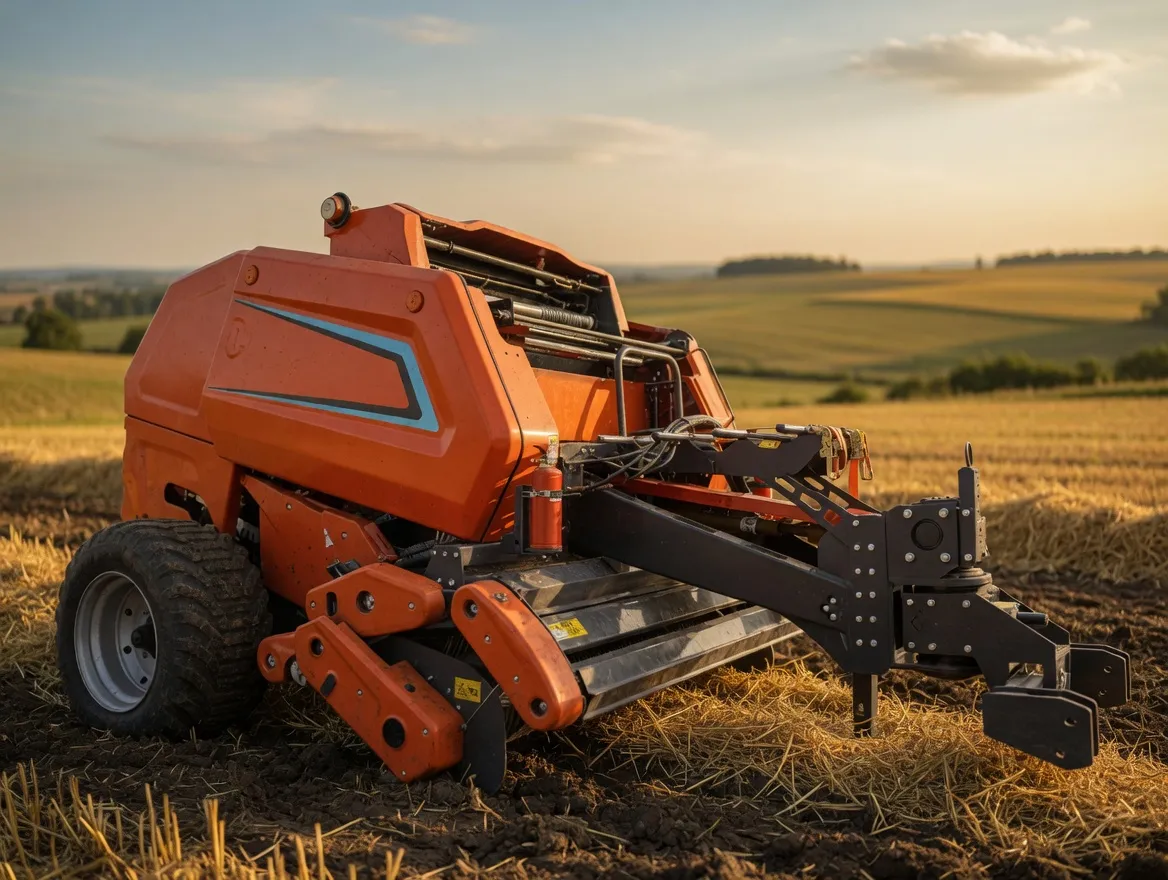
The ability to hit the 50–60% moisture window consistently is partly about timing and crop management — but it is also about having a baler whose mechanical design can handle the actual moisture range of silage crops in Australian conditions without performance compromise. Ever-power balers use variable chamber designs and silage-rated belt compounds that maintain bale density and shape across the 40–65% range without requiring constant pressure adjustment between sessions. The sealed bearing and belt tensioner specifications are calibrated for the wet end of the silage moisture range — where plant juice contamination and bale weight loads are highest — providing the reliability margin that operators baling at 60–65% in unpredictable weather conditions need to maintain productivity.
Silage-Rated Belt Compound
Belt friction spec maintained from 40% to 65% moisture — no belt slip in the wet operating range that standard hay belts cannot sustain.
Variable Chamber Pressure
Adjustable chamber pressure for different crop types and moisture levels — correct bale density whether working at 42% or 62%.
Full Australian Range
From 1.0m compact models to the S9000 ビヨンド — a model for every Australian enterprise scale and crop type.
Technical Support
Charlton-based team available for advice on moisture management, baler settings, and crop-specific silage quality questions.
Choosing the Right Silage Baler for Your Crops?
Talk to Our Silage Specialists in Australia
Charlton Industrial Area, Australia — crop-specific baler recommendations, pressure settings, and silage quality advice for Australian conditions.
よくある質問
Common Questions About Silage Baling Moisture Content