
Why Silage Baler Greasing Is Different from Hay
The Environment That Makes Standard Intervals Inadequate
When a empacadora de ensilaje processes high-moisture crop, the interior of the machine becomes a wet, acidic environment that is fundamentally hostile to conventional lubrication. Plant juice — a dilute solution of organic acids, mineral salts, and soluble plant matter — penetrates bearing seals and housing gaps in a way that dry chaff from hay baling never does. Once plant juice reaches a grease film inside a bearing, it both dilutes the grease and introduces acid components that degrade the corrosion-inhibiting additives. The bearing housing that would remain well-lubricated for 40–50 operating hours in hay service may be running on contaminated, degraded grease after 12–15 hours of silage work.
Beyond contamination, the sustained high-load conditions of silage baling — heavier bale weights, higher belt tensions, more frequent stuffer cycles — increase the working temperature in loaded bearings above what hay baling generates. Higher temperature accelerates grease oxidation and reduces viscosity, both of which reduce the load-carrying film thickness between bearing surfaces. The result is a grease film that thins faster and fails sooner under silage loads than under hay loads at the same volume and initial quality. This is not a marginal effect — it’s the reason that dairy farm operators running multiple silage cuts per year see bearing failures at hours that would seem premature to operators running the same machine primarily on dry hay.
Understanding these mechanisms points directly to the two responses that matter: greasing more frequently than dry hay service, and using a grease product whose chemistry is matched to the silage environment rather than to the dry conditions for which most standard agricultural greases are specified. This guide addresses both. For silage baler parts and lubricant availability for Ever-power machines, the Charlton Industrial Area team can advise on model-specific requirements.
Choosing the Right Grease for Silage Service
Not All Agricultural Greases Are Equal in a Wet Acid Environment
The agricultural market offers a wide range of greases labelled as suitable for farm equipment, but the performance differences between product types are significant in silage service conditions. Selecting the correct grease chemistry for each application on the silage baler machine is not an exercise in over-specification — it’s the difference between a grease that lasts the intended interval and one that needs to be replaced at half the interval to prevent damage.
Grease Types Compared for Silage Baler Use
| Grease Type | Water Resistance | EP Rating | Silage Suitability |
|---|---|---|---|
| Calcium-Sulphonate Complex | Excellent | High | ✅ Recommended — best all-round choice |
| Polyurea (NLGI 2) | Good | Medium–High | ✅ Suitable for sealed bearings |
| Lithium Complex (NLGI 2 EP) | Moderate | High (with EP) | ⚠️ Acceptable at shorter intervals |
| Standard Lithium (NLGI 2) | Low | Low | ❌ Not recommended for silage |
| Bentonite / Clay Base | Excellent | Medium | ⚠️ Good for high-temp, but mix cautiously |
Key Properties to Require for Silage Baler Grease
Regardless of grease type, the following four properties are non-negotiable for silage baler application. A grease that fails on any one of these cannot be compensated for by increasing application frequency — the chemistry has to be right before the interval question becomes relevant. Check these properties on the technical data sheet before purchasing any grease for silage service.
Water Resistance
Minimum ASTM D1264 water washout test result of under 2% at 79°C. Grease that washes out from bearing housings in wet conditions provides no lubrication benefit.
EP Additives
Extreme pressure additive package rated for 4-ball weld load of at least 250kg. Essential for the high-load bearings on pickup shaft and lower chamber rollers in silage service.
Corrosion Inhibition
Pass the ASTM D1743 corrosion test. The plant acids in silage juice accelerate bearing raceway corrosion — the grease must actively inhibit this, not just passively coat the surface.
Thermal Stability
Dropping point above 250°C. Lower-rated greases bleed oil from the thickener under the sustained high-load temperatures generated by heavy silage bales.
⚠️ Critical: Never Mix Incompatible Grease Types
Mixing greases with different thickener chemistries — for example, combining a calcium-sulphonate complex grease with a standard lithium grease — can produce a mixture with lower performance than either product alone. Some combinations actually soften into a near-liquid state under heat, losing their structural integrity completely. When switching grease types on any bearing point, purge the old grease fully before applying the new product. If purging isn’t practical, stay within the same grease type family.
Complete Grease Point Locations on a Silage Baler
Every Point, Every System — in Order of Criticality for Silage Service
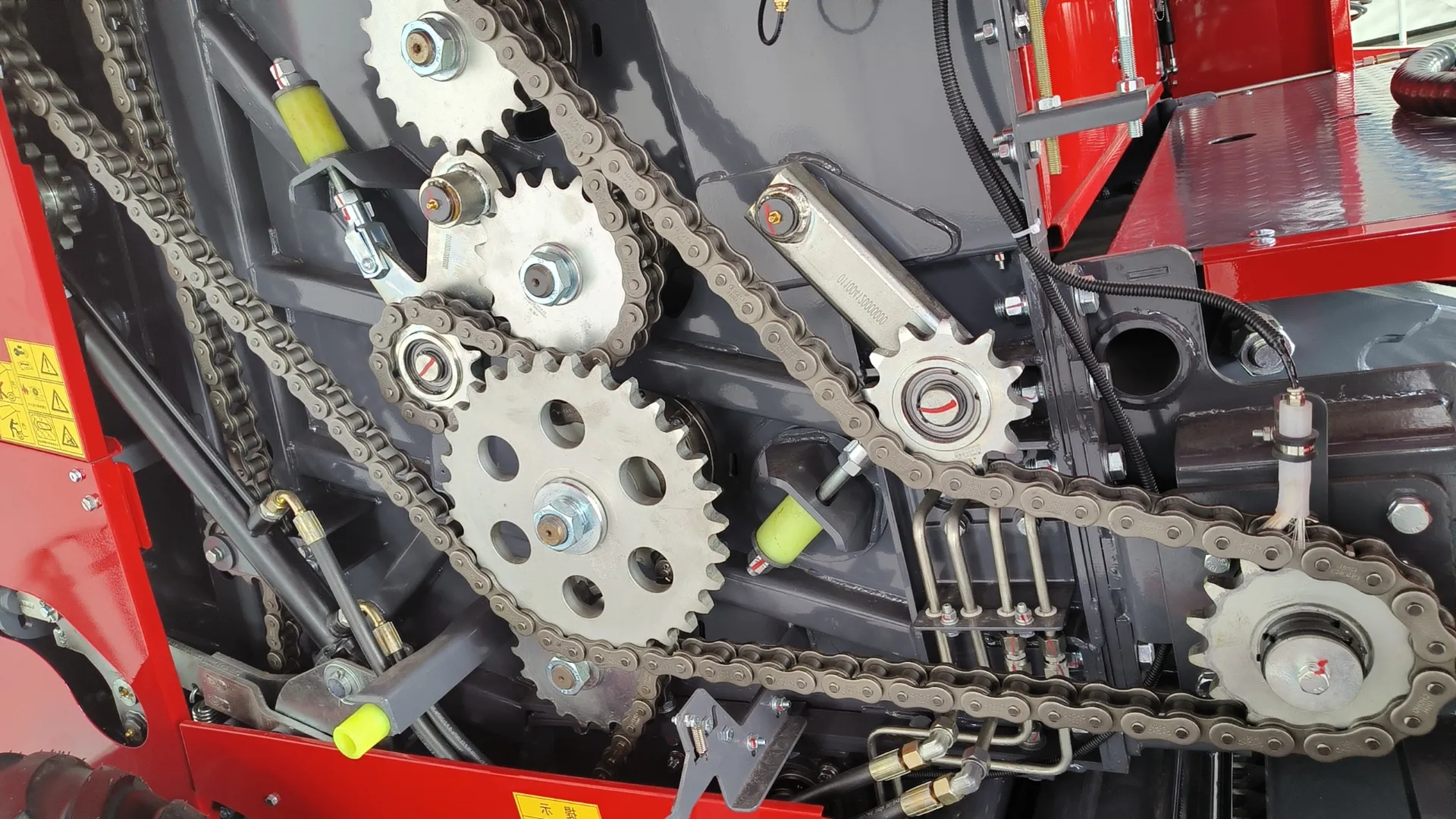
The grease points described below cover the major lubrication locations common to belt-drive round baler designs. Exact fitting locations vary by model — always use the lubrication diagram in your operator manual as the definitive reference. The criticality ranking reflects the consequences of missed lubrication in silage service: CRITICAL means failure occurs within days without lubrication; HIGH means progressive damage within weeks.
Pickup System Grease Points
Pickup Reel Spindle Bearings (×2)
Located at each end of the pickup reel shaft. These bearings run under continuous load and direct plant juice exposure — the highest contamination-risk point on the machine. Daily greasing in silage season using calcium-sulphonate complex grease. Purge until fresh grease appears from the bearing seal.
Pickup Drive Shaft Bearings
Drive shaft from the main gearbox to the pickup reel typically has two or three bearing support points. Daily greasing — a seized pickup drive shaft bearing stops the entire pickup operation and is one of the most common mid-season failures on neglected machines.
Cam Follower Pins
Each tine row has a cam follower pin that rides in the cam track groove. These are small-diameter pins under cyclic load — they wear quickly without regular lubrication. Grease at the beginning and end of each silage session or every 8–10 hours of operation.
Float Arm Pivot Bearings
The pivot bushings on the pickup float arms need regular greasing to allow the float system to respond freely to ground contours. Stiff float pivots cause the pickup to ride high and miss crop. Every 10–15 operating hours.
Bale Chamber & Belt System Grease Points
Drive Roller Bearings (all lower rollers)
Lower roller bearings are subjected to the highest sustained radial loads from bale weight. In silage service, plant juice seeps into the lower chamber and directly contacts lower roller bearing housings. Daily greasing of lower roller bearings; every 2 days for upper rollers where direct contamination is lower.
Idler Tensioner Roller Bearings
Belt tensioner idler rollers run at high speed and moderate load — they need less frequent greasing than drive rollers but are still at risk from plant juice contamination. Every 2 days or 15–20 hours of silage operation.
Tailgate Hinge Pins and Latch Pivots
Tailgate operates under high hydraulic force on every bale ejection cycle. Dry hinge pins develop wear grooves rapidly, changing the tailgate geometry over a season. Every 2 days during active silage campaigns.
PTO Driveline & Stuffer Grease Points
PTO Universal Joints (×2–4)
PTO shaft universal joint crosses have small needle roller bearings that run at high speed and require regular greasing. In silage service where the PTO runs for extended periods, grease every 8 hours of operation using a quality lithium complex or calcium-sulphonate grease via the cross fittings.
Stuffer Mechanism Pivot Bearings
Stuffer arm pivot bearings and the stuffer drive crank bearing points require daily greasing in silage service. The stuffer operates under sudden high-load impacts on each crop charge — dry pivot bearings wear rapidly and change the stuffer timing geometry progressively.
Knotter Bill Hook Shaft Bearing
The bill hook shaft bearing runs at moderate speed but is directly exposed to the silage-contaminated knotter zone. Daily light greasing of the shaft bearing fitting, plus a corrosion-inhibiting spray on the bill hook and knife after each operating day.

Greasing Intervals for Silage Baler Service
The Schedule That Matches the Silage Operating Environment
The intervals below are based on the silage operating environment and are approximately half those recommended for equivalent dry hay service. For operations running more than 10 hours per day during a cutting campaign, use the operating hours triggers rather than the day-based intervals — if you bale 14 hours in a day, a 10-hour bearing point needs greasing during the day, not just at the end of it. For the complete Ever-power silage baler range and model-specific lubrication diagrams, visit our product pages.
| Grease Point | Silage Interval | Hay Interval | Grease Type |
|---|---|---|---|
| Pickup reel spindle bearings | Every 8 hrs | Every 20 hrs | Ca-Sulphonate NLGI 2 |
| Pickup drive shaft bearings | Every 8 hrs | Every 20 hrs | Ca-Sulphonate NLGI 2 |
| Drive roller bearings (lower) | Every 8 hrs | Every 20 hrs | Ca-Sulphonate NLGI 2 |
| PTO universal joint crosses | Every 8 hrs | Every 20 hrs | Li Complex NLGI 2 EP |
| Stuffer pivot bearings | Every 8 hrs | Every 20 hrs | Ca-Sulphonate NLGI 2 |
| Cam follower pins | Every 10 hrs | Every 25 hrs | Li Complex NLGI 2 EP |
| Drive roller bearings (upper) | Every 15 hrs | Every 40 hrs | Ca-Sulphonate NLGI 2 |
| Tailgate hinge and latch pivots | Every 15 hrs | Every 40 hrs | Ca-Sulphonate NLGI 2 |
| Idler tensioner bearings | Every 15 hrs | Every 40 hrs | Ca-Sulphonate NLGI 2 |
How to Grease Correctly — Technique Matters
Getting the Grease Where It Needs to Go
The most common greasing mistake on any agricultural machine — including the silage baler machine — is applying grease to a dirty fitting or a blocked passage and believing the bearing has been lubricated. If fresh grease doesn’t purge from the bearing seal when pumping, either the fitting is blocked, the passage is clogged with dried residue, or the grease gun isn’t making a seal with the fitting. Any of these conditions means no new grease has entered the bearing cavity, regardless of how many pump strokes were applied.
Clean the fitting before connecting the grease gun
Wipe the grease nipple free of silage residue and old dried grease with a clean rag before attaching the coupler. Contaminants pushed into the bearing by the first pump stroke cause more damage than the missed lubrication they were meant to fix.
Pump slowly — watch for purge at the seal
Apply grease slowly and continuously, watching for fresh grease to emerge from the bearing seal. The purge is confirmation that the old grease has been displaced and the bearing cavity contains a fresh charge. Stop pumping once you see a clean purge — over-packing a bearing can burst the seal.
If no purge after 5–6 pumps, suspect a blocked fitting
A blocked grease nipple — indicated by high resistance on the gun handle without purge from the bearing — needs to be replaced before the bearing can be lubricated. Remove the nipple, clear the passage with a wire probe, and fit a new nipple before resuming.
Wipe excess purge from the bearing area
Grease that purges from a seal and remains on the bearing housing exterior attracts silage debris and becomes a sticky contamination trap. Wipe the purge clean immediately after greasing to keep the bearing area clean for the next inspection and greasing cycle.
Off-Season Lubrication: Protecting Bearings During Storage
What Happens to Grease During the Off-Season Period
Bearings on a stored empacadora de ensilaje are not in a benign state. The silage residue that penetrates bearing housings during the season continues to react with the grease chemistry after the machine is stored. Acids from residue traces within the housing gradually degrade the grease thickener over the storage period, converting what was a functional grease film into a thin, contaminated liquid that provides no protection when the machine is restarted next season. Without end-of-season re-greasing, the bearings that performed adequately at the end of the last season begin the new season already in a compromised state. This is why bearing failures in the first few hours of a new silage season are disproportionately common on machines that weren’t correctly stored.
The correct off-season lubrication procedure is to fully purge all bearing points with fresh grease at the end of the campaign — the same day the season ends, not weeks later — and then apply a corrosion-inhibiting spray to all exposed metal surfaces. Fresh grease displaces acid-contaminated grease from the bearing cavity and establishes a new, clean grease film that provides genuine protection during the storage period. More information about our full-season support approach is on the About Us page.
Why Ever-Power Balers Are Designed for Practical Lubrication Access
Field-Accessible Grease Points That Support the Daily Lubrication Routine

The most technically correct lubrication schedule is worthless if the grease points can’t be reached efficiently in field conditions. Ever-power baler designs position all marked lubrication fittings for standard grease gun access without requiring guard removal, and group fittings where possible to reduce the time required for the daily greasing routine. For Australian operators working in remote locations without workshop support nearby, this design approach makes the difference between a daily greasing routine that actually happens and one that gets deferred because it’s too time-consuming. Whether you’re operating a compact 1.0m round baler or the high-capacity S9000 Beyond, lubrication access is a design priority across the full range.
Need Grease Products or Technical Advice?
Talk to Our Silage Baler Support Team
Charlton Industrial Area, Australia — model-specific lubrication guidance, parts supply, and maintenance support for Australian operators.
Preguntas frecuentes
Common Questions About Silage Baler Greasing

Australia Ever-power Forage Balers Co., Ltd.
📍 Charlton Industrial Area, Australia