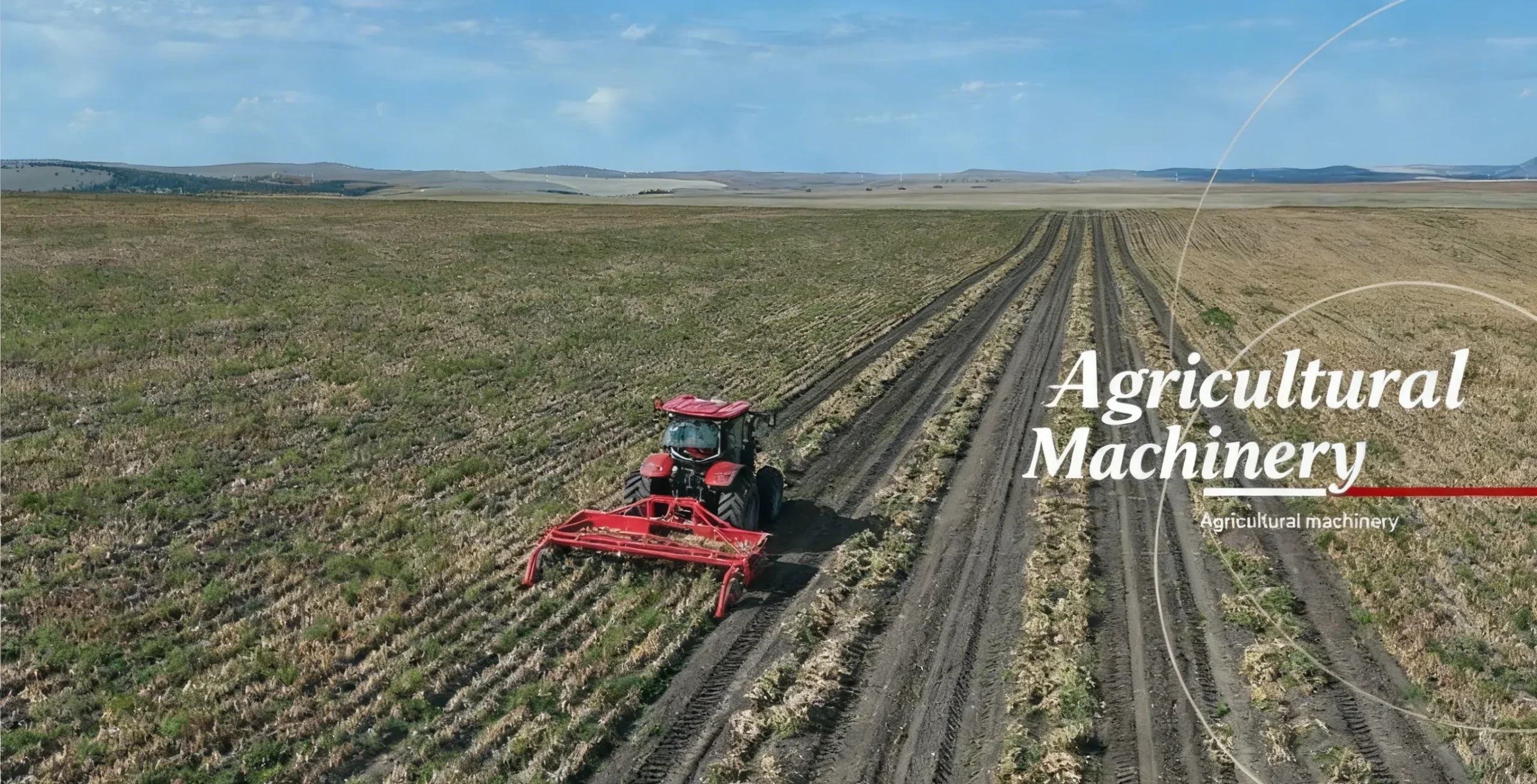
Post-harvest baling of millet straw across Inner Mongolia, the Sahel, and India’s semi-arid zones: nutritional profile, drying conditions, market channels, and why this residue outperforms alternatives where rainfall fails.
Millet Straw in Semi-Arid Livestock Systems: An Undervalued Resource
Pearl millet (Pennisetum glaucum), proso millet (Panicum miliaceum), foxtail millet (Setaria italica), and finger millet (Eleusine coracana) are the staple grain crops of the world’s driest agricultural zones. In the Sahel belt of sub-Saharan Africa — spanning Senegal, Mali, Burkina Faso, Niger, Nigeria’s north, and Sudan — pearl millet is the primary food crop for 90 million people, grown on over 14 million hectares annually in conditions where rainfall averages 200 to 500 mm per year and other cereals cannot reliably produce grain. In India’s Rajasthan, Gujarat, and Maharashtra states, millet grain feeds both humans and livestock on 9 to 11 million hectares of dryland farming. In China’s Inner Mongolia, Shanxi, and Hebei provinces, proso millet and foxtail millet have been cultivated for over 7,000 years as the primary grain crop of the semi-arid loess plateau and desert steppe margins.
After grain harvest, millet straw is the single largest roughage resource available to pastoral communities in these arid zones. In the Sahel, where cattle, sheep, goats, and camels graze on whatever post-harvest residue remains in the field, millet straw baling represents an upgrade from waste management to a structured feed inventory: instead of relying on animals to self-feed in harvested fields, baled stover can be stored and distributed through the critical January to April dry season when grazing is exhausted. In Inner Mongolia, baled millet straw is routinely traded as a winter feed supplement for beef cattle, sheep, and camel herds that cannot access sufficient green grazing from October through April.
Despite its importance, millet straw receives very little attention in equipment and agronomy literature dominated by temperate and subtropical farming contexts. This guide covers the specific management considerations for millet straw baling: the nutritional profile, the ideal post-harvest timing window in arid and semi-arid conditions, equipment suitability for low-density millet straw windrows, and the market channels that make baling worthwhile in pastoral communities with limited capital for equipment investment. For context on baling decisions across multiple residue crops on the same operation, our guide on best forage balers for dry hay production covers equipment selection principles applicable across dryland baling contexts.
Nutritional Profile of Millet Straw Across Species
| Species | Crude Protein (DM) | NDF | TDN | Primary Market Regions |
|---|---|---|---|---|
| Pearl millet straw | 4–8% | 65–72% | 42–52% | Sahel Africa, India, West Africa |
| Proso millet straw | 4–7% | 62–70% | 42–50% | Inner Mongolia, N. China, Russia |
| Foxtail millet straw | 5–8% | 60–68% | 44–52% | N. China, India, Japan |
| Finger millet straw | 5–9% | 58–66% | 46–54% | East Africa, India, Nepal |
| Wheat straw (reference) | 3–5% | 70–78% | 38–50% | Widespread |
Millet straw’s nutritional advantage over wheat and rice straw — particularly for finger and pearl millet — is meaningful in the context of the livestock systems that use it. In the Sahel, where cattle and small ruminants subsist on 2 to 4 kg dry matter per day from sparse grazing and crop residues, the difference between 4% and 8% crude protein in their primary roughage is the difference between body weight maintenance and body weight loss during the dry season. At the farm scale, this translates to reproductive performance differences that affect calving intervals, kid and lamb survival, and the milk production of nursing cows and does.
Camel and Goat Feed: A Niche High-Value Channel
Pearl millet straw has long been recognised as palatable and nutritious roughage for camels in the pastoral systems of Niger, Mali, and northern Nigeria, where camels function as both working animals and meat producers. Camels are more efficient than cattle in extracting nutrients from high-fibre, low-quality roughage and tolerate the sodium content of millet straw better than some other animals. In these markets, camel owners pay a modest premium for baled pearl millet straw over loose straw bought by weight — the bale format enables storage and transport that loose straw cannot offer in a pastoral system where seasonal movements of 50 to 200 km are normal.
Post-Harvest Timing and Drying in Arid Conditions
The Advantage of Arid Climates for Straw Baling
Unlike rice straw in the humid tropics or wheat straw in the sub-humid subtropics, millet straw in arid and semi-arid zones (annual rainfall below 600 mm) dries rapidly and reliably after harvest. In Inner Mongolia’s harvest season (September), relative humidity averages 40 to 55% and temperature 15 to 22°C — ideal hay-making conditions. Millet straw at 25 to 35% moisture at combine harvest dries to below 16% within 2 to 4 days in these conditions without any active management beyond leaving the straw in the combine discharge pattern. In the Sahel’s October to November harvest season — post-monsoon, dry season beginning — drying conditions are similarly favourable: 35 to 40°C, 25 to 40% relative humidity, moderate harmattan winds.
The practical challenge in arid-zone millet straw baling is not drying but logistics: getting a baler to the right field at the right time across large, dispersed dryland farming areas where individual farm sizes range from 0.5 to 5 hectares and no single farm generates enough stover for a full day of baling. Contractor operations that serve multiple farms in sequence during the 7 to 14 day post-harvest baling window are the dominant business model for millet straw baling in both Inner Mongolia and the Sahel, where cooperatives or commercial baling contractors move from village to village during the harvest season.
| Region | Typical Harvest Month | Post-Harvest Moisture | Days to Baling Ready | Key Constraint |
|---|---|---|---|---|
| Inner Mongolia (proso/foxtail) | September | 20–32% | 2–4 days | Logistics across dispersed farms |
| Sahel — Niger/Mali (pearl millet) | October–November | 18–30% | 2–5 days | Equipment access and capital |
| Rajasthan, India (pearl millet) | October | 22–35% | 3–5 days | Labour for windrow raking |
| North China (foxtail) | September–October | 18–28% | 2–3 days | Competition for equipment |
Equipment Considerations for Low-Density Millet Straw
Why Millet Straw Is Lighter Than Other Crop Residues
Millet straw — particularly from fine-stemmed foxtail millet and pearl millet varieties grown on low-fertility soils — is among the lightest and lowest-density crop residues a round baler handles. The thin, dry stems and minimal leaf material produce windrows that weigh 0.8 to 1.5 tonnes of fresh matter per hectare — 30 to 50% less dense than wheat straw windrows from equivalent areas. This low density means that the baler pickup must operate at a slow, consistent forward speed to avoid missing material between pickup tine cycles, and that chamber pressure must be set to maximum to achieve acceptable bale density from the sparse windrow material.
The 9YG-1.0 round baler is well-matched to small-scale millet straw operations: its compact size suits the 0.5 to 3 hectare farm plot scale common in Inner Mongolia smallholder systems and in Sahelian village farming, and it operates from 35 to 50 hp tractors that are widely available in both regions. For contractor operations covering 50 to 200+ hectares of millet straw per season across multiple villages, the 9YG-1.25A variable-chamber round baler provides the throughput and bale size consistency needed for commercial hay trading in provincial roughage markets.
Raking Before Baling — Essential for Arid-Zone Millet
In arid dryland farming environments, millet straw is typically spread very thin across the post-harvest field surface — 2 to 5 cm deep — because the stover yield per hectare is low (1 to 3 tonnes DM/ha on marginal soils) and the combine spread swath is wide relative to the straw density. A baler operating directly on this spread straw at normal forward speed produces bales with 20 to 40% of the target weight because the pickup encounters only scattered material rather than a consolidated windrow. A single raking pass using a finger-wheel rake — the most appropriate type for lightweight millet straw — consolidates the spread material into a 60 to 80 cm windrow that the baler can pick up efficiently.

Market Channels and Economic Case for Millet Straw Baling
Inner Mongolia: The Established Trading Market
Inner Mongolia’s pastoral regions have a functioning commercial roughage market with established logistics: hay trading companies purchase baled millet straw from contracted farmers during the September to October window at ¥60 to ¥120 per 1.0 m round bale (weighing 150 to 220 kg at 14% moisture), then transport and sell into winter cattle and sheep feeding operations in the region through November to April. The price differential between the October purchase price (lowest, at harvest) and the February peak price (highest, when winter feed is scarce) creates a seasonal arbitrage that some larger hay trading companies exploit with their own storage facilities.
The Sahel: Building from Scratch
Commercial millet straw baling in the Sahel is at an earlier stage of development. NGO-supported programmes in Niger, Burkina Faso, and northern Nigeria have introduced small baler cooperatives as part of livestock feed security and sustainable land management programmes. The economic case — reducing dry-season livestock mortality by 15 to 30% through supplementary feeding of baled millet stover — is well-documented. The constraint is capital: baler ownership is out of reach for individual Sahelian smallholders, and cooperative ownership models require organisational development support that moves slowly in resource-constrained environments. Where baling cooperatives have been established, they typically report 30 to 60% reduction in dry-season livestock body weight loss and improved reproductive performance in the following wet season.
Frequently Asked Questions

Discuss Your Millet Straw Baling Operation
Tell us your farm area, annual stover yield estimate, and available tractor — we’ll help specify the right baler model for your arid-zone millet straw operation.