What ROI Means for a Silage Baler Purchase
Framing the Investment Correctly Before Running the Numbers
А прэс-падборшчык сіласу is not a revenue-generating asset in the traditional sense — it doesn’t directly produce income. Its return comes from two sources: the cost saving it provides relative to the alternative (contracting), and the quality and timing improvements it enables that have value in the farm’s livestock production system. Calculating ROI for a silage baler therefore involves quantifying both the direct cost saving and the indirect production benefits, then comparing the total return against the total investment over the machine’s service life.
The direct cost saving is the difference between what contracting would cost for the same bale numbers and what owning costs (including all five cost components: depreciation, capital, repairs, consumables, and labour). If contracting costs $38 per bale and owning costs $37 per bale, the direct saving is $1 per bale — not a compelling ROI on a $40,000 machine. If contracting costs $45 per bale and owning costs $32 per bale, the direct saving is $13 per bale — at 250 bales per year, that is $3,250 per year, and the machine pays back its net investment in approximately 9–10 years through direct savings alone. The quality and timing benefits add to this return and may significantly shorten the effective payback period.
This guide builds the complete ROI analysis in sections: direct cost saving, quality and timing return, worked payback example, and the qualitative factors that influence whether the quantitative result is decisive or just one input into a broader decision. For more about the Ever-power range that is the subject of this analysis, visit the product pages або contact the Charlton team.
The Direct Return: Cost Saving Per Bale at Different Volumes
How the Annual Saving Changes With Production Volume
The direct cost saving from owning rather than contracting is volume-dependent because ownership costs include fixed components that spread across annual bale numbers. As shown in the cost-per-bale analysis, a mid-range silage baler produces the following annual direct saving relative to a contractor rate of $38 per wrapped bale (GST exclusive), at different annual volumes:
| Annual Bales | Ownership Cost/Bale | Contractor Cost/Bale | Annual Saving | Payback (Years) |
|---|---|---|---|---|
| 100 bales | $71.00 | $38.00 | –$3,300 (loss) | Never |
| 180 bales | $44.50 | $38.00 | –$1,170 (loss) | Never |
| 230 bales | $38.20 | $38.00 | –$46 (breakeven) | ~Break-even |
| 300 bales | $34.00 | $38.00 | +$1,200/yr | ~23 yrs |
| 400 bales | $29.50 | $38.00 | +$3,400/yr | ~8 yrs |
| 500 bales | $26.80 | $38.00 | +$5,600/yr | ~5 yrs |
Note: These figures use the worked example from the cost-per-bale article — a $38,000 baler purchased new with $10,000 resale after 10 years, averaged maintenance of $1,400/year, consumables of $13/bale, and labour at $4/bale. Payback is calculated on the net investment (purchase price minus resale value = $28,000). Individual farms will have different specific cost inputs.
The Indirect Return: Quality, Timing, and Operational Control
The Returns That Improve the ROI Calculation Beyond Direct Cost Saving
The direct cost saving comparison in the table above tells only part of the ROI story. A farm-owned baler delivers additional returns through improved harvest timing, quality control, and operational flexibility that contracting cannot provide — and these returns have real economic value that often tips the ownership ROI calculation to a more favourable result than the direct cost saving alone suggests.
Harvest Timing Return
The ability to bale at the optimal moisture and crop growth stage — rather than when a contractor is available — has direct feed quality value. Research consistently shows that grass silage cut and baled at the correct growth stage (early head emergence) has 15–20% higher metabolisable energy per kg DM than equivalent silage from the same crop cut 1–2 weeks later at full head. At 250 bales per year with 250 kg DM per bale, a 15% ME improvement represents a significant improvement in total feed energy stored — with a monetary value equivalent to $8–15 per bale in avoided purchased feed or milk production improvement. This quality return alone can exceed the direct cost saving at medium production volumes.
Quality Control Return
When a contractor bales, the moisture measurement, bale density setting, and wrapping timing decisions are made by the contractor — not necessarily optimised for the specific farm’s livestock and quality requirements. With an owned machine, the owner controls every quality variable: moisture at baling, chamber pressure, wrapping interval, wrap layers, and inoculant application. This quality control capability has particular value for dairy operations feeding high-producing cows where silage quality directly affects milk volume and composition. Estimating this return is difficult, but for a 150-cow dairy herd producing 600,000 litres per year, a 2% improvement in feed conversion efficiency from better-quality silage represents 12,000 additional litres — at $0.70 per litre, that is $8,400 per year in additional revenue attributable to quality control.
Operational Flexibility Return
An owned baler is available when it’s needed — for emergency re-baling after a film breach, for late cuts that fall outside a contractor’s scheduled rounds, and for the short daily sessions that fit around milking on a dairy farm. Contractors charge mobilisation fees (typically $150–400 per call-out) and may not be available at short notice during peak season when multiple farms are cutting simultaneously. Owning eliminates mobilisation costs and availability risk. For a farm that typically requires 2–3 unscheduled baling events per year, the avoided mobilisation fees alone represent $300–1,200 per year of direct saving that doesn’t appear in the per-bale cost comparison. For the full прэс-падборшчык сіласу для малочнай фермы range, visit foragebalers.com/about-us.
Payback Period Analysis: A Worked Three-Farm Example
How the Combined Direct + Indirect Return Changes the Payback Picture
The following example applies the combined direct saving plus indirect return to three representative Australian farm types, using a mid-range $38,000 baler (net investment after resale = $28,000) and a contractor rate of $38 per wrapped bale. The indirect returns (timing, quality, flexibility) are conservatively estimated at the lower end of their realistic range.
🚫 Farm A — Small Beef: 120 bales/yr
Direct saving: –$3,960/yr (costs more than contractor)
Indirect returns: +$1,200/yr (estimated timing + flexibility)
Net annual return: –$2,760
Payback: Never at this volume. Contract out.
⚡ Farm B — Medium Dairy: 280 bales/yr
Direct saving: +$1,120/yr
Indirect returns: +$4,500/yr (timing + quality + flexibility)
Net annual return: +$5,620
Payback: ~5 years. Strong ROI case.
✅ Farm C — Large Dairy: 450 bales/yr
Direct saving: +$3,825/yr
Indirect returns: +$8,000/yr (quality return dominant)
Net annual return: +$11,825
Payback: ~2.4 years. Compelling ROI.
Farm B’s example illustrates the critical insight: even when the direct cost saving alone barely justifies ownership, the indirect returns from quality and timing control can transform the ROI from marginal to compelling. For dairy operations where the quality of silage directly affects milk production and component percentages, the indirect return is often the larger of the two return components. This is why the ROI case for silage baler ownership is generally stronger for dairy operations than for equivalent-volume beef operations where feed quality is less directly linked to per-unit revenue.
The Farm Profiles Where Ownership ROI Is Clearly Positive
When the Decision Is Clear Before Running Detailed Numbers
High-production dairy with 250+ bales/year. Quality control return alone often justifies the investment; combined with cost savings and timing flexibility, ROI is compelling. Payback typically 4–7 years.
Operations in regions with limited contractor availability. When contractors are scarce, expensive ($45–60/bale), or unreliable in scheduling, ownership advantages compound and ROI improves dramatically. Even at modest volumes, the availability benefit alone can justify ownership.
Operations using the baler for custom work in addition to own production. Each custom baling bale reduces per-bale fixed costs and generates revenue. At 100 own bales plus 100 custom bales at $35 per bale charged, the machine generates significant annual cash flow while also reducing per-bale cost for own production.
Operations replacing an old baler already in the ownership cycle. A farm already accustomed to owning and operating a baler, replacing an end-of-life machine, does not face the learning curve or organisational change cost of new ownership. The ROI starts from the first bale on the new machine.
When the ROI Favours Sticking With Contractors
Honest Assessment of When Ownership Doesn’t Pay
Under 180–200 bales per year with competitive local contractors. Fixed costs per bale are too high at these volumes; the direct cost saving is negative. Even generous indirect return estimates rarely close the gap. Contracting is the more economical choice.
Single-year or uncertain silage production. If silage production is likely to be significantly reduced or discontinued within 3–4 years (farm sale, enterprise change, succession), the machine will not have enough service life to recoup the investment. The payback period must be achievable within the realistic ownership window.
Farms with no suitable tractor or operator. A silage baler requires a correctly matched tractor (55–100+ HP depending on model) and a competent operator for reliable operation. If neither is available without additional capital investment or training, the ROI calculation must include these additional costs — which can significantly change the result.
When capital is better deployed elsewhere. If the $38,000 investment in a silage baler would generate a higher return invested in improved pastures, irrigation, livestock genetics, or farm debt reduction than the $3,000–8,000 annual saving and production benefit from the baler, the ROI favours the alternative investment. Capital allocation decisions require comparing ROI across all available options, not just between owning and contracting.
Ever-Power: The ROI-Conscious Silage Baler Choice for Australian Farms
Competitive Purchase Price, Long Service Life, Local Support
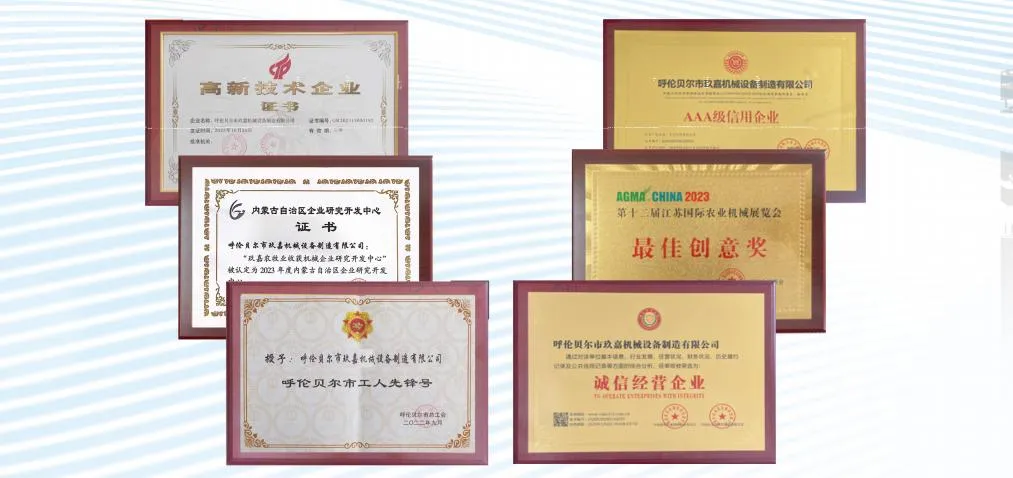
The ROI analysis shows that three machine-specific factors most directly improve the economics of ownership: purchase price, service life, and maintenance cost. Ever-power addresses all three. Competitive purchase price reduces the depreciation and capital cost components that drive per-bale fixed costs — a lower purchase price means every bale produced over the machine’s life benefits from a lower amortised capital burden. The silage-rated specification (sealed bearings, corrosion-resistant internals, silage belt compound) supports long service life — more bales per dollar of original investment means better long-run ROI. And local parts supply from Charlton means maintenance events are addressed quickly and at competitive parts cost, keeping the repair and maintenance component of the per-bale calculation within budget. For a personalised ROI analysis based on your farm’s specific annual volume and cost inputs, contact the Charlton team.
Ready to Run the ROI Numbers for Your Farm?
Get a Personalised ROI Analysis
Charlton Industrial Area, Australia — model-specific ROI modelling for your annual volume, contractor rates, and farm conditions.
Часта задаваныя пытанні
Common Questions About Silage Baler ROI

Аўстралійская кампанія Ever-power Forage Balers Co., Ltd.
📍 Прамысловая зона Чарльтан, Аўстралія