
Why Silage Baler Bearings Fail Faster Than in Hay Service
Three Mechanisms That Accelerate Bearing Wear in the Silage Environment
Bearings in a прэс-падборшчык сіласу face a combination of degradation mechanisms that simply don’t exist — or exist at much lower intensity — in dry hay baling. Understanding these mechanisms isn’t just academic context: it explains why a bearing that meets its rated service life in hay use may fail at a fraction of that life in silage service, and it tells you which bearing positions to prioritise for earlier inspection and replacement in a silage-specific maintenance programme.
The first mechanism is corrosive contamination. Plant juice from silage crops is a dilute solution of organic acids — primarily lactic and acetic acids — combined with mineral salts and soluble plant matter. This solution penetrates bearing seals over time, particularly in positions with direct exposure to the crop stream. Once inside the bearing housing, the acid content attacks the steel raceways and rolling elements, creating pitting corrosion that roughens the bearing contact surfaces and generates the metallic debris particles that accelerate fatigue spalling. A bearing that develops pitting corrosion from acid contamination will typically fail well before its theoretical fatigue life because the debris it generates acts as an abrasive within the bearing itself.
The second mechanism is water wash-out of the grease film. High-moisture crop releases water vapour continuously throughout the baling cycle — the humidity inside the bale chamber approaches 100% during silage operation. This moisture penetrates bearing housings and progressively dilutes the grease, reducing its load-carrying film thickness. A bearing running on water-contaminated grease generates significantly more heat than one running on clean grease at the correct viscosity. The third mechanism is overloading: silage bales are 30–45% heavier than equivalent hay bales, which means every bearing position on the machine sustains proportionally higher radial and axial loads with each bale cycle. The combined effect of these three mechanisms is a bearing failure rate in silage service that is typically two to three times higher than the same bearing in dry hay service — a reality that has to be reflected in the inspection and replacement schedule for any машына для прэсавання сіласу.

How to Tell When a Bearing Needs Replacing
The Four Diagnostic Methods — From Hand Check to Operating Observation
Bearing failure is not a binary event — it progresses through stages, and each stage has observable indicators that can be detected before catastrophic seizure occurs. Catching a bearing at the early or mid-failure stage means a planned bearing replacement at a convenient time; missing it means an emergency breakdown at the worst possible moment. For silage baler bearings, the following four diagnostic methods cover everything from pre-season shed inspection to in-field monitoring during active campaigns.
Method 1 — Hand Rotation Test (Pre-Season and Weekly)
With the machine completely stopped, PTO disengaged, and key removed, rotate each shaft and roller by hand through a full revolution. A healthy bearing feels smooth and continuous — there should be no detectable roughness, grinding sensation, or tight spots. Any of these sensations indicate surface damage or contamination within the bearing that requires further investigation. For roller bearings on the bale chamber, also rock the shaft laterally while rotating — detectable radial play (more than 1–2mm on pickup shaft spindles, essentially zero on chamber rollers) indicates either the bearing has lost its press fit or the inner race is spinning on the shaft.
Method 2 — Temperature Check (During Operation)
A bearing running normally in silage service will develop moderate heat — warm to the touch but not uncomfortable to hold. A bearing that is developing internal damage will run noticeably hotter — too hot to maintain hand contact for more than a second or two. The most practical field check is to touch each bearing housing briefly with the back of the hand (not the palm — the pain response is faster from the back of the hand) after stopping the machine at the end of a baling session. Any housing that is significantly hotter than the others should be inspected and replaced before the next session. A temperature gun is more precise if available — a bearing in silage service running more than 30°C above ambient is approaching failure.
Method 3 — Noise Diagnosis (During Operation)
Bearing noise changes character predictably as damage progresses. Early-stage contamination and pitting produces a low-level grinding or gritty sound that is distinct from the normal mechanical noise of the machine but easy to dismiss as background. Mid-stage damage produces a more pronounced rumbling or growling tone from the affected location. Late-stage damage — spalled raceways or cage fracture — produces an irregular, intermittent clicking or knocking that increases in frequency with rotation speed. Diagnosing bearing noise requires knowing the normal sound profile of the machine at operating speed, which comes from experience — another reason to run the machine at pre-season and note the baseline noise profile before it enters service.
Method 4 — Grease Condition Check (Post-Session)
When fresh grease purges from a bearing during lubrication, the colour and consistency of the old grease being displaced tells you about the bearing’s condition. Clean, consistent grease of normal colour indicates a healthy bearing. Grey or black grease indicates metallic debris from bearing surface wear — the bearing should be inspected for damage. Milky or watery-looking grease indicates water ingress — the seal has been compromised and needs replacement. Gritty grease with visible dark particles indicates contamination from silage debris that has bypassed the seal — the bearing should be cleaned, inspected for damage, and re-packed. For model-specific запчасткі для прэс-падборшчыка сіласу including bearings, звяжыцеся з нашай камандай for availability.
| Indicator | What It Means | Action |
|---|---|---|
| Roughness on hand rotation | Early surface damage or contamination | Inspect — schedule replacement |
| Lateral play on shaft spindle | Bearing clearance exceeded or spun inner race | Replace before next session |
| Bearing housing significantly hotter than others | Lubrication failure or internal damage | Stop — replace before further operation |
| Grinding noise increasing with speed | Surface pitting — mid-stage damage | Replace at first opportunity |
| Intermittent clicking at operating speed | Spalling or cage fracture — late-stage failure | Stop immediately — replace now |
| Grey/black purge grease at fitting | Metallic debris — surface wear present | Inspect bearing — plan replacement |
| Milky/watery purge grease | Water ingress — seal compromised | Increase grease frequency; plan seal/bearing replacement |
Priority Bearing Locations in Silage Service
Which Bearings Fail Most Often — and Cost the Most When They Do
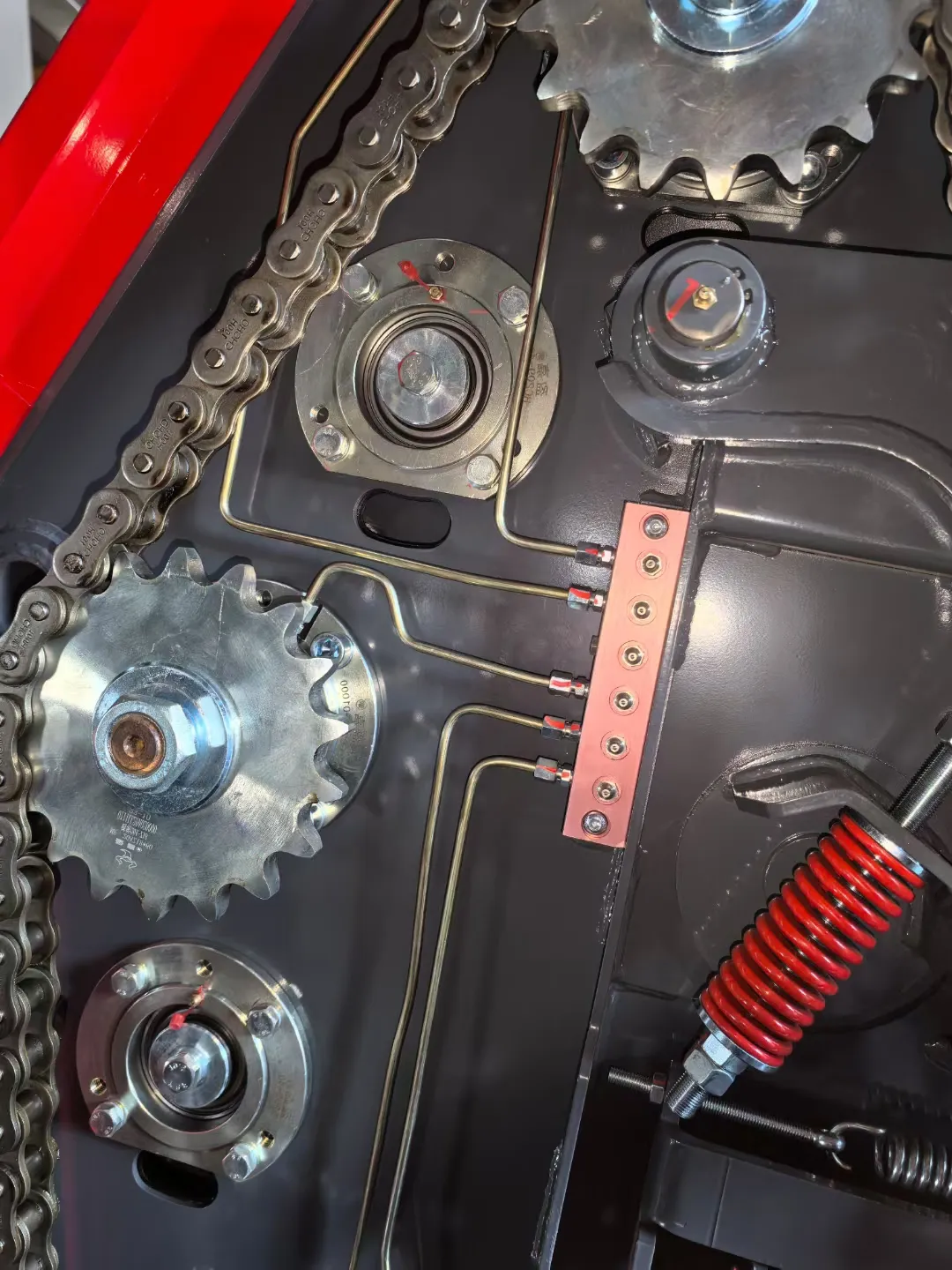
Not all bearing positions carry equal failure risk in silage service. The following locations are the highest-priority for inspection and planned replacement because they combine high load, high contamination exposure, and high consequence if they fail in the field. Understanding this priority ordering allows operators to focus inspection time and carry the most strategically valuable spare bearings rather than trying to carry a complete bearing inventory for the whole machine.
How to Replace a Silage Baler Bearing: Step-by-Step
The Correct Procedure for Roller and Pickup Shaft Bearings
The procedure below covers the replacement of flanged unit bearings (the most common type in agricultural baler applications) and pressed-in cylindrical roller bearings. The specific tools and disassembly sequence vary by model — always refer to the operator manual for your specific machine. The principles remain the same: never force bearings, never damage the shaft or housing surface, and always verify correct seating before reassembly.
⚠️ Required Tools for Bearing Replacement
Bearing puller (two or three-jaw type matching shaft diameter), bearing press or fitting tool (never use a hammer directly on the bearing face), shaft cleaning cloth, digital vernier calliper (to verify shaft and housing dimensions), appropriate spanners for lock nut/circlip, and a clean rag. Never use a hammer directly on a bearing — the impact loads damage the rolling elements and raceways of the new bearing on installation.
Isolate the machine and access the bearing
Disengage PTO, turn off the tractor engine, remove the key. For roller bearings, open the tailgate and relieve hydraulic pressure. Remove the guard or access cover for the affected bearing location. Clean the area around the bearing housing — removing silage residue before disassembly prevents contamination of the new bearing.
Remove the shaft retention hardware
Remove the lock nut, circlip, or setscrew that secures the bearing on the shaft — the operator manual shows the specific retention method for each position. Soak any corroded fasteners with penetrating oil and allow 10 minutes dwell time before attempting to loosen — forcing corroded fasteners shears them and creates a much larger repair task.
Extract the bearing with a puller
Position the bearing puller jaws on the inner race (not the outer race or the seals) and extract the bearing from the shaft by tightening the puller screw steadily. If the bearing resists, check that all retention hardware has been removed — forcing a bearing that is still partially secured will damage the shaft. For flanged unit bearings, remove the housing mounting bolts first, then separate the bearing from the shaft using the puller.
Inspect and clean the shaft and housing
After the bearing is removed, clean the shaft journal and housing bore thoroughly and inspect for fretting corrosion, scoring, or wear. Measure the shaft diameter with a vernier calliper and compare to the bearing bore tolerance — a shaft worn below minimum specification will not retain the new bearing correctly, and a spinning inner race will damage the shaft and new bearing rapidly. Address shaft damage before installing the new bearing.
Install the new bearing correctly
Apply a light coat of grease to the shaft journal. Position the new bearing squarely on the shaft and use a bearing fitting tool (a tube that contacts only the inner race) to press it home. Apply force only to the inner race when pressing onto a shaft — applying force to the outer race transmits the load through the rolling elements and damages the new bearing before it enters service. Press firmly until the bearing seats fully against its shoulder.
Grease, reassemble, and verify
Pack the bearing housing with fresh silage-grade grease before fitting the housing cover. Re-install all retention hardware to specification torque. Rotate the shaft by hand to verify smooth operation before reinstalling guards and running under power. Run the machine at low PTO speed with no crop for two minutes and recheck the bearing temperature before resuming normal operation.
Selecting the Right Replacement Bearing for Silage Service
Specification Choices That Affect Service Life in the Silage Environment
When replacing a bearing in a машына для прэсавання сіласу, bearing quality and seal specification matter more than they do in most other agricultural applications. The corrosive, wet environment inside a silage baler means that a standard open bearing or light-contact sealed bearing will have significantly shorter service life than a bearing with high-contact seals and corrosion-resistant surface treatments. The price difference between a standard agricultural replacement bearing and a higher-specification sealed bearing with corrosion-inhibiting coating is modest; the service life difference in silage conditions is substantial.
High-Contact Rubber Seals (2RS)
Specify bearings with the 2RS seal designation — both sides sealed with high-contact rubber seals. Standard 2Z (metal shields) allow moisture and fine particles to pass around the shield edge in wet conditions; 2RS seals make actual contact with the inner race to maintain a genuine barrier.
Pre-Greased with Compatible Grease
Factory-greased sealed bearings use a standard lithium grease that may not be compatible with the calcium-sulphonate grease recommended for silage service. For bearings that will be packed additionally with silage-grade grease, verify compatibility or specify bearings factory-filled with calcium-sulphonate complex grease.
C3 Internal Clearance for Heated Positions
For bearing positions known to run warm (lower drive rollers, pickup shaft in high-throughput applications), specify C3 internal clearance. The additional clearance accommodates thermal expansion without the preload that causes premature fatigue in standard-clearance bearings running hot.
OEM-Specified Dimensions
Always replace with a bearing matching the exact OEM bore, outer diameter, and width specification. Dimensionally similar bearings from different standards may differ in raceway geometry, internal clearance class, or seal design — any of which can affect fit and service life. Contact our team for OEM-specified replacement bearings.
Planned Bearing Replacement Schedule for Silage Service
Replacing on Schedule Rather Than Waiting for Failure
Planned bearing replacement — replacing bearings at a scheduled interval before failure rather than reacting to each failure event — is significantly more cost-effective than reactive replacement in silage baler operations. The cost of a planned bearing replacement in the shed before the season is the bearing cost plus 30–60 minutes of labour. The cost of the same replacement as an emergency during a cutting campaign includes the bearing, the emergency parts logistics, the crop standing in the field waiting, and the potential secondary damage from running a failing bearing to destruction. For Australian operators with silage operations dependent on hitting narrow harvest windows, the economics strongly favour planned replacement at the schedule below.
| Bearing Location | Silage Service Interval | Hay Service Interval |
|---|---|---|
| Pickup reel spindle bearings | Annually (or at first sign of wear) | Every 2 seasons |
| Lower drive roller bearings | Annually (or at first sign of wear) | Every 2–3 seasons |
| PTO universal joint crosses | Every 2 seasons or at play detection | Every 3–4 seasons |
| Stuffer pivot bearings | Every 2 seasons or at play detection | Every 3–4 seasons |
| Upper roller and idler bearings | Every 2–3 seasons | Every 4–5 seasons |
Ever-Power: Sealed Bearings Built for the Silage Environment
Bearing Specification Choices That Extend Service Life
When selecting a прэс-падборшчык сіласу на продаж in Australia, the bearing specification at key positions is a detail that has a real impact on operating costs over the machine’s service life. Ever-power machines use high-contact rubber sealed bearings (2RS specification) at the highest contamination-risk positions — pickup shaft spindles and lower drive roller positions — as standard rather than as an optional upgrade. The incremental cost of this specification is recovered many times over in the reduced replacement frequency and prevented secondary damage compared to machines using open or lightly-shielded bearings in these positions. Replacement bearings for all positions in the Ever-power range are available from our Charlton Industrial Area facility — звяжыцеся з нашай камандай for model-specific bearing specifications and availability, or visit our Старонка «Пра нас» to learn more about our support approach.
Need Replacement Bearings?
Contact Our Technical Support Team
Charlton Industrial Area, Australia — OEM-specified silage baler bearings, parts supply, and maintenance guidance for all Ever-power models.
Часта задаваныя пытанні
Common Questions About Silage Baler Bearing Replacement

Аўстралійская кампанія Ever-power Forage Balers Co., Ltd.
📍 Прамысловая зона Чарльтан, Аўстралія