
What “Hire” Actually Means in Australian Silage Context
Clarifying the Three Forms of “Hiring” Before Comparing Them
In Australian agriculture, “hiring” a مكبس السيلاج takes three distinct forms, each with different cost structures, operational implications, and suitability for different farm situations. Treating all three as equivalent leads to incorrect comparisons and poor decisions. Understanding which hire model applies to your situation is the first step in a correctly framed hire vs buy analysis.
Model 1: Full-Service Contracting
A contractor brings the baler, operates it, produces the bales, and wraps them — you pay a per-bale rate inclusive of all costs. This is the most common “hire” model in Australian silage production. The contractor rate typically ranges from $28–50 per wrapped bale depending on region, season, and contractor. The farm provides the crop in the windrow and organises the wrapped bales for storage.
Model 2: Machine-Only Hire (Wet Hire)
A baler is hired from a machinery hire company or farm neighbour — you operate it yourself with your own tractor and labour. You pay a daily or weekly hire rate for the machine ($250–500/day for a mid-range baler is typical in Australian market). This model requires that you have a suitable tractor, a competent operator, and the willingness to take operational responsibility for the machine. Machine-only hire is less common for balers than for other farm equipment but exists in some regions.
Model 3: Shared Ownership or Syndicate
Two or more farms jointly purchase a baler and share its use, capital cost, and maintenance. This model provides the operational advantages of ownership (timing control, quality control) while reducing the per-farm capital commitment. Syndicate arrangements work well when the farms have non-overlapping silage seasons, similar production volumes, and a high-trust relationship. They require careful legal and financial structuring to manage the shared ownership and priority access arrangements.
The hire vs buy comparison in the remainder of this guide primarily addresses Model 1 (full-service contracting) versus outright ownership, as this is the most common decision situation in Australian farms. The framework, however, is adaptable to Machine-Only Hire and Syndicate Ownership situations by adjusting the cost inputs accordingly. For the full silage baler for sale range, visit the Ever-power product pages.
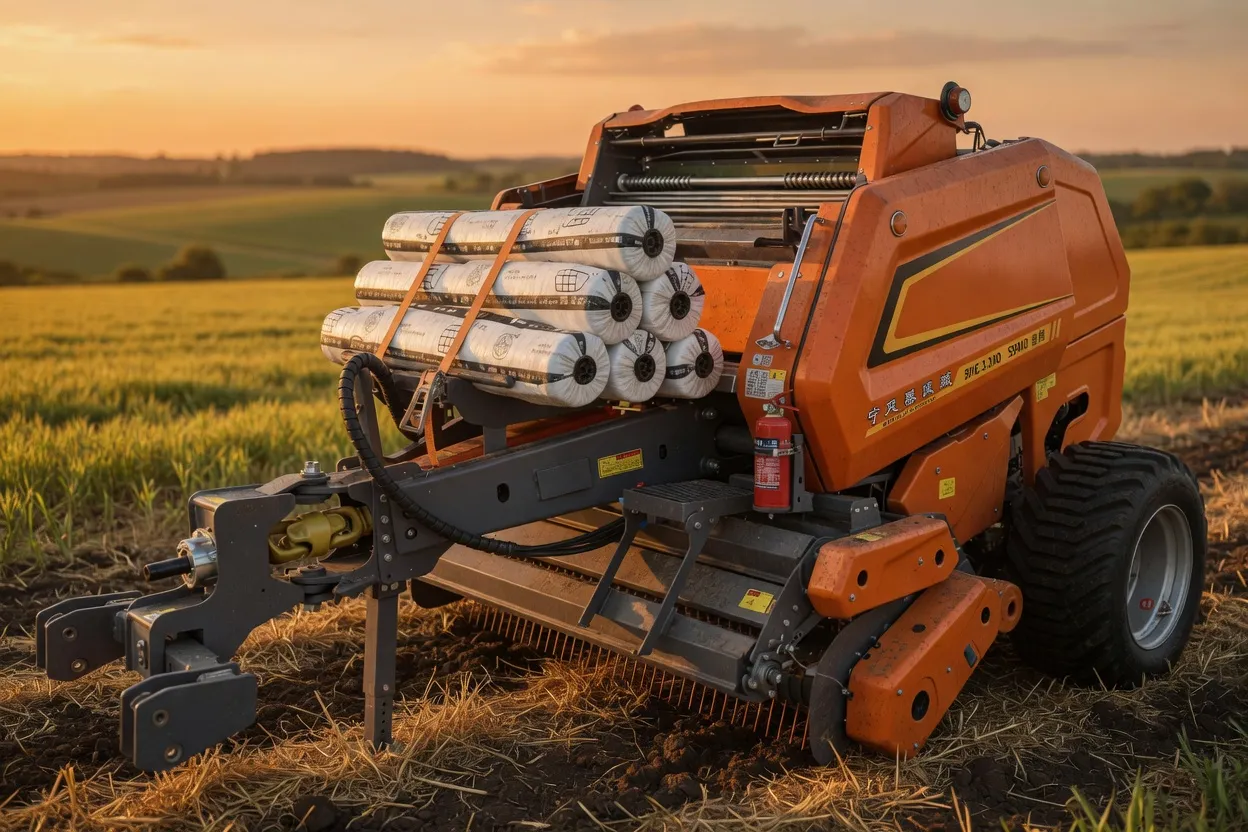
What Hiring Gives You — and What It Doesn’t
The Genuine Advantages and Genuine Limitations of the Contractor Model
What Hiring Gives You
No capital commitment. The largest immediate advantage of contracting is that it requires zero capital investment in machinery. The farm’s capital remains available for land, stock, genetics, or debt reduction — all of which may produce a higher return than the equipment investment depending on the farm’s financial position and growth priorities. For farms in an expansion phase or carrying significant debt, deferring equipment capital commitments in favour of revenue-generating or debt-reducing investments is often the correct financial strategy.
No maintenance or repair exposure. When a contractor’s machine breaks down in the middle of a baling session, it is the contractor’s problem — not the farm’s. The farm does not bear the maintenance and repair variability that makes owned machine cost calculations difficult to predict. This certainty has financial value that doesn’t appear in per-bale comparisons.
Access to current technology without upgrade cost. A contractor who replaces their machine every 5–7 years brings current technology to each job. A farm that owns a machine for 15 years is operating with technology that may be 15 years old. For precision farming operations where bale monitoring, variable pressure reporting, and connectivity are important, this technology currency difference has operational value.
What Hiring Doesn’t Give You
Harvest timing control. A contractor serves multiple clients — your paddock is ready to bale on Day 3 of the optimal window, but the contractor may not be available until Day 6. Three days of suboptimal moisture at baling, or three days of additional field exposure after the optimal cut stage, have real quality consequences. Owned equipment eliminates this timing dependency entirely.
Quality control. The contractor sets the chamber pressure, decides on the wrapping interval, and determines the inoculant application protocol — or more accurately, applies their standard practice across all clients. Your farm’s specific quality requirements (high density for drought reserve, immediate wrapping for high-moisture crop, specific inoculant for tropical grasses) may not be prioritised by a contractor managing multiple clients simultaneously.
Availability certainty in peak season. In regions where multiple farms cut within a narrow seasonal window, contractor capacity is constrained during peak demand. Farms that have not built a strong relationship with a specific contractor may find themselves queued after more valuable or more established clients, particularly in seasons where weather compresses the harvest window for all farms simultaneously. For farms in these situations, owned equipment is not just a cost decision but a risk management decision. For the full range from Australia Ever-power Forage Balers, visit the About page.
What Buying Gives You — and What It Costs
The Complete Picture of Ownership Benefits and Ownership Costs
What Buying Gives You
Ownership provides full operational control over every silage quality variable — moisture at baling, density setting, wrapping interval, wrap layers, and inoculant selection. It eliminates contractor scheduling dependency and provides availability on any day the crop is ready. It allows the harvest to pause and resume around milking schedules, weather changes, and other farm priorities without contractor mobilisation fees. It creates the opportunity for custom baling income from neighbours, which can significantly improve the economics. And it removes the risk of contractor-driven quality variation that is outside the farm’s control.
What Buying Costs
Ownership requires initial capital outlay ($30,000–70,000+ AUD for a quality mid-range to commercial silage baler and wrapper), ongoing annual costs averaging $6,000–15,000 per year (depreciation, capital, maintenance, consumables for 200–400 bales/year), and operator time and skill. The ownership cost is front-loaded relative to the saving — the investment precedes the savings by years, and if annual volume is lower than planned, the savings may never materialise. For silage baler parts and after-sales support, contact the Charlton team.
The Hire vs Buy Decision Framework
A Structured Approach to the Decision for Australian Farm Conditions
The following framework addresses each decision dimension in the order of practical importance for most Australian farm situations. Reaching a clear “buy” or “hire” answer on the first few dimensions often makes the remaining ones unnecessary — but if earlier dimensions produce ambiguous answers, the later ones provide the tie-breaking criteria.
Annual Bale Volume — The Primary Gate
Under 180 bales/year → Hire. At this volume, ownership true cost per bale consistently exceeds contractor rates. Only strong non-financial reasons (availability crisis, extreme contractor unreliability) would change this conclusion. 180–230 bales/year → Borderline. Run the full cost calculation with your specific inputs; the result will be close to neutral and non-financial factors will be decisive. Above 230–250 bales/year → Buy is increasingly favourable — the economics improve continuously with volume above this threshold.
Contractor Availability and Reliability
Reliable, available, competitive pricing → Hire model works. If a good contractor is reliably available within the optimal baling window at a reasonable price, the hire model removes equipment capital and maintenance risk without significant quality or timing cost. Unreliable, unavailable in peak season, or expensive ($45+/bale) → Buy. In regions with limited contractor access, the operational risk of contracting is a genuine cost that justifies earlier ownership even at lower volumes.
Quality Control Requirement
High-production dairy, TMR-fed, quality-sensitive livestock → Buy. When silage quality directly affects milk production, reproduction, or other measurable revenue outcomes, the quality control advantage of ownership has quantifiable financial value that can justify purchase at lower volumes than the pure cost comparison suggests. Beef store, backgrounding, or quality-tolerant system → Hire is adequate if the contractor delivers acceptable basic silage quality.
Capital Position and Alternative Uses
Strong balance sheet, no better use for $35,000–50,000 → Buy. Tight capital, better returns elsewhere (land, stock, debt reduction) → Hire and reinvest the capital. This is a farm business question, not just a machinery economics question. The ROI of the baler must be compared against the ROI of all alternative capital deployments available to the farm.
Custom Work Opportunity
Neighbours need baling and will pay market rate → Buy. Custom work income transforms the economics and significantly shortens payback. Even 80–100 custom bales per year at $35 per bale generates $2,800–3,500 revenue and reduces per-bale cost for own production by $10–15 per bale — effectively financing the machine from external revenue.
Quick Reference: Hire or Buy for Common Australian Farm Scenarios
Scenario-Matched Recommendations for the Most Common Situations
| Farm Scenario | Recommendation | Primary Reason |
|---|---|---|
| Small beef/sheep farm, 60–100 bales/yr, competitive local contractor | Hire | Volume too low for ownership economics to compete |
| Medium dairy 130–180 cows, 180–220 bales/yr, good contractor access | Borderline | Quality control and timing value may tip to buy; run specific calculation |
| High-production dairy 200+ cows, 280+ bales/yr | Buy | Quality return + volume economics + timing control = strong ROI |
| Any farm size in region with unreliable / expensive contractors ($45+) | Buy | Availability risk and cost premium overcome volume economics |
| Farm with custom work opportunity (100+ extra bales from neighbours) | Buy | Custom income transforms the economics regardless of own volume |
| Farm with tight capital and better returns available elsewhere | Hire | Opportunity cost of capital outweighs marginal equipment economics |
| Farm replacing an old baler already in the ownership cycle (200+ bales/yr) | Buy | Already operationally dependent on owned baler — replacement is correct |
| Two farms 100 bales each, willing to share a machine | Buy (Syndicate) | 200 combined bales produces positive economics; share capital and maintenance |
The Syndicate Option: Sharing Ownership to Improve Economics
When Two or Three Farms Sharing a Machine Makes Better Sense Than One Farm Owning
For farms in the 100–180 bale per year range where individual ownership economics are marginal, syndicate ownership with one or two neighbouring farms can transform the economics. Two farms each producing 120 bales per year combine for 240 bales — a volume where the direct cost saving from ownership begins to be clearly positive. The capital cost and maintenance cost are shared, halving each farm’s annual fixed cost commitment. The operational challenge is scheduling — ensuring each farm can access the machine when their crop is ready without conflict.
Successful machine syndicates in Australian agriculture typically have three key features: non-overlapping peak use periods (the farms’ optimal silage windows fall at different times, reducing scheduling conflicts), a clear written agreement on priority access, maintenance cost allocation, and machine disposal; and a high level of trust and communication between the parties. The written agreement is essential — verbal arrangements that work well when the relationship is strong create expensive disputes if the relationship deteriorates or one party’s circumstances change. For مكبس السيلاج model recommendations suitable for syndicate purchase, the Charlton team can advise on models matched to combined production volumes and both partners’ tractors.
Ever-Power: The Right Buy When the Decision Favours Ownership
Competitive Price, Local Support, and the Range to Match Every Volume
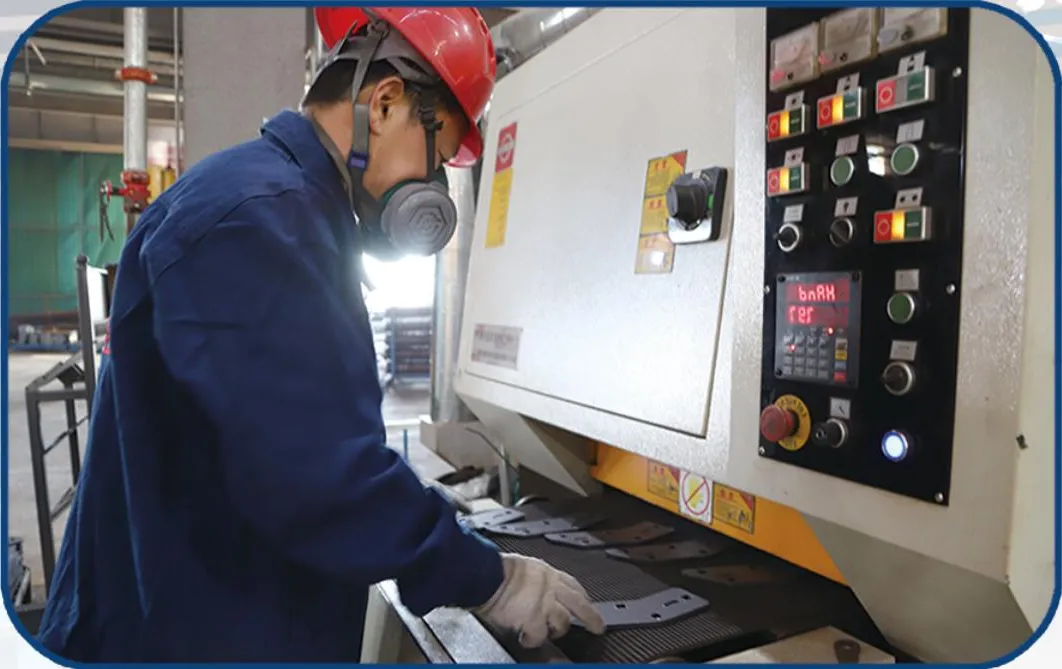
When the decision framework points to ownership, the choice of machine determines whether ownership economics deliver the expected return or fall short. Ever-power’s competitive purchase price — lower than European equivalents at comparable specification levels — means the depreciation component of the per-bale cost is lower from the first bale, improving the economics at all production volumes. The range spans from the compact, 40 HP-capable 9YG-1.0 for smaller farms where the marginal ownership case needs the lowest possible purchase price, through the 9YG-1.25 for the most common Australian farm-scale ownership profile, to the S9000 Beyond for high-volume commercial operations where quality return is as important as cost. Local parts supply from Charlton means the maintenance cost component stays predictable and avoids the extended downtime during peak season that drives farmers to abandon ownership for contracting.
Ready to Make the Hire vs Buy Decision?
Get a Personalised Recommendation From Our Team
Charlton Industrial Area, Australia — model selection advice, cost modelling, and honest assessment of whether ownership makes sense for your specific annual volume and farm situation.
الأسئلة الشائعة
Common Questions About the Silage Baler Hire vs Buy Decision

شركة أستراليا إيفر باور المحدودة لمعدات العلف
📍 Charlton Industrial Area, Australia