產品
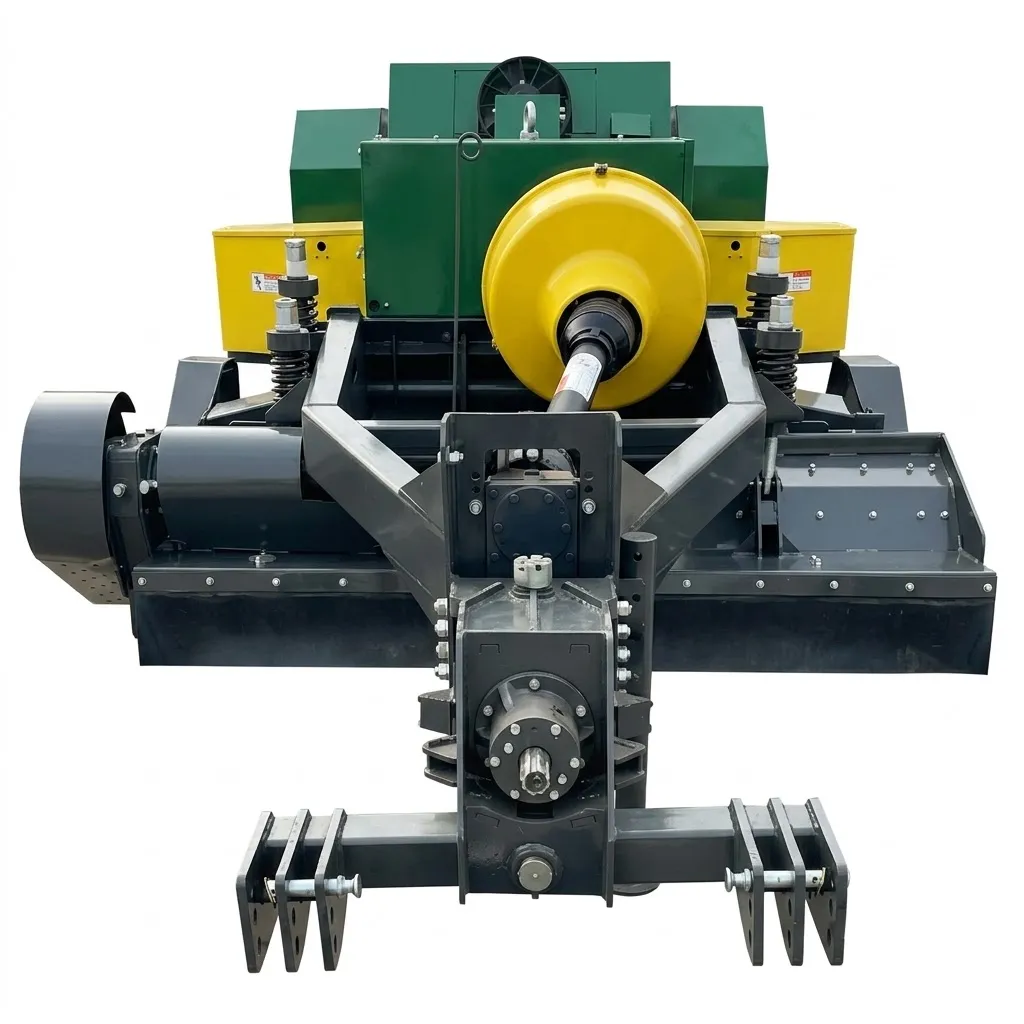
9YF-2200S Square Baler | Hammer-Claw, Corn & Sorghum Straw
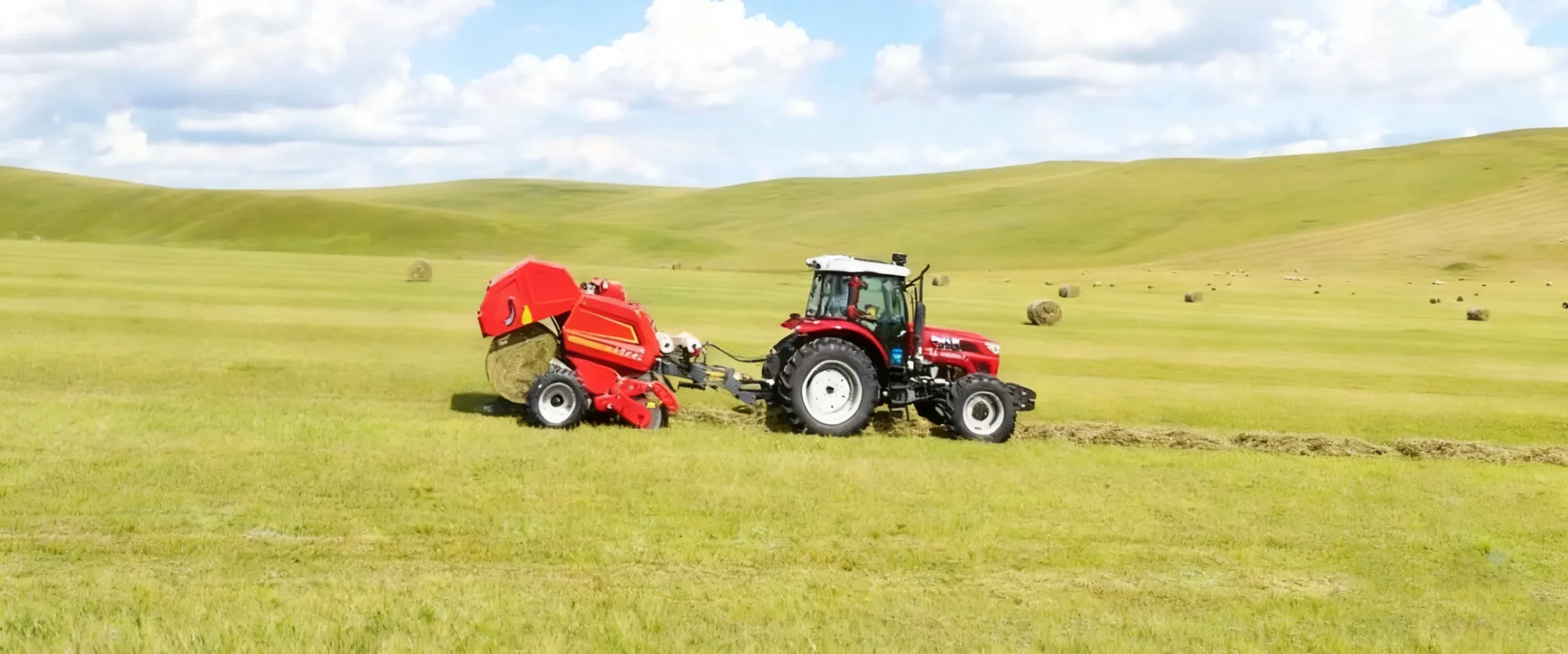
The 9YF-2200S is a towed square baler with a hammer-claw shredding pickup that processes corn, sorghum, and cotton stalks directly in the field without pre-chopping. A 2200 mm working width, fork feeding mechanism, and two D-type automatic knotters produce high-density 460×360 mm bales. Minimum power ≥73.5 kW (≈100 hp). Machine weight 2350 kg. Suitable for corn straw, sorghum, cotton straw, wheat straw, and cured forages.
Square Baler Built for Hard-Stem Crops — Hammer-Claw Shredding for Corn, Sorghum and Cotton Straw
Standard square balers are designed around the crop types that defined them: wheat straw, rice straw, and light hay. For most of the crops these machines were built to handle, a fork feeding mechanism delivers material into the compression chamber cleanly and efficiently. Corn straw, sorghum stalks, and cotton straw are different. Their stems are thicker, woodier, and more resistant to compression than cereal straw — and without pre-treatment, they feed inconsistently, jam feeders, and produce variable-density bales that tie poorly. The 9YF-2200S solves this by replacing the standard spring-tooth pickup with a hammer-claw shredding mechanism upstream of the compression chamber.
The hammer-claw shredder breaks down and crushes hard-stem stalks before they enter the compression zone — producing a more uniform, compressible material that the fork feeding mechanism can charge into the 460×360 mm chamber evenly on each plunger stroke. The result is denser, more consistent bales from crops that standard machines handle poorly or not at all. With a minimum power requirement of ≥73.5 kW, the 9YF-2200S steps up from the standard 9YF-2200's ≥36.8 kW to drive the additional shredding load. The machine weighs 2350 kg and spans 6240 mm (L) × 2760 mm (W) × 1700 mm (H) in transport. For an overview of how square and round baler formats compare across different crop types, see our guide on round and square forage baler differences.
Australia Ever-power Forage Balers Co., Ltd. supplies the 9YF-2200S direct to Australian buyers from Charlton Industrial Area, with local spare parts stock for the hammer-claw shredder mechanism, fork feeder components, and knotter wear parts.
完整技術規格
Full technical documentation including hammer-claw timing specs, PTO shaft requirements, and spare parts catalogue on request — 聯絡我們的團隊.
The Crop Standard Feeders Cannot Handle — and Why the Hammer-Claw Changes What's Possible
Every square baler's compression chamber expects material that arrives in a compressible form. Wheat straw arrives that way naturally. Corn straw, sorghum stalks, and cotton straw do not — and the gap between what a standard feeder delivers and what the compression zone needs is where bale quality breaks down.
Why Hard-Stem Crops Resist Standard Baling
Corn straw
Corn stalks after harvest range from 15–25 mm in stem diameter with a fibrous inner pith and a hard outer sheath. When a spring-tooth pickup delivers them unprocessed into a fork feeder, the stalks cross and interlock, preventing the fork from charging the chamber evenly. The result is unpredictable bale density — dense in patches where stalks happen to align, loose where they bridge. In a standard machine, corn straw baling often requires pre-chopping with a separate implement, adding a field pass and fuel cost before baling can begin.
Sorghum stalks and cotton straw
Sorghum stalks are among the toughest baling materials in Australian and Asian farming systems — high moisture content at harvest, woody central pith, and variable length depending on variety and timing. Cotton straw's branching structure creates the same bridging and feeder blockage problems as corn straw, compounded by the lateral branch nodes that prevent longitudinal alignment. Neither material bales reliably in a standard spring-tooth pickup machine at productive ground speeds.
How the Hammer-Claw Shredder Solves This
Step 1 — Impact shredding
Rotating hammer-claw elements strike incoming stalks at high speed, fragmenting the hard outer sheath and breaking down the fibrous pith into shorter, more uniform lengths. This impact phase does in seconds what sun-drying and weathering do over days — converting a rigid stem into a compressible fibrous mass.
Step 2 — Crushing and fibre opening
As the shredded material passes through the claw mechanism, stem sections are crushed longitudinally — splitting the outer wall and exposing the fibrous inner structure. This increases the material's surface area and allows it to mat together under compression rather than slip and bridge. The density and shape consistency of the final bale depends on this matting behaviour.
Step 3 — Even fork feeding to chamber
Pre-shredded material flows into the fork feeding mechanism in a form that the fork can meter and charge consistently on each plunger stroke — without the bridging and interlocking that unprocessed stalks cause. Each plunger stroke compresses a well-distributed charge, producing bale faces that are uniform in density from edge to edge.
9YF-2200S vs 9YF-2200 — Same Crop, Different Outcome
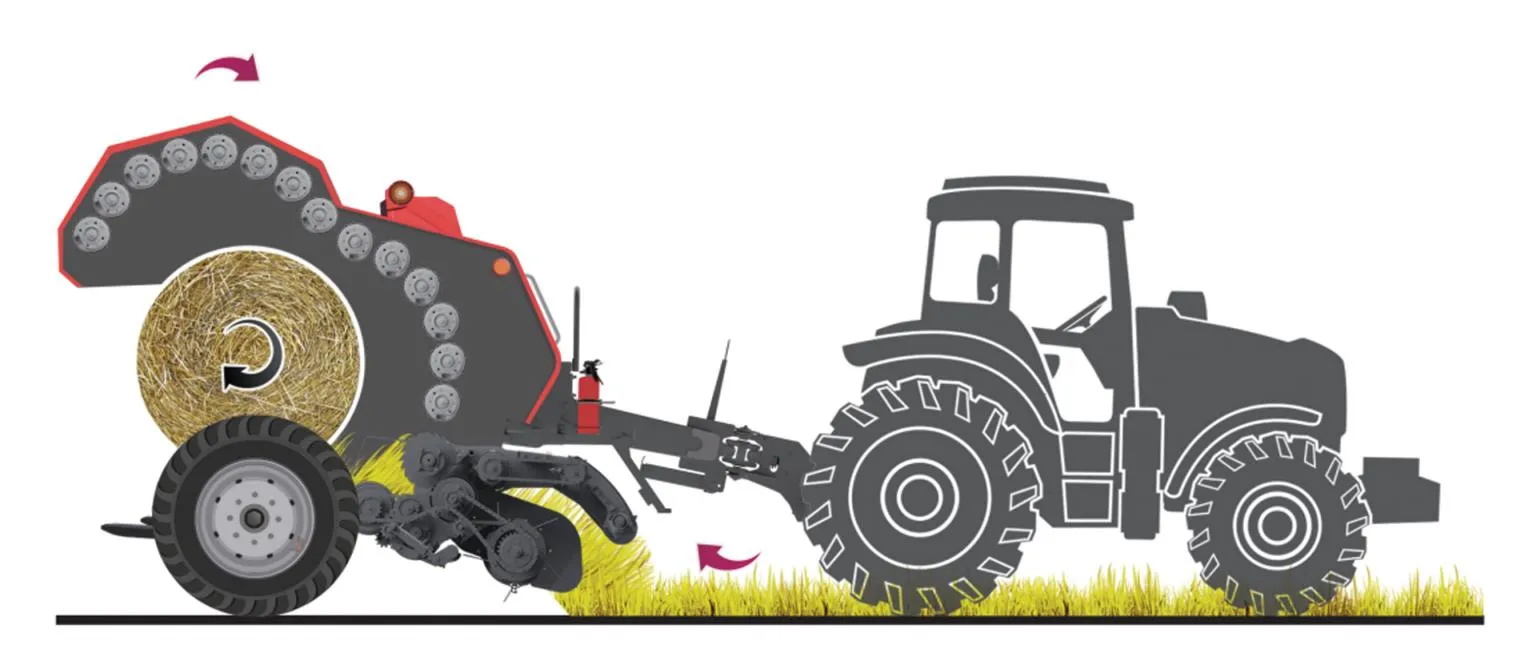
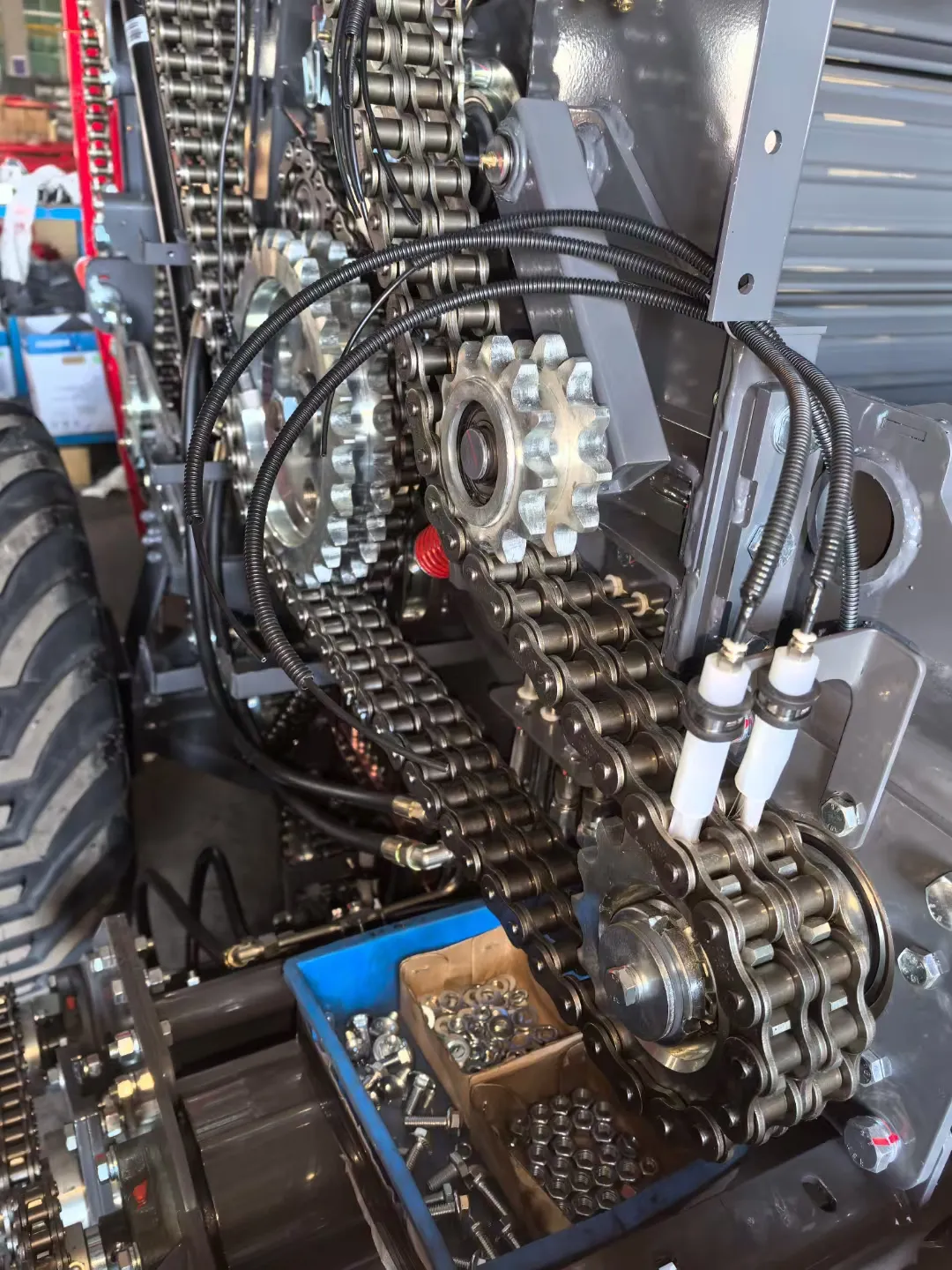
Five Mechanical Systems That Define the 9YF-2200S
The 9YF-2200S builds on the proven 9YF square baler architecture — 2200 mm pickup, fork feeder, D-type automatic knotting, 460×360 mm compression chamber — but adds the hammer-claw shredding system that transforms the machine's crop capability. Here's how each system works and why it matters.
Hammer-Claw Shredding Pickup — The Machine's Defining Capability
The hammer-claw mechanism replaces the spring-tooth reel of the standard 9YF-2200 with a rotating drum carrying hardened hammer-claw elements. As the machine advances over the windrow, these elements impact the incoming stalks at high rotational speed, breaking them down and crushing the fibrous structure before the material enters the feeding system. The 2200 mm working width covers the same windrow widths as the standard machine, but the material that arrives at the fork feeder is fundamentally different — pre-shredded, shorter-length, and far more uniform in compressibility.
Wear monitoring for the hammer-claw elements
Hammer-claw elements are sacrificial wear components — they are designed to take the impact of hard-stem crops and be replaced as they wear rather than to last indefinitely. Inspect the elements at the start and end of each operating day during hard-stem baling. Worn elements reduce shredding effectiveness before they fail mechanically; the first sign of declining bale density on corn straw is often hammer-claw element wear rather than a feeder or knotter issue. Australia Ever-power stocks replacement hammer-claw elements at Charlton Industrial Area.
Fork Feeding Mechanism — Controlled Charging After Shredding
The fork feeder receives shredded material from the hammer-claw mechanism and delivers discrete, metered charges into the compression zone in synchronisation with each plunger stroke. This combination — shredding first, then fork feeding — is the operational sequence that makes high-density baling of corn and sorghum straw achievable without pre-chopping. The fork feeder alone cannot handle unprocessed hard-stem crops; the hammer-claw alone does not meter the charge. Both are required.
Ground speed and feeder load matching
In heavy corn straw windrows, the combined load on the hammer-claw and fork feeder is at its highest. Ground speed should be set to match the windrow density — slower in heavy windrows, faster in lighter ones. The target is a consistent feeder charge on each stroke; the "variable bale length" pattern of alternating full-size and short bales signals that the fork feeder is being overloaded relative to ground speed. Reduce speed until the pattern disappears, then hold it.
2 × D-Type Knotters — Automatic Rope Tie on Every Bale
Two D-type knotters handle the automatic rope tying cycle. When the bale reaches preset length, both knotters activate simultaneously, completing the tie and releasing the bale without operator intervention. On pre-shredded corn straw bales — which are denser and heavier per unit than wheat straw bales at the same dimensions — the rope specification matters: higher-tensile rope prevents snap failures under the additional bale weight. Our team can advise on the correct twine tensile rating for hard-stem applications at the time of purchase.
Knotter inspection for shredded-crop operation
Shredded corn straw produces fine fibrous dust that accumulates in the knotter mechanism more rapidly than light wheat straw. Include a brief blow-down of the knotter area with compressed air in the daily inspection routine — clearing this accumulation prevents dust from interfering with bill hook timing and twine disc rotation. The D-type knotter is reliable in this environment when kept clean; neglected, it is the most likely source of tie failures in heavy shredded-crop operation.
460×360 mm Compression Chamber — Standard Format, Higher Density Output
The 9YF-2200S produces the same 460×360 mm bale cross-section as the rest of the 9YF series, meaning storage, handling, and transport setups designed around this format transfer directly from other machines in the range. What changes with the hammer-claw is the density and uniformity of what's inside the bale — pre-shredded corn straw compresses more evenly than unprocessed stalks, producing bales that are heavier per unit and more consistent face-to-face than would be achievable in a standard machine on the same crop.
Bale end-use value for shredded hard-stem materials
Shredded and crushed corn straw bales open up end-use channels unavailable to whole-stalk bales: mushroom substrate producers need a fibrous material of consistent particle size; livestock feed supplement users prefer a broken-down stalk that animals can consume without jaw strain; biomass energy buyers value consistent density for feedstock specifications. The hammer-claw's processing step is what makes the bale commercially useful beyond simple field clearance.
≥73.5 kW Power Requirement — Why the Shredder Doubles the Power Demand
The standard 9YF-2200 requires ≥36.8 kW; the 9YF-2200S requires ≥73.5 kW — almost exactly double. The additional power is consumed by the hammer-claw mechanism, which must impact and crush hard-stem stalks at continuous high rotational speed. This is not a marginal addition to the standard machine's power budget; it is a separate, substantial power demand that runs in parallel with the compression and knotting systems. A tractor producing exactly 73.5 kW at the PTO under light conditions may fall below this threshold under full load in heavy corn straw. Our practical recommendation is 100–120 hp (approximately 75–90 kW) at PTO for sustained hard-stem operation with adequate load margin.
Matching the right tractor before purchase
Confirm your tractor's PTO output under full load — not the engine nameplate power — before purchasing the 9YF-2200S. Many tractors rate engine power at a higher figure than their sustained PTO output under continuous field load. Contact us at [email protected] with your tractor make and model; our team will confirm compatibility before you commit to the machine.
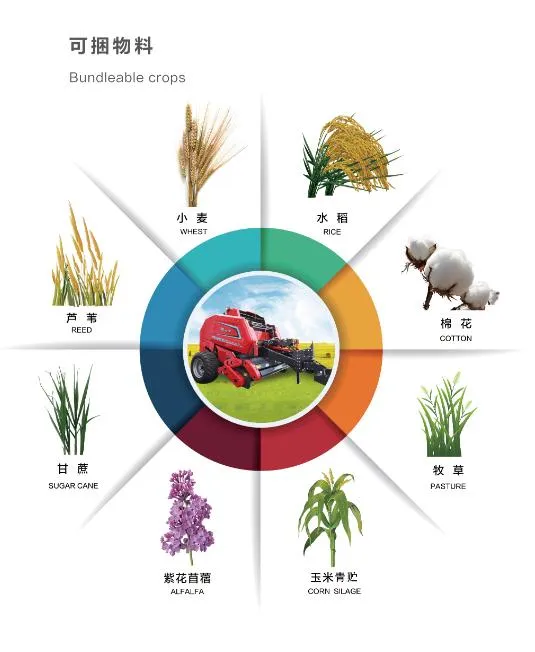
Crops the 9YF-2200S Handles — and What Each Becomes After Baling
The 9YF-2200S handles all the crops a standard square baler handles — plus the hard-stem crops it cannot. Below are the primary crop applications and the end-use channels each opens up.
Corn Straw — Primary Application
The machine's design target. Post-harvest corn stalks bale directly without pre-chopping at standard baling ground speeds. Moisture at baling should be 17–23% for best shredding and compression performance. End-use: livestock roughage supplement, mushroom substrate, biomass energy feedstock, paper pulp raw material.
Sorghum Stalks
Sweet sorghum and grain sorghum stalks both process well through the hammer-claw system. Sorghum moisture at baling should be 10–23%. The woody pith that makes sorghum resist standard baling is effectively fragmented by the claw elements; the resulting shredded material compresses and forms dense, stable bales. End-use: livestock feed, biomass.
Cotton Straw
The branching structure and lateral nodes that block standard pickup tines are broken down by the hammer-claw elements before material reaches the feeder. Cotton straw bales from the 9YF-2200S are suitable for livestock bedding and biomass applications. Set pickup ground clearance slightly higher than for cereal crops to minimise soil contamination from cotton's wider stubble spread.
Wheat & Rice Straw
The 9YF-2200S also handles standard cereal straw applications. The hammer-claw processes lighter straws more aggressively than a spring-tooth would, so wheat straw bales from the 9YF-2200S are typically shorter-fibre and denser than from a standard machine — useful for operations where higher bale density is a selling point. Bale below 20% moisture for reliable rope tying.
Alfalfa & Forage Grasses (cured)
Dried and cured alfalfa, ryegrass, oaten hay, and mixed pasture windrows can be baled in the 9YF-2200S. The hammer-claw breaks stem nodes and produces shorter leaf-and-stem fragments than a spring-tooth machine — which can improve fermentation characteristics in supplementary feed applications. Target below 20% moisture. For high-moisture silage, see our round baler with film wrapping range.
Mixed Seasonal Workflows
Operations that rotate through corn straw, wheat straw, and hay across the same season benefit from the 9YF-2200S's ability to handle all these materials in the same machine without changeover. The hammer-claw processes everything from light ryegrass to dense corn straw — adjusting ground speed for the windrow density is the primary operational variable, not machine reconfiguration.
Running the 9YF-2200S at Peak Output in Hard-Stem Crops
The 9YF-2200S has one additional maintenance requirement that a standard square baler does not: the hammer-claw mechanism. Everything else follows the same operating discipline as the 9YF-2200 series — moisture, speed, knotter inspection, lubrication. These six habits keep both the shredder and the baler producing at full capacity.
Inspect Hammer-Claw Elements Daily
Hammer-claw elements are wear parts. Check each element at the start and end of each baling day — look for chips, deformation, or significant edge rounding. A worn element that is not replaced reduces shredding effectiveness before it causes a mechanical failure; the first visible sign is a drop in bale density consistency. Keep a set of replacement elements in the cab or field kit throughout the season.
Bale Corn Straw at 17–23% Moisture
Corn straw moisture above 25% makes the shredded material sticky and prone to bridging in the fork feeder; below 15% the shredded fibre is too brittle to mat together under compression, producing low-density bales that lose shape after tying. The 17–23% range is the shredding-and-baling sweet spot for corn straw. Use a moisture meter — don't estimate by feel, which is unreliable on shredded material.
Match Ground Speed to Windrow Density
The hammer-claw and fork feeder together set the effective throughput ceiling for each windrow density. In very heavy corn straw windrows, reduce ground speed until bale length consistency stabilises. The "variable bale length" pattern — alternating full-size and short bales — is the feeder's signal that it is being overloaded. Reduce speed until it disappears, then hold it for that field section.
Blow Knotter Dust Daily — Shredded Crop Accumulates Fast
Shredded corn straw and sorghum produce fine fibrous dust at a higher rate than whole-stalk crops. This dust accumulates in the knotter mechanism and around the bill hooks, twine discs, and needle guides. Use compressed air to blow out the knotter area at each fuel stop during hard-stem baling. Include a visual check of bill hook timing and twine disc condition before starting each day.
Grease at Every Fuel Stop — Extra Points vs Standard Machine
The 9YF-2200S at 2350 kg carries more bearing and pivot points than the 9YF-2200 — the hammer-claw mechanism adds several high-speed bearings to the lubrication map. At the ≥73.5 kW operating power level in summer harvest conditions, these bearings run hot and consume grease faster than the equivalent bearings on a lower-power machine. Grease all points at every refuelling stop; never skip a stop.
Clear the Chamber and Shredder Housing at Shutdown
Shredded corn straw left in the compression chamber overnight compresses and dries into a harder plug than wheat straw — the fibrous shredded material mats and sets more firmly under residual spring tension. Run the machine briefly after the last bale to clear both the chamber and the shredder housing of any residual material. A 2-minute shutdown routine saves 20–30 minutes of clearing time at the next morning's start.
Hammer-Claw Square Baler Technology — Supplied Direct with Australian Parts Stock
Australia Ever-power Forage Balers Co., Ltd., Charlton Industrial Area. We supply the 9YF-2200S direct to Australian buyers with local parts and setup support. About our business and supply model.
Australian Stock for Hammer-Claw Wear Parts
Hammer-claw elements, knotter components, fork feeder parts, and rope guides for the 9YF-2200S are held in stock at Charlton Industrial Area. The hammer-claw elements are the highest-turnover wear item on this machine — in a full corn straw season, a set may need replacing mid-season. Having them in-country means a one or two day turnaround rather than a multi-week freight wait that loses your baling window.
Factory-Direct for a Specialist Machine
Hammer-claw square balers are a niche product — fewer manufacturers build them, and those that do price them accordingly through distribution chains. Ever-power's direct supply removes the importer-distributor-dealer margin from a machine type that already commands a price premium for its specialist capability. What you pay reflects production and freight cost, not channel margin.
Setup Guidance for Hammer-Claw Operation
The 9YF-2200S has setup requirements the standard 9YF series does not — hammer-claw element inspection intervals, moisture targets for hard-stem crops, tractor PTO matching, and knotter dust management in shredded-crop conditions. Our Australian team provides this guidance as part of the machine purchase, not as a separate service charge. Contact us at [email protected] or through the 查詢表格.

常見問題解答
Common questions from corn, sorghum, and mixed-crop operations evaluating the 9YF-2200S.