The Short Answer — and Why It Varies So Much
Why “How Long Do Bales Last?” Has No Single Correct Answer
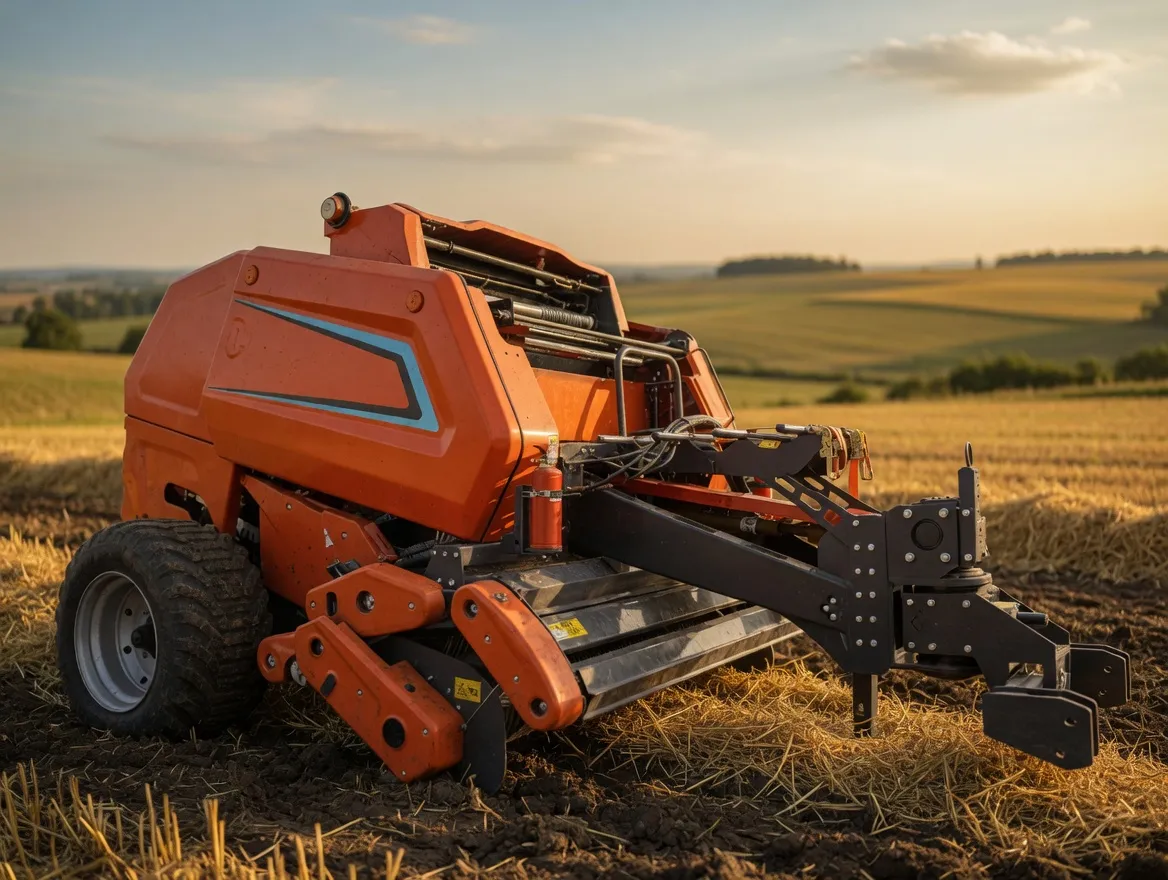
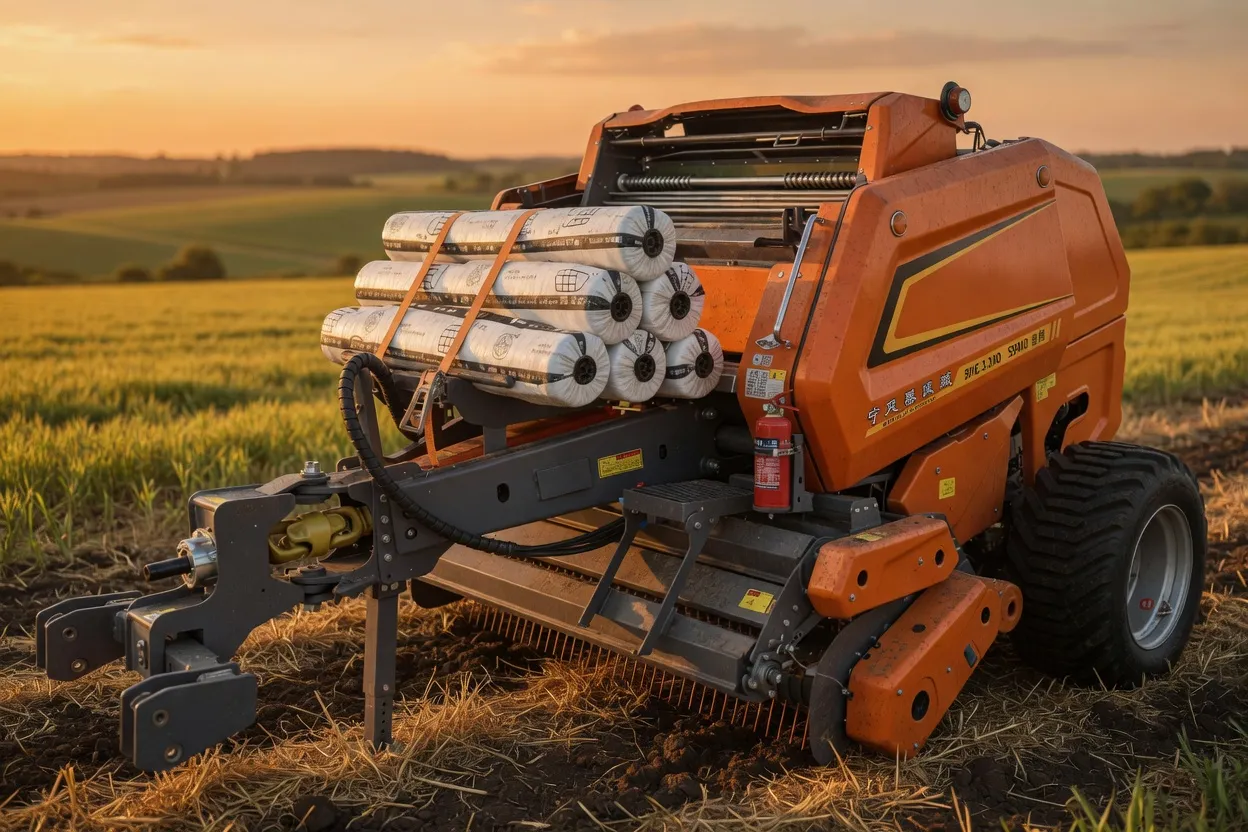
A wrapped silage bale produced by a 青貯飼料打捆機 and correctly managed can retain excellent feed quality for 12–18 months under typical Australian outdoor storage conditions, and up to 24–30 months under optimal conditions (covered storage, high wrap layers, low bird pressure, well-drained site). Poorly produced or poorly stored bales may show significant quality deterioration within 3–6 months. The difference between these outcomes is entirely determined by a set of specific, manageable factors — not luck or crop type alone.
Two separate timelines are relevant when asking how long a silage bale lasts. The first is the fermentation timeline — how long the bale needs to be stored before it is ready to feed. Well-made bales from most crops require a minimum of 6 weeks for lactic acid fermentation to complete and pH to stabilise; feeding before this point risks feeding unstable, still-fermenting silage with elevated volatile acid content and low aerobic stability. The second is the quality retention timeline — how long the bale maintains the feed quality established during fermentation before significant deterioration begins. This guide is primarily about the second timeline: the storage life of fermented silage bales.
The storage life of a silage bale is determined by the interplay of six key factors: fermentation quality at completion, bale density, wrap layers and film quality, storage site conditions, UV exposure, and mechanical film integrity management during the storage period. Each factor has an independent effect on storage life, and together they create a wide range of possible outcomes from the same baler and same crop. Understanding each factor gives operators the tools to predict storage life accurately and to extend it where needed — for drought reserve planning in particular, this understanding is practically important. For advice on the Ever-power silage baler range, visit the product pages.
Factor 1 — Fermentation Quality at Completion
How the Quality of Fermentation Sets the Maximum Achievable Storage Life
A bale that has fermented well — pH below 4.5, lactic acid dominant, low butyric acid — has established a stable, low-pH chemical environment that is inherently hostile to most spoilage organisms. This stable environment is the foundation of long storage life: the better the fermentation, the more resilient the stored silage is to the gradual quality stresses of the storage period. A bale with a pH of 3.9 and a clean lactic acid fermentation can tolerate a small film breach or a few weeks of elevated UV exposure without dramatic quality loss; a bale with a pH of 5.2 and elevated butyric acid from a failed fermentation was already deteriorating before the storage period began, and minor storage stresses push it to outright spoilage rapidly.
The two most important production-stage determinants of fermentation quality are crop moisture at baling and bale density. Baling at 50–62% moisture with adequate density (185+ kg DM/m³ in variable chamber machines) consistently produces the stable fermentation that maximises storage life. Baling above 67% moisture or with insufficient density consistently produces the poor fermentation that limits storage life regardless of how well the bale is subsequently wrapped and stored. Fermentation quality cannot be improved after the bale is sealed — it is fixed at the production stage and determines the storage life ceiling for everything that follows.
Factor 2 — Bale Density
Why Higher Density Directly Extends How Long Quality Is Retained
Higher bale density extends storage life through two mechanisms. The first is the faster establishment of anaerobic conditions after wrapping — as discussed in the mould guide, less interstitial air means oxygen is exhausted more rapidly, reducing the aerobic establishment window for spoilage organisms. The second is the structural integrity advantage of a dense bale throughout the storage period: a firm, dense bale maintains its circular shape under stacking load and through temperature cycling, whereas a loose bale deforms progressively, creating contact-point film stress and bale-surface irregularities that increase the risk of film adhesion failure over time.
In practical terms, the difference between 165 kg DM/m³ (a typical fixed chamber baler result on grass silage) and 195 kg DM/m³ (a well-set variable chamber result on the same crop) represents approximately 2–4 months additional reliable storage life under equivalent storage conditions — because the denser bale’s structural and anaerobic advantages compound over the storage period to produce meaningfully better quality at feed-out. For a silage baler machine matched to your production scale and quality targets, contact the Charlton team.
Factor 3 — Wrap Layers and Film Quality
How Wrap Specification Determines the Barrier Life of the Bale
Wrap layers and film quality determine how long the anaerobic barrier around the bale remains effective. Standard 25-micron UV-stabilised film at 6 layers with 50% overlap provides an oxygen barrier that remains effective for 12–15 months in direct Australian outdoor sun. The same film at 4 layers remains effective for 8–10 months. At 8 layers of premium 25-micron UV-rated film, the effective barrier life extends to 18–24 months in most Australian outdoor storage conditions. These are not marketing claims but engineering realities based on the UV degradation rates of agricultural film under Australian UV indices and the oxygen transmission rate of the resulting layer stack.
Film quality within the same layer count also varies significantly. Budget film without a properly formulated UV stabiliser package can degrade to barrier failure within 9–12 months in Australian conditions, while premium film with an 18-month UV rating reliably performs to specification through the rated period. For drought reserve bales that must be held for 18–24 months, the film selection decision at wrapping directly determines whether the feed is usable when needed. Specifying film without confirming the UV stabiliser duration rating is one of the most common and most costly silage management oversights in Australian operations. For information about the 9YCM-850 wrapping unit, see the product page.
| Wrap Specification | Typical Storage Life (Outdoor AU) | Recommended Use |
|---|---|---|
| 4 layers, standard UV film | 6–8 months | Immediate-season use only — not for drought reserve |
| 6 layers, 18-month UV-rated film | 12–15 months | Standard Australian default — most seasonal silage |
| 8 layers, 18-month UV-rated film | 18–24 months ✅ | Drought reserve, high-value crops, long-storage sites |
| 8 layers + covered storage | 24–30+ months ✅ | Maximum storage life — strategic drought reserve |
Factor 4 — UV Exposure and Storage Site
How Where You Store Bales Affects How Long They Last
UV radiation from direct Australian sunlight is the primary cause of film barrier degradation during storage, and the UV exposure level of the storage site is therefore one of the most influential location-based determinants of storage life. A bale stored in full, unshaded outdoor sun in a high-UV Australian location experiences film degradation approximately 30–50% faster than an equivalent bale stored under a shed roof or shadecloth cover. This difference compounds over the storage period — the bale stored in direct sun will breach its effective barrier life 4–6 months earlier than the shaded bale at the same wrap specification.
Storage site drainage also affects storage life, though through a different mechanism. Ground moisture beneath bales from poor drainage creates film deterioration at the bale base — the lower film layers are continuously exposed to the plant acid and moisture combination of standing water under the bale, which accelerates film degradation in the base contact zone. This deterioration is typically invisible until the bale is moved or opened; by the time visible mould at the base is discovered, the entire underside film may have failed. Well-drained sites — ideally on aggregate, concrete, or well-sloped firm ground — eliminate this deterioration pathway and contribute meaningfully to the overall storage life of bales stored on them. For advice from Australia Ever-power Forage Balers, visit the About page.
Factor 5 — Mechanical Film Integrity During Storage
How Physical Film Damage Limits Storage Life Even When Everything Else Is Correct
A bale with excellent fermentation quality, high density, 8 wrap layers, and a well-drained shaded storage site can still have its effective storage life cut to weeks if a bird pecks through the film and the breach is not repaired. Mechanical film damage from birds, livestock, handling equipment, and ground debris creates localised oxygen entry points that override the protection provided by every other factor. Once oxygen enters a breach, aerobic spoilage expands from that point at a rate determined by temperature and spoilage organism population — regardless of how well the rest of the bale is protected.
Effective mechanical integrity management — regular inspection with immediate repair of breaches, active bird deterrence, livestock exclusion, and correct handling technique — is what allows the theoretical storage life established by the other five factors to be actually achieved in practice. Operations that neglect inspection routinely achieve only 60–70% of their theoretical storage life; operations with disciplined inspection and prompt repair consistently achieve 90–100% of it. The inspection and repair cost (primarily labour time) is modest relative to the value protected. For silage baler parts and storage advice, contact the Charlton team.
Factor 6 — Crop Type and Fermentation Buffering Capacity
How the Crop Itself Affects How Long the Silage Remains Stable
Different crop types have different fermentation characteristics that affect storage life. High-sugar, low-buffering crops like temperate ryegrass typically ferment to a low, stable pH quickly and maintain that pH robustly through the storage period — these silages have inherently good storage stability. High-buffering crops like legumes (lucerne, clover) resist acidification because their high protein content acts as a chemical buffer against pH drop — they require more lactic acid production to reach preservation pH, and if conditions don’t support sufficient acid production (low moisture, low initial sugar, limited lactic acid bacteria population), they ferment to a higher equilibrium pH that is less stable during storage.
Practically, this means that well-made ryegrass silage is typically more forgiving of minor storage management lapses than well-made lucerne silage at the same moisture — the ryegrass pH buffer advantage means it takes more oxygen infiltration to destabilise its preserved state. Lucerne and legume-dominant silages benefit most from the maximum wrap specification (8 layers) and strictest inspection routines because their lower pH buffer means they are more vulnerable to the quality deterioration that follows oxygen infiltration. Maize silage, by contrast, has a high dry matter content at correct harvest maturity and ferments rapidly to a stable low pH — it typically achieves the longest storage life of common Australian silage crops when correctly produced, often maintaining quality for 24+ months with correct wrap specification and management.
Storage Life Reference: Realistic Expectations by Scenario
Practical Storage Life Ranges for Common Australian Silage Situations
⚠️ Poor Outcome: 3–6 months
Baled above 68% moisture, low density, 4 layers, stored outdoors with no inspection. Poor fermentation quality limits storage life independently of the physical factors. These bales should be fed within the season and not considered for drought reserve.
⚡ Typical Outcome: 8–12 months
Baled at 55–65% moisture, adequate density, 4–6 layers of standard UV film, outdoor storage with monthly inspection and basic bird deterrence. This represents the average Australian farm silage bale — adequate for seasonal use but not reliably suited to multi-year drought reserve.
✅ Good Outcome: 12–18 months
Baled at 50–62% moisture, high density (185+ kg DM/m³), 6 layers of 18-month UV-rated film, outdoor storage with fortnightly inspection during Oct–Mar, active bird deterrence, good drainage. Achievable by most operations with disciplined management — covers most drought reserve requirements.
🏆 Optimal Outcome: 18–30+ months
Baled at 50–60% moisture, maximum density, 8 layers of premium UV-rated film, covered storage (shadecloth or shed), weekly inspection in high-risk periods, immediate breach repair, livestock exclusion fencing. Requires deliberate design — appropriate for strategic multi-year drought reserve production.
Planning for Drought Reserve: Maximising Storage Life Deliberately
The Specific Changes to Make When Bales Are Intended for Extended Storage
When producing silage specifically for drought reserve — bales that may need to be held for 18–30 months before use — every factor that extends storage life should be consciously maximised rather than managed to a standard target. This means selecting the cutting with the best fermentation characteristics (typically a well-grown first cut of temperate grass at early heading), baling at the lower end of the moisture range (50–58% rather than 60–65%), operating at maximum chamber pressure for the highest achievable density, wrapping to 8 layers with UV-rated film immediately after baling, storing at the best available site with shadecloth cover, and committing to fortnightly inspection and same-day breach repair throughout the storage period.
The additional cost per bale of these drought-reserve-specific measures — primarily the extra film layers and the shadecloth cover — is modest relative to the feed value being protected and the insurance value of a reliable multi-year feed reserve. Operations that produce drought reserve bales to the same specification as their regular silage often find that the reserve has deteriorated beyond acceptable quality by the time it is needed — which defeats the entire purpose of accumulating the reserve. Making the drought reserve specification explicit, separate from the standard seasonal production specification, and consistently applied to the designated reserve bales is the management discipline that makes the reserve genuinely reliable when conditions eventually demand it. For silage baler for dairy farm and beef reserve silage production advice, contact the Ever-power Charlton team.
Ever-Power: Equipment That Builds Long Storage Life Into Every Bale
The Machine Foundation of Silage Bales That Last
The two production-stage factors that most directly extend storage life — fermentation quality and bale density — are both substantially influenced by the baler’s mechanical specification. Ever-power’s variable chamber pressure system allows density optimisation across the full silage moisture range, and the silage-rated belt compound maintains the compression performance that achieves target density even in the wet-end conditions where density is most difficult to maintain. The precision roller surfaces produce the smooth, consistent bale shape that gives wrapping film the closest possible contact — reducing the micro-gap oxygen retention that limits storage life in loosely formed bales. From the 9YG-1.25 for farm-scale operations to the S9000 Beyond for maximum performance, the Ever-power range provides the mechanical foundation for silage bales that last.
Planning Drought Reserve or Long-Term Silage Storage?
Get Expert Advice From Our Silage Specialists
Charlton Industrial Area, Australia — storage life planning, wrap specification advice, and equipment recommendations for Australian operations.
常見問題解答
Common Questions About Silage Bale Storage Life
澳洲永動力飼料打包機有限公司
📍 Charlton Industrial Area, Australia