
Enfardamento de palha de trigo: cama para animais, forragem ou biocombustível — qual mercado paga mais?
A complete guide for wheat straw producers in China, India, Australia, and the Middle East — covering baling timing, moisture targets, and market specifications for each end-use sector.
Three Markets, One Material
Wheat straw is among the most versatile crop residues globally. After grain harvest in the major wheat belts of China’s Huang-Huai-Hai plain, India’s Punjab and Haryana, Australia’s grain zones, and the Middle East’s irrigated wheat fields, straw represents a material with three distinct commercial applications: livestock bedding, cattle roughage, and bioenergy feedstock. The baling specifications, moisture requirements, and target bale weight differ meaningfully between these three markets — a bale optimised for a Japanese equine bedding buyer is not the same as a bale designed for a biomass pellet plant. Understanding which market you are targeting before you bale determines every variable in the production chain from cutting height to net wrap type.
This guide addresses all three end-use markets in sequence: what each buyer wants, what that means for your baling operation, and how to transition your baler setup between markets if you serve more than one. For the roughage application in ruminant rations — particularly the increasingly common practice of combining chopped wheat straw with silage in a total mixed ration — additional guidance on moisture and particle size is included in Section 3. Our article on why silage is better than hay for dairy cows provides relevant nutritional context for ruminant feeding decisions.

Section 1: Market 1 — Livestock Bedding
1.1 What Bedding Buyers Specify
The livestock bedding market — horse stables, pig farms, poultry operations, cattle housing — is the highest-value wheat straw market in Europe and North America, with premium products commanding €80 to €150 per tonne in UK and Irish horse stable markets at 2025 price levels. Bedding buyers specify three things above all else: low moisture (below 14%), absence of mould or discolouration, and consistent bale weight for cost-per-unit pricing in commercial distribution.
| Especificação | Premium Bedding | Standard Roughage | Biofuel/Biomass |
|---|---|---|---|
| Umidade | <14% | <18% | <15% |
| Cor | Bright golden | Golden-yellow | Qualquer |
| Mould tolerance | Zero | Rastreamento aceitável | Acceptable |
| Bale weight | Consistent ±5% | Flexible | Consistent |
| Price level (AUD/tonne) | $180–280 | $80–130 | $60–100 |
1.2 Production Requirements for Premium Bedding
Premium bedding straw requires cutting at a uniform height of 15 to 20 cm above ground — low enough to maximise straw yield per acre but high enough to avoid picking up soil, which introduces discolouration and mould spores that contaminate the bedding product. Baling must occur within 3 to 5 days of grain harvest before rainfall re-wets the straw above 16% moisture. Barn storage is required — outdoor stored straw bales develop yellowing and surface contamination within 4 to 6 weeks of significant rainfall, dropping them from bedding to roughage grade.
Section 2: Market 2 — Cattle Roughage
2.1 Nutritional Profile and Ration Inclusion
Wheat straw is a structural roughage, not a feed ingredient. Crude protein is typically 3 to 5% on a dry matter basis — insufficient for any productive animal class without significant protein supplementation. Total digestible nutrients (TDN) are 40 to 50% — energy-limited roughage suitable for maintaining dry beef cows, stocker cattle, and sheep through periods of feed scarcity. Its primary value is providing rumen fill and dietary fibre that regulates rumen passage rate in cattle fed high-starch rations.
In Chinese intensive beef systems, wheat straw at 25 to 35% of the total mixed ration dry matter is combined with corn silage, corn stover, and soybean meal to produce balanced rations for yearling and two-year-old beef cattle. Straw’s low cost per tonne makes it the structural roughage of choice when the goal is minimising ration cost per kg of weight gain rather than maximising growth rate. For roughage-grade production, bale moisture below 18% is sufficient and outdoor storage for 6 to 9 months is acceptable.
Wheat straw treated with 3 to 5% urea solution (applied by spraying a concentrated aqueous urea solution at 40 to 50 L per tonne of straw) undergoes ammoniation over 21 to 28 days in sealed storage — the urea breaks down to ammonia which reacts with cell wall fibres, improving digestibility by 8 to 15 percentage points and raising crude protein to 8 to 10%. For Chinese and Indian smallholder beef and dairy operations with limited access to high-quality protein feeds, urea-treated wheat straw baleage is a cost-effective roughage upgrade with simple on-farm implementation.
Section 3: Market 3 — Bioenergy and Biomass
3.1 Specifications for Biomass Power and Pellet Plants
The bioenergy market for wheat straw is growing rapidly across China, where co-firing of agricultural biomass with coal in power plants has government support, and in Europe, where standalone biomass boilers and combined heat-and-power (CHP) plants purchase straw under long-term contracts. Biomass buyers specify maximum moisture of 14 to 15% for direct combustion and 12% for pellet feedstock, but are generally less concerned about colour, dust content, or minor mould presence than bedding buyers. Bale weight consistency matters for automated handling systems — pellet plants in particular run bales through robotic unwrapping and feeding systems that require weight within ±10% of the specified bale weight.
3.2 Baling for Biomass — Key Differences
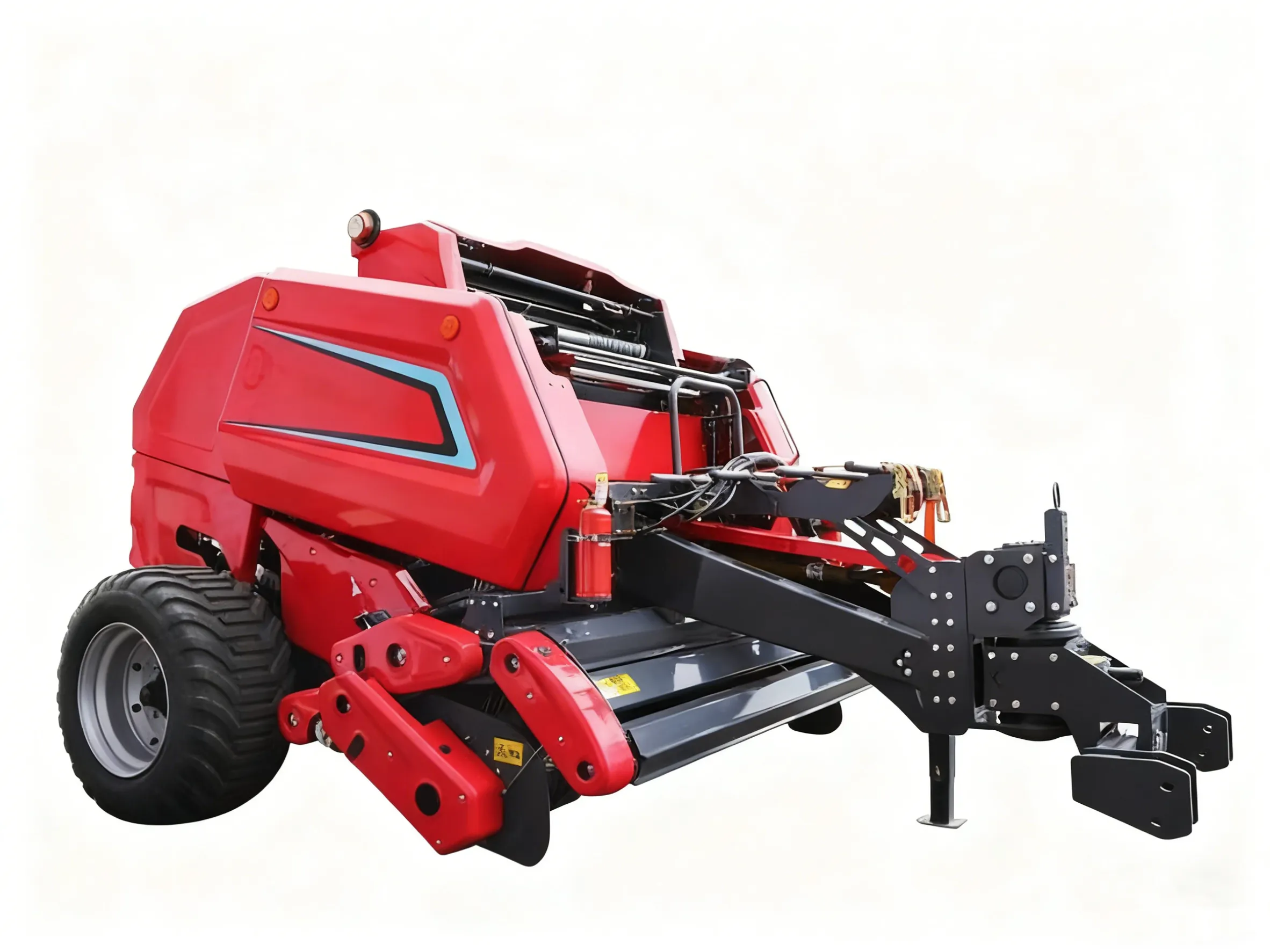
Biomass baling for power plants typically uses large round bales (1.5 to 1.8 m diameter) or large square bales to minimise the number of bales per tonne — reducing transport and handling cost per unit of energy delivered. If your current round baler produces 1.25 m bales, this is still acceptable for smaller biomass buyers but may require a commercial discount on transport cost compared to larger-format bales. For new investments specifically targeting the biomass market, the 9YG-2.24D S9000 Enfardadeira de silagem de fardos redondos Beyond provides the larger chamber diameter and higher throughput needed for efficient large-bale wheat straw production for energy markets.
Section 4: Baling Operational Notes
Wheat straw baled above 20% moisture will heat in the bale core within 2 to 4 weeks, producing mould that crosses all three market applications into unsaleable territory. Unlike grass silage, straw has no fermentation pathway — it simply heats, moulds, and degrades. Check moisture with a handheld meter before baling each field.
Cutting height below 12 cm significantly increases soil pickup during raking and baling. Soil contamination introduces discolouration and mould spores that eliminate bedding-grade premium, reduces TMR palatability in roughage applications, and increases ash content in biomass deliveries.
Even one significant rain event on freshly baled wheat straw will re-wet the outer layer above 16% and cause surface yellowing — dropping the bales from premium bedding grade to roughage grade. Barn storage or covered stack is essential for all bedding-grade production.
All wheat straw bales intended for outdoor storage beyond 4 weeks should use net wrap rather than twine. Net wrap reduces weathering loss at bale ends and provides better shape retention that improves water shedding on the rounded top surface.
Perguntas frequentes

Find the Right Baler for Your Wheat Straw Operation
Compartilhe o tipo de cultura, o volume anual e as especificações do trator — nós indicaremos a enfardadeira ideal para a sua operação.