Europe’s Oldest Textile Fibre Crop — and Why Field Retting Still Defines Quality
How Belgian, French, and Belarusian flax producers bale and deliver linen fibre straw — retting timing, moisture targets, and the bale specifications that determine factory acceptance.
Flax Straw and the Global Linen Industry: A Supply Chain Under Pressure
Linen textile production from flax (Linum usitatissimum) is one of the world’s oldest industries, with archaeological evidence of linen weaving in ancient Egypt, Mesopotamia, and China dating back 5,000 years. In 2025, global linen fabric production is concentrated in Belgium and France (the primary European flax-growing and processing regions), Belarus and Ukraine (the primary eastern European producers), and China’s Heilongjiang province (the world’s largest flax fibre producer by volume). The global linen apparel market has grown steadily since 2018 as sustainability credentials, natural breathability, and biodegradability have driven consumer preference shifts in European and North American fashion markets.
The entire commercial value of flax straw lies in the long bast fibres — thin, strong filaments 20 to 100 cm in length that run along the outer stem wall. These fibres are processed into linen thread and then linen fabric through a sequence of mechanical and chemical processing steps starting with field retting, then scutching, hackling, spinning, and weaving. Every step in this sequence either preserves or destroys a portion of the fibre length and tensile strength that determines the final thread quality. Of all the processing steps, field retting and baling are the ones where farmer management decisions have the greatest direct impact on fibre quality delivered to the scutching mill.
This guide covers flax straw production specifically for textile fibre supply — the pathway with the highest value per tonne and the most demanding quality specifications. For operators producing flax for linseed oil (where straw quality is less critical), many of the principles still apply, but the precision of retting management and bale moisture specifications can be relaxed. For background on how baling format affects downstream processing across industrial crops, our article on the difference between round and square forage balers covers the format trade-offs relevant to industrial crop supply chains.
The Flax Crop Cycle and Harvest Timing
From Sowing to Pulling — The 100-Day Crop
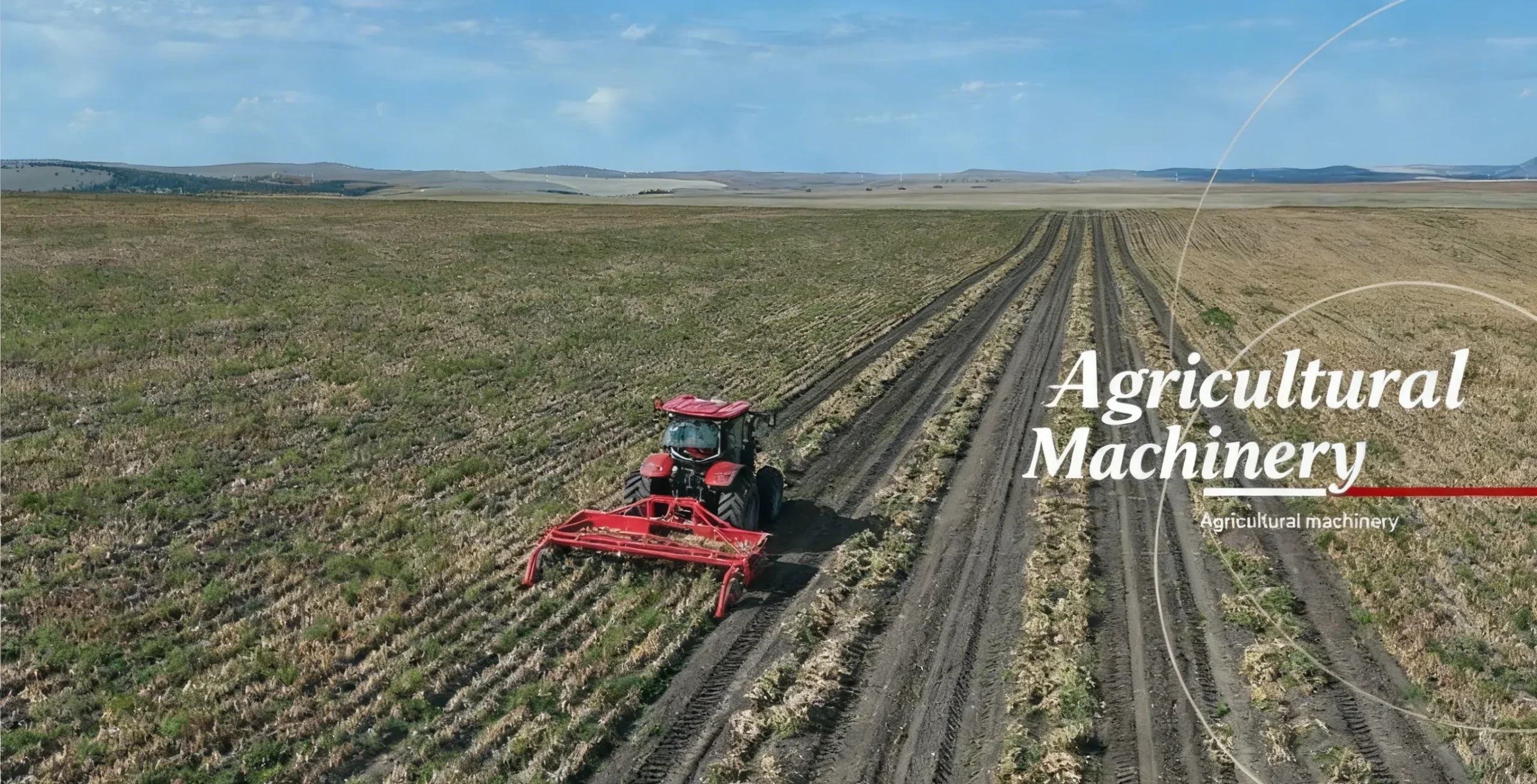
Flax for textile fibre is sown in March to April in northern France, Belgium, and the Netherlands and reaches harvest readiness in 90 to 110 days — typically late June to late July. The crop must be pulled (harvested by uprooting, not cutting) rather than cut to preserve the full fibre length from the base of the stem to the seed head. Cutting removes the lower 10 to 20 cm of the stem, which contains the highest-quality, most uniform fibres — a significant quality and value loss that makes cutting unacceptable for textile fibre supply. Purpose-built flax pulling machines are the standard harvesting equipment; some operations combine pulling and spreading into a single pass using a pull-and-spread header.
Harvest timing for fibre flax is defined by the yellowing of the lower third of the stem (the ‘green turning yellow’ stage, approximately 30 days after flowering), when the bast fibres have reached maximum length and tensile strength but before the stems lignify to the point where retting efficiency declines. Harvesting earlier (green stem) produces immature fibres with lower strength; harvesting later (fully brown, fully senesced) produces over-ripe fibres with excessive lignification that reduces retting efficiency and processing quality.
Field Retting: The Quality-Defining Step
After pulling, the flax is spread in swathes across the field for field retting — a 3 to 6 week process in which morning dew and light rainfall activate soil and airborne microorganisms (primarily bacteria and fungi) that digest the pectin matrix bonding the bast fibres to the woody stem core (xylem). Effective retting separates the fibre bundles sufficiently for clean mechanical scutching at the mill, while preserving fibre length and tensile strength. Under-retting — insufficient microbial action — leaves pectin bridges intact that tear the fibres during scutching, reducing both fibre yield and quality grade. Over-retting — excessive microbial activity — weakens the cellulose structure of the fibres themselves, reducing tensile strength and the dyeability of the resulting linen thread.
| Retting Duration | Fibre Separation | Fibre Strength | Visual Indicator | Quality Outcome |
|---|---|---|---|---|
| 2–3 weeks | Incomplete | Dobry | Straw remains brown | Under-retted — scutching losses |
| 3–5 weeks ✓ | Complete | Dobry | Straw turns silver-grey | Optimal — premium fibre |
| 5–7 weeks | Complete | Spadkowy | Straw bleaches pale | Over-retted — reduced tensile |
| >7 weeks | Complete | Słaby | Straw whitens/brittle | Severely over-retted — unusable |
Baling Retted Flax Straw: Specifications That Matter
Moisture at Baling — The Critical Parameter
Retted flax straw must be baled at 14 to 18% moisture for textile fibre supply. Above 18%, the retted fibres continue microbial degradation in the sealed bale, progressing from optimal retting to over-retting within 4 to 8 weeks — delivering a degraded product to the mill several months after harvest. Below 12%, the straw becomes brittle and fibre bundles fracture during bale formation, reducing the long-fibre content that the scutching mill’s quality payment system rewards.
In Belgium and northern France — where July and August weather alternates between drying periods and Atlantic rainfall events — achieving the 3 to 5 week retting duration while also landing in the 14 to 18% moisture window at baling is a genuine operational challenge. The traditional French approach is to monitor retting completion daily from week 3 onward and to mobilise baling equipment within 24 to 48 hours of a confirmed drying period following confirmed retting completion. Belgian producers in Flanders, where summer rainfall is more frequent, may need 2 to 3 drying periods before moisture drops sufficiently for baling after retting is judged complete.
Round Bale vs. Large Square Bale for Flax Supply
European scutching mills generally specify large rectangular (square) bales for textile fibre supply — the bale format allows more consistent fibre orientation and produces more uniform scutching yields than round bales where stem alignment varies across the bale cross-section. In France and Belgium, where scutching mills have standardised their receiving and processing equipment around large rectangular bales, round bales are accepted only for lower-specification fibre categories or for paper pulp supply. Operators specifically producing premium linen fibre for high-quality textile mills should confirm whether the receiving mill accepts round bales before investing in round bale production infrastructure.
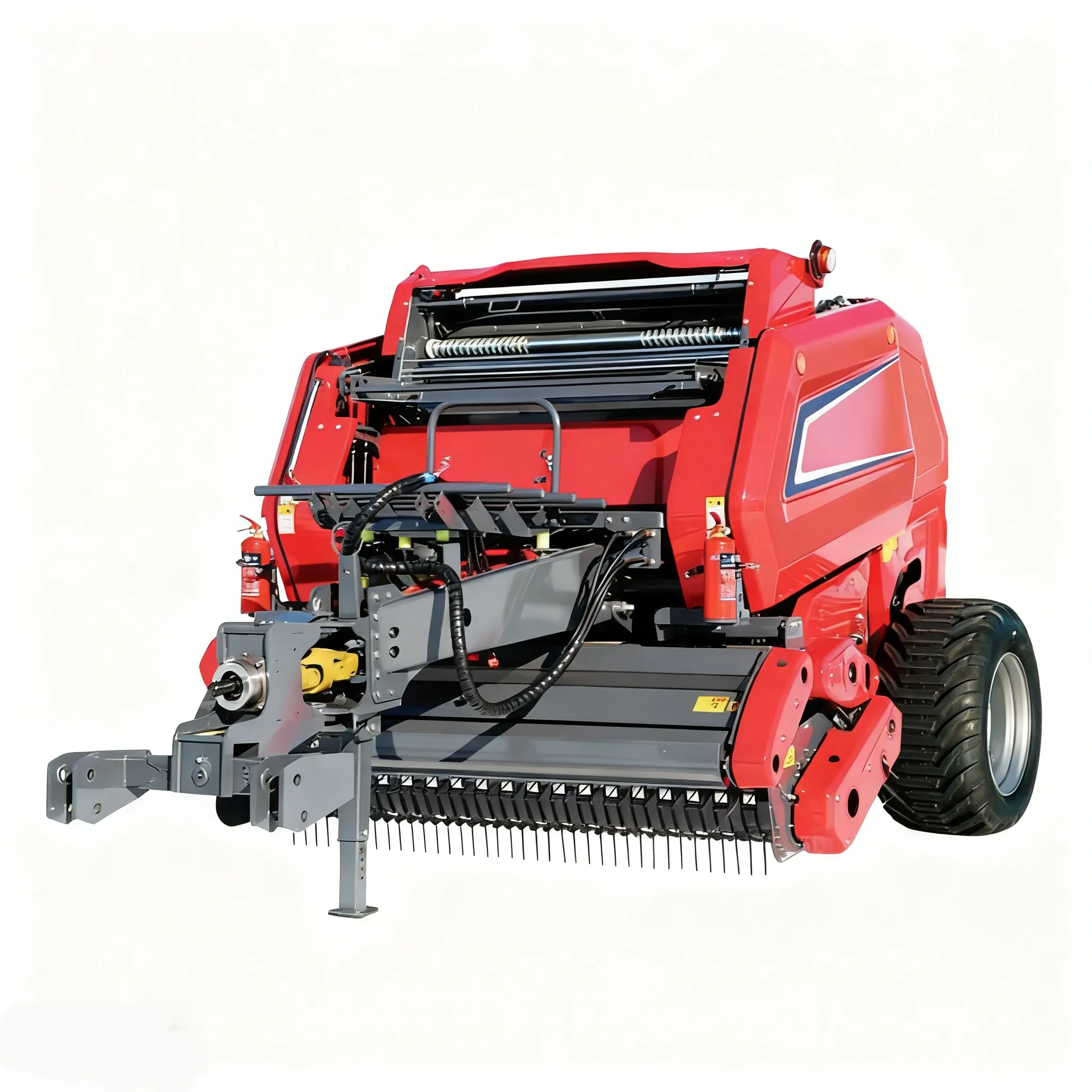
For biomass and paper pulp outlets — the secondary markets for flax straw that cannot meet textile fibre specification — round bales from the Prasa zwijająca o zmiennej komorze 9YG-1.25A are fully accepted and are the standard delivery format. Dual-market operations that sort bales at harvest into textile-specification and biomass-fallback categories based on retting quality and moisture assessment use round balers for the biomass portion and may contract a large square baler for the textile premium portion.
Belarus and China’s Heilongjiang: Eastern Production Profiles
Belarus: Scale Production for Eastern European Mills
Belarus is Europe’s second-largest flax fibre producer after France, with approximately 45,000 to 60,000 hectares under cultivation annually and a vertically integrated textile industry that processes domestic fibre through state-owned scutching mills and linen weaving facilities. Belarusian flax production uses large-scale field operations with coordinated pulling, retting, and large rectangular bale production. The continental climate of Belarus (drier summers than Belgium and northwestern France) generally produces reliable retting conditions in July and August, though drought years can slow microbial retting activity and require supplementary dewing (mechanical application of water to the swathe) to maintain adequate retting rate.
Heilongjiang: China’s Flax Belt
China’s Heilongjiang province grows approximately 100,000 to 150,000 hectares of flax per year — the largest single flax production area in the world — supplying domestic textile mills and producing retted fibre for export to Chinese and Korean linen manufacturers. Heilongjiang’s cool, continental climate (similar to Belarus) provides good summer drying conditions for retting, but the compressed August harvest window and large-scale production create significant logistical pressure to bale large volumes within a narrow weather window. Round bales from the 9YG-1.25A are used for biomass and paper supply; large rectangular balers dominate the textile fibre supply chain.
Common Mistakes in Flax Straw Baling
Cutting flax at ground level removes the basal 15 to 20 cm of stem where the longest, most uniform fibre bundles are found. Scutching mills grade fibre partly on average fibre length — a cut crop delivers a systematically shorter fibre that achieves a lower quality grade and lower price per tonne regardless of retting quality. Always pull, not cut, flax for textile fibre supply.
Sealed bales of retted flax straw above 20% moisture continue microbial activity that progresses from completed retting into over-retting. Fibre strength declines measurably within 4 to 6 weeks of baling at this moisture — a degradation that is invisible externally but immediately apparent at the scutching mill’s quality assessment. Check moisture at three or more windrow base points before baling and delay if any reading exceeds 18%.
Belgium and northwestern France experience frequent Atlantic fronts during the July to August retting period. Operations that wait for a full week of continuous sunshine before baling — when a 2 to 3 day drying period is all that is available — frequently miss the optimal retting window as another front arrives and over-retting begins. Take the drying window when it appears, even if conditions are less than ideal; a slightly sub-optimal moisture is recoverable through additional field drying, but over-retting is irreversible.
Retting quality varies across a single field due to differences in swathe density, microtopography (wet low spots rett faster), and sunlight exposure. Sort bales at the windrow by visual retting assessment — silver-grey colour indicates optimal retting, brown indicates under-retting, and very pale or white straw indicates over-retting. Mixing quality levels in the same delivery lot reduces the average quality payment received.
Często zadawane pytania
Discuss Your Flax Straw Baling Operation
Tell us your production area, target mill, and retting management approach — we’ll help specify the right baler format for your linen fibre supply chain.