Bedding, Roughage, or Biofuel — Three Markets, Three Specifications, One Decision
How cutting height, drying timing, baler setup, and storage method determine which of the three wheat straw markets you can access — and how to maximise value across all of them.
Three Markets, One Baler: Understanding What Each Wheat Straw Buyer Actually Wants
Wheat straw is the most commercially versatile crop residue in the world. After grain harvest across China’s Huang-Huai-Hai plain, India’s Punjab and Haryana, Australia’s grain zones, and the irrigated wheat belts of the Middle East, the straw remaining in the field is not a single product — it is three distinct commercial products depending on who buys it. Each buyer segment has its own specification, its own price structure, and its own tolerance for deviation. The mistake most producers make is baling as if all three markets want the same thing.
The three markets are animal bedding, cattle and sheep roughage, and biomass energy feedstock. Premium animal bedding buyers — horse stables across the UK, Ireland, the Netherlands, and Australia — want wheat straw that is bone dry (below 14% moisture), bright golden in colour, free of any mould or discolouration, and consistent in bale weight to within 5%. Roughage buyers in China’s intensive beef sector want dry straw at a lower price point, are tolerant of some yellowing, and care more about bale count per delivery than forage analysis. Biomass power plants and pellet manufacturers specify maximum moisture of 14 to 15% and minimum consistent bale weight but are almost entirely indifferent to colour, minor mould, or dust. Understanding which market you are producing for before the combine starts is the single decision that determines every other baling variable in the chain.
This article covers all three markets in depth: what each buyer specifies, what that means for cutting height, drying timing, baler setup, binding choice, and storage conditions, and how to transition operations between markets if your farming system serves more than one. For producers new to the distinction between hay and silage preservation methods, our guide on Wat een silagebalenpers is en hoe deze werkt. provides useful foundational context alongside this crop-specific guide.
Wheat Straw Nutrition: Setting Realistic Expectations
Wheat straw is a structural roughage, not a nutrient-dense feed ingredient. On a dry matter basis, it contains 3 to 5% crude protein — insufficient for any productive animal class without supplementation. Neutral detergent fibre (NDF) sits at 70 to 78%, making straw one of the highest-fibre common feeds available. Acid detergent fibre (ADF) typically runs 42 to 52%. Total digestible nutrients (TDN) are 38 to 50%, placing wheat straw in the lower-energy roughage category alongside rice straw and barley straw.
| Nutrient | Wheat Straw (DM basis) | Timothy Hay | Maïssilage | Role in Ration |
|---|---|---|---|---|
| Ruw eiwit | 3–5% | 8–12% | 8–9% | Needs supplementation |
| NDF | 70–78% | 48–56% | 40–48% | Rumen fill / fibre |
| ADF | 42–52% | 28–36% | 24–32% | Digestibility indicator |
| TDN | 38–50% | 52–60% | 68–72% | Energy contribution |
| Ash | 6–8% | 5–7% | 4–6% | Silica content — higher in straw |
Despite its low nutritional profile as a feed, wheat straw has genuine utility in ruminant rations when its role is correctly defined. In intensive beef finishing systems in China’s north and northeast — where rumen fill and ration bulk are actively managed to control intake and prevent acidosis from high-grain diets — wheat straw at 15 to 30% of the total mixed ration dry matter provides exactly the structural fibre that maintains rumen health. In this role, the cost-per-unit-of-digestible-fibre calculus often makes wheat straw the most economical roughage available, outcompeting higher-quality forages that deliver more protein and energy than the ration requires.
Urea Treatment: A Cost-Effective Upgrade for Low-Specification Markets
Urea ammoniation of wheat straw is an established technique that raises crude protein content from 4% to 8 to 10% and improves NDF digestibility by 8 to 15 percentage points — transforming utility-grade straw roughage into a product that can partially substitute for purchased protein supplements in beef growing rations. The process is simple: dissolve urea in water at a concentration of 3 to 5 kg urea per 100 litres of water, apply at 40 to 50 litres per tonne of straw, then seal the treated mass in film for 21 to 28 days. Ammonia released from urea hydrolysis reacts with ester linkages in the straw cell wall, breaking bonds that previously locked fibre in an indigestible form. For Chinese smallholder beef operations where purchasing soybean meal is expensive and the supply is unreliable, urea-treated wheat straw bales represent one of the most practical feed quality improvements available at farm scale.
Market 1 — Premium Animal Bedding: The Highest-Value Channel
What Premium Bedding Buyers Specify
The premium animal bedding market for wheat straw is concentrated in the equine sector: horse stables, livery yards, racing stables, and equestrian centres across the UK, Ireland, the Netherlands, Belgium, and Australia. These buyers apply detailed specifications that would be considered excessively strict in any roughage context. The reason is practical: bedding straw enters direct prolonged contact with horses, and mouldy, dusty, or contaminated straw causes equine respiratory disease (recurrent airway obstruction, formerly called COPD) and skin problems that generate significant veterinary costs for the stable owner.
Premium bedding straw specifications: moisture below 14% (often specified at below 12% for high-end buyers), colour bright golden throughout with no discolouration or yellowing, zero visible mould on any bale layer, no foreign material (soil, green plant material, stones), consistent bale weight within ±5% of stated weight, and clean dry smell. In the UK and Irish markets, premium bedding straw bales (typically small squares at 15 to 20 kg or large rounds at 200 to 350 kg) sell for £80 to £160 per tonne delivered — significantly above the £35 to £65 per tonne typical for roughage-grade straw in the same regions.
Production Requirements for Bedding-Grade Straw
Meeting premium bedding specifications requires managing every variable in the production chain. Cutting height of 15 to 20 cm minimises soil contamination — low cuts bring stubble debris and soil into the swath that contaminates the final bale. Baling must be completed within 3 to 5 days of grain harvest, before rainfall events re-wet the straw above 16% moisture. Barn or covered storage is non-negotiable: a single overnight heavy dew on outdoor-stored freshly baled straw will re-wet the outer layer to 18 to 20% and initiate the surface yellowing and mould growth that drops the bales from bedding grade to roughage grade. For premium equine bedding production, the covered storage infrastructure — barn, Dutch barn, or covered hay shed — is as important an investment as the baler itself.
Market 2 — Cattle and Sheep Roughage: Volume, Value, and Ration Integration
Roughage-Grade Specification and Storage
Roughage-grade wheat straw is the most widely traded form of the material globally. In China’s beef production provinces (Hebei, Henan, Shandong, Liaoning, Jilin, Heilongjiang), millions of tonnes of wheat straw bales are traded annually between grain farmers and beef cattle operations. The specification is straightforward: moisture below 18 to 20% for outdoor storage, no active mould (minor historical yellowing acceptable), bale weight consistent enough to allow weight-based pricing per delivery, and net wrap or twine binding depending on buyer preference.
For roughage-grade production, bale moisture below 18% is sufficient and outdoor storage for 6 to 9 months on a raised, well-drained surface is acceptable with net wrap. A 1.25 m round bale of wheat straw at 15% moisture on a compacted gravel surface under net wrap retains acceptable roughage quality for 9 to 12 months in the relatively dry storage conditions of China’s major wheat-producing regions. The Huang-Huai-Hai plain’s semi-arid summer-autumn climate after grain harvest provides good natural drying conditions — straw in standing windrows typically reaches 14 to 18% moisture within 3 to 5 days of harvest in this region under normal summer weather.
Integrating Wheat Straw in Beef TMR Systems
The most productive use of wheat straw in intensive beef operations is as a structural fibre component of a total mixed ration (TMR) balanced to a target crude protein and energy specification. A typical growing beef TMR for 350 to 500 kg steers gaining 1.0 to 1.3 kg/day in a Chinese intensive feedlot might include: corn silage 35 to 45% of DM, wheat straw 15 to 25% of DM, corn grain or ground corn 20 to 28% of DM, soybean meal or cottonseed cake 6 to 10% of DM, mineral-vitamin premix 1 to 2% of DM. The wheat straw fraction provides the dietary NDF needed to maintain rumen pH above 6.0 and prevent subacute rumen acidosis when high levels of grain are included in the ration. Without sufficient structural roughage, high-concentrate beef rations routinely cause liver abscess rates of 15 to 30% and significant reductions in average daily gain from depressed feed intake — costly outcomes that straw at correct inclusion rates prevents.
Market 3 — Biomass Energy: Scale, Density, and Contract Specification
Biomass Power and Pellet Market Requirements
China’s biomass power sector consumed approximately 90 million tonnes of agricultural biomass in 2023 under the national renewable energy promotion programme. Wheat straw is one of the primary feedstocks for dedicated straw-fired power plants operating in Hebei, Shandong, Henan, Jiangsu, and Anhui provinces. In Europe, dedicated biomass CHP plants and co-firing at modified coal plants consume millions of tonnes of wheat straw annually across Denmark, the UK, Poland, and Germany. Both markets specify maximum moisture of 14 to 15% for direct combustion and 12% or below for pellet feedstock.
Biomass buyers are almost entirely indifferent to colour, minor dust content, or surface mould that would disqualify straw from bedding markets. What they care about is consistent caloric value (directly linked to moisture and ash content) and consistent bale weight for automated handling in their reception facilities. Many biomass plants use conveyor and robotic debaling systems calibrated to a specific bale weight — typically a 1.2 to 1.5 m round bale at 250 to 400 kg. Bales significantly above or below specification weight disrupt the automated line and generate manual handling costs that biomass buyers pass back to suppliers as price penalties.
| Specificatie | Premium Bedding | Roughage | Biomass/Pellet | Penalty for Miss |
|---|---|---|---|---|
| Moisture | <12–14% | <18–20% | <14–15% (pellet: <12%) | Rejection / downgrade |
| Colour | Bright golden | Yellow acceptable | Irrelevant | None |
| Mould | Zero tolerance | Trace acceptable | Acceptable | None |
| Bale weight | ±5% of spec | Flexible | ±8–10% of spec | Line disruption penalty |
| Ash / soil | Zeer laag | <5% | <8% | Combustion efficiency |
| Typical price (AUD/t) | $180–$280 | $60–$110 | $55–$90 | Scale-dependent |
Baler Configuration Differences for Biomass Production
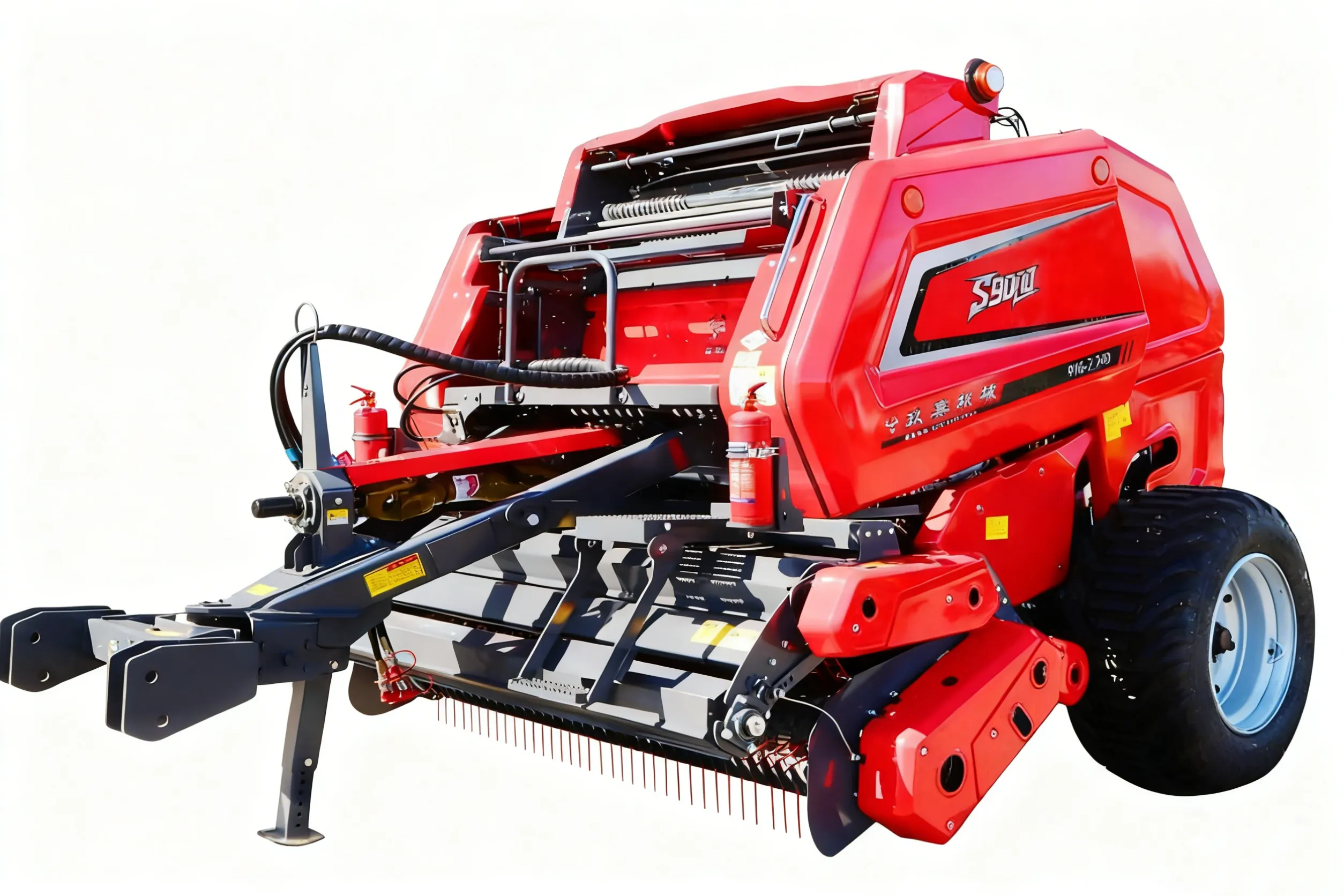
Biomass buyers typically prefer larger-diameter round bales (1.5 to 1.8 m) or large rectangular bales to minimise transport and handling cost per tonne. If the current baler produces 1.25 m bales, this is still acceptable for many biomass contracts but may require a modest freight cost concession compared to suppliers running larger-format equipment. For new capital investment targeting biomass contracts specifically, the 9YG-2.24D S9000 Beyond ronde balenpers provides the larger chamber diameter, wider pickup, and higher throughput appropriate for high-volume wheat straw production serving biomass contracts. For farm-scale operations across all three markets simultaneously, the 9YG-1.25A ronde balenpers met variabele kamer handles the full specification range — from tight, consistent bedding-grade bales to high-volume roughage production — on the same machine.
Baling Operations: Timing, Setup, and the Moisture Decision
The 3-to-7 Day Post-Harvest Window
Safe baling moisture for wheat straw in any market is below 18% — and below 14% for premium bedding or biomass pellet production. In most wheat-growing climates, straw lying in the combine swath reaches this range within 3 to 7 days of harvest in dry summer conditions. The window narrows significantly when rainfall intervenes: a 15 mm rain event on partially dried straw re-wets the outer layer to 25 to 35% and adds 2 to 4 additional drying days before baling is again appropriate. Producers who delay baling beyond 10 to 12 days in dry conditions risk the straw dropping below 12% moisture, at which point the brittle leaf sheaths and flag leaves shatter during raking and pickup — reducing both bale weight per acre and the proportion of finer, more digestible material in the final bale.
Cutting Height and Soil Contamination Management
The relationship between combine cutting height and straw quality is more significant than most producers account for. Combining at 12 to 15 cm cutting height — low, to capture maximum grain — leaves a short, dense stubble that is difficult to rake cleanly without pulling soil and stubble debris into the windrow. Increasing cutting height to 18 to 22 cm increases straw yield per hectare and produces a taller stubble that supports the windrow above soil contact, significantly reducing soil contamination in the baled product. For premium bedding production where soil contamination is a zero-tolerance defect, cutting at 20 to 25 cm and leaving the extra stubble in the field is the correct compromise.
If the combine deposits straw in a narrow, dense swath, use a finger-wheel rake to spread the straw into a wider windrow within 4 hours of cutting to maximise drying surface area. Wide, thin windrows dry 30 to 50% faster than the dense combine swath.
In warm, dry, low-humidity conditions, straw reaches 16 to 18% within 3 days. Check moisture at the windrow base — the bottom layer retains moisture 3 to 6 hours longer than the surface. Do not bale on surface-moisture readings alone.
Merge the spread windrow to baling width with a second rake pass when moisture is confirmed below 18% (bedding targets: below 14%). Bale immediately after merging — do not leave merged windrows overnight if weather is uncertain.
Net wrap is the correct choice for any bales that will be stored outdoors beyond 4 weeks. The dome-shaped net-wrapped bale sheds rainfall more effectively than the flat-ended twine-tied bale, reducing outer-layer moisture re-absorption. For barn-stored bedding-grade straw, twine is acceptable and reduces binding cost.

Why Wheat Straw Is the Foundation of China’s Biomass Energy Programme
China’s national crop residue comprehensive utilisation target — set at 85% of total agricultural residue by 2025 under the Ministry of Agriculture and Rural Affairs’ ‘Three Great Actions’ programme — makes wheat straw baling a policy-priority activity in the country’s major wheat-producing provinces. Shandong alone generates approximately 40 million tonnes of wheat straw annually. Hebei, Henan, Jiangsu, and Anhui together add another 80 to 100 million tonnes. The fraction of this straw that is currently baled commercially remains below 40%, making wheat straw the single largest opportunity in China’s agricultural biomass collection and utilisation sector.
Provincial government incentives for straw baling vary by region and year. At 2024 to 2025 rates, active subsidy programmes in major wheat provinces offer ¥20 to ¥60 per tonne of baled straw for operations registered with the county agricultural bureau, with higher rates in counties where anti-burning enforcement pressure is most acute. Biomass power plants operating under long-term straw supply contracts in these provinces sometimes offer a further ¥10 to ¥20 per tonne above spot market rates for contracted annual volume commitments, providing income predictability that spot roughage sales cannot match.
For operations considering wheat straw baling as a dedicated commercial activity — either as a farm diversification or as a standalone contractor service — the equipment investment decision centres on volume. A single-machine operation with the 9YG-1.25A baler handling 30 to 60 hectares of straw per season is viable as a part-time farm diversification. Contractor operations covering 200 to 500 hectares per season with one or two balers and a wrapper for the biomass silage-bale option represent a full-time business with capital requirements and revenue models that merit a dedicated business case analysis.
Common Mistakes That Destroy Straw Value
Wheat straw baled above 20% moisture does not ferment (it has no fermentation pathway) — it simply heats from microbial respiration, reaches core temperatures above 55°C within 48 to 72 hours, and initiates mould at the bale centre. The mould spreads outward over weeks, producing the characteristic musty smell and grey-black discolouration that eliminates any premium value and reduces roughage value by triggering mycotoxin production in susceptible moulds. No market — bedding, roughage, or biomass — accepts actively mouldy straw bales.
One significant rainfall event on freshly baled premium-grade wheat straw is sufficient to re-wet the outer bale layer above 16% moisture, initiate chlorophyll oxidation (turning bright gold to dull yellow), and introduce surface spore contamination that spreads over the following weeks. There is no recovery from outdoor weather exposure for bedding-grade straw — once discoloured, the bale cannot be re-classified upward. Barn or covered storage from baling to sale is the non-negotiable infrastructure requirement for premium bedding production.
Combine cutting heights below 12 cm pull soil, stones, and short stubble debris into the straw swath. This contamination is distributed throughout the bale and cannot be removed. For bedding markets, visible soil contamination is an immediate rejection trigger. For roughage markets, it increases the ash content of the straw and introduces soil organisms that accelerate storage deterioration. Cutting at 18 to 22 cm adds negligible grain loss while producing significantly cleaner straw.
Once wheat straw dries below 12%, the brittle leaf sheaths and awns shatter on contact with rake tines. A single rake pass at 10% moisture removes 10 to 20% of the fine-leaf fraction from the windrow — both the most nutritious component for roughage buyers and the most visually appealing component for bedding buyers. Check moisture before any rake pass; if below 15%, go directly to baling without raking.
Straw from first-cut, early-harvested, sunny-dried windrows may qualify for premium bedding pricing. Second-cut or rain-delayed straw may only reach roughage grade. Selling all production into the roughage market without testing and marketing premium-eligible bales separately leaves 40 to 100% of potential revenue from the bedding price differential on the table. Simple moisture testing and visual assessment before each loading is the minimum market intelligence investment.

Veelgestelde vragen

Discuss Your Wheat Straw Baling Programme
Tell us your hectarage, target market, and available tractor — we’ll specify the right baler model and configuration for your production goals.