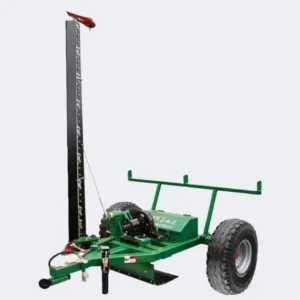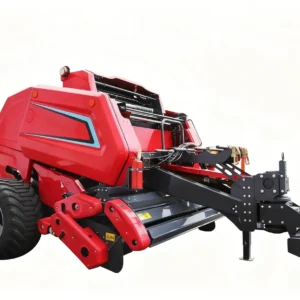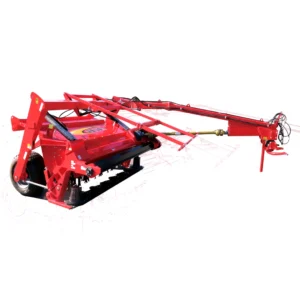
product van voerbalenpers

Ronde hooibalenpers transporteur 9jyy-2.5 model
The Round Hay Baler Transporter 9JYY-2.5 Model, manufactured by Australia Ever-power Forage Balers Co., Ltd., is a tow-behind unit with hydraulic loading/unloading and a 2500 kg capacity. Its differentiating features include dual-wheel tires for enhanced stability on soft or undulating terrain and gentle bale handling to minimize damage. It is compatible with modern round balers from manufacturers such as John Deere, Case IH, CLAAS, New Holland, and Massey Ferguson, accommodating bales of 1300 mm diameter and 1000–1500 mm length.
Productparameters
| Serienummer | Item | Eenheid | Specificatie |
|---|---|---|---|
| 1 | Productnaam | / | Round Hay Baler Transporter |
| 2 | Productmodel | / | 9JYY-2.5 |
| 3 | Koppelingsmethode | / | Aanhangwagentype |
| 4 | Laad- en losformulier | / | Hydraulisch |
| 5 | Maximale draagcapaciteit | Kg | 2500 |
| 6 | Overeenkomend vermogensbereik | kW | ≥20 |
| 7 | Working Pressure | MPa | ≥16 |
| 8 | Transportsnelheid | km/u | ≤40 |
| 9 | Bandenmodel | / | 10.0/80-12 (Dual Wheels) |
| 10 | Laadbare en losbare baalgrootte | mm | Diameter 1300, Length 1000-1500 |
| 11 | Totale afmetingen (L×B×H) | mm | 10300×2420×2485 |
| 12 | Totaal machinegewicht | kg | 1165 |
The 9JYY-4.5 Round Hay Bale Collector and Transporter: A Key Pillar for Elevating Australian Farm Operational Efficiency
Invoering
In the vast and diverse landscape of Australian agriculture, the seasonality of forage harvests, rising labour costs, and the relentless pursuit of operational efficiency collectively drive the demand for smarter, more integrated machinery solutions. Traditional bale handling—reliant on multiple tractor trips and significant manual labour—is not only time-consuming and costly but also particularly vulnerable to increasingly variable climatic conditions. It is in this context that the round bale collector and transporter, integrating efficient collection, stable transport, and convenient unloading into one unit, has evolved from a mere accessory to the core of a modern farm's logistics system. This article delves into the 9JYY-4.5 model, designed for Australian conditions, analysing its technical features, adaptability to the unique agro-ecologies of each state, and, through real-world case studies and data, elucidating why it constitutes a strategic investment for enhancing pastoral profitability and resilience.
The Heart of Modern Australian Farming Efficiency: The 9JYY-4.5 Round Bale Collector and Transporter
Australia's livestock and hay industries are cornerstones of the national agricultural economy. According to the latest reports from the Australian Bureau of Agricultural and Resource Economics and Sciences (ABARES), forage crops, including hay and silage, are critical for maintaining dry-season feed security and export earnings. However, post-harvest logistics—the efficient movement of heavy round bales from the paddock to storage or transport—has long been a bottleneck constraining efficiency and cost control.

Traditional Challenges and the Modern Solution
Traditional methods typically involve using front-end loaders, forklifts, or tractor-mounted grabs, handling only one or two bales at a time. This is not only slow, requiring frequent tractor shuttles, but also skill-intensive and poses safety risks. On large-scale properties in regions like the Central West of New South Wales (NSW) or the Wheatbelt of Western Australia (WA), where transport distances can be vast, this inefficiency translates directly into higher fuel costs and potential harvest delays, especially when weather windows are brief.
The 9JYY-4.5 model is engineered precisely to address these challenges. It is, in essence, an intelligent, tow-behind "mobile bale shed." Its core value lies in process integration and automation. In the field, it rapidly and continuously collects bales produced by the round baler, loading them in an orderly fashion via its hydraulically-driven system. Once full, it transforms into an efficient transport unit, moving multiple bales in a single, stable trip to their destination. This "batch collection, single transport" model revolutionises paddock logistics.
The 9JYY-4.5: Embodiment of Efficiency and Reliability
The "4.5" designation signifies its robust capacity. Its well-engineered structure can safely carry a payload of up to 4,500 kg, meaning it can effortlessly transport 12-18 standard large round bales (approximately 1.2-1.5m in diameter) in one operation. Compared to traditional methods moving 1-2 bales at a time, the efficiency gain is exponential. For farms with hundreds of hectares of pasture in regions like Gippsland, Victoria (VIC), or the South East of South Australia (SA), the time saved is dramatic—potentially reducing a days-long bale-gathering task to mere hours.
Its hydraulic loading and unloading system is another standout feature. The operator, using power from the tractor's PTO, can control the entire process smoothly from the cab. The gentle hydraulic action minimises the risk of damaging bale wrap, protecting valuable feed quality. The low-centre-of-gravity trailer design and dual-wheel tyre configuration (specified as 10.0/80-12) ensure transport stability even on the undulating backroads of Queensland (QLD) or the damp paddock tracks of Tasmania (TAS), significantly reducing the risk of bale roll-off or equipment tip-over, directly enhancing operational safety.
Seamless Integration with the "Forage Baling" Workflow
True efficiency stems from the optimisation of the entire workflow. A high-performance forage baler is the core of the production phase, but without an efficient partner like the 9JYY-4.5, the baler's potential remains unrealised. Envision the scene: the baler works efficiently ahead, while the collector-transporter follows closely behind. The baler no longer needs to pause waiting for bale removal and can operate continuously. This allows farmers to better capitalise on brief ideal weather conditions for harvest, reducing the risk of nutrient loss or spoilage from rain. This synergy makes the entire chain—from cutting and curing to baling and stacking—flow seamlessly, forming an indispensable part of overall "Hay Baler Efficiency."
For Australian farmers and agribusinesses, investing in the 9JYY-4.5 is not merely purchasing a piece of equipment; it is implementing a system to optimise field logistics. It directly addresses the challenge of improving agricultural labour productivity, a key focus for ABARES, by substituting capital for scarce and expensive labour, freeing up human resources for more skilled and supervisory tasks, thereby elevating the operational efficiency and competitiveness of the entire farm.

Technical Specifications and Selection Guide: A Deep Dive into the 9JYY-4.5 and Its Fit
Choosing the right collector-transporter requires looking beyond brands to understand how technical parameters translate into real-world paddock performance. Here is an interpretation of the key specifications of the 9JYY-4.5 model and their significance for Australian users.
Analysis of Core Performance Parameters
-
Maximum Load Capacity (4,500 kg): This is the primary consideration. It dictates the throughput per trip. Given common Australian bale densities (approx. 180-250 kg for dry hay, heavier for silage), this capacity makes it ideally suited for medium to large farms. For large enterprises seeking peak efficiency, it can perfectly match high-output round balers (like leading brands in the "Forage Balers Australia" market), reducing the frequency of shuttle trips.
-
Matching Power Range (≥30 kW): Indicates the minimum tractor power required. A tractor of around 40 HP or more can operate it smoothly, allowing it to be paired with the medium-horsepower tractors commonly found on Australian farms, without necessitating investment in a higher-horsepower prime mover.
-
Loading & Unloading Form (Hydraulic): Full hydraulic control is the standard for modern, labour-saving operation. It ensures smooth, precise operation and offers high reliability with lower maintenance needs compared to complex mechanical linkages.
-
Loadable Bale Size (Diameter up to 1500mm, Length 1000-1500mm): This covers the output dimensions of the vast majority of Australian round balers, from standard to large high-density bales, offering strong versatility.
-
Transport Speed (≤40 km/h): This is a crucial parameter balancing safety and efficiency. It allows the unit to move at a reasonable pace on farm tracks and even some rural roads, speeding up the cycle from paddock to storage, while ensuring structural safety.
-
Tyre Configuration (10.0/80-12 Dual Wheels): The dual-wheel design greatly enhances flotation on soft ground and transport stability, effectively distributing ground pressure to prevent sinking. This is particularly important in regions like the NSW coast after rain or on irrigated pastures in VIC.
Selection Guide: Matching Your Farm's Needs
Assess Farm Size & Bale Production: Calculate the typical number of bales produced per day during your harvest season. If daily output exceeds 100 bales, the high load capacity of the 9JYY-4.5 will significantly reduce transport cycles. For smaller or fragmented holdings, a model with slightly lower capacity (e.g., a 2.5-tonne model) may be more cost-effective.
Consider Your Tractor Fleet: Ensure your available tractors (especially those typically used for harvest support) meet the ≥30 kW power requirement and have a spare hydraulic output.
Review Paddock & Road Conditions: If your farm is hilly or has generally soft soils, the dual-wheel configuration and robust axle design are critical. For long-distance road transport, check local regulations regarding agricultural trailer width and speed limits.
Focus on Bale Type: Is it mainly for dry hay bales or heavier, more delicate silage bales? Smooth hydraulic operation is crucial for protecting silage wrap. The 9JYY-4.5 is designed with both in mind.
Future-Proofing: Consider your farm's expansion plans. Investing in equipment with slightly more capacity than your current needs can be more economical than facing an upgrade in just a few years.
Synergy with Transport Wagons
In discussing collector-transporters, it's essential to mention "Transport Wagons." The 9JYY-4.5 itself is a highly specialised transport wagon. However, in very large operations, it may work in tandem with larger, dedicated road transport trailers or flats: the collector-transporter handles rapid field collection and consolidation to the paddock edge, where larger wagons perform bulk long-haul to the shed or point of sale. This two-tier logistics system is highly effective for some giant farms or contracting businesses.

Keuze van voerbalenpersen voor Australische gewassen en bedrijfsgroottes
The diversity of Australian agriculture means there is no "one-size-fits-all" forage baling solution. Selecting a baler and its supporting collector-transporter must be tightly integrated with the types of crops grown and the scale of the operation.
Crop Type Dictates Baling Needs
-
Cereal Hay (e.g., Oaten, Barley straw): The most common type, typically of lower density. The focus is on speedy baling to minimise leaf loss. A fast round baler paired with a rapid collector-transporter maximises work within the ideal moisture window. The 9JYY-4.5 can efficiently handle high volumes of standard-density bales for this crop.
-
Legume Hay (e.g., Lucerne, Clover): High-value, with leaves prone to shatter. Requires a baler with gentle handling (e.g., belt balers may have an advantage over roller types). Smoothness during collection and transport is crucial for preserving legume quality; the hydraulic control of the 9JYY-4.5 provides the required gentle handling.
-
Silage (Corn, Sorghum, Pasture): Bales are heavy, high-moisture, demanding high packing density from the baler and perfect sealing from the wrapper. Consequently, the collector-transporter must handle greater weight and ensure transport doesn't compromise the wrap. The robust build and smooth hydraulic unloading of the 9JYY-4.5 are well-suited for this.
-
Straw Baling: Primarily for bedding or bioenergy. Operations are often large-scale and speed-critical. A high-capacity collector-transporter can dramatically improve efficiency in clearing bales from vast cereal stubbles.
Farm Size and Equipment Configuration
-
Small Family Farms (< 200 ha grazing/pasture): May lean towards compact balers and smaller collection trailers (e.g., 2.5-tonne capacity). The focus is on versatility and lower capital outlay. However, if collaborating with neighbours or doing contracting, investing in a higher-capacity unit like the 9JYY-4.5 can expand business scope.
-
Medium-Sized Professional Grazing Operations (200-1000 ha): This is the core target market for the 9JYY-4.5. Such farms have sufficient volume to justify the investment and require equipment that balances reliability, capacity, and speed. It can effectively manage typical seasonal harvest peaks.
-
Large Corporate Farms or Contractors (>1000 ha): Often run multiple baler teams. Deploying several 9JYY-4.5 units to form a "baling-collection-transport" pipeline is key to maximising system throughput. They may opt for the highest capacity models and place extreme importance on durability and uptime.
Regional Considerations - Examples:
-
In the damp pastures of Tasmania, quickly moving silage bales off the field to prevent secondary fermentation is paramount.
-
In the expansive WA Wheatbelt during straw baling, transport distances can be very long, making efficient collection and stacking central to cost control.
-
In Queensland's northern tropical pastures, harvest windows can be dictated by the wet season, making equipment speed and reliability directly linked to completing work before rains.
Therefore, selecting a collector-transporter like the 9JYY-4.5 must be considered within the context of the entire crop system and farm operation. It is the critical logistics bridge connecting an efficient "Forage Baler" with safe storage or market.
Key Components and Transport Wagon Integration: The Design Philosophy of the 9JYY-4.5
The superior performance of the 9JYY-4.5 stems from its thoughtfully designed and manufactured key components. Understanding these aids in daily maintenance and unlocking the equipment's full potential.
1. High-Strength Main Frame and Loading Deck:
This is the machine's skeleton. Constructed from high-tensile steel, it ensures sufficient torsional strength and durability under a full 4,500 kg load on rough terrain. The low-profile deck design reduces the lift height required for bales, making loading more energy-efficient and faster.
2. Hydraulic System:
Acting as the machine's "muscles and nerves," its core comprises hydraulic motors, cylinders, and control valves. The system working pressure (≥16 MPa) provides powerful lifting and pushing force. High-quality seals and durable hydraulic hoses are crucial for Australia's dusty and hot operating environments. This system enables remote-controlled operation of the entire process from bale grip, lift, deck movement, to final offloading.
3. Gripping and Conveying Mechanism:
Typically includes adjustable grab arms or a chain-track conveyor, adaptable to bales of different diameters. The design aims to securely grip bales while minimising the risk of puncturing or tearing the wrap, which is critical for maintaining the anaerobic fermentation environment in silage.
4. Running Gear and Suspension:
Includes the axle, suspension, and the 10.0/80-12 dual wheels. The dual-wheel setup not only provides stability but also acts as a "floatation" aid, allowing the unit to be supported safely even if one tyre deflates—an important safety feature. A robust mechanical or torsion axle suspension absorbs field shocks, protecting both the equipment structure and the bales.
5. Safety and Braking Systems:
Lighting and reflective marking compliant with Australian standards are essential for road travel. A reliable override braking system or independent air/hydraulic brakes (depending on model) ensure safe, controlled movement, especially when descending slopes with a full load.
Its Role as an Integrated "Transport Wagon"
In modern farm logistics, the 9JYY-4.5 transcends the simple trailer concept. It is a highly specialised, automated materials handling transport wagon. Its integration is evident in:
-
Synchronisation with the Baler: It works in rhythm with the baler, forming part of the harvest production line.
-
Interface with Storage: Its precise offloading capability (allowing stacking 2-3 high) can create neat stacks directly at the shed or stacking site, optimising storage space.
-
Linkage with the Logistics Chain: As the primary transport unit from field to storage or loading point, it works efficiently in concert with larger road transport wagons.
This deep integration makes it not an isolated piece of kit, but a central node in the entire post-harvest forage handling system. For the Australian farmer, investing in such an integrated system means investing in the smoothness and controllability of the entire operational process.
Vergelijkende analyse van toonaangevende merken voerbalenpersen
The Australian market features several well-known forage baler brands, each with its loyal following. Choosing a baler must also consider its compatibility and efficiency with subsequent collection and transport equipment. Below is an objective analysis of major brands, including the positioning of EVER-POWER.
John Deere:
-
Strengths: Extremely high brand recognition with a dealership network spanning every Australian state, from Queensland to Tasmania. The product line is exceptionally comprehensive, from small to ultra-large round and square balers. Its "Integrated Management Systems" enable data sharing with other John Deere equipment. Reliability is long-proven in the market.
-
Market Positioning: The premium market leader. Suited for large farms and professional contractors seeking brand reputation, complete solutions, and top-tier after-sales support.
-
Synergy with Collector-Transporters: Its high-output balers demand high-speed collection partners like the 9JYY-4.5 to avoid becoming a bottleneck.
Case IH / New Holland:
-
Strengths: Another agricultural machinery giant, known for rugged durability, particularly in its large-diameter round balers. Strong dealership network. Significant recent advances in automation (e.g., auto-tying, density control).
-
Market Positioning: Strong competitor in the mid-to-high-end market. Has a solid foundation in drier regions (like WA, SA) and on mixed farming operations.
-
Synergy with Collector-Transporters: Their equipment often produces large, heavy bales, placing demands on the transporter's load capacity and structural strength.
CLAAS:
-
Strengths: Renowned for technological innovation and high efficiency, especially its "pick-up" systems and fast baling cycles. Excellent cabin comfort and automation levels. Popular with contractors and large farms seeking peak performance.
-
Market Positioning: Technology-oriented premium market. Pricing is typically at the top end, justified by productivity and fuel efficiency.
-
Synergy with Collector-Transporters: Its high-speed operation makes efficient logistics support (like fast collection and transport) an absolute necessity to realise its potential.
Massey Ferguson:
-
Strengths: Offers good value for money, reliable products, with sometimes good parts commonality. Holds a steady market share globally and in Australia.
-
Market Positioning: A mainstay of the mid-range market. Suitable for medium-sized farms with budget constraints but a need for dependable performance.
-
Synergy with Collector-Transporters: Its balers are generally compatible with mainstream collector-transporters.
EVER-POWER (Australia Ever-power Forage Balers Co., Ltd.):
-
Strengths:
-
Value & Cost-Effectiveness: As a manufacturer entering the market directly or through partners, it typically offers more competitive pricing, making advanced features more accessible to medium-sized farms.
-
Customisation Service: As the manufacturer of equipment like the 9JYY-4.5, it can offer flexible configurations based on specific Australian customer needs (e.g., specific hitch types, additional safety features, fine-tuning for particular crops).
-
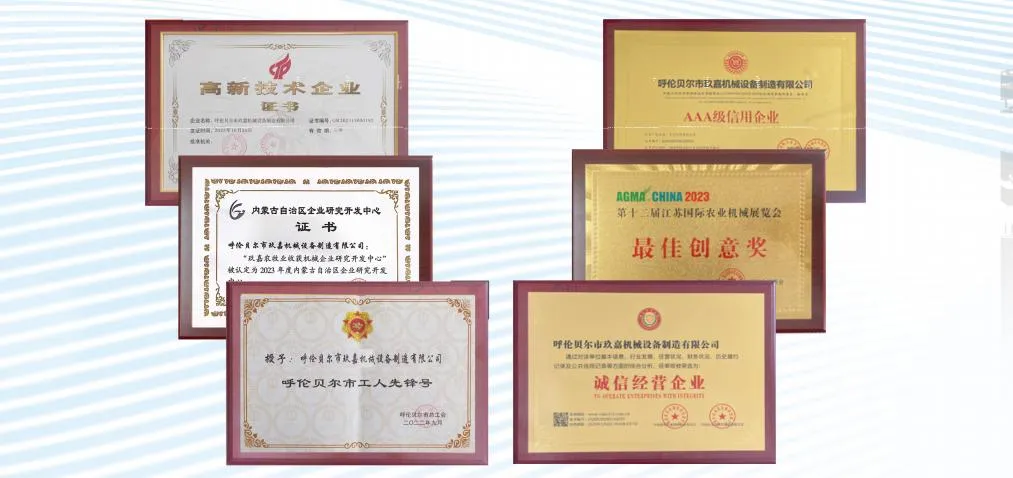
Quality Certification: Holds ISO 9001 Quality Management System certification, ensuring production processes and product quality meet international standards.
-
Proactive After-Sales Support: The offer of a comprehensive two-year warranty and a commitment to technical support directly addresses a core concern for users in remote Australian locations. A global supply chain aids spare parts availability.
-
-
Market Positioning: The "High-Value, Reliable Alternative." EVER-POWER aims to provide quality products for Australian farmers and dealers who value substantive equipment performance, total cost of ownership, and desire direct manufacturer support. It may not compete directly with Deere or CLAAS on peak performance specifications but presents a compelling appeal in reliability, suitability, and overall value. Its products (like the 9JYY-4.5 transporter) can serve as excellent companions to efficient balers of any brand, offering users a complete logistics solution.
-
Synergy with Collector-Transporters: EVER-POWER's unique strength lies in offering synergistically designed baling and collection-transport solutions. They understand the importance of the interface between the two, ensuring their transporters work seamlessly with various baler brands, even optimising the overall workflow.
Summary Comparison:
For the Australian user, the choice depends on priorities. For those with ample budget who prioritise brand and full-spectrum support, the traditional European/American giants are a safe choice. For those pursuing the latest technology and maximum efficiency, CLAAS is a direction. For those seeking a reliable, efficient, and well-supported total solution (especially one that includes optimised collection and transport) within a controlled budget, EVER-POWER represents a very sensible and pragmatic choice. In the current agricultural economic climate, this value proposition is gaining increasing recognition.

Voederbalenpersen op de Australische markt: regionale toepassingen en regelgeving
Significant variations in climate, topography, agricultural focus, and regulations across Australian states directly influence the selection and use of forage collection and transport equipment.
Analysis of Key State Applications
New South Wales: Features extremely diverse agriculture, from dairy on the east coast (requiring high-quality silage) to vast dryland pastoralism in the west (large-scale hay production). On the western plains, long-distance transport is the norm; the high load capacity and ≤40 km/h transport speed of the 9JYY-4.5 effectively reduce transit time. In more sloped areas, equipment stability and braking safety are paramount.
Victoria: As a centre for dairy and intensive agriculture, it has very high requirements for silage quality. Regions like Gippsland have high humidity, necessitating rapid collection and transport to prevent bales sitting in the field. Equipment flotation in damp conditions (the dual-wheel advantage) and gentle handling are key. Victoria also has relatively strict regulations for agricultural vehicle road safety.
Queensland: In the tropical north, intense seasonal rainfall creates short, sharp harvest windows. Equipment must be extremely reliable, withstand hot and humid conditions, and work fast to beat weather changes. In Qld's cane regions, similar transporters can also be adapted for by-products like cane trash. Vast stations demand low-maintenance, high-durability equipment.
South Australia & Western Australia: These states feature vast wheat-sheep belts. Straw baling is a significant enterprise. Operations are large-scale and dusty. Equipment needs robust dust-handling for cooling systems and a sturdy chassis for long, high-intensity work. WA may have specific permit requirements for over-width equipment on roads.
Tasmania: Focused on high-value dairy and specialty crops. Farm sizes may be smaller but management is intensive. Equipment dimensions need to suit smaller paddocks while still meeting the requirement for fast, clean handling of high-quality silage. The wetter climate demands good corrosion resistance.
Australian Regulations and Safety Standards
Operating a towed unit like the 9JYY-4.5 in Australia requires compliance with relevant regulations:
-
Road Travel: Each state has rules governing agricultural trailer width, length, height, weight, and requirements for lights, brakes, and reflectors. For example, widths over 2.5m may require special permits or escort vehicles. The width of the 9JYY-4.5 (~2.42m) is typically designed within mainstream regulatory limits. Operators must know their state's speed limits for trailers (even if the unit is capable of 40km/h, road laws may set lower limits) and driver licensing requirements (heavy combinations may require a higher-class license).
-
Work Health & Safety: Safe work procedures must be followed. This includes using appropriate drawbars and safety chains, ensuring tractor power is adequate, operating safely on slopes, and keeping all guards in place. Hydraulic system maintenance must guard against high-pressure fluid injection risks.
-
Bioveiligheid: When moving equipment between states or regions, it must be cleaned down to prevent the spread of weed seeds and pests—a national focus in Australia.
-
Noise & Emissions: While the diesel tractor is the power source, choosing a tractor with lower noise and emissions aligns with trends towards farm sustainability.
Integration of Local Keywords:
For a buyer in NSW searching for "NSW farm equipment," they need gear adaptable to everything from humid valleys to dry plains. A user in Victoria searching for "Victoria hay baler"配套设备 will pay special attention to capabilities that protect silage quality. Suppliers like EVER-POWER meet these needs by offering products compliant with Australian standards and configurable for regional specifics.

Praktische ervaring en Australische casestudies
Theoretical data requires practical validation. The following case studies, constructed from typical Australian scenarios, demonstrate the value of the 9JYY-4.5 in real-world operations.
Case Study 1: Gippsland, Victoria – Dairy Family Farm
Farm Profile: 350 milking cows, 200 hectares of pasture for silage and hay. Gently undulating terrain, wet springs.
Challenge: Previously used a tractor front-end loader to move silage bales. This was inefficient and often led to some bales being rained on in the field due to slow removal, compromising quality. The harvest season was heavily reliant on casual labour, which was costly and hard to manage.
Solution: Introduced one 9JYY-4.5 collector-transporter to work with their existing round baler and wrapper.
Results:
- Efficiency Gain: Collection and transport time reduced by approximately 60%. The baler could operate almost continuously.
- Kwaliteitsborging: Bales reached the covered storage area promptly, significantly improving silage fermentation quality and reducing mould incidence.
- Labour Savings: Reduced the need for one additional full-time operator during harvest; only one extra person was needed to operate the transporter from the baler's tractor.
- ROI: The farmer estimated the unit paid for itself within three harvest seasons through reduced feed loss and labour savings.
Case Study 2: Central West NSW – Large Grain & Forage Enterprise
Farm Profile: Operates 8,000 hectares, with 3,000 ha dedicated to oaten and lucerne hay, partly for export. Paddocks are large and dispersed.
Challenge: Tight harvest windows meant traditional transport couldn't keep pace with high-output balers, creating a bottleneck. Long-distance transport to a central stack was costly.
Solution: Deployed two 9JYY-4.5 units in a "relay" system: one followed the baler(s) for field collection to the paddock edge; the other shuttled between the edge and larger road transport trailers for final haulage.
Results:
- Production Line Effect: Created an efficient logistics chain, boosting overall harvest capacity by over 30%.
- Cost Control: Reduced the number of heavy truck entries into paddocks, lowering soil compaction risk and track maintenance costs.
- Market Responsiveness: Enabled faster baling and delivery to port, allowing better capture of market price opportunities.
Case Study 3: South East South Australia – Diversified Farm & Contractor
Farm Profile: Family-run, 500 owned hectares plus provides forage harvesting and straw baling contracting services to neighbouring farms.
Challenge: Needed equipment that was highly reliable and versatile to handle different clients' crops (hay, silage, straw). Downtime directly impacted income and reputation.
Solution: Chose the 9JYY-4.5 as a key component of their contracting fleet, valuing its versatility (handles different bale sizes) and the two-year warranty/support offered by EVER-POWER.
Results:
- Business Growth: Efficient service capability allowed them to take on larger, more urgent contracts.
- Reliability: Consistent equipment performance, backed by warranty support, provided peace of mind and built client trust.
- Competitive Edge: Offered a "turnkey" harvest package including fast collection and transport, differentiating them from competitors offering baling-only services.
These cases demonstrate that the value of the 9JYY-4.5 is realised across different scales and types of Australian farms. Its core contribution is systematically solving logistics bottlenecks, liberating labour from arduous physical tasks, and safeguarding the quality of the final feed product.

Opkomende trends en innovatieve toepassingen in de Australische context
Australian agriculture is moving towards greater precision, connectivity, and sustainability. Equipment like the 9JYY-4.5 is not only a solution for today's problems but also a key node for integrating into the future farm.
1. Precision Agriculture & Data Integration:
Future collector-transporters may be equipped with sensors and GPS, recording the collection location of each bale (linked to yield maps), weight, and quality data (e.g., moisture/nutrient estimation via NIR scans). This data could upload to farm management software, aiding fertiliser, irrigation, and feed ration optimisation. The machine's own operational data (load cycles, fuel use) could enable predictive maintenance and efficiency analysis.
2. Automation & Robotics:
In the longer term, fully autonomous bale-collecting robots are a research direction. As a step towards this, existing equipment could gain assistive features like automatic grab alignment, semi-autonomous follow-me functions (allowing the transporter to automatically trail the baler), further reducing operator strain. This has strategic importance for addressing Australia's chronic agricultural labour shortages.
3. Alternative Power:
As electric tractor technology develops, compatible electric or hybrid-powered collector-transporters may become feasible. Charging during work breaks or even using regenerative braking could lower carbon emissions and operating noise, aligning with societal expectations for sustainability.
4. Multi-Purpose Applications:
The basic principle of the 9JYY-4.5 could be adapted for other cylindrical agricultural products or materials, such as:
* Cotton Module Transport: With specific modifications, for short-haul movement of cotton modules.
* Biomass Fuel Transport: Collecting and transporting biomass bales from orchard prunings or forestry.
* Large Irrigation Pipe Movement: Serving as a transport for heavy piping during the off-season.
5. Circular Economy & Stubble Utilisation:
The trend in Australia to bale crop residues (e.g., wheat stubble) for feed, bedding, or bioenergy is growing. An efficient, low-cost collection and transport system is key to making this "waste-to-resource" transition economically viable, opening a new and significant market space for collector-transporters.
Implications for Australian Farmers:
Investing in modern equipment like the 9JYY-4.5 is not just purchasing productivity; it is equipping the farm with an interface to integrate into future ag-tech ecosystems. Choosing a supplier like EVER-POWER, which focuses on current product quality and reliability while remaining open to innovation and customisation, positions a farm to stay ahead in future competition.

Why Choose Us: Australia Ever-power Forage Balers Co., Ltd.
Having evaluated the technology, market, and applications, choosing the right partner is as critical as choosing the right equipment. Australia Ever-power Forage Balers Co., Ltd. (EVER-POWER) offers you not just a machine, but a long-term partnership for efficiency.
Our Commitment:
-
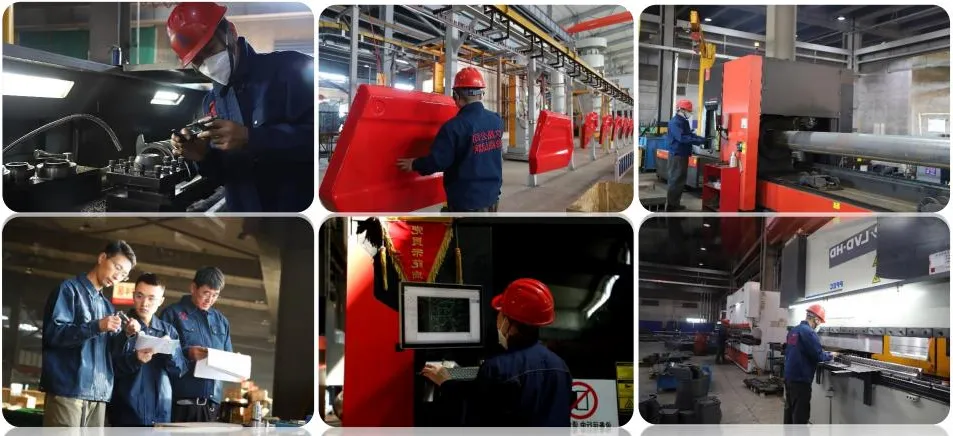
Manufacturing Strength & Quality Assurance: With years of experience in agricultural machinery R&D and manufacturing, ISO 9001 Quality Management System certification guides every step from design to production. Every 9JYY-4.5 that leaves our facility undergoes rigorous testing to ensure it meets the demands of Australia's tough operating environments.
-
Customer-Centric Customisation: We understand the diversity of needs across Australian farms. Whether it's special tyre requirements for WA's vast holdings or enhanced anti-corrosion treatment for TAS's damp conditions, we offer personalised configuration options to ensure the equipment fits your specific needs perfectly.
-
Robust Global Supply Chain & Local Support: As an international manufacturer, we maintain a stable global parts supply chain, ensuring timely spare parts availability. In Australia, we provide professional after-sales support through our partner network or directly, including:
-
A comprehensive Two-Year Warranty for peace of mind.
-
Responsive technical advice and troubleshooting.
-
Ample stock of common spare parts to minimise your downtime.
-
-
Exceptional Value Proposition: We strive to eliminate unnecessary intermediaries, combining top-tier quality, advanced features, and competitive pricing to offer one of the most compelling returns on investment in forage handling solutions on the market.
Neem contact met ons op to Begin a New Chapter of Efficiency
If you are searching for a solution that can fundamentally transform your farm's bale handling, the 9JYY-4.5 Round Bale Collector and Transporter deserves your close attention. It represents the fusion of efficiency, reliability, and intelligent logistics.
Act Now to Elevate Your Farm's Productivity!
We invite you to contact us via phone, email, or our website for detailed technical specifications on the 9JYY-4.5, a tailored quote, and expert application advice. Our team is ready to help you analyse your needs, craft the optimal configuration for you, and make your next harvest season the start of a productivity leap.
Veelgestelde vragen
How does the 9JYY-4.5 improve efficiency compared to a front-end loader?
The 9JYY-4.5 collects and transports multiple bales in a single trip (up to 18 standard bales), eliminating the constant shuttling of a front-end loader that typically moves only 1-2 bales at a time. This batch-handling approach can reduce collection and transport time by up to 60%, allowing your baler to operate continuously without waiting.
What is the minimum tractor horsepower required to operate this unit?
The 9JYY-4.5 requires a tractor with a minimum power output of 30 kW (approximately 40 HP). This ensures sufficient hydraulic power for smooth loading and unloading, and adequate pulling power for a full load.
Can it handle both dry hay and silage bales safely?
Yes. Its full hydraulic control system provides gentle, precise handling to minimise damage to both dry hay and silage wrap. The stable, low-centre design and dual wheels also prevent bale roll-off during transport, which is crucial for protecting valuable silage.
Are there specific regulations for using it on public roads in my state?
Regulations vary by state. The unit's width (~2.42m) generally complies with mainstream limits, but operators must check local rules regarding width permits, lighting/reflector requirements, speed limits for towed equipment, and necessary driver's license class for the total combination weight.
How does the dual-wheel configuration benefit operation?
The 10.0/80-12 dual wheels provide superior flotation on soft ground (reducing rutting and soil compaction), enhance transport stability on uneven terrain and slopes, and offer a safety margin—the unit can remain supported even if one tyre loses pressure.
What is the expected lifespan and what warranty is provided?
Built with high-tensile steel and quality components for Australian conditions, the unit is designed for long-term durability. EVER-POWER supports this with a comprehensive **Two-Year Warranty**, covering defects in materials and workmanship, backed by technical and spare parts support.
How many bales can it actually carry in one load?
With a maximum load capacity of 4,500 kg, it can carry approximately 12-18 standard large round bales, depending on the crop type and bale density. For example, it may hold 16-18 lighter dry hay bales or 12-14 heavier silage bales.
Is it suitable for the hilly terrain common in parts of NSW or Tasmania?
Yes. The low centre of gravity, stable dual-wheel axle, and reliable braking system are specifically designed for safe operation on undulating terrain. Always ensure your tractor has sufficient weight and power for the slope and load.
Can it be customised for specific farm needs?
Yes. EVER-POWER offers customisation options. Examples include specific hitch types to match your tractor, additional tie-down points, lighting packages for different state regulations, or even adjustments to handling mechanisms for non-standard bale sizes.
What routine maintenance does it require?
Key routine maintenance includes regular greasing of all pivot points, checking hydraulic fluid levels and hoses for leaks, inspecting tyre pressure and condition, ensuring all lighting and safety features work, and keeping the frame and moving parts clean, especially after working in dusty conditions.
How quickly can it load and unload a full set of bales?
The hydraulic system enables fast cycle times. Loading a full complement of bales typically takes just a few minutes, as the operator can perform the sequence smoothly from the tractor seat. Unloading an entire stack at the storage site can be completed in under five minutes.
Does it work efficiently with baler brands other than EVER-POWER?
Absolutely. The 9JYY-4.5 is a universal transport solution designed to work seamlessly with any modern round baler, including high-output models from John Deere, Case IH, CLAAS, and others. Its role is to optimise logistics after the baling process.
Where can I get spare parts and technical support in Australia?
EVER-POWER provides direct technical support and coordinates spare parts supply through its Australian network. Common parts are held in stock locally for quick dispatch, with backing from a global supply chain to ensure availability and minimise potential downtime.