product
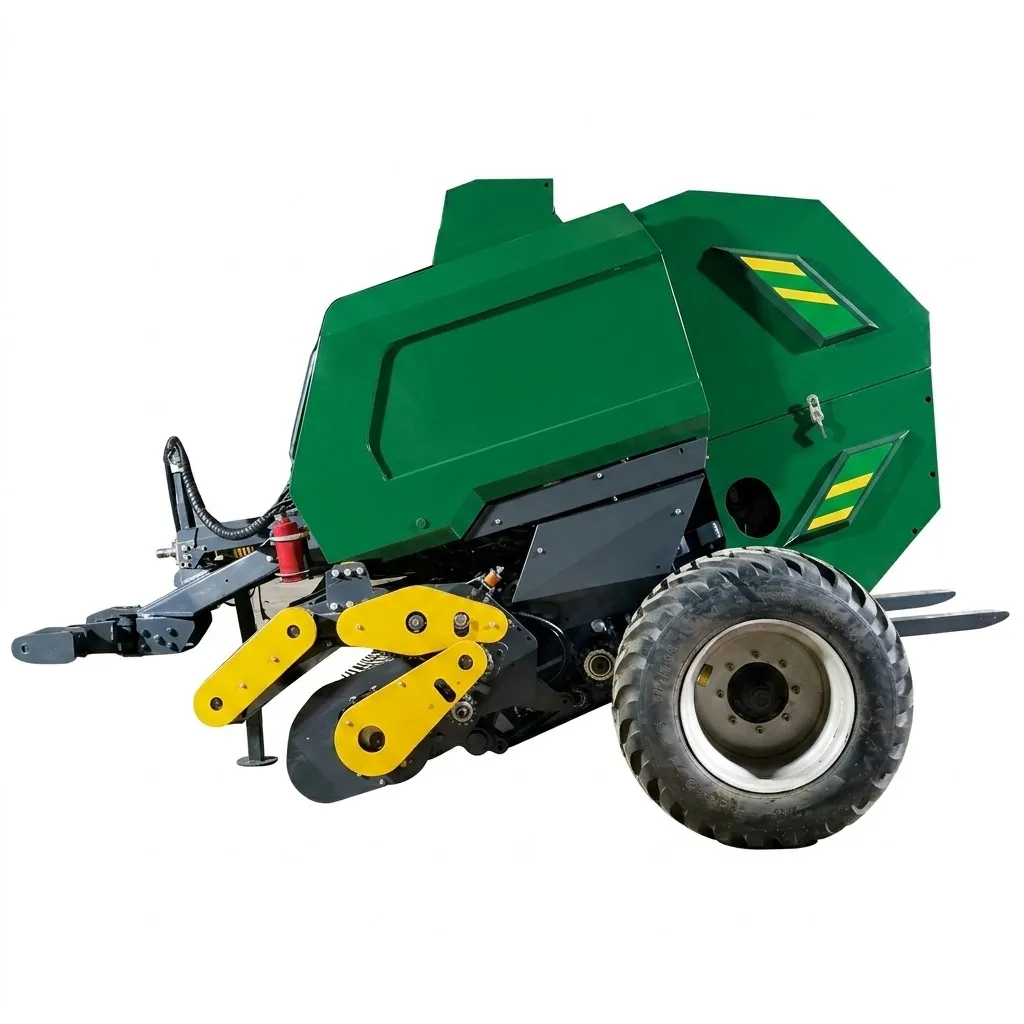
9YG-2.2 Rollenpers voor zware silageproductie
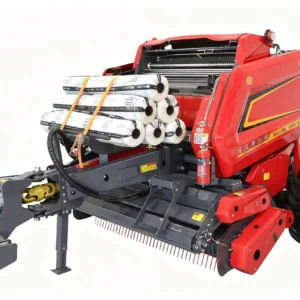
The 9YG-2.2 is a heavy-duty trailed round baler with an 18-roller fixed-diameter roll drum chamber (Φ1220 mm), handheld colour touchscreen control, displacement sensor bale weight monitoring, and sensor-counted automatic net wrap. Rated 110–150 kW and weighing 3800 kg, it suits high-volume dairy silage operations, commercial contractors, and large livestock stations where bale density consistency is a direct revenue factor.
Every silage season, the same problem repeats across dairy farms and contracting operations throughout Australia: inconsistent bale density leads to uneven fermentation, and uneven fermentation means nutritional variation in the feed that reaches the animal. The 9YG-2.2 addresses this at the machine level — with a fixed-diameter roll drum compression chamber, handheld colour touchscreen monitoring, and a continuous screw feeding mechanism that together produce measurably consistent bale weight and density across the full field run, from the first bale cut to the last.
This is a trailed round baler at the premium end of the Ever-power forage baler range — 3800 kg, 110–150 kW minimum power requirement, 18-roller Φ1220 mm roll drum chamber. It is not designed to be the most affordable machine or the easiest to operate. It is designed to produce the most consistently high-quality silage bale that a round baler in this weight class can deliver, with the electronic monitoring tools to verify that quality bale-by-bale across an entire season's output. For operations where feed quality directly determines revenue — dairy milk production, premium hay contracts, silage supply agreements — that consistency has a measurable dollar value. If you want to understand exactly how moisture content affects silage bale quality, our technical guide covers it in full.
Australia Ever-power Forage Balers Co., Ltd. supplies the 9YG-2.2 direct from our Charlton Industrial Area facility — removing the distributor chain that inflates the price of equivalent-specification European machines in the Australian market. What you pay reflects manufacturing and logistics cost, not product tier positioning.
Volledige technische specificaties
Full technical documentation, PTO configuration guide, and spare parts catalogue available — request from our team.
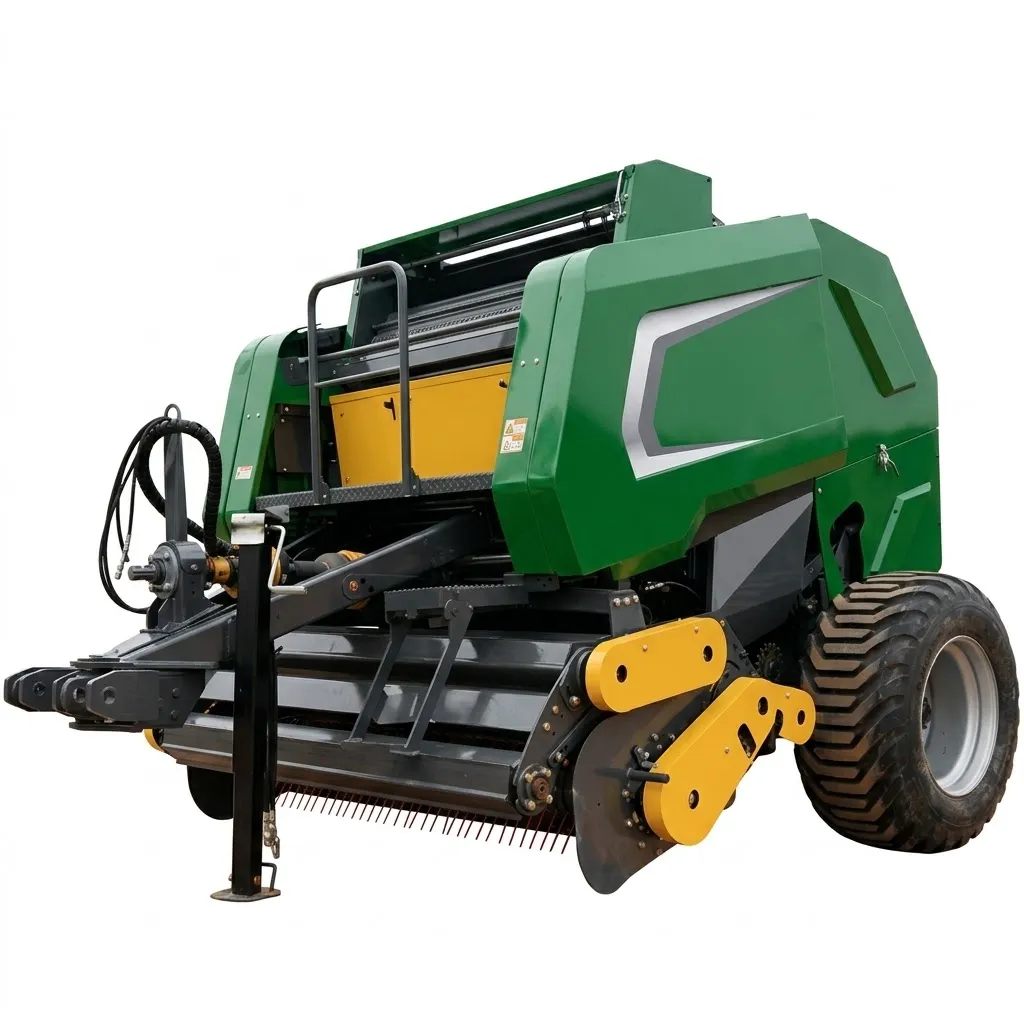
Why Bale Density Varies — and How the Roll Drum Chamber Solves It
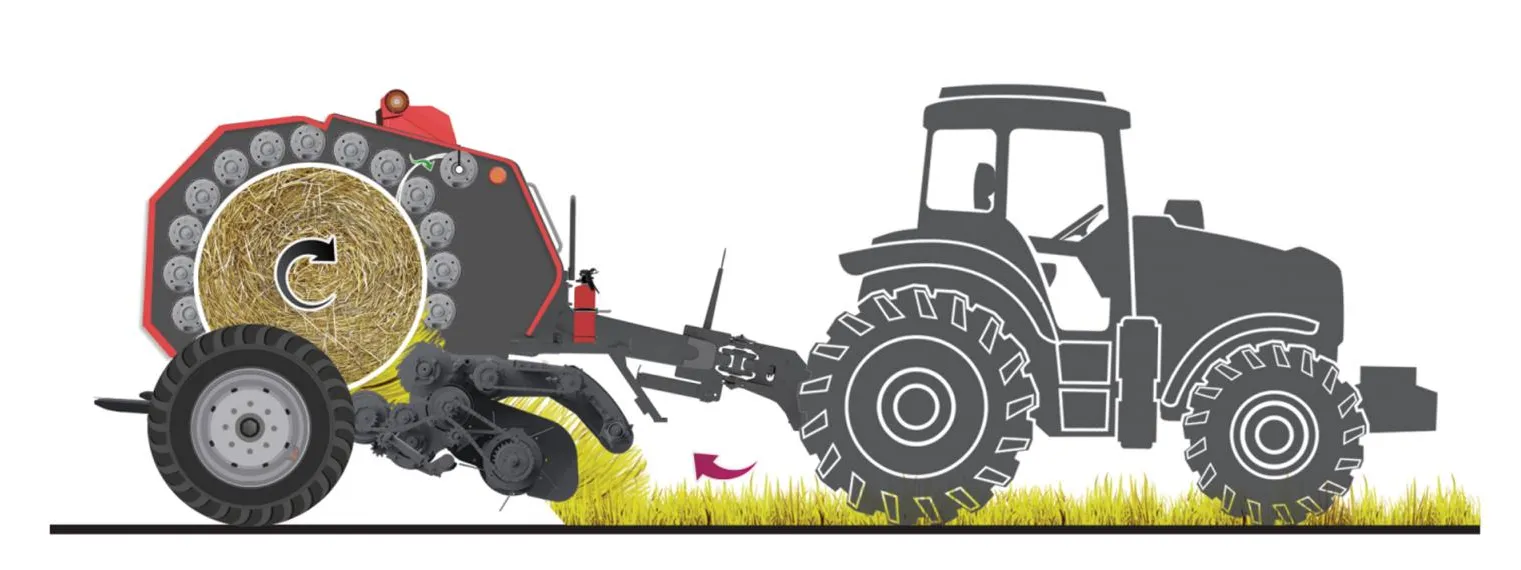
Variable bale density is not primarily a machine speed problem or an operator error problem. It is a compression chamber design problem. Understanding this is the starting point for understanding why the 9YG-2.2's 18-roller roll drum chamber produces more consistent silage quality than belt-drive alternatives at comparable throughput rates.
📊 Consistent Fermentation Conditions
Uniform bale density means uniform oxygen exclusion across the bale cross-section. Anaerobic fermentation proceeds at the same rate from core to surface — the outcome is nutritional consistency at feedout rather than the "sweet core, acidic surface" variation that dense-surface, loose-core belt bales commonly produce.
🔩 No Belt Replacement in the Ownership Lifecycle
Baler belts in high-throughput silage operations require replacement every 1–3 seasons at significant cost. The 9YG-2.2's roller array has no belts. Roller bearing replacement is the primary compression-zone maintenance interval — at substantially longer service intervals and lower per-service cost than belt replacement across equivalent operating hours.
💧 High-Moisture Performance Without Degradation
At 60–70% crop moisture — typical of early-cut ryegrass silage on coastal Australian dairy properties — steel rollers maintain compression traction throughout the full bale formation cycle. The wet-condition performance advantage of the roll drum design is most pronounced exactly when the highest-value silage crops are being harvested.
📐 Fixed Φ1220 mm Diameter — Predictable Film Coverage
Every bale exits at exactly Φ1220 mm diameter. Stretch film wrapping calculations are constant across the season — the number of film layers per bale does not change between loads or operators. This predictability removes a significant source of silage quality variability that arises when bale diameter changes between cuts in variable-chamber machines.
Touchscreen Monitoring, Displacement Sensor Weighing, and Precision Net-Wrap Counting
The 9YG-2.2 replaces operator estimation — the traditional method of judging when a bale is ready — with sensor-based monitoring that delivers the same bale parameter every cycle regardless of who is operating the machine. This shift from observation to measurement is the difference between approximate consistency and verifiable consistency.
Handheld Colour Touchscreen — Full Status in View from the Tractor Seat
The operator holds or mounts a colour touchscreen display that shows live bale formation status, running machine parameters, and fault alerts as they occur. Two operating modes — automatic and manual — are selectable from the display. In automatic mode, the machine manages the complete bale cycle: compression target, net-wrap initiation, wrap count, cut-and-clamp, and bale ejection. Manual mode passes each decision point to the operator for applications where field-specific adjustments are needed cycle-by-cycle.
Why visibility from the cab matters in a 3800 kg machine
On a machine of this size operating in remote paddock conditions, the ability to read all operating parameters without leaving the cab reduces the daily interruptions that physical check-downs require. More practically, touchscreen alert visibility catches developing problems early — before they become field stoppages that require external assistance to resolve.
Displacement Sensor Bale Weight Monitoring — Target Weight Every Bale
A high-precision displacement sensor tracks bale formation progress and correlates the mechanical state of the forming bale with weight — displaying a live estimate on the touchscreen throughout the compression cycle. The operator sees bale weight building in real time and can verify the machine is on track to the target before the net-wrap cycle begins. When the target is reached, automatic mode initiates wrapping; manual mode prompts the operator to confirm.
Commercial relevance — bale weight is a billing unit
For silage contractors billing by bale weight, and for operations supplying silage to feedlots or dairy farms under weight-based contracts, bale weight accuracy is directly linked to revenue. An operation producing bales that systematically vary by 15–20% in weight either over-delivers on weight-based sales or under-delivers on volume commitments. The displacement sensor holds bale-to-bale variation within a narrow range, making every load a predictable weight rather than an estimated one.
Sensor-Counted Net Wrap — Exact Loop Delivery Every Cycle
The net-wrap system counts loops using a high-precision position sensor, not a timer. The operator sets the target loop count on the touchscreen; the sensor confirms exact delivery of that count before cutting and releasing the bale. This precision eliminates two failure modes that timer-based net-wrap systems introduce: under-wrapping (insufficient net tension leading to bale slump or net failure in handling) and over-wrapping (excess net consumption with no quality benefit).
Net wrap is the second-largest operating cost after fuel
At scale — 2000+ bales per season — the difference between two loops and three loops per bale on every bale represents a full roll of net wrap per roughly 150 bales. The sensor-counted system holds consumption at exactly the programmed loop count across the full season, removing the variability that accumulates when wrap count drifts with operator fatigue or changing field conditions during a long baling day.
Automatic Lubrication, Hydraulic Pickup, and Global-Sourced Drive Components
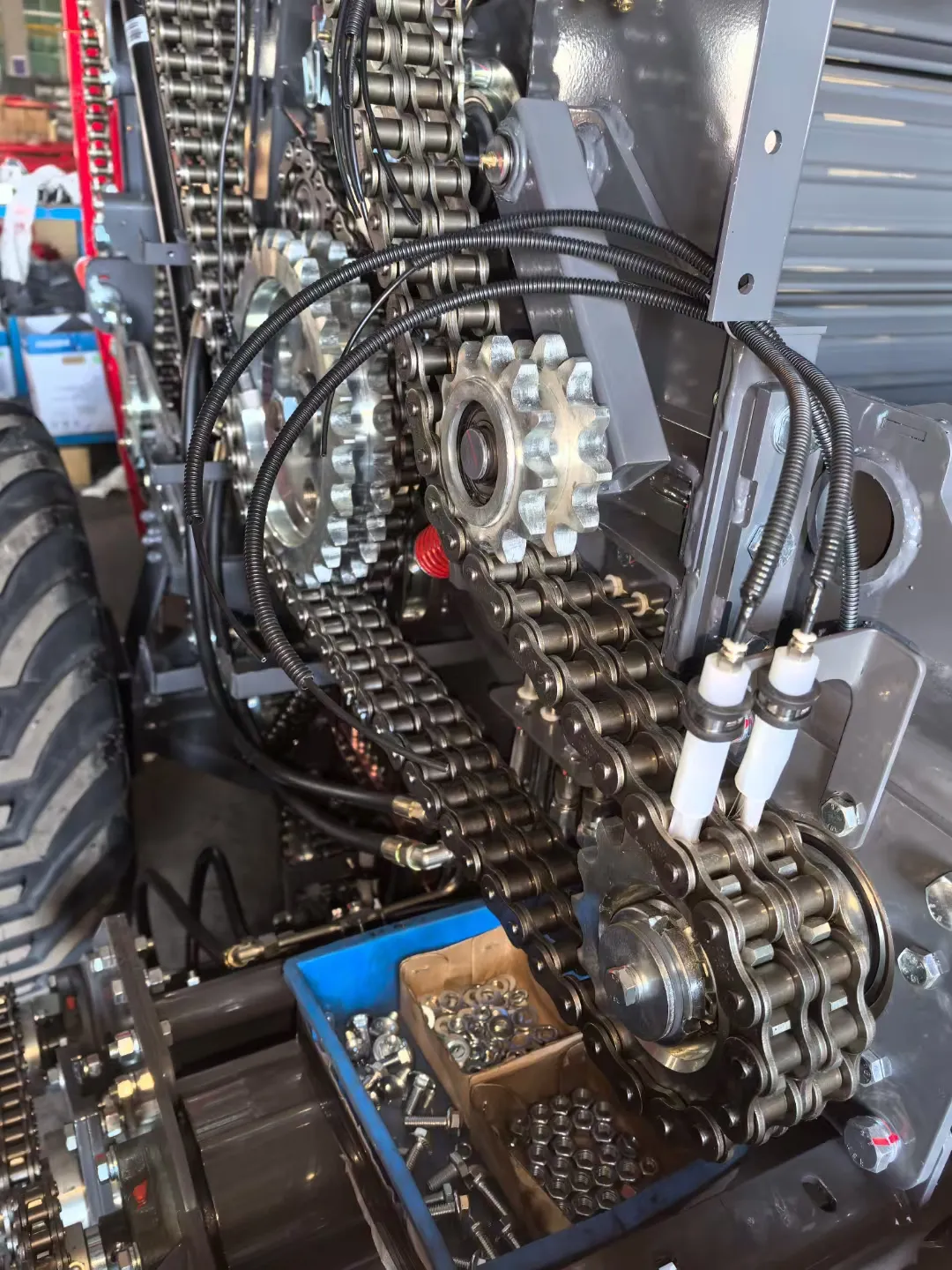
Three supporting systems reduce the maintenance burden that a 3800 kg machine at this power level would otherwise impose. Fully automatic thin-oil lubrication keeps the chain drive system lubricated continuously without operator intervention — eliminating the chain wear that accumulates when manual lubrication intervals are missed during intensive harvest periods. Hydraulic pickup height adjustment with float capability allows the operator to adapt reel height to changing ground conditions from the cab without stopping. Key drive components — shaft, bearings, clutch, chain, and electronic control — are sourced from globally recognised manufacturers, providing a spare parts path through industrial suppliers in Australia rather than requiring OEM international freight for every replacement.
Crops and Operations Where the 9YG-2.2 Delivers Its Strongest Return
The 9YG-2.2 is not optimised for every farm. It is optimised for operations where bale quality consistency is a revenue factor, where volume is high enough to justify a 110 kW minimum tractor and 3800 kg machine investment, and where the silage programme runs across multiple cuts and crop types through a full growing season.
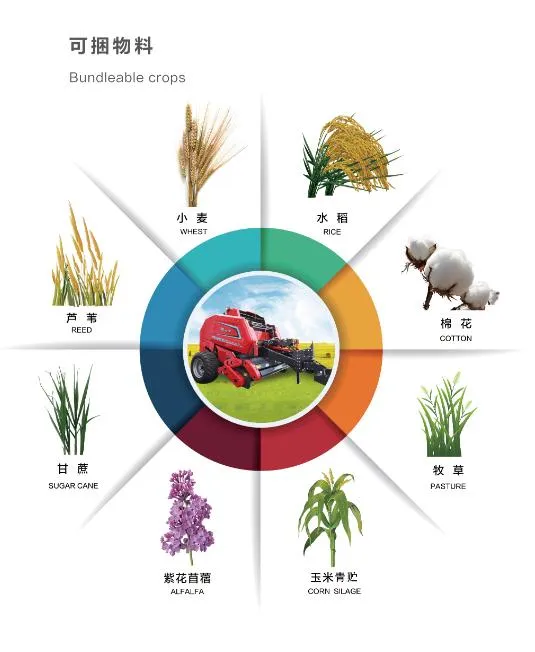
Ryegrass Silage — High Moisture, High Volume
Early-cut perennial ryegrass at 60–70% moisture is where the 9YG-2.2 most clearly outperforms belt-drive alternatives. At this moisture level, the roll drum chamber maintains full compression without the slip events that degrade belt-drive consistency. The 2200 mm pickup captures the full windrow from wide-cut dairy mowing equipment in a single pass, and the screw feeder delivers continuous, consistent material flow into the drum at the high intake volumes these windrows produce.
Corn Silage and Sorghum
Whole-plant corn and sorghum silage at 60–70% moisture present the heaviest compression load in the round baler application range. The 9YG-2.2's 18-roller chamber and 110–150 kW power range are sized for this material — maintaining consistent chamber pressure through the dense, fibrous material without the roller speed reduction that reduces compression quality in underpowered machines.
Lucerne, Oaten Hay, and Mixed Pasture
Drier crops at 15–25% moisture bale through the 9YG-2.2 without difficulty — though the machine's full capability is not required for these lighter applications. For operations running the same machine across both high-moisture silage and dry hay seasons, the 9YG-2.2 handles the full crop type range without machine changes, and the touchscreen weight monitoring delivers consistent bale weight across both application types.
✓
✓
✓
✓
✓
→
→
→
→
Running the 9YG-2.2 at Full Capability Through the Silage Season
The 9YG-2.2's automatic systems reduce the routine intervention burden on the operator — but they do not reduce the value of correct setup and daily maintenance practice. The following habits determine whether the machine delivers its specification-level performance across the full season or gradually underperforms from accumulated wear.
Calibrate Sensor at Season Start and Crop Change
The displacement sensor's weight correlation should be validated against actual bale weights on a platform scale at the start of each season and when switching between significantly different crop types. A calibration that was accurate for dry ryegrass in April will drift when the same field is cut green in September. Platform-scale validation takes 15 minutes and prevents systematic weight error accumulating across an entire seasonal cut.
Pre-Season Roller Inspection — All 18
Before the first bale of each season, run a physical inspection of all 18 compression rollers: bearing play, surface wear, and correct axial positioning across the 1400 mm chamber width. A roller with elevated bearing play produces a repeating soft band around the bale circumference at its angular position — identifiable on the ejected bale but not correctable in the field without a spare bearing. Pre-season inspection catches this before it affects 1000 bales.
Verify Auto-Lube Function at Each Day Start
The automatic thin-oil lubrication system should be verified as functioning within the first few minutes of each day's operation — confirm visually that oil is reaching the chain drive before committing the machine to a full paddock run. A lubrication pump failure that appears on the display as normal but is not delivering oil will cause chain wear that accumulates undetected across the day, becoming a significant service item that could have been caught at day start.
Adjust Net Wrap Count When Crop Moisture Changes
High-moisture silage bales at 65%+ moisture are softer on ejection and benefit from more net loops to hold shape while cooling. Dry hay bales at 15–18% moisture are structurally self-supporting and do not need the same loop count. Actively adjust the wrap count setting on the touchscreen between crop conditions rather than leaving it fixed — the sensor-counted system makes this a 30-second adjustment that pays off in net savings and bale quality across the full run.
Maintain Rated PTO Speed Under Load
The 9YG-2.2's screw feeder and 18-roller chamber are designed to operate at rated PTO speed. In dense high-moisture corn or sorghum windrows, PTO speed drop reduces screw throughput rate and roller surface velocity — compressing the material less completely per revolution and increasing cycle time per bale. Reduce ground speed before allowing PTO speed to drop. A 160–180 hp tractor provides the right power margin for sustained operation through peak-load windrow conditions without this compromise.
Set Pickup Float for Each New Field Surface
Set the hydraulic pickup float range appropriately for the paddock surface before committing to a full field run. Tighter float on level, firm paddocks minimises soil disturbance at the reel edges. Wider float on undulating or drained paddocks prevents tines driving into ridges. Two minutes of float adjustment at field entry saves the spring tine inspection and replacement that follows extended tine-to-soil contact in incorrect float settings.
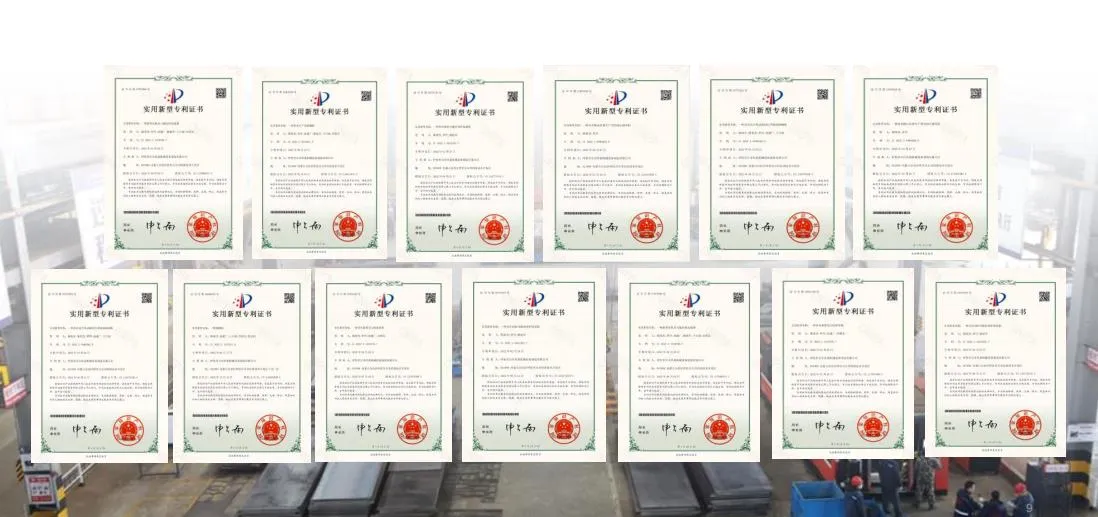
Direct Manufacturer Access to Roll Drum Baler Technology — No Distributor in Between
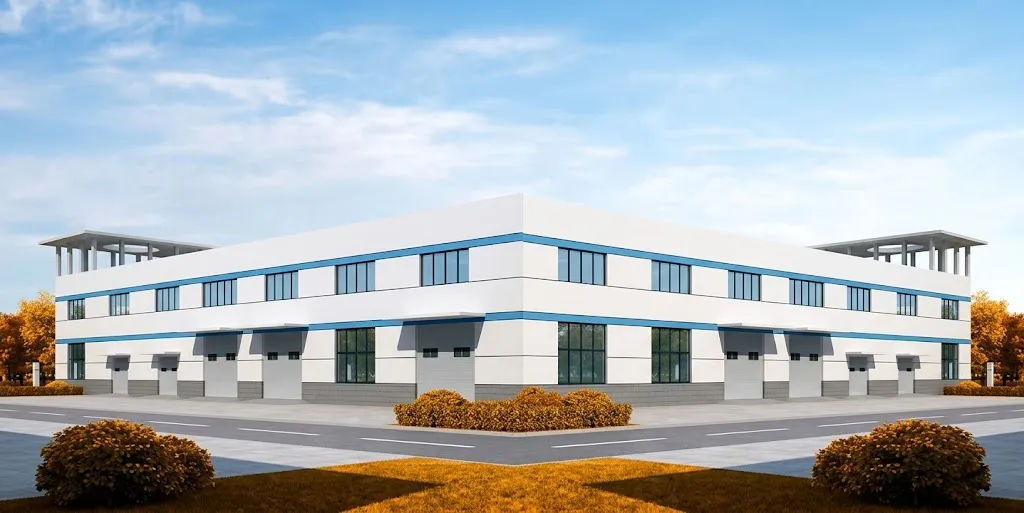
Australia Ever-power Forage Balers Co., Ltd. operates from Charlton Industrial Area, Australia. Learn about our manufacturing standards and supply model at foragebalers.com/about-us.
Manufacturer Price, Not Distributor Price
Roll drum round balers at 110–150 kW with touchscreen control carry a premium price in European brand channels — partly reflecting genuine engineering quality, and partly reflecting the importer-distributor-dealer margin stack. Ever-power's direct-to-Australia supply removes that stack. The 9YG-2.2's price reflects what it costs to manufacture and deliver to Charlton, not where it sits in a European product tier hierarchy.
Australian Parts Stock — Rollers, Sensors, Chain Drive
Replacement roller bearings, spring pickup tines, net-wrap sensor components, chain drive parts, and screw feeder components for the 9YG-2.2 are held in Australian stock. For a machine at this throughput level during silage season, locally available parts means a repair measured in hours rather than the weeks that international freight introduces. This is not a courtesy — it is an operational necessity for a machine that runs continuous harvest-window schedules.
Technical Partnership, Not Just Product Supply
Our Australian team supports buyers through first-season setup of the touchscreen control system, displacement sensor calibration, net wrap configuration for specific crops, and PTO matching for your tractor. We approach the relationship as a technical partnership across the machine's working life — not a transaction completed at delivery. Contact us at [email protected] of via onze aanvraagformulier.
Veelgestelde vragen
Questions from dairy farmers, silage contractors, and large livestock operations evaluating the 9YG-2.2.