उत्पाद
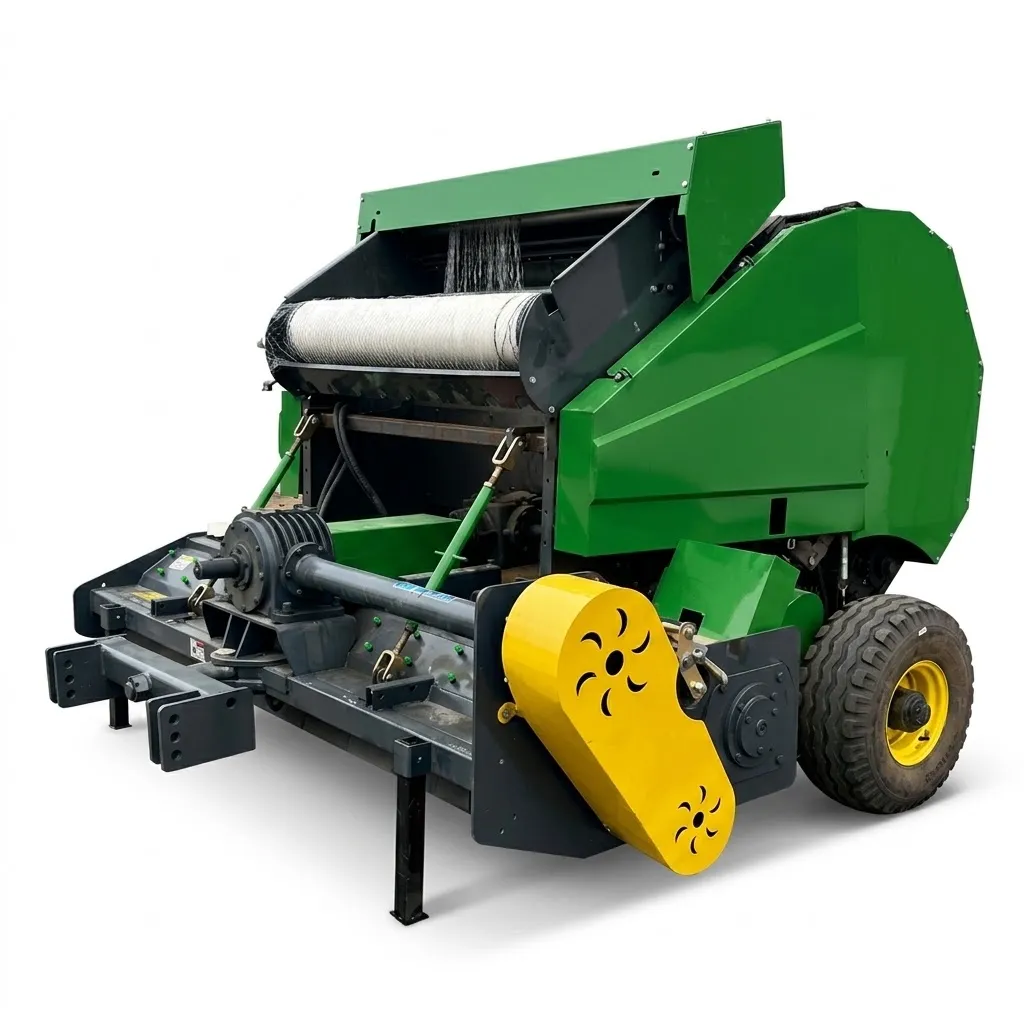
9YQ-2300 राउंड हे बेलर — 2300 मिमी वाइड-कट पिकअप, रोल ड्रम, ड्यूल-स्टेज फीडिंग
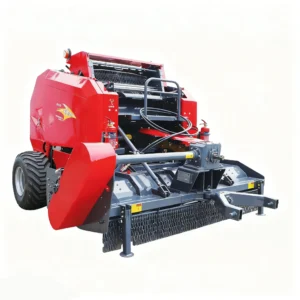
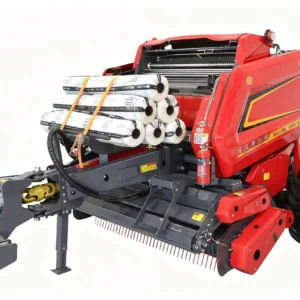
The 9YQ-2300 is a wide-cut trailed round baler with a 2300 mm spring-tooth pickup — the widest in the Ever-power roll drum range — capturing full windrows from 5–6 metre mowers in a single pass without re-raking. Paired with dual-stage shift fork and screw continuous feeding, an 18-roller Φ1000 mm roll drum chamber, and a power range of 58.8–132.5 kW (80–180 hp).
Stop Re-Raking. The 9YQ-2300 Captures Your Full Wide-Cut Windrow in One Pass.
If your mowing equipment cuts at 5 or 6 metres and your baler's pickup is 1950 mm wide, you are making a choice every season: rake windrows down to the pickup width before baling — adding a tractor pass, fuel cost, and time — or accept that the baler misses the outer edges of every windrow on every pass, leaving dry matter in the field. Neither outcome is desirable. The 9YQ-2300 eliminates the choice entirely. With a 2300 mm spring-tooth pickup reel, it captures the full windrow width from 5–6 metre cutting equipment in a single pass, with no re-raking required and no edge crop left behind.
The 9YQ-2300 carries the same proven mechanical package as the 9YQ-1950 — dual-stage shift fork and screw continuous feeding, 18-roller Φ1000 mm roll drum compression chamber, automatic net wrapping — scaled to handle the larger crop volume that a 2300 mm reel delivers per unit of forward travel. The power range shifts upward accordingly: 58.8 to 132.5 kW (approximately 80 to 180 hp), reflecting the additional mechanical load of the wider reel and the heavier windrow charges it processes. For operations running 80–180 hp tractors with wide-cut mowing or combining equipment, the 9YQ-2300 is the roll drum baler that matches the rest of the field setup rather than requiring the field setup to be adjusted around the baler. Understanding why baling speed affects silage quality helps operators get the most from the 2300 mm reel's single-pass capability.
At 2500 kg, the 9YQ-2300 is only 115 kg heavier than the 9YQ-1950 despite carrying a 350 mm wider reel — the machine remains compact enough for regular transport between properties on a standard trailer. Australia Ever-power Forage Balers Co., Ltd. supplies this model direct from Charlton Industrial Area, with local Australian stock for the dual-stage feeder components that determine the machine's field performance.
Complete Technical Specifications
Full technical documentation and spare parts catalogue on request — हमारी टीम से संपर्क करें.
What a Narrow Reel Costs You in a Wide-Cut Operation — Every Season
Pickup width mismatch is one of the most quietly expensive inefficiencies in Australian silage and hay operations. It does not produce a dramatic failure event — no alarm goes off, no bale is visibly wrong. It simply means that a proportion of every windrow goes uncollected, or that an additional tractor pass is needed before baling begins. Over a full season at scale, both outcomes have a measurable cost.
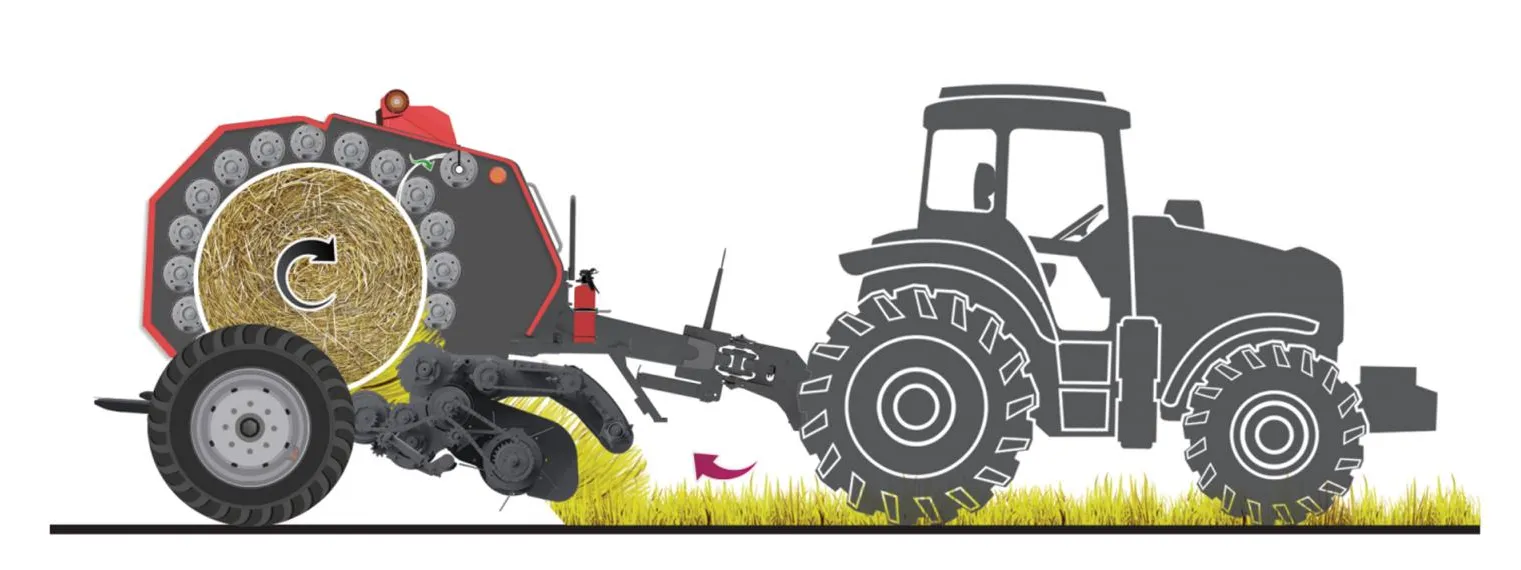
How the 9YQ-2300's Mechanical Systems Handle What a Wider Reel Delivers
A 2300 mm reel at working speed delivers proportionally more crop volume per unit of time than a 1950 mm reel in the same windrow conditions. The 9YQ-2300's mechanical systems are configured to handle that additional volume without the blockage risk and density variation that wider-reel single-mechanism feeders produce in demanding crop conditions.
2300 mm Spring-Tooth Pickup — Hydraulic Float, Cab-Controlled Height
The 2300 mm spring-tooth reel is the widest in the Ever-power round baler range. Spring-loaded tines follow ground contours across the full 2300 mm span — flexing on contact with ridges, swales, and uneven pasture surfaces rather than snapping against rigid soil features. Hydraulic pickup height adjustment with float capability is provided as standard: from the tractor cab, the operator can adapt reel height to changing ground conditions across a long paddock without stopping the machine. At 2300 mm reel width, accurate centreline tracking on the windrow is more important than at narrower widths — the outer tine zones have less margin for tracking drift before they run off the windrow edge. The hydraulic float range should be set appropriately for each new field surface condition before starting the baling run.
Why spring tines at 2300 mm — not rigid tines
Rigid tines on a 2300 mm reel would impose significantly higher soil impact forces at the outer tine rows during surface contact events — the wider span amplifies the leverage effect of any ground contact. Spring tines absorb this energy through tine deflection and return, protecting both the tines and the reel shaft bearings from the repeated impact loads that rigid tines would transmit at this working width.
Dual-Stage Feeding — More Critical at 2300 mm Than at 1950 mm
The shift fork and screw continuous feeding combination carries over from the 9YQ-1950 — and its blockage-prevention function is proportionally more important at 2300 mm pickup width. A wider reel delivers a larger crop volume surge per machine cycle when it passes through a thick windrow section. Presented to a screw-only inlet, this surge stalls the screw. The fork stage in the 9YQ-2300 absorbs the surge at the first point of contact — breaking the clump, metering the volume, and delivering a manageable charge to the screw regardless of what the 2300 mm reel encountered on that pass.
The fork stage as a volume buffer for wide-reel operation
Think of the fork stage as the buffer between the variable-volume world of a 2300 mm reel working at field speed and the consistent-volume requirement of the roll drum chamber. The reel sees variability — thick windrow sections, thin windrow sections, high-moisture clumps, dry loose material. The fork stage converts that variability into a metered, consistent stream. The chamber sees consistency — which is why the bale density is consistent, which is why the silage fermentation is consistent.
18-Roller Roll Drum Chamber — Same Φ1000 mm Fixed Geometry as the 9YQ-1950
The compression chamber is identical to the 9YQ-1950: 18 Φ190 mm hardened steel rollers in a fixed-diameter array producing a Φ1000 mm bale within a 1250 mm chamber width. Fixed-diameter roll drum geometry means the compression force on the forming bale is the same from first material entry to net-wrap trigger — no compression variation as the bale grows, no belt slip under high-moisture conditions, no bale density variation that originates in the chamber design. Where variability in bale density does occur, it can be attributed to feeder input variation — and the dual-stage feeder upstream is specifically designed to minimise that.
Bale size and film wrap compatibility
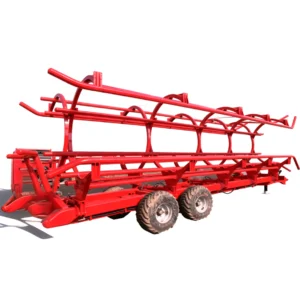
The Φ1000 mm bale diameter produced by the 9YQ-2300 is compatible with standard Australian round bale film wrappers — both inline and satellite-arm designs — that handle bales from 800 to 1300 mm diameter. For silage applications, film wrapping must follow net wrapping before the bale is stored. The 9YCM-850 bundling film wrapping unit in our range is compatible with the Φ1000 mm bale format; contact us to discuss the complete baling and wrapping setup for your operation.
Power Range 58.8–132.5 kW — Sized for the Tractor That Runs Wide-Cut Equipment
The 9YQ-2300's minimum power requirement of 58.8 kW (approximately 80 hp) is higher than the 9YQ-1950's 36.7 kW minimum, reflecting the additional mechanical load of the wider pickup reel and the heavier crop volume it delivers per machine cycle. The upper limit of 132.5 kW (approximately 180 hp) accommodates the larger four-wheel-drive tractors commonly used with wide-cut mowing equipment in high-volume Australian silage operations — meaning the baler and the mower can share the same large tractor without either machine being underpowered.
Practical tractor pairing recommendations
For dry hay at moderate windrow density: 80–100 hp is adequate and efficient. For high-moisture ryegrass silage from full-width windrows: 120–150 hp provides better PTO stability under peak intake load. At the minimum 80 hp in heavy green silage, PTO speed can drop on dense windrow sections, which reduces fork stage clearing speed and allows surge material to reach the screw — the practical effect is increased blockage risk in the most demanding conditions. A 10–15% power margin above minimum is the practical recommendation for sustained high-moisture silage operation.
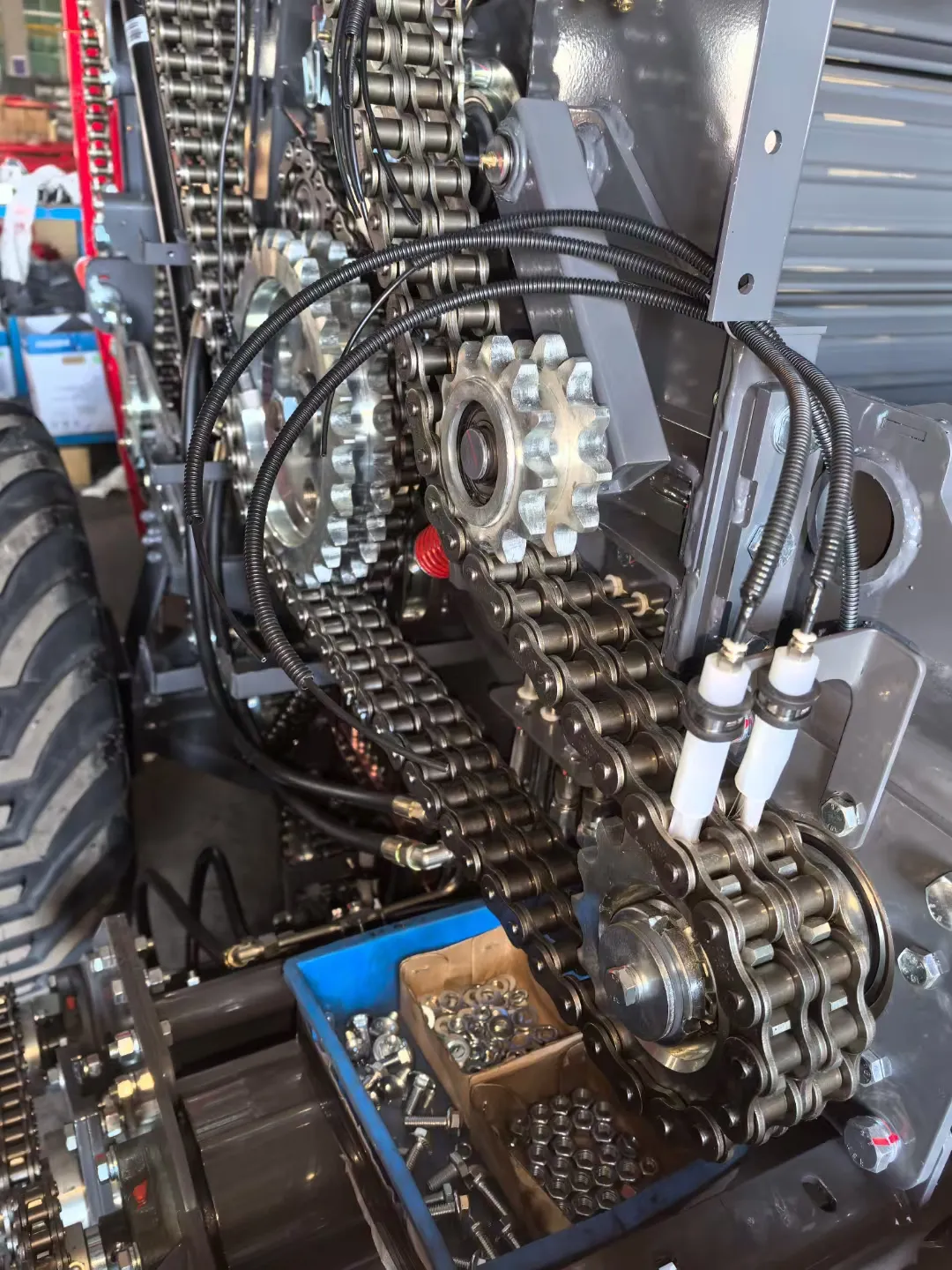
9YQ-2300 vs 9YQ-1950 vs 9YG-2.2 — Three Roll Drum Balers, Three Operating Contexts
All three share roll drum chamber technology. The right choice depends on pickup width requirement, tractor availability, and whether electronic bale weight monitoring justifies the 9YG-2.2 step up.
✓
✓
✓
✓
✓
→
→
→
→
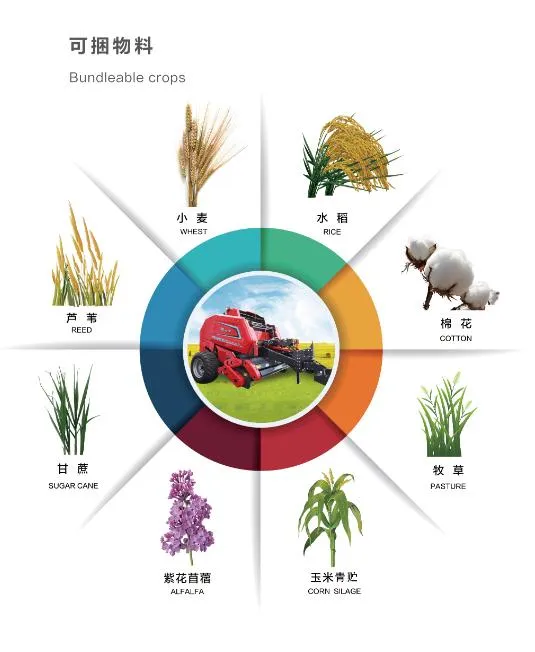
Running the 9YQ-2300 at Full Productivity with a 2300 mm Reel
Wide-reel operation introduces a small number of additional disciplines compared to narrower machines. These habits ensure the 2300 mm reel's throughput advantage is realised in practice rather than lost to avoidable stoppages.
Track Windrow Centreline Precisely at 2300 mm
At 2300 mm reel width, accurate windrow centreline tracking matters more than at narrower reels — the outer tine zones have less tracking tolerance before they overrun the windrow edge. Use the baler's centreline marker as a steering reference at field working speed. On undulating paddocks where tractor steering loads are variable, reducing speed slightly improves tracking stability and prevents the outer tine rows contacting soil on the downslope side of ridges.
Keep PTO Speed Stable — Reduce Ground Speed First
If PTO speed drops when entering a heavy windrow section, the response should always be to reduce ground speed rather than allow the drop to continue. At 2300 mm working width, PTO speed reduction reduces fork stage clearing speed disproportionately — because the fork is dealing with a larger crop mass than at narrower widths. Sustained PTO speed under load is the primary operating discipline that keeps the dual-stage system performing at specification in demanding crop conditions.
Inspect Outer Tine Rows More Frequently
On a 2300 mm reel, the outer tine rows are most exposed to soil contact and tracking-deviation events. Check the outer 200 mm of tine rows on each side more frequently than the centre during silage runs. Bent or missing outer tines create a consistent strip of uncollected crop on every pass — the widest reel in the range also has the widest impact when outer tines are not operating correctly.
Clear Fork Stage at Each Fuel Stop in Green Silage
In high-moisture green silage conditions, the fork stage processes a larger volume of sticky material per hour than at narrower pickup widths — residue accumulation on the fork face builds faster. At each fuel stop during silage runs, inspect and clear the fork face and the inlet to the screw stage. A fork face with accumulated residue reduces the pre-metering function and increases screw stall risk on the next heavy windrow section — the additional 10 seconds at each fuel stop prevents the 20-minute blockage clearance event that follows a full stall.
Pre-Season Roller and Reel Shaft Bearing Check
Before each season, inspect all 18 compression rollers for bearing play and surface wear, and check the 2300 mm reel shaft outer bearings specifically — the wider span places slightly higher bending load on these bearings during operation in heavy windrows. Reel shaft bearing play on the wider machine is more significant than on narrower reels because it translates to greater reel deflection under load, which reduces pickup consistency at the outer tine rows. Address bearing play at pre-season inspection rather than mid-season replacement.
Grease Reel Shaft Bearings at Every Stop
The 2300 mm reel shaft outer bearings operate under higher sustained load than the equivalent bearings on a narrower reel — wider span, higher bending moment under heavy windrow contact. Grease these bearings at every fuel stop using the grade specified in the maintenance schedule, not a general-purpose substitute. In summer silage conditions, the additional bending load plus ambient heat accelerates grease breakdown at the outer reel bearings more quickly than at the centre — the fuel-stop greasing interval is the practical protection against in-season bearing failure at this specific location.
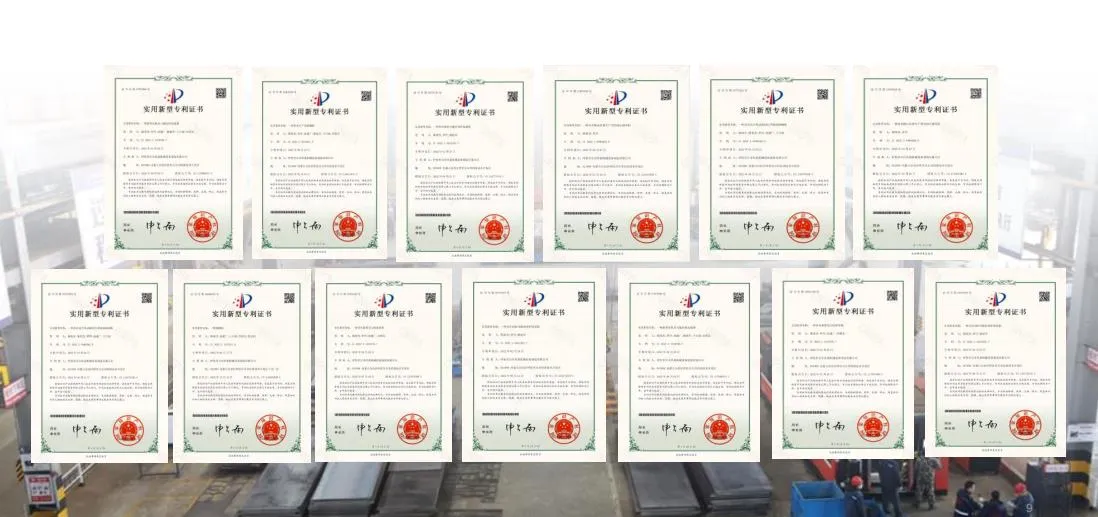
Wide-Cut Roll Drum Baler Technology — Direct Supply, Australian Parts, Full Setup Support
Australia Ever-power Forage Balers Co., Ltd., Charlton Industrial Area. About our business and supply model.
Wide-Cut Specification at Manufacturer Price
A 2300 mm pickup combined with dual-stage feeding and a roll drum chamber is a high-specification combination that carries a premium in European-brand distribution. Ever-power's direct supply to Australia eliminates the importer and distributor margins that inflate this premium. The price you pay reflects what it costs to build and deliver the 9YQ-2300 to Charlton Industrial Area — not what the channel charges to resell it.
Australian Stock — Wide Reel Tines and Feeder Parts
Spring tines for the 2300 mm reel, shift fork components, screw feeder bearings, compression roller bearings, and net-wrap mechanism parts are held in Australian stock. For a machine running at 80–180 hp through high-volume silage, having the wear-rate-sensitive parts — especially outer reel tines and fork stage components — available locally is the difference between a same-day repair and a week-long wait. We recommend a pre-season parts kit with every machine order.
Wide-Reel Operation Support
Our team provides first-season guidance on reel tracking at 2300 mm width, tractor pairing recommendations for specific crop conditions, fork stage clearance settings, and ground speed optimisation for your cutting equipment windrow profile. Wide-reel baling has operating nuances that narrow-reel experience does not fully prepare an operator for — we support that transition. Contact us at [email protected] or through our enquiry form.
अक्सर पूछे जाने वाले प्रश्नों
Common questions from high-volume dairy farms, silage contractors, and pastoral stations considering the 9YQ-2300.