उत्पाद
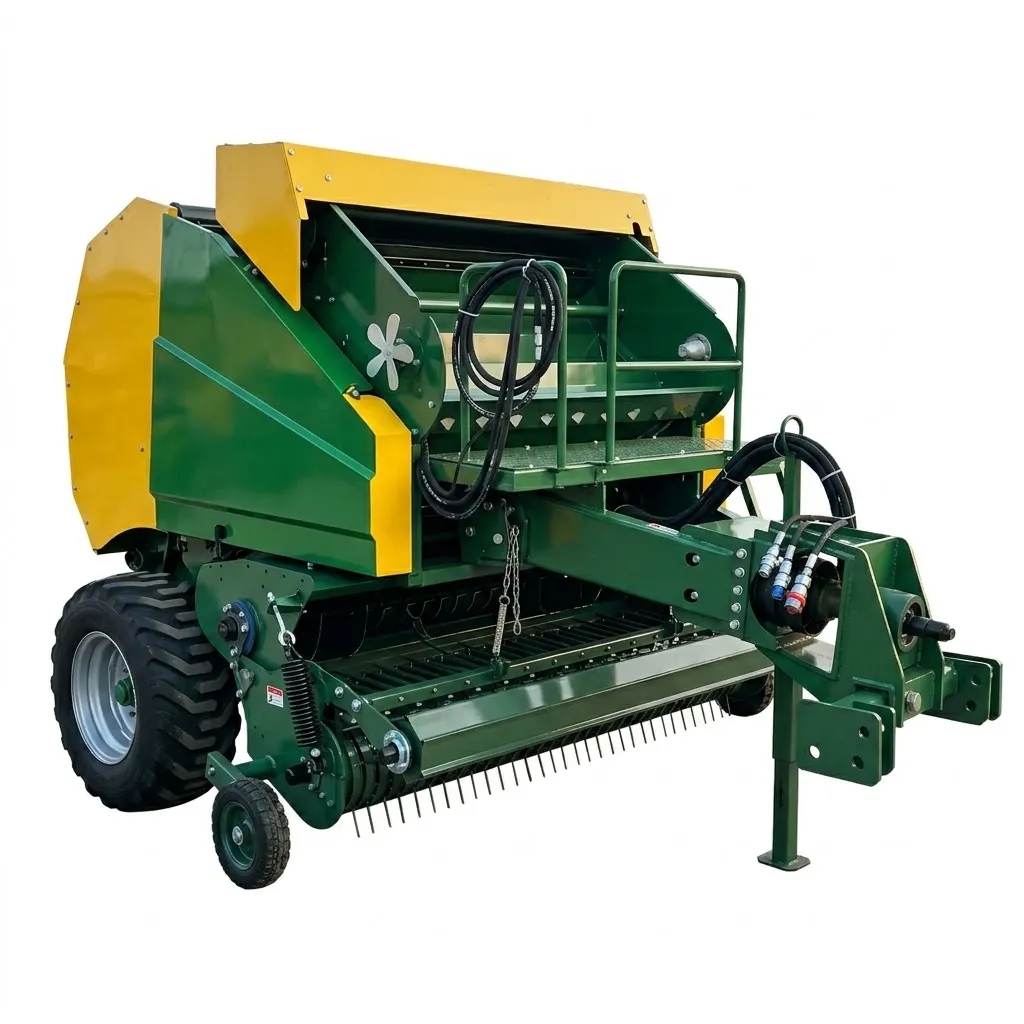
9YQ-1950 राउंड बेलर | ड्यूल-स्टेज फीड, 50–150 hp
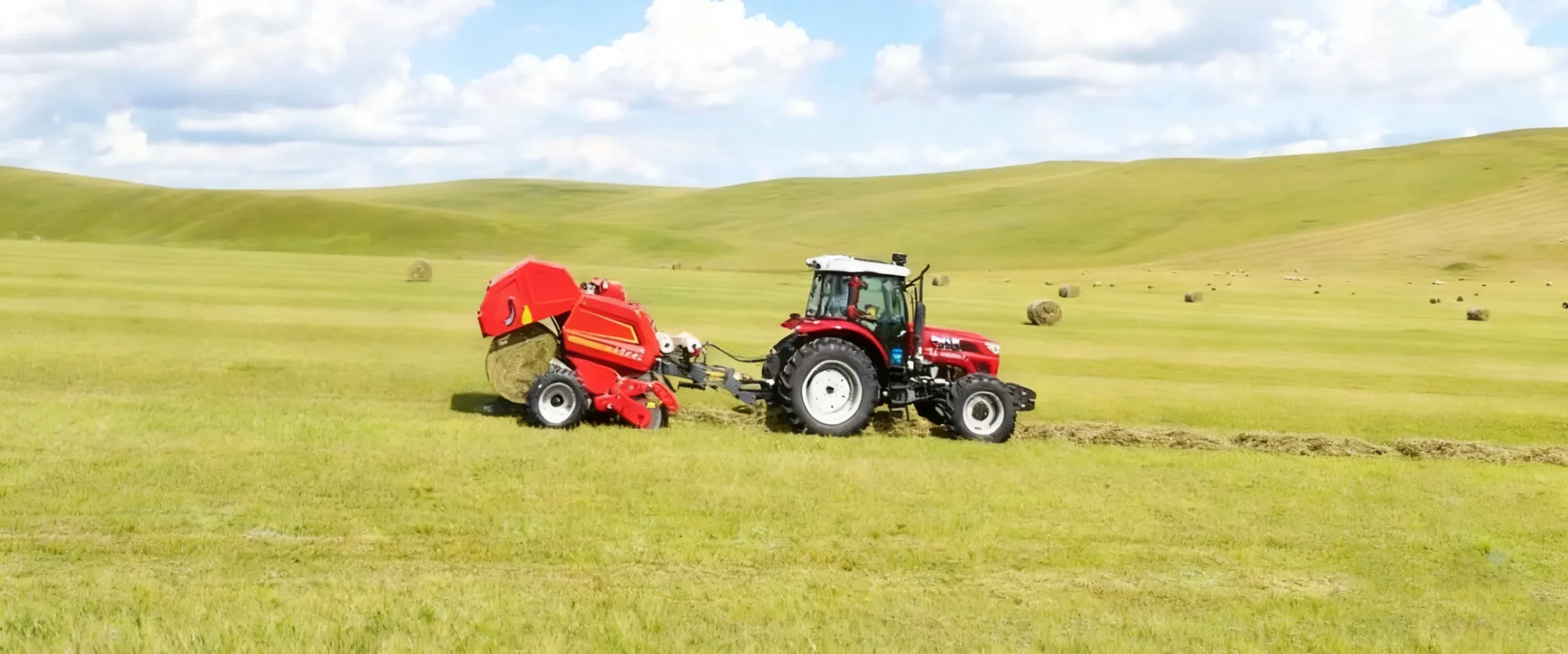
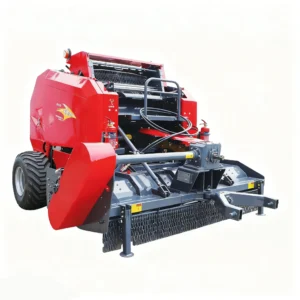
The 9YQ-1950 combines an 18-roller Φ1000 mm roll drum compression chamber with a dual-stage shift fork and screw continuous feeding system — reducing feeder blockages in high-moisture silage and variable windrow conditions. With a power range of 36.7–110.3 kW, it suits tractors from 50 to 150 hp, making roll drum bale quality accessible across mid-scale dairy, sheep, and mixed farm operations.
The Baler That Handles What Your Tractor Already Has — 9YQ-1950 Roll Drum Baler, 50 to 150 hp
One of the most common constraints in Australian forage baling is not crop volume, not field size, and not seasonal timing — it is tractor availability. The high-specification roll drum balers that deliver premium silage bale quality typically require 150–200 hp tractors. The 9YQ-1950 was built to make the same roll drum chamber technology available to farms whose tractor fleet sits in the 50–150 hp range: the minimum is 36.7 kW (approximately 50 hp), and the upper limit is 110.3 kW (approximately 150 hp). That three-to-one range covers the majority of mixed farm tractors operating across Australia's dairy, sheep, beef, and cropping regions.
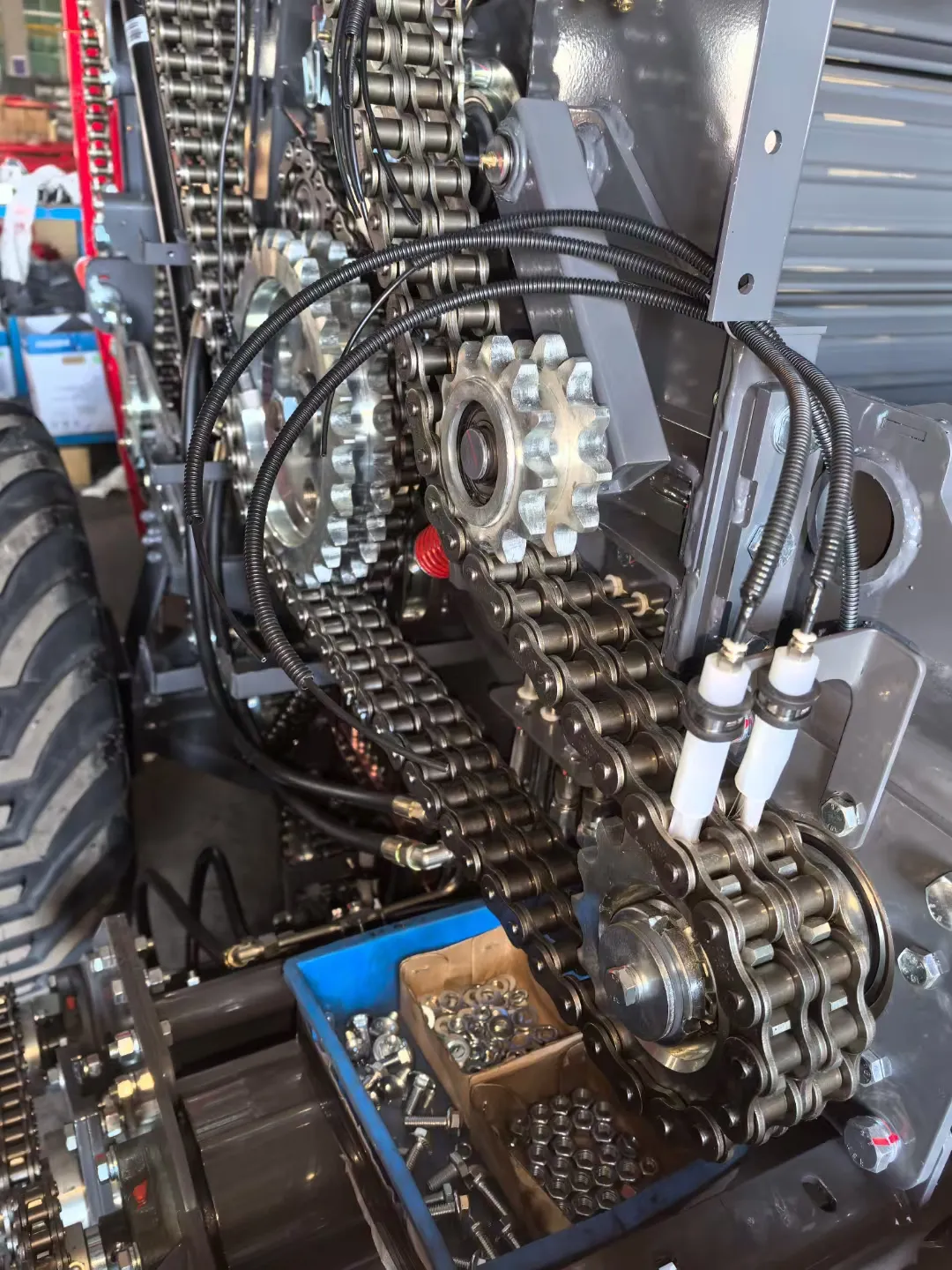
The machine's most distinctive mechanical feature is not its power range — it is the dual-stage feeding system. Where most round balers at this weight class use a single feeding mechanism, the 9YQ-1950 pairs a shift fork feeding mechanism with a screw continuous feeding mechanism operating in sequence. The fork stage receives crop directly from the 1950 mm spring-tooth pickup and breaks it into metered portions before it reaches the screw. The screw then delivers a smooth, uninterrupted flow into the Φ1000 mm roll drum compression chamber. This two-step approach handles surge conditions, high-moisture clumping, and variable windrow density in ways that either mechanism alone cannot manage — the practical result is fewer blockage events and more consistent chamber filling across diverse crop conditions. For a closer look at how pickup and feeding problems affect bale quality, our guide covers common causes and solutions.
At 2385 kg, the 9YQ-1950 is a genuinely transportable machine — substantially lighter than the 9YG-2.2 and compact enough for regular movement between properties or paddocks on a standard farm trailer. Australia Ever-power Forage Balers Co., Ltd. supplies this machine direct from Charlton Industrial Area, with Australian spare parts stock for the dual-stage feeder system that makes it unique in this category.
Complete Technical Specifications
Full technical documentation and spare parts catalogue available on request — हमारी टीम से संपर्क करें.
The Feeding Blockage Problem — and Why Two Stages Solve What One Cannot
Ask any operator who has run a round baler through high-moisture silage crops what their most frequent field stoppage is, and the answer is almost always the same: feeder blockage. Not mechanical failure, not net-wrap mis-ties, not PTO problems — the moment when crop bunches at the feeder inlet and the machine stalls. The 9YQ-1950 was designed specifically to address this at the mechanical level rather than leaving it to operator ground-speed management.
🌿 Variable Windrow Density
Windrows are not uniform along their length. A thick section followed by a sparse section delivers a surge then a trickle to the feeder. A screw-only inlet stalls on the surge; a fork-only inlet feeds unevenly from the trickle. The dual-stage system handles both: the fork stage absorbs the surge, the screw stage compensates for the trickle. The chamber receives the same volume on every cycle regardless of what the pickup encountered on the pass.
💧 High-Moisture Clumping
Green ryegrass at 60–70% moisture, freshly cut lucerne, early-cut pasture — all of these clump on the pickup and arrive at the feeder inlet as a compacted mass rather than a loose flow. A screw-only feeder presented with this mass stalls. The fork stage breaks the clump before it reaches the screw, converting an unmanageable mass into a manageable stream. This is where the dual-stage advantage is most pronounced and most commercially significant.
🌾 Mixed Crop Types in One Day
Operations running the same machine through oaten hay in the morning and silage pasture in the afternoon encounter a complete change in crop density, moisture, and clumping behaviour between sessions. The dual-stage system adapts to both: the fork stage adjusts its effective clearing action to the material mass presented by the pickup, and the screw delivers consistently downstream regardless. No feeder reconfiguration between crops is required.
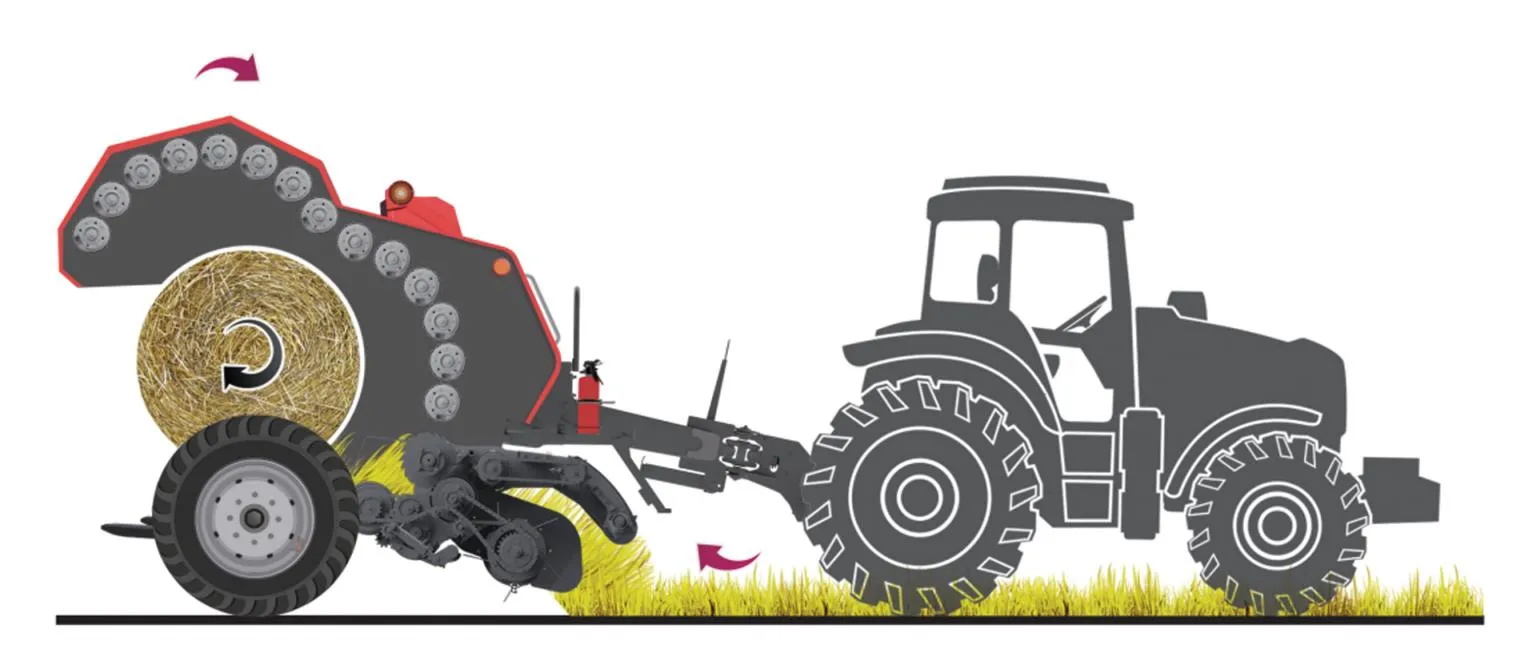
36.7 to 110.3 kW — A Power Range That Fits Your Operation As It Is, Not As It Should Be
The 9YQ-1950's power range is not a marketing figure — it is a genuine operational envelope that covers most Australian farm tractors from entry-level four-wheel-drive up to large high-horsepower machines. The significance is practical: this machine works with the tractor you already own, without requiring a separate procurement decision to unlock its capability.
Why the Wide Power Range Is a Farm Fleet Advantage
Most farms with mixed operations do not have a dedicated baling tractor. The machine that bales one month may be doing cultivation, spreading, or post-driving the next. When the primary tractor is committed elsewhere during a tight baling window, a narrow-power-range baler sits idle. The 9YQ-1950's 36.7–110.3 kW range means that almost any tractor available on a given day can run it productively — within the rated envelope and without operating outside the machine's design parameters.
18-Roller Roll Drum Chamber — Φ1000 mm Fixed Compression
The Φ1000 mm compression zone is formed by 18 Φ190 mm hardened steel rollers across a 1250 mm chamber width. Like the larger 9YG-2.2, the fixed-diameter geometry applies the same radial compression force throughout the full bale formation cycle — no compression variation from first material entry to net-wrap trigger. The Φ1000 mm diameter is somewhat smaller than the 9YG-2.2's Φ1220 mm, producing a lighter per-bale weight that suits a broader range of on-farm handling equipment and feedout systems.
The practical handling advantage of Φ1000 mm
A Φ1000 mm silage bale is meaningfully smaller and lighter than the Φ1220 mm bale from the 9YG-2.2. For farms using smaller telehandlers or front-end loaders for bale handling — rather than dedicated large-spec bale handlers — the Φ1000 mm format is more compatible with the equipment already on the property. Storage shed ceiling height, stack height safety, and transport stack configurations are all more manageable with a smaller bale diameter.
1950 mm Spring-Tooth Pickup — Hydraulic Height, Ground-Following Float
The 1950 mm spring-tooth reel captures windrows from 4–5 metre mowing equipment in a single pass without raking or merging. Spring-loaded tines follow ground surface variation without snapping on paddy field ridges, drainage swales, or uneven pasture surfaces. Hydraulic pickup height adjustment with float capability allows the operator to adapt reel height to changing conditions from the tractor cab — maintaining consistent crop capture without field stops for manual height changes.
9YQ-1950 vs 9YG-2.2 — Which Roll Drum Baler Fits Your Scale?
Where the 9YQ-1950 Delivers Its Clearest Advantage
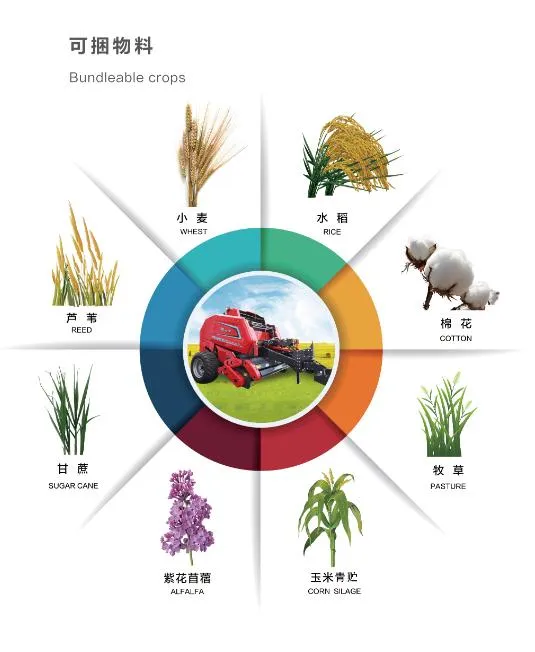
The 9YQ-1950's dual-stage feeding advantage is most pronounced where crop conditions vary most — across different moisture levels, different crop types, and different windrow profiles. These are the conditions that define mid-scale Australian silage and hay operations.
Ryegrass and Pasture Silage
High-moisture perennial ryegrass at 60–70% is the most demanding feeding condition for a round baler at this scale. The fork stage handles the clumped, sticky material from a wet pickup without the screw stall events that characterise single-mechanism machines in these conditions. The roll drum chamber maintains consistent compression through the high-moisture material that belt-drive alternatives manage variably.
Lucerne and Oaten Hay
At below 20% moisture, lucerne and oaten hay bale through the 9YQ-1950 without the clumping risk of silage crops. The dual-stage feeder remains advantageous for maintaining consistent chamber filling across variable-density dry hay windrows — the fork stage compensates for windrow taper and sparse sections that would produce density variation in the bale with a single-mechanism feeder.
Corn Silage at the Upper Power Range
Whole-plant corn at 60–70% moisture is the heaviest feeding application in this machine's envelope. A 100–110 hp tractor at the upper end of the rated range is the correct pairing for this crop. The fork stage's surge-buffering function is particularly valuable in corn silage, where chopped material comes off the header in uneven charges that would overwhelm a screw-only inlet at the same crop volume rate.
Mid-Scale Dairy Farms
Dairy farms needing consistent silage quality for winter feeding — but not at the output volumes that justify the 9YG-2.2's heavier investment — are the natural fit for the 9YQ-1950. The roll drum chamber's density uniformity supports consistent fermentation across the bale batch, which translates to more predictable daily milk production across the herd through the feeding period.
Sheep and Mixed Livestock Farms
Sheep farms and mixed livestock operations baling oaten hay and vetch for feed reserves through dry periods benefit from the 9YQ-1950's flexibility across crop types. The same machine handles oaten hay for dry-season reserves and pasture silage for early-cut nutritional quality, with the dual-stage feeder adapting to both without reconfiguration between applications.
Small Silage Contractors
Smaller contracting operations serving sheep farms, small dairy blocks, and mixed-enterprise clients benefit from the 9YQ-1950's compact transport dimensions (3200 mm length, 2385 kg) and its compatibility with a wide range of client farm tractors. The dual-stage feeder's robustness across crop types reduces the troubleshooting burden when moving between different farm contexts in a single contracting day.
Running the 9YQ-1950 Efficiently Across Crop Types and Power Configurations
The dual-stage feeder's strength — its adaptability across crop conditions — also means that getting the most from it requires actively using the right tractor for the right crop. These practices translate the machine's design flexibility into field-level output.
Match Tractor Power to the Day's Crop
Light dry hay at 50–70 hp. Heavy green silage at 90–110 hp. This active pairing is what the wide power range enables — and it should be used deliberately rather than defaulting to the same tractor regardless of crop conditions. Running a 50 hp tractor through heavy corn silage produces PTO speed drop under load, which reduces fork stage clearing speed and allows clumps to bypass the metering action and stall the screw. Match the tractor to the crop, and the dual-stage system performs at specification.
Inspect the Fork Stage at Each Fuel Stop in Wet Conditions
In high-moisture silage conditions — 60%+ crop moisture — material accumulates on the fork face faster than in dry hay applications. Sticky silage residue on the fork reducing its clearing action is the most common cause of reduced dual-stage performance during intensive green-silage runs. At each fuel stop, brief visual inspection of the fork face and the inlet to the screw stage confirms the fork is clearing effectively and allows early-stage residue removal before it builds to a level that affects feeder performance.
Pre-Season Roller Check — All 18
Before the first bale of each season, inspect all 18 compression rollers for bearing play, surface wear, and axial positioning across the 1250 mm chamber width. A roller with elevated bearing play creates a repeating soft zone in the bale at its angular position — detectable by running a hand around the ejected bale circumference. Catching and replacing a worn bearing pre-season takes an hour; diagnosing the same issue in the middle of peak silage season takes longer and costs the day's output.
Set Pickup Height at Every Field Change
Hydraulic height adjustment is provided for a reason — use it actively at each new field. For silage crops where soil contamination of the bale increases clostridial spoilage risk, correct pickup height is a direct silage quality input: too low and the tines drag soil into the feeder and into the bale. Too high in light windrows and fine-stemmed leaf material is left on the ground, reducing bale weight and nutritional density per bale produced.
Adjust Net Wrap for Crop Moisture Level
High-moisture silage bales need more net wrap loops than dry hay bales to maintain shape during cooling and transport to the wrapping site. Actively reset the wrap count between silage and hay applications rather than leaving the count fixed at a single setting. At scale — hundreds of bales per season — the difference between an appropriate wrap count and an excess wrap count represents a meaningful consumable cost, and insufficient wrap count risks bale slump that complicates film wrapping and storage stacking.
Grease All Points at Every Fuel Stop
The 9YQ-1950's dual-stage feeder introduces additional bearing points beyond the standard pickup-and-chamber layout — the fork stage pivot bearings and the screw feeder shaft bearings both require regular lubrication at the intervals specified in the maintenance schedule. Greasing at every refuelling stop rather than once per day maintains protection across all points simultaneously. In Australian summer silage conditions, afternoon heat accelerates grease breakdown at exposed fittings — waiting until the following morning to grease means several hours of under-lubricated operation at peak ambient temperature.
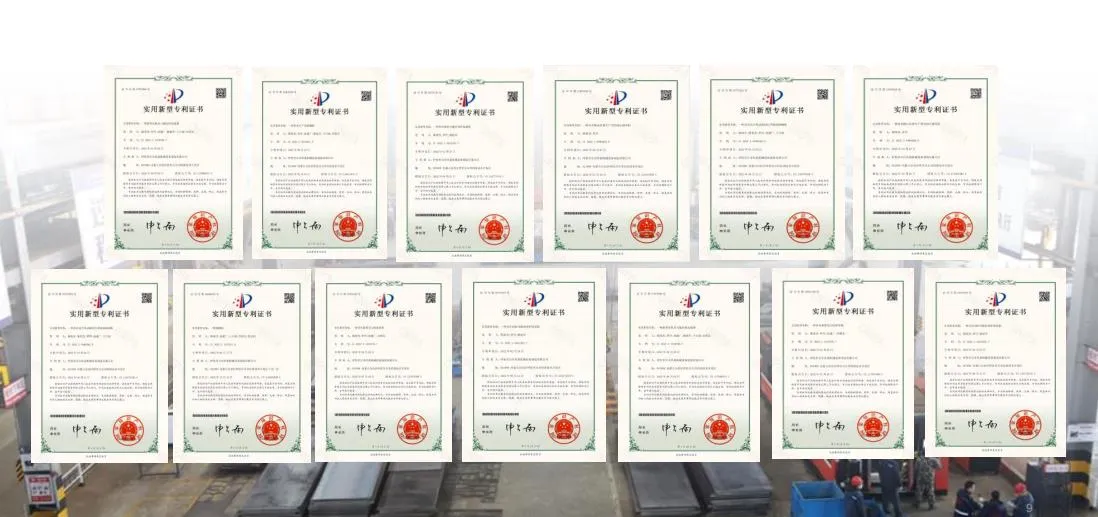
Dual-Stage Feeding Technology Supplied Direct — With Australian Parts Stock for the Components That Make It Unique
Australia Ever-power Forage Balers Co., Ltd., Charlton Industrial Area. Read more at foragebalers.com/about-us.
Direct Price — No Distributor Overhead
A dual-stage feeder combined with a roll drum chamber at this power range is a specification combination that commands a significant premium in European-brand distribution channels — the technology is recognised as superior, and the pricing reflects both engineering quality and multi-tier distribution margins. Ever-power's direct supply to Australia removes the distributor layer: the price you pay is the price of the machine, not the price of the machine plus the cost of distributing it through multiple intermediaries.
Australian Stock for Dual-Stage Feeder Parts
The shift fork components and screw feeder parts that define the 9YQ-1950's feeder design are stocked in Australia — not on international freight timelines. Spring pickup tines, fork pivot bearings, screw shaft components, roller bearings, and net-wrap mechanism parts are all held locally. The dual-stage feeder is the most mechanically distinctive element of this machine; having its parts available in Australia protects the seasonal continuity that the machine's performance advantage is built to deliver.
Setup Support for the Dual-Stage System
Our Australian team provides first-season guidance on fork clearance adjustment, screw timing, ground speed optimisation for specific crop and tractor combinations, and net wrap count settings for silage versus hay applications. The dual-stage feeder performs best when set up correctly for the crop — we support that setup rather than leaving it to trial and error. Reach us at [email protected] or through our contact form.
अक्सर पूछे जाने वाले प्रश्नों
Common questions from mixed-farm operators, small dairy producers, and contractors evaluating the 9YQ-1950.