
निर्यात के लिए टिमोथी घास की गांठें बनाना: एशियाई बाजारों के लिए प्रीमियम गांठों का उत्पादन
Boot stage timing, diurnal WSC management, export moisture specifications, and barn storage — the complete production guide for Japan and South Korea export markets.
Why Japan and South Korea Pay a Premium for Timothy Hay
Timothy grass (Phleum pratense) has occupied a unique position in the global hay trade for more than three decades: it is the only common forage grass that commands a consistent, significant price premium in Asian markets — typically 20 to 40% above equivalent-grade alfalfa and two to three times the value of oat or ryegrass hay at comparable nutritional specifications. Understanding why this premium exists is the starting point for any producer considering timothy for export, because the production decisions that deliver premium prices are entirely different from those that deliver volume.
The premium is not cultural preference in the way that certain foods carry regional loyalty without functional justification. It is biological and veterinary. Timothy’s combination of moderate crude protein (8 to 13% depending on cutting stage), high neutral detergent fibre (30 to 38%), low calcium, and very low non-structural carbohydrates makes it the most appropriate roughage source for two species that dominate Asian premium hay consumption: thoroughbred and sport horses managed in a stable environment, and companion rabbits in urban households where owners follow veterinary dietary guidance. Both species have physiological constraints that make the alternatives — alfalfa, clover, ryegrass — problematic, and timothy specifically avoids each of those problems.
For the horse market: high-calcium hays fed long-term to growing horses increase the risk of developmental orthopaedic disease. Timothy’s calcium-to-phosphorus ratio of approximately 1.5:1 is safe across all life stages. For the rabbit market: high-starch or high-sugar hays can cause caecal dysbiosis and obesity in companion rabbits. Timothy’s low NSC and the distinct seed head texture that rabbits use for dental wear makes it irreplaceable in premium rabbit husbandry. Japanese and Korean importers are not paying for perception — they are paying for a specific biological fit that no other common hay crop delivers as consistently.
The supply side of the equation matters equally. British Columbia, Washington State, Oregon, and Alberta are the world’s primary timothy export production regions. These areas combine the right summer drying climate, established export logistics infrastructure, and the agronomic expertise needed to consistently produce boot-stage hay at the quality specifications Asian markets demand. Australian producers in the New England tablelands of NSW and parts of Victoria’s high country supply a supplementary volume that has grown as North American supply has become constrained by drought. Our article on grass silage baling best practices covers complementary topics for producers running mixed hay and silage programmes.

Section 1: The Harvest Stage Decision — Boot Stage vs. Early Heading
1.1 Boot Stage: The Premium Export Window
The boot stage in timothy is defined as the period when the seed head is fully developed inside the leaf sheath but has not yet emerged at the leaf tip. Visually, the flag leaf is slightly swollen at the base where the head is enclosed, and the plant has completed its primary elongation. This stage lasts 3 to 7 days in most growing environments — unusually narrow for a field crop — and requires daily paddock monitoring once rapid growth begins in early summer.
At boot stage, timothy has its highest leaf-to-stem ratio, maximum chlorophyll content (translating to the bright green colour Japanese graders assess visually), peak water-soluble carbohydrate accumulation, and no visible seed material that would reduce palatability for rabbits or cause seed-head separation issues in bales. Crude protein at boot stage runs 10 to 14% — adequate for horses and rabbits while remaining below the level that causes urinary problems in rabbits (above 16 to 18%). This is the product that Japanese premium importers specify, that rabbit food manufacturers source for bagged retail packaging, and that racing stable managers request by name.
1.2 Cutting Stage Comparison
| Stage | कच्चा प्रोटीन | एनडीएफ | Visual | Export Grade | बाज़ार |
|---|---|---|---|---|---|
| Boot stage | 10–14% | 28–33% | Bright green, no heads | Japan A-grade | Racing stables, rabbit retail |
| Early heading | 8–11% | 32–36% | Green, heads emerging | Korea standard | General horse market |
| Mid heading | 7–9% | 35–39% | Yellow-green, heads visible | Domestic only | Domestic horse hay |
| Full heading+ | <7% | >40% | Yellow, seed-heavy | Reject | Not suitable for export |
1.3 Diurnal Sugar Cycle: Why Afternoon Cutting Matters
Water-soluble carbohydrate (WSC) content in timothy — the primary driver of both palatability and green colour retention during curing — follows a daily cycle driven by photosynthesis. After a full day of strong sunshine, WSC concentration in the leaf tissue peaks in the afternoon between 1:00 PM and 5:00 PM as the previous 8 to 10 hours of photosynthesis have produced and accumulated sugars. Cutting at this point captures the maximum WSC value in the harvested material.
Morning cuts on overcast days produce hay with 20 to 35% lower WSC than afternoon cuts on sunny days from the same paddock at the same growth stage. This difference is visible to the eye by the time the hay has cured: afternoon-cut, sunny-day timothy retains a vibrant green colour through curing because the high sugar content supports the biochemical pathways that maintain chlorophyll. Morning-cut, overcast timothy yellows noticeably during curing as lower WSC accelerates chlorophyll breakdown. Japanese export graders sort on visual colour assessment at the point of container inspection — colour is not cosmetic, it is a proxy for WSC and harvest management quality.
Section 2: Drying, Handling, and the Leaf Shatter Problem
2.1 Timothy’s Specific Drying Challenge
Timothy dries in 36 to 48 hours from afternoon cutting to safe baling moisture in British Columbia and Washington State summer conditions — somewhat slower than alfalfa but faster than thick-stemmed grasses. The specific challenge with timothy is not drying speed but the fragility of the leaf attachment to the stem once the hay reaches below 14% moisture. Timothy leaves attach more loosely to the stem than alfalfa leaflets or Bermuda grass blades, and they shatter and detach on mechanical contact with rake tines, tedder fingers, and baler pickup tines at low moisture levels.
The operational implication is strict mechanical pass limitation: one mower-conditioner pass at cutting, one tedder pass within 2 to 3 hours of cutting in overcast or humid conditions (optional in strong drying conditions), one raking pass to form the baling windrow, then baling. Every additional mechanical pass after the hay has cured below 16% moisture loses 3 to 8% of the leaf fraction from the bale. Leaf loss is not just a yield penalty — it disproportionately removes the highest-quality component of timothy hay because the leaves carry a much higher protein and WSC concentration than the stems.
2.2 Export-Grade Moisture Specification
Japanese importers specify a maximum bale moisture of 14% for container shipment of premium-grade timothy. Korean importers accept up to 16% for standard-grade product. These specifications exist because the transit from origin port to destination port takes 12 to 21 days in standard container shipping, during which the sealed container reaches ambient temperatures of 25 to 35°C. Hay baled at 16% or above in this temperature range produces microbial respiration heat within the bale that generates visible mould on the interior layers by the time the container is opened at destination inspection.
Experienced British Columbia export producers load containers at 12 to 13% moisture — deliberately targeting 1 to 2 percentage points below the specification limit — to accommodate the moisture equilibration that occurs inside sealed containers during transit. Loading at exactly 14% results in arrival moisture of 15 to 16% in warm-season shipments, which triggers mould assessment at inspection. This 2-point safety margin is not conservative excess — it is the documented practice of producers with established relationships with Japanese importers.
| विनिर्देश | Japan Premium | Korea Standard | Non-Compliance Consequence |
|---|---|---|---|
| नमी | <14% | <16% | Mould at arrival — full container rejection |
| रंग | Bright green, uniform | Green acceptable | Grade downgrade, price penalty |
| Dust content | Zero detectable | न्यूनतम | Quarantine hold, phytosanitary issue |
| Mould (visible) | शून्य सहिष्णुता | ट्रेस स्वीकार्य है | Full lot rejection, relationship damage |
| Cutting stage | Boot stage only | जल्दी शीर्षक के लिए बूट करें | Grade penalty, price reduction |
| बाह्य पदार्थ | None detectable | न्यूनतम | Quarantine hold at port |
2.3 Storage Before Shipping: Why Barn Storage Is Not Optional
Export-grade timothy stored outdoors, even under tarps, is incompatible with the colour and dust specifications of Asian premium buyers. A single morning dew event re-wets the bale surface sufficiently to trigger chlorophyll oxidation and a yellowing reaction on the outer layer within 24 hours. Two or three dew events over a week’s outdoor storage — normal in British Columbia summers — produce surface yellowing and dust contamination that is visible to graders and triggers downgrade in Japanese inspection.
The standard practice among established BC and Washington State export producers is to move timothy bales into a ventilated covered shed within 24 to 48 hours of baling, arrange in single-layer rows with 20 cm air circulation space between rows, and retest moisture with a handheld probe before container loading. Container loading occurs at 12 to 13% moisture, measured from multiple probe points in each sampled bale. Bales from the same lot that test above 13.5% are held back for the domestic market rather than loaded for export.
Section 3: Equipment and Production System for Export Timothy
3.1 Round Bale vs. Small Square Bale for Export
The Japanese and Korean timothy export markets use two distinct bale formats for different buyer segments. Small square bales (15 to 20 kg, approximately 35 × 45 × 90 cm) dominate the retail distribution channel: pet supply shops, horse accessory retailers, and the bagged rabbit hay category that has become a significant product category in Japanese supermarkets and online retail. These small bales are compressed, retied, and repackaged by Japanese importers for retail sale.
Large round bales (1.0 to 1.25 m diameter, 200 to 350 kg per bale) are accepted and increasingly common in the wholesale channel serving large equine facilities: racing stables with 20 to 100+ horses, breeding operations, and equine rehabilitation centres. These buyers have mechanical feedout equipment — round bale feeders, TMR mixers, or fork handlers — and prefer round bales for their lower labour requirement per tonne of feed delivered. The price differential between small square and round bale export timothy has narrowed as round bale demand from large facilities has increased, and the labour saving in production (no small-bale tying, no manual loading) makes round bale production economically attractive for high-volume export operations.
3.2 Baler Configuration for Export-Grade Timothy
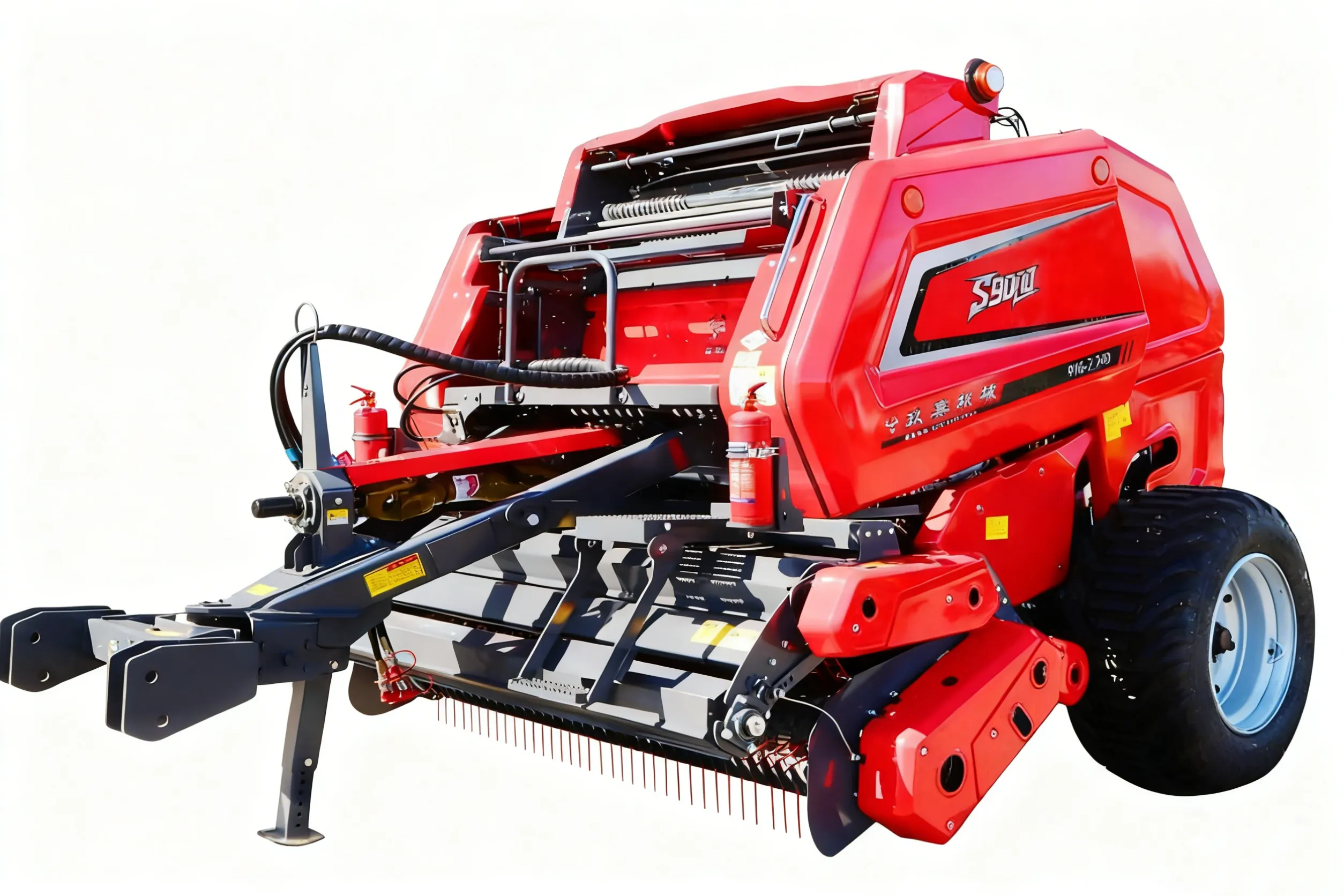
Export-grade timothy round bales require consistent diameter and density across a lot because shipping container loading is engineered to fit a specific number of uniformly sized bales. Bales that vary by more than 5 cm in diameter create inefficient loading arrangements that waste container space (reducing tonnes per container) and can cause load shifting during transit that damages bale integrity. A variable-chamber baler with a well-calibrated density controller produces more consistent bale diameter across variable windrow density than a fixed-chamber machine.
The 9YG-1.25A परिवर्तनीय कक्षीय गोल बेलर handles boot-stage timothy at the forward speed and chamber pressure settings appropriate for export-grade production. For larger-volume export operations producing 500+ tonnes per season, the 9YG-2.24D S9000 बियॉन्ड राउंड बेलर provides the higher throughput rate needed for tight weather windows in the narrow boot-stage harvest period.
Section 4: Timothy Production in Australia for Asian Export
Australian timothy production for export to Japan and South Korea has grown steadily as a supplement to North American supply. The New England tablelands of New South Wales (around Armidale, Walcha, and Glen Innes) and parts of Victoria’s Monaro and high country produce quality boot-stage timothy on well-managed ryegrass-free paddocks, typically from a first cut in October to November and a possible second cut in January to February.
Logistical advantages of Australian supply for Asian markets include a transit time of 7 to 14 days from Brisbane or Sydney to Japanese and Korean ports — significantly shorter than the 12 to 21 days from North American ports. This shorter transit reduces the moisture equilibration risk and provides Japanese buyers with more predictable arrival quality. Phytosanitary protocols for Australian hay export to Japan and Korea are well-established and consistently cleared at ports of entry.
Australian producers targeting the export timothy market need to achieve the same specifications as North American counterparts: boot stage cutting, post-afternoon WSC peak, barn or covered storage, 12 to 13% moisture at loading. The critical additional challenge in Australia is the narrower and less consistent summer drying window in high-rainfall tableland environments where afternoon cloud cover is common — making mower-conditioner use and active drying management more critical than in the drier North American production regions.
Common Mistakes in Export Timothy Production
The boot stage window for premium export timothy is 3 to 7 days wide. A paddock that is at boot stage on Monday will have visibly emerging heads by Thursday in active growing conditions. Daily monitoring is not optional during this period — it is the production management discipline that separates consistent premium export production from occasional-premium output. Set calendar reminders from the moment first-cut regrowth resumes after spring establishment.
Container mould from high-moisture timothy is the most documented quality failure in the Asian export market. It is not a risk that some consignments avoid and others encounter — it is a predictable outcome of loading hay above specification moisture into a sealed container in warm-season shipping conditions. Testing moisture before every container load is the minimum standard of care for export production.
Timothy leaf shatter below 16% moisture is severe. A single rake pass at 12% moisture removes a visible quantity of leaf from the windrow — this material is lost to the ground and not recovered in the bale. Every mechanical pass after the critical moisture threshold costs both yield and quality. Plan mechanical operations to complete before the hay reaches this stage.
Even short-term outdoor storage of export-grade timothy exposes bales to dew, light rain, and humidity re-wetting that causes chlorophyll yellowing and surface dust formation. Japanese graders sample from the bale interior, but the surface condition is the first assessment point — consistent yellowing on the exterior raises questions about interior quality even when the core is acceptable. Barn storage from baling to container loading is the non-negotiable standard for export production.
अक्सर पूछे जाने वाले प्रश्नों
Discuss Your Timothy Export Programme With Our Team
Tell us your production area, target volume, and export market destination — we’ll specify the right baler configuration for premium-grade export timothy hay production.