Ukraine Grows 10 Million Tonnes of Sunflower Per Year — and Burns Most of the Stalks
Why sunflower stalk is harder to bale than any cereal residue, what markets justify the effort, and how operations in Ukraine, Russia, and northwest China are turning thick woody stems into biomass value.
Sunflower Stalks: The Problem Behind Europe’s Biggest Oilseed Crop
Sunflower (Helianthus annuus) is the dominant oilseed crop of the Black Sea agricultural belt. Ukraine harvests 10 to 12 million tonnes of sunflower seed annually on 6 to 7 million hectares — making it the world’s largest sunflower producer ahead of Russia (9 to 10 million tonnes) and Argentina (3 to 4 million tonnes). China’s Inner Mongolia, Xinjiang, and Gansu provinces together produce 2 to 3 million tonnes. After combine harvest of the seed head, the sunflower plant leaves behind a stalk of 1.5 to 2.5 m height and 20 to 40 mm stem diameter — one of the thickest and most woody crop residues in commercial agriculture.
Sunflower stalks have historically been the crop residue that every agronomist recommends managing but that no one has successfully baled at scale. The combination of extreme stem thickness, high lignin content (20 to 28% of dry matter), pith structure that resists compression, and the hollow internodal segments that collapse under baler chamber pressure creates a material that standard round balers cannot handle without pre-shredding and that even pre-shredded presents genuine baling challenges. The default management is field burning — still widespread in Ukraine and Russia despite legal prohibitions — or mechanical incorporation with heavy-duty stem choppers, which is slow, expensive, and associated with Sclerotinia and Phoma disease carryover in soils.
This guide covers why sunflower stalk baling is worth the additional management effort, what pre-processing is essential, which market channels justify the baling cost in the context of current Ukrainian, Russian, and Chinese biomass and roughage markets, and what equipment configurations handle the material effectively. For context on how biomass baling economics compare across different residue types, our overview of silage baler ROI — when owning pays off vs hiring covers the capital investment decision relevant to residue baling operations.

Why Sunflower Stalk Cannot Be Directly Baled
Stem Diameter and Pith Collapse
Sunflower main stems at harvest carry diameters of 25 to 45 mm — significantly larger than corn stalks (20 to 30 mm) and an order of magnitude larger than grass or cereal straw. The internal pith structure of the sunflower stem is spongy rather than fibrous, and collapses under baler chamber pressure in a way that produces very low bale density — below 80 kg DM/m³ in most attempts at direct whole-stem baling. At this density, a standard 1.25 m round bale weighs only 80 to 120 kg — economically unacceptable for transport and far too porous for any commercial storage application.
The branching structure of the sunflower plant adds to the direct-baling problem: the lateral branches (20 to 35 cm long, 5 to 12 mm diameter) extend outward from the main stem and create a structure that catches and tangles in pickup tines, forms irregular masses in the chamber rather than layering uniformly, and produces asymmetric bales with poor shape retention. Pre-shredding is non-negotiable for sunflower stalk baling — not an optional efficiency improvement but a prerequisite for any commercially viable bale.
| Pre-Shred Setting | Fragment Size | تراکم عدل | Chamber Behaviour | Best Market |
|---|---|---|---|---|
| None (intact stalk) | 1.5–2.5 m | <80 kg DM/m³ | Tangling, plugging | Not viable |
| Heavy shred | 80–150 mm | 100–130 kg DM/m³ | Occasional plugging | Roughage only |
| Medium shred ✓ | 40–80 mm | 130–170 kg DM/m³ | Good flow | Biomass + roughage |
| Fine shred | 15–40 mm | 160–200 kg DM/m³ | عالی | Pellet feedstock |
Market Applications and Value Assessment
Market 1: Biomass Combustion
Sunflower stalks have a calorific value of 15 to 17 MJ/kg dry matter and ash content of 5 to 9% (higher than cereal straws due to the significant mineral content of sunflower stalk tissue). The higher ash content is a disadvantage for dedicated biomass combustion systems with low ash tolerance, but is acceptable for industrial boilers and biomass co-firing operations that routinely handle agricultural biomass at 6 to 10% ash. Ukrainian biomass pellet plants — expanding rapidly since 2018 under the EU Renewable Energy Directive — are the primary commercial outlet for fine-shredded sunflower stalk in western Ukraine.
Market 2: Livestock Roughage
Medium-shredded sunflower stalk (40 to 80 mm) has crude protein of 4 to 7% DM, NDF of 65 to 75%, and TDN of 40 to 50% — nutritional values comparable to wheat straw or corn stover. As a maintenance roughage for dry beef cows and sheep at 20 to 35% of total DMI alongside a protein and energy supplement, it is commercially functional in the beef and sheep operations of northern Kazakhstan and southern Russia where high-quality roughage alternatives are scarce. Palatability is lower than for cereal straws — cattle typically show a preference adaptation period of 5 to 10 days when first introduced to sunflower stalk roughage. Adding molasses at 2 to 3% of ration DM in the adaptation period significantly improves initial intake.
Market 3: Mushroom Cultivation Substrate
Sunflower stalk, particularly the pith fraction after shredding, has been used as a component of oyster mushroom substrate in China’s mushroom-producing provinces. The high cellulose content (38 to 44% DM) and moderate lignin make sunflower shiv a serviceable substrate filler when mixed with wheat straw or cottonseed hull. This is a niche application in Ukraine and northwestern China but one that commands higher prices than roughage markets for the same volume of pre-shredded material.
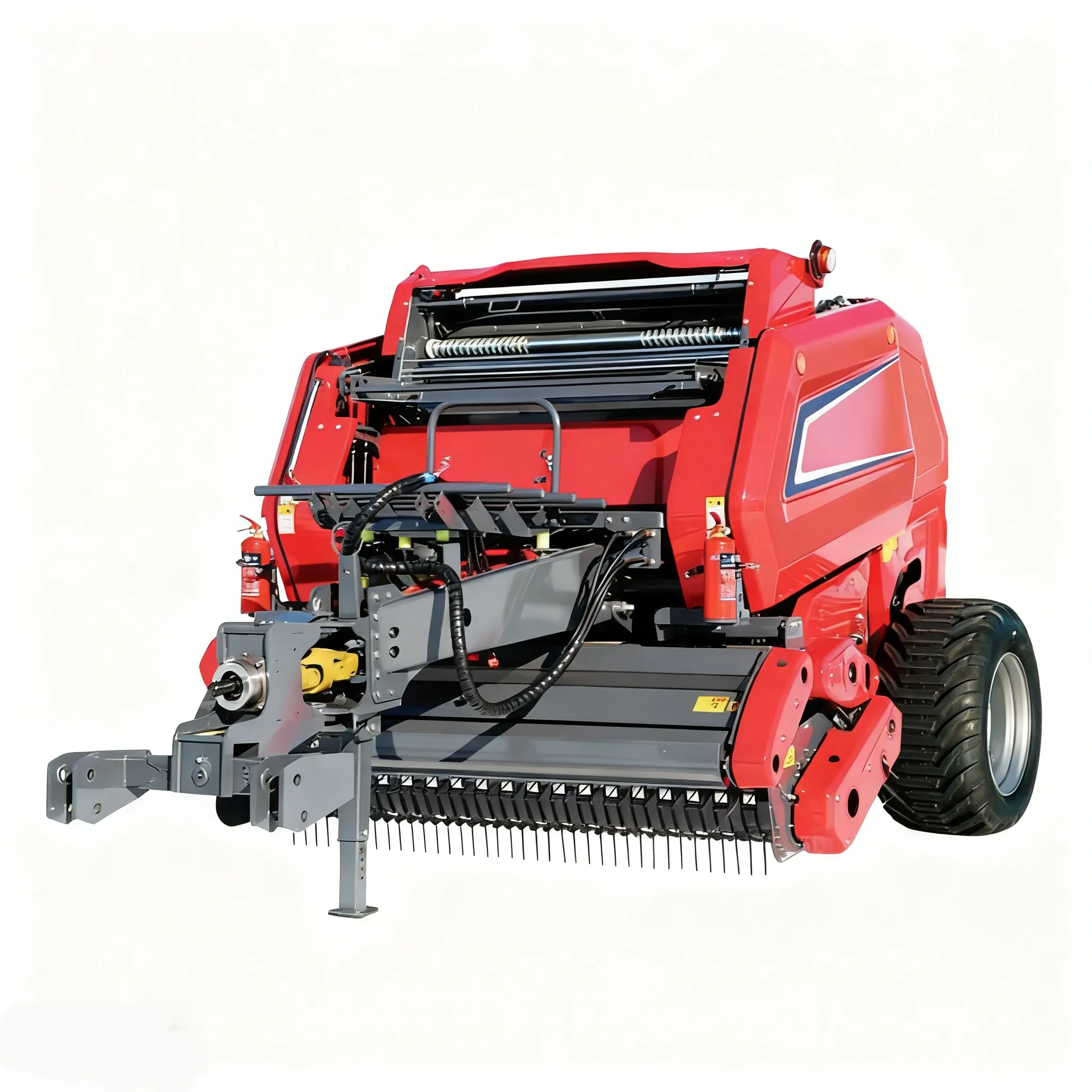
The دستگاه بستهبندی گرد با محفظه متغیر 9YG-1.25A handles medium-shredded sunflower stalk (40 to 80 mm) in standard round bale format for both roughage and biomass markets. For fine-shredded material targeted at pellet feedstock, the variable chamber’s pressure control achieves the 160 to 200 kg DM/m³ bale density that pellet plant conveyor systems specify.
Operational Management in Ukraine and Northwestern China
The Ukrainian Harvest Window
Ukrainian sunflower harvest runs from late August through October across the steppe zone. Stalk moisture at harvest is typically 20 to 35% in the southern steppe (Kherson, Mykolaiv, Odesa oblasts) and 28 to 45% in the northern forest-steppe. Allowing 5 to 10 days of natural field drying after combine harvest reduces stalk moisture to 15 to 22% — suitable for dry baling without additional management. Pre-shredding within 3 to 5 days of harvest produces the most efficient result: the stalks are still moist enough to fragment cleanly without excessive dust generation, but below the moisture threshold where fresh stalk poses mould risk after baling.
Disease Management Consideration
Sclerotinia stem rot, Phoma stem canker, and Botrytis head rot are the primary sunflower diseases that overwinter in stalk material. Baling and removing stalks from the field — rather than chopping and incorporating — reduces the inoculum load for subsequent season’s crops on the same field. This disease management benefit is increasingly recognised by Ukrainian agronomists as a secondary justification for baling beyond the direct commercial value of the baled material.
اشتباهات رایج
Intact sunflower stalks at 1.5 to 2.5 m height and 30 to 45 mm stem diameter cannot be baled with any standard round baler. The result is chamber plugging within the first few metres of windrow, pickup tine damage from the rigid branching structure, and bale shapes that bear no resemblance to the cylindrical format required for handling and storage. Pre-shredding is the non-negotiable first step.
Pre-shredded sunflower stalk at above 22% moisture in a sealed round bale heats to 50 to 65°C within 48 to 72 hours as microbial respiration consumes the damp pith material. This heating causes bale deformation, film failure (if wrapped), and mould development within 3 to 4 weeks. Dry to below 18% before baling — the arid to semi-arid conditions of southern Ukraine and northwestern China make this achievable within 5 to 8 days of harvest in most years.
Sunflower stalks at 30 to 45 mm diameter and high lignin content are severely hard on shredder hammers, blades, and bearings. Grass-rated flail mowers and light-duty shredders rated for corn straw or wheat straw suffer accelerated wear or catastrophic blade failure in standing sunflower. Specify a heavy-duty sunflower stalk shredder with hardened alloy hammers and reinforced bearings before committing to commercial-scale sunflower stalk baling.
Combine sunflower headers leave varying quantities of shattered disk head material (woody receptacle tissue) in the windrow alongside the stalks. This disk material is denser and more abrasive than stalk shreds and can accumulate in bale cores, raising ash content and abrasive wear on downstream pellet mill equipment. Where feasible, set the header stubble height high enough to leave most disk head material on the combine harvest path rather than incorporating it into the stalk windrow.
سوالات متداول

Discuss Your Sunflower Stalk Baling Programme
Tell us your production area, shredder availability, and target market — we’ll specify the right baler configuration for commercial sunflower stalk residue management.