80 Million Hectares of Cotton Fields — and the Residue Nobody Has Figured Out Yet
Why cotton stalk is the hardest common crop residue to bale, what markets justify the effort, and how operations in Xinjiang, India, and Texas are turning a disposal problem into biomass value.
Cotton Stalk: A Difficult Material With Real Commercial Potential
Cotton (Gossypium hirsutum y G. arboreum) is grown on approximately 33 million hectares globally, concentrated in China’s Xinjiang Uyghur Autonomous Region, the Indo-Gangetic plain, Pakistan’s Punjab, the US states of Texas and the Deep South, and Brazil’s Mato Grosso. After cotton fibre harvest — whether by machine in Xinjiang and the USA or by hand in India and Pakistan — the standing cotton plant residue presents one of the most challenging crop disposal problems in commercial agriculture.
Cotton stalks are thick, woody, and densely branched — nothing like the thin, flexible stems of grass or cereal straw. Mature cotton plants at harvest stand 0.8 to 1.4 m tall with main stems of 15 to 25 mm diameter and branching structures that reach 60 to 80 cm in width. The material is heavily lignified, making it resistant to mechanical processing, and the waxy cuticle on the stems resists moisture absorption and evaporation. In Xinjiang — where machine picking is standard and the harvest season compresses into 6 to 8 weeks in September and October — the volume of stalk generated per hectare is 2 to 4 tonnes dry matter, and the logistical pressure to clear fields for winter preparation makes residue management one of the most acute seasonal challenges in the region’s farming calendar.
The traditional solution — shredding and soil incorporation — works agronomically but is expensive (requiring dedicated shredder equipment with heavy-duty blades rated for woody material), slow, and increasingly questioned on plant disease grounds (Verticillium wilt, a major cotton disease pathogen, overwinters in incorporated stalk material). Open-field burning was widely practised until China’s 2014 national prohibition, and enforcement in Xinjiang specifically has tightened significantly since 2018 with drone monitoring during the post-harvest period. For context on how baling converts difficult crop residues into commercial products, our article on what silage is and how it differs from hay covers the preservation options relevant to woody residue baling.

Why Cotton Stalks Cannot Be Directly Baled
The Structural Problem
A standard round baler pickup is designed for material with a maximum stem diameter of approximately 8 to 12 mm and a flexible, non-rigid structure that allows the crop to fold and compress as it enters the bale chamber. Intact cotton stalks at 20 to 25 mm diameter with dense branching fail this requirement comprehensively: the rigid woody stems puncture pickup tines rather than bending around them, the branching structure causes tangling that jams the feed mechanism, and the resulting low-density bale has such poor compaction that anaerobic conditions cannot be achieved for fermentation and weathering resistance is negligible.
Pre-shredding — either with a dedicated cotton stalk shredder (棉花秸秆粉碎机, a common equipment category in Xinjiang’s agricultural machinery market) or with a heavy-duty flail mower — reduces cotton stalks to 30 to 80 mm fragments before the round baler operates. Pre-shredded cotton stalk at 50 to 80 mm particle size enters the baler chamber without plugging, achieves bale density of 120 to 160 kg DM/m³, and produces a structurally stable bale suitable for transport and storage. This two-step process — shred then bale — adds cost and an additional equipment pass to the operation, but it is the only reliable method for cotton stalk baling at commercial scale.
| Pre-Shred Length | Pickup Suitability | Densidad de pacas | Best Application |
|---|---|---|---|
| Intact stalks (no shred) | ❌ Poor — plugging | Muy bajo | Not recommended |
| 80–120 mm fragments | Moderado | Low-Medium | Solo empacado de emergencia |
| 40–80 mm fragments ✓ | Bien | Medio | Commercial roughage baling |
| 20–40 mm fragments | Excelente | Alto | Biomass pellet feedstock |
| <20 mm (ground) | Excelente | Muy alto | Pellet plant delivery |
Three Market Channels and Their Specifications
Market 1: Livestock Roughage
Pre-shredded cotton stalk at 40 to 80 mm particle length has crude protein of 5 to 8% DM and NDF of 65 to 75% — nutritional values similar to corn stover or wheat straw. The key difference from other straws is the higher lignin content (18 to 24% of NDF fraction in cotton stalk versus 8 to 12% in wheat straw), which reduces the rumen-accessible fibre fraction. Cotton stalk is best used as a structural roughage at 15 to 25% of total DMI for beef cattle, not as a primary roughage at high inclusion rates where its low digestibility would cause significant intake depression.
Important animal health note: cotton plants contain gossypol, a toxic phenolic compound concentrated in the seed but also present in the stalk and leaf tissue at lower concentrations. Gossypol in cotton stalk roughage is at levels generally below the acute toxicity threshold for ruminants, but high-inclusion feeding (above 35% of DMI) over extended periods has been associated with chronic gossypol accumulation in some studies. Limit cotton stalk inclusion to 20 to 25% of total DMI for all ruminant classes, and avoid feeding to breeding bulls, pregnant animals in first trimester, and young calves where gossypol sensitivity is higher.
Market 2: Biomass Energy
Cotton stalk has a calorific value of 14 to 17 MJ/kg dry matter — comparable to wood chip and significantly above cereal straws. This high energy density (relative to its low ash content of 3 to 5% DM, compared to 6 to 8% for cereal straws) makes cotton stalk one of the better agricultural biomass feedstocks for dedicated combustion. In Xinjiang, several biomass power plants have established contracted supply relationships with cotton farming cooperatives for pre-shredded and baled cotton stalk, providing a price-stable outlet during the 6 to 8 week harvest window.
Market 3: Industrial Applications
Cotton stalk contains approximately 35 to 42% cellulose and 25 to 30% hemicellulose — fibre fractions suitable for paper and particle board production. Several pulping operations in Xinjiang and India’s Gujarat state process cotton stalk bales as a partial substitute for wood fibre in kraft pulp production. The baled format is preferred over loose material for transport logistics: a standard 1.25 m round bale of shredded cotton stalk at 15% moisture weighs 180 to 280 kg and loads efficiently onto flat-bed trucks for mill delivery.
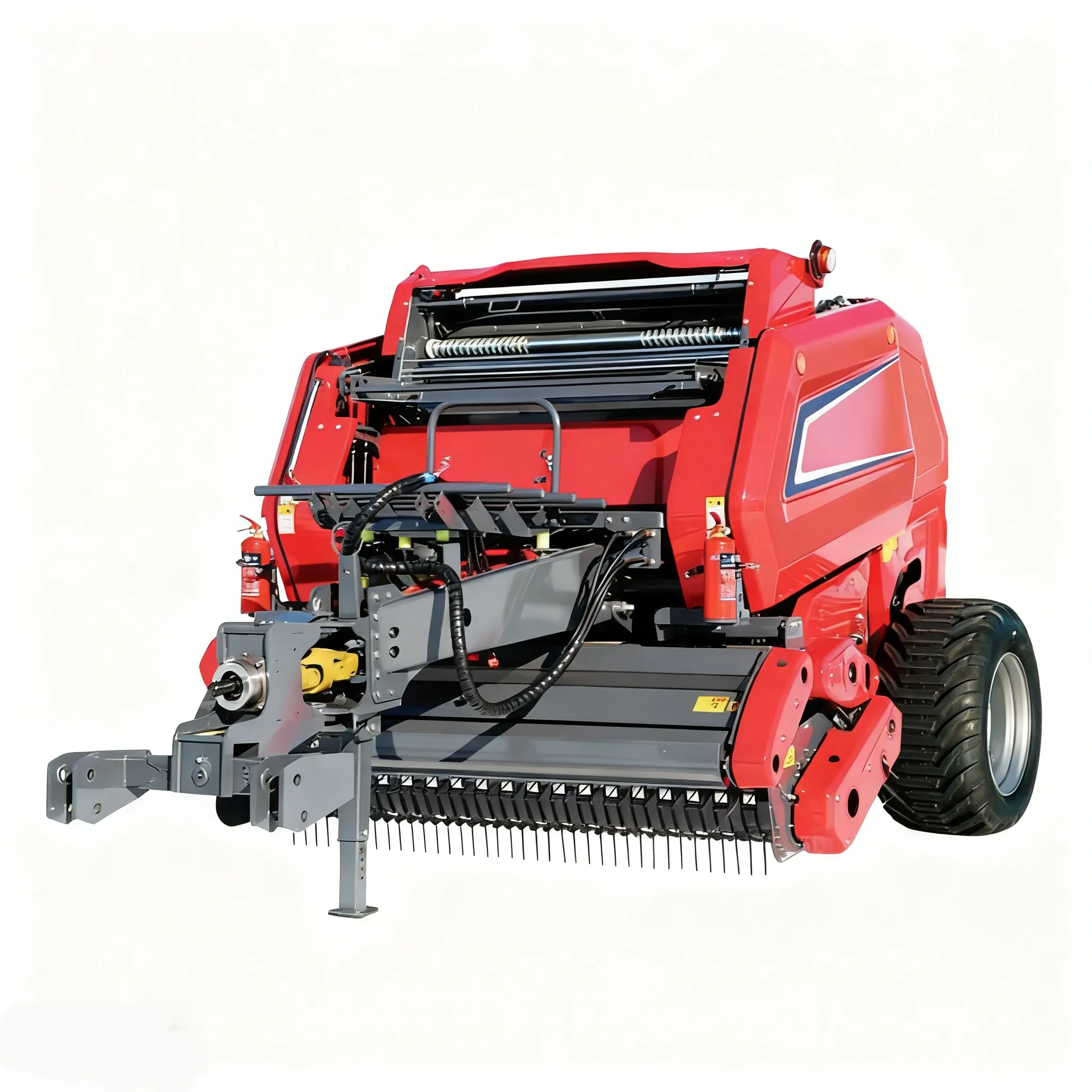
El Empacadora redonda de cámara variable 9YG-1.25A handles pre-shredded cotton stalk at 40 to 80 mm particle size without modification — the variable chamber accommodates the density variation between light surface layers and denser core material in cotton stalk windrows. For biomass operations requiring larger bale formats (1.5 m+) for power plant automated handling systems, contact EverPower for specifications on higher-capacity equipment configurations.
Operational Management: Shredding, Moisture, and Timing in Xinjiang
The 6-Week Xinjiang Window
Xinjiang cotton harvest is compressed into late September through October — a 6 to 8 week window that is among the most operationally intensive periods in any major agricultural region globally. Machine picking typically begins when fibre has opened on 60 to 70% of bolls, and residue management must follow within 2 to 4 weeks of each field’s harvest to allow winter preparation. This time pressure, combined with the additional pre-shredding step required for cotton stalk baling, means that operations producing more than 200 bales per season need to plan a dedicated shredder-baler-transport chain operating in parallel rather than sequentially.
Moisture and Storage
Cotton stalks at harvest in Xinjiang’s dry continental climate typically carry only 18 to 28% moisture — drier than most other crop residues at harvest due to the arid conditions and the maturity of the plant at cotton picking time. This relatively low harvest moisture means that pre-shredded cotton stalk can often be baled without additional field drying, reaching the 12 to 18% target moisture range within 2 to 3 days of shredding in Xinjiang’s dry October conditions. Bales stored outdoors at 12 to 16% moisture under net wrap on a compacted surface maintain acceptable quality for 12 to 18 months in Xinjiang’s low-humidity climate.
Errores comunes
Intact cotton stalks are physically incompatible with standard round baler pickups. Attempting to bale un-shredded cotton stalks results in jammed chambers, damaged pickup tines, broken feed augers, and — at best — poorly formed low-density bales with no commercial value. Pre-shredding to 40 to 80 mm is a non-negotiable prerequisite, not an optional step.
Gossypol in cotton stalk tissue, while at sub-acute-toxic concentrations, accumulates with repeated exposure. Breeding bulls are the most sensitive class — gossypol concentrations associated with sperm abnormalities and reduced fertility have been documented at cotton stalk inclusions above 30% of DMI over 60+ day feeding periods. Limit to 20% of DMI for all classes; avoid entirely for breeding bulls and first-trimester pregnant cows.
Verticillium wilt and Fusarium wilt pathogens can survive in cotton stalk material. Baling and removing stalks from the field for sale to distant livestock operations — rather than shredding and incorporating into the same field — reduces the inoculum load that overwinters in the soil and can meaningfully reduce disease pressure in subsequent cotton crops. This is an additional agronomic benefit of commercial baling over field incorporation.
Cotton stalk at 20 to 25 mm stem diameter and dense branching is hard on shredder blades and hammers. Agricultural flail mowers rated for grass and light brush will suffer accelerated wear or component failure in established cotton stands. Specify a heavy-duty cotton stalk shredder (棉花秸秆粉碎还田机 with hardened alloy hammers) for commercial-scale operations — the equipment investment pays back through reduced downtime and blade replacement frequency.
Preguntas frecuentes

Discuss Your Cotton Stalk Baling Programme
Tell us your field area, shredder availability, and target market — we’ll specify the right baler configuration for commercial cotton stalk residue management.