
The Core Relationship: Speed, Feed Rate, and Bale Density
Why Every km/h Added Has a Quality Cost
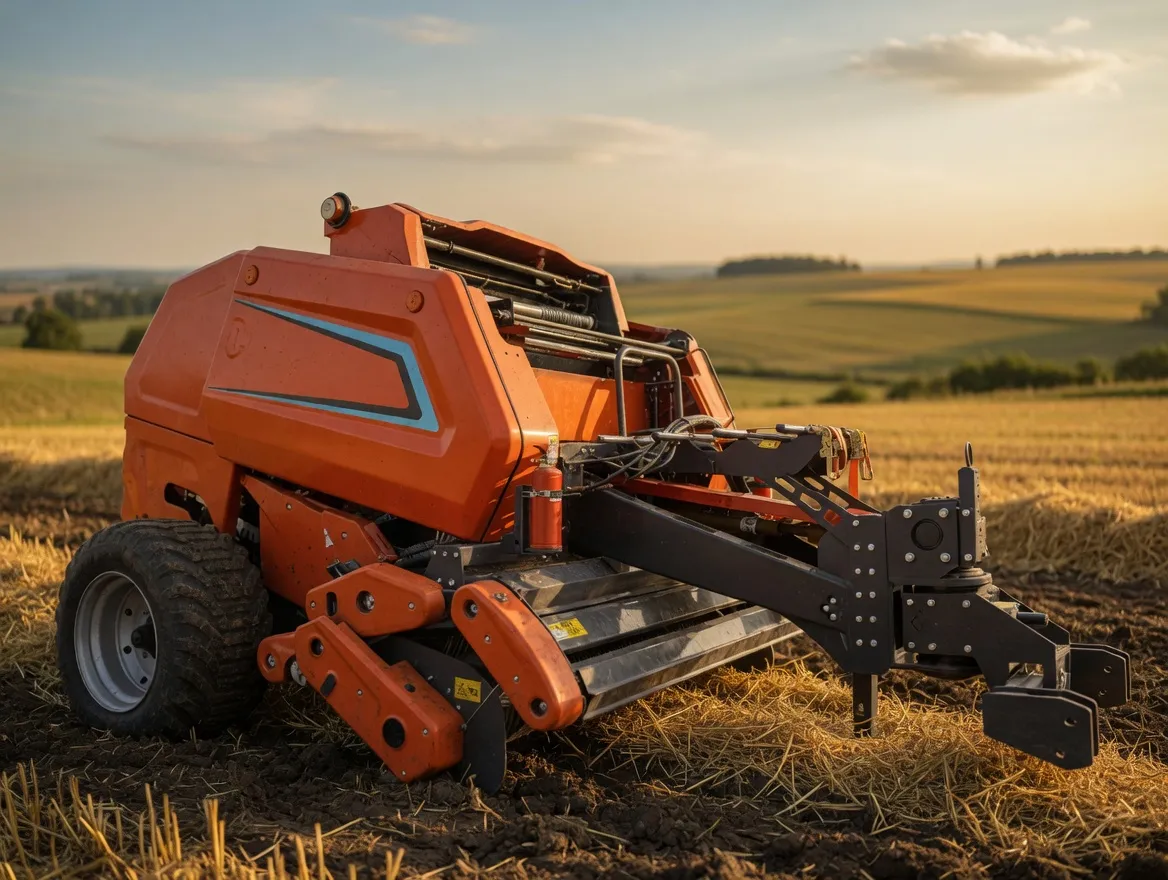
Travel speed in a silage baler directly controls the rate at which crop material enters the bale chamber. At low travel speeds, the pickup delivers a steady, manageable flow that the stuffer mechanism can charge into the chamber in even, well-distributed layers. The forming bale receives each charge completely and compacts it before the next arrives — building a uniformly dense cylinder from the core outward. At high travel speeds, the pickup is forced to ingest crop faster than the stuffer and chamber can process it. Material arrives in dense surges, the chamber receives uneven charges, and the bale builds with alternating dense and loose zones that show up as both surface irregularities and internal density variation.
The fermentation implications of this density variation are direct and significant. Silage preservation depends on the rapid establishment of anaerobic conditions throughout the bale interior — the absence of oxygen is what allows lactic acid bacteria to dominate over aerobic spoilage organisms. In a uniformly dense bale, the interstitial air spaces are small and evenly distributed, and they are consumed by residual microbial respiration within hours of wrapping, establishing anaerobic conditions throughout the bale quickly. In a bale with loose internal zones, these zones contain larger air pockets that take proportionally longer to become anaerobic — extending the window during which aerobic activity and the associated dry matter and nutrient losses occur. For silage baler for dairy farm operations where feed quality directly affects milk production, the density difference between a correctly paced bale and a fast-baled one has measurable nutritional and economic consequences.
The machine itself is also affected. High travel speed means high intake rate, which means the pickup, stuffer, and bale chamber are all operating at or near their maximum rated load continuously. This sustained high-load operation is harder on bearings, belts, and shear bolt protection systems than operating at moderate speed with occasional peak loads. Operators who routinely run at the top of the baler’s speed envelope see measurably higher component replacement frequency — particularly in pickup tines, stuffer wear parts, and drive chain elongation rates — than those who match travel speed to windrow conditions and machine capability.
What Actually Limits Baling Speed in Silage
Four Real Constraints That Determine How Fast You Can Go
The popular answer to “what limits baling speed?” is “the risk of a blockage.” This is true but incomplete. Blockage is the most visible consequence of excessive speed, but it is not the first quality problem to appear as speed increases — density variation and compression quality decline before a blockage event occurs. Understanding the full set of constraints that determine the practical speed ceiling in a given set of conditions allows operators to set the right speed proactively rather than discovering the limit at the moment the machine blocks.
Constraint 1 — The Stuffer Mechanism’s Cycle Rate
The stuffer mechanism operates at a fixed cycle rate determined by the PTO speed and the drive ratio — it delivers a defined number of crop charges per minute to the bale chamber, regardless of how fast the tractor is travelling. When travel speed is matched to this cycle rate, each stuffer charge fully fills the chamber intake zone before the next charge arrives, producing even layering in the forming bale. When travel speed is too high, the pickup delivers crop faster than the stuffer can cycle — material backs up in the feed channel, and the stuffer attempts to force an oversized charge, producing the density spike and surge pattern that creates the loose zones in the bale described above. The stuffer cycle rate is the mechanical ceiling for travel speed at any given windrow density.
Constraint 2 — Windrow Density and Width
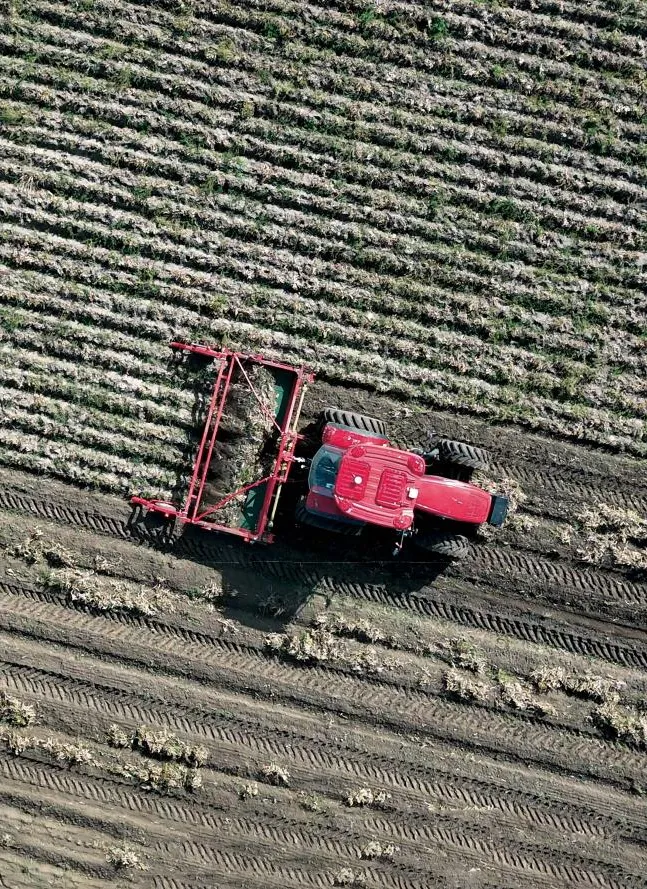
A heavy, dense first-cut windrow requires a lower travel speed than a light third-cut windrow to deliver the same intake rate to the chamber. Operators who set their travel speed for their lightest cutting and maintain it through their heaviest cutting will systematically over-speed in heavy crops. The correct approach is to set speed based on windrow density for each cutting, not to carry a single speed setting across all conditions. A useful on-the-go indicator is the tractor engine loading — if engine RPM drops perceptibly when the pickup enters the windrow, the intake rate is too high for the tractor-baler system at that speed, and slowing down is the correct response.
Constraint 3 — Crop Moisture and Stem Length
High-moisture silage crop flows differently through the baler than dry hay or well-wilted silage. Wet crop is heavier per unit volume, more cohesive (stems stick together), and tends to form denser slugs in the feed channel. At the same travel speed and windrow density, a crop at 65% moisture imposes a higher load on the stuffer mechanism than the same crop at 55% moisture. High travel speed with high-moisture crop is the most demanding condition for both bale quality and machine stress — it is where the combination of overloading and quality deterioration escalates most rapidly.
Constraint 4 — Field Conditions and Terrain
Rough or undulating terrain forces the pickup head to move up and down relative to the windrow, causing variable pickup contact and therefore variable intake rate even at constant travel speed. At low travel speeds, the tractor-baler system has enough time to compensate for these variations without surging. At high travel speeds, each terrain-induced pickup variation becomes a larger intake spike because the system has less time between variations to stabilise. Slowing down in rough conditions is not just a safety consideration — it is the correct response to a condition that increases effective intake rate variability regardless of windrow characteristics.
What Over-Speed Baling Does to Silage Quality — Step by Step
The Chain of Quality Degradation from the Field to the Feed Face
The quality consequences of excessive travel speed are not visible in the field — the bales look round, they wrap, and they stack. The quality deterioration doesn’t show up until the bales are opened at the feed face, by which point nothing can be done to recover the dry matter and nutritional value that was lost during the extended aerobic phase caused by the internal air pockets of a low-density bale. Tracing the full chain from over-speed baling to the feed face outcome makes the connection between travel speed and silage quality concrete.
High speed → surge feed → uneven chamber layers
The bale chamber receives alternating dense and thin layers of crop material, forming a bale with internal density variation rather than the uniform structure needed for consistent fermentation throughout.
Uneven density → larger air pockets in loose zones
The thin, loosely compacted layers in the bale retain significantly more interstitial air than the dense layers. These air-rich zones are distributed unevenly throughout the bale cross-section.
Air pockets → extended aerobic phase after wrapping
After wrapping, the larger air reserves in loose-zone bales sustain aerobic microbial activity for longer before anaerobic conditions are established. This extended aerobic phase generates heat, consumes dry matter, and allows aerobic spoilage organisms to establish colonies before lactic acid bacteria can dominate.
Aerobic activity → dry matter loss and heat damage
Each percentage point of dry matter consumed in the aerobic phase represents direct feed value loss. Heat generated by aerobic activity also damages the soluble protein fraction of the silage — Maillard reactions bind protein to the fibrous cell wall fraction, reducing its digestibility and making it unavailable to the animal’s rumen.
Residual aerobic colonies → face heating at feed-out
Aerobic yeast and mould colonies established during the extended post-wrapping aerobic phase remain dormant through the storage period. When the bale is opened and the face is exposed to air at feed-out, these colonies re-activate rapidly, causing the feed-face heating that operators identify as “hot silage” — which is actually spoilage-driven temperature rise reducing feed value on a daily basis.
Setting the Right Speed: Practical Guidelines by Crop and Condition
The Speed Framework for Australian Silage Baling Conditions
The right travel speed is not a single number — it is a function of windrow density, crop moisture, field conditions, and machine capacity. The guidelines below represent practical starting points for Australian silage conditions. Treat them as starting settings to adjust based on the bale quality feedback described in the following section. For model-specific speed recommendations, refer to the operator manual for your silage baler machine — the manufacturer’s guidelines reflect the tested capacity of that specific chamber and stuffer design.
| Condition | Suggested Speed | Key Reason |
|---|---|---|
| Heavy first-cut grass, >55% moisture | 4–6 km/h | High mass per metre of windrow — fast travel overloads stuffer; wet crop adds weight |
| Average second-cut mixed pasture, 50–60% | 6–8 km/h | Moderate windrow density — standard silage operating range for most conditions |
| Light third-cut or aftermath, 45–55% | 7–10 km/h | Low windrow density — baler under-loaded at slow speed; can increase while maintaining consistent intake |
| High-density windrow (double-merged), any moisture | 3–5 km/h | Merged windrows double intake rate at any speed — halving speed restores normal load |
| Rough or undulating terrain | Reduce by 2 km/h | Pickup contact variation adds effective intake rate variability on top of windrow density |
| Maize or whole-crop cereal silage | 3–5 km/h | High dry matter yield per metre, long stems — one of the most demanding baling conditions for speed management |
Reading Bale Feedback to Calibrate Your Speed
The Signals That Tell You to Slow Down — Before the Block
The bales produced at any given speed carry diagnostic information about whether that speed is appropriate for the current conditions. Learning to read this feedback allows operators to calibrate speed without needing to open bales or wait for laboratory analysis. The following indicators are observable at or immediately after ejection and provide real-time quality feedback that can be acted on immediately — before the sub-quality baling pattern is established across the whole cutting.
✅ Good Speed Signal: Firm, round bale
Bale holds a circular cross-section after ejection, feels uniformly firm when pressed at multiple points. The bale doesn’t spring back or deform under normal handling. Speed is correctly matched to conditions — maintain.
⚠️ Too Fast: Ridged or lumpy bale surface
Visible ridges or depressions around the bale circumference indicate surge feeding from overspeed. The ridges correspond to density spikes at each feed surge. Reduce speed by 1–2 km/h and check the next bale.
⚠️ Too Fast: Bale deforms after ejection
A bale that settles from round to oval within minutes of ejection was not fully compacted before the chamber released — it had loose internal zones that collapsed under gravity. Reduce speed and/or increase chamber pressure setting.
🔴 Too Fast: Engine lugging / PTO speed drop
Audible engine RPM drop when the pickup enters the windrow means intake load is exceeding tractor-baler capacity at that speed. This is the precursor to a blockage — reduce speed immediately and check that PTO is back to the correct operating RPM.
🔴 Too Fast: Bale reaches target before windrow ends
If the baler completes and ejects a bale mid-windrow — before the tractor has reached the headland — the bale cycle is completing faster than the windrow length was designed for. This indicates over-speed for the windrow density.
✅ Good Speed Signal: Consistent bale weights
If available, weighing several consecutive bales and finding consistent weights (within 5–8% of each other) confirms that the chamber is filling uniformly with each cycle. Large weight variation between bales from the same windrow indicates speed-induced intake inconsistency.
PTO Speed and Engine Throttle: The Settings That Enable Correct Travel Speed
Why Correct PTO RPM Must Come Before Travel Speed Adjustment
Travel speed management is only effective when the PTO is running at the correct operating speed. Most silage balers are designed to operate at 540 or 1000 RPM PTO — the specification is in the operator manual and must be adhered to. At sub-rated PTO speed, the stuffer cycle rate is reduced, which means the effective intake capacity of the machine is lower — the machine will block at travel speeds that would be manageable at correct PTO speed. At above-rated PTO speed (which occasionally happens when operators confuse engine throttle with PTO output), the increased stuffer cycle rate can mask overloading at high travel speeds right up to the moment of a blockage.
The critical point is that engine throttle must always be set to achieve the correct PTO RPM first, and travel speed must then be adjusted to manage intake rate within that fixed PTO-speed framework. Reducing engine throttle to save fuel while increasing travel speed to maintain throughput is a common error that creates a lower-capacity machine operating faster than it should — with predictable consequences for bale quality and blockage frequency. For comprehensive information about the Ever-power range of silage balers, visit our product pages.
✅ PTO and Throttle Checklist
- Set engine throttle to achieve the rated PTO speed (typically 540 RPM) before entering the first windrow of the session.
- Verify PTO speed with a tachometer if available — don’t estimate from engine sound alone.
- Never reduce throttle to manage intake load — reduce travel speed instead. Throttle controls PTO; speed controls intake rate.
- If the engine lugs when entering the windrow at rated throttle, the travel speed is too high for the conditions — slow down.
- Maintain consistent engine throttle through turns and headlands — variable PTO speed during the wrap/tie cycle affects binding quality.
Headland Management: Speed Changes That Affect Bale Quality
The Start and End of Every Windrow Pass as a Quality Inflection Point
The quality implications of speed management extend to the transitions at each end of the windrow. When the tractor accelerates from the headland onto the windrow, a brief period of sub-rated travel speed at the start of the windrow pickup is followed by a rapid speed increase to operating speed. During the acceleration phase, the pickup is taking up crop at below-optimal intake rate, then suddenly at above-optimal rate as speed overshoots the target before settling. This creates a density variation at the start of each windrow pass that adds to the internal structure variation of the bale being formed at that moment.
The correct headland approach is to reach the target operating speed before the pickup contacts the windrow — not to accelerate while already on the crop. Set the operating speed on the headland approach run, engage the windrow entry at that speed, and maintain it consistently through the pass. Similarly, when a bale completes mid-windrow, the tractor should maintain forward speed during the wrap/tie and tailgate-open cycle rather than slowing to accommodate the ejection — the windrow continues regardless of the bale cycle, and stopping or slowing on the windrow during ejection creates a dense accumulation that the pickup collects as a surge when forward progress resumes. For silage baler parts and support, contact our Charlton team.
Ever-Power Balers: Designed to Reward Correct Speed Management
Stuffer Design, Chamber Geometry, and Silage-Rated Components
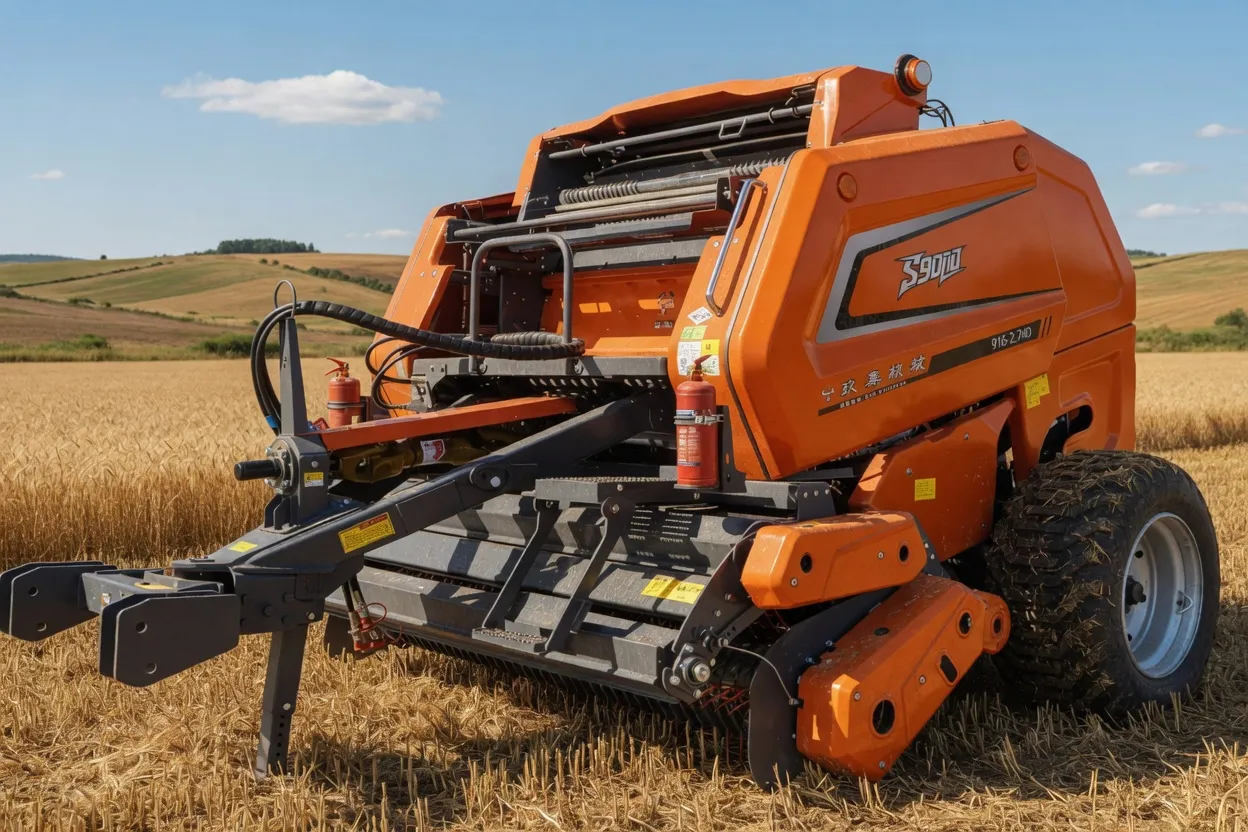
When evaluating a silage baler for sale in Australia, the stuffer mechanism design and chamber geometry are the specifications most relevant to speed-versus-quality performance. Ever-power machines use stuffer designs with generous intake channel cross-sections that reduce the sensitivity of bale quality to minor speed variations — the intake channel can accommodate a larger charge before backing up, which gives the operator more practical working range around the optimum speed before density variation becomes significant. The variable chamber pressure control on the S-series models also allows operators to compensate for the slightly lower per-cycle density that comes with lighter windrows at higher speeds, maintaining target bale weight without speed adjustment. For the full range, visit the About Us page.
Want to Optimise Your Silage Baling Setup?
Talk to Our Silage Specialists in Australia
Charlton Industrial Area, Australia — speed settings, chamber pressure calibration, and model-specific operating advice for Australian conditions.
Frequently Asked Questions
Common Questions About Silage Baling Speed

Australia Ever-power Forage Balers Co., Ltd.
📍 Charlton Industrial Area, Australia