
Bermuda Grasbalering: Rondebalerwenke vir Subtropiese Plase
Cutting intervals, variety drying rates, afternoon thunderstorm strategy, outdoor storage, and the decision between dry hay and baleage — a complete production guide.
Bermuda Grass: The Subtropical Hay Crop Built for Heat and Pressure
Bermuda grass (Cynodon dactylon) is the most widely grown warm-season perennial pasture species across the southern United States, subtropical Australia, and the commercial farming regions of South Africa. Where cool-season grasses such as ryegrass and fescue surrender under a combination of summer heat, irregular rainfall, and intensive rotational grazing, Bermuda grass persists — coming back harder after each cutting, tolerating drought that would finish most perennial species, and still delivering 4 to 6 commercially usable cuttings per season under adequate nitrogen fertilisation.
As a hay crop, Bermuda grass is baled dry — not wrapped as silage or baleage in the way that alfalfa or ryegrass are preserved. The subtropical climates where it performs best provide the rapid field drying conditions that make dry hay baling straightforward in most seasons: peak summer cuttings on well-drained paddocks in Texas, Georgia, Queensland, or KwaZulu-Natal can reach safe baling moisture in 24 to 36 hours. What makes Bermuda grass hay genuinely challenging to produce commercially is not drying speed but the combination of afternoon thunderstorm unpredictability, variety-specific differences in drying rate, and the tight quality specifications that the horse hay and export markets impose.
This guide covers every decision in the Bermuda grass round bale production chain: cutting interval and stage, variety-specific drying characteristics, the afternoon thunderstorm risk management strategies used by experienced Gulf Coast and Queensland producers, baler configuration for dry hay, outdoor storage best practice, and the circumstances under which baleage becomes a better choice than dry hay for a given cutting. For producers new to the question of which crops suit round baling best, our article on what is a silage baler and how it works provides useful background context.
Cutting Stage: Crude Protein vs. Yield and the 4-Week Decision
The Crude Protein Gradient Across Cutting Intervals
Bermuda grass crude protein content is directly controlled by cutting interval more than by any other single management variable. At 3 to 4 weeks of regrowth — the standard commercial horse hay interval — hybrid Bermuda grass carries 14 to 18% crude protein on a dry matter basis. Extend the interval to 5 weeks and protein drops to 11 to 13%. At 6 to 8 weeks, when stem fibre dominates the canopy and leaf proportion has declined sharply, crude protein falls to 8 to 10% — below the threshold for productive dairy cows and borderline for growing beef cattle without additional protein supplementation.
The practical implication is a genuine market bifurcation: horse hay and dairy supplement markets reward the 4-week interval with premium pricing that typically offsets the yield penalty from more frequent cutting. Commercial beef cow hay operations targeting cost-per-tonne efficiency choose 5 to 6 week intervals, accepting lower protein in exchange for higher yield per cutting. Knowing your buyer’s protein specification before the season starts determines which interval programme makes more financial sense for your specific operation.
Hybrid Varieties and Drying Rate Differences
Not all Bermuda grass hybrid varieties dry at the same rate after cutting. This matters operationally because the primary storage risk in Bermuda grass hay is moulding from baling above 18% moisture — and some varieties carry moisture in their stems significantly longer than others even in identical drying conditions.
| Variety | Optimal Dry Time | Stem Structure | Primary Market | Cut Interval |
|---|---|---|---|---|
| Coastal | 24–30 hrs | Fine, medium density | Horse hay, beef | 4–5 weeks |
| Tifton 85 | 36–48 hrs | Thick, succulent | Dairy supplement, export | 4 weeks |
| Russell | 36–44 hrs | Medium-thick | Beef hay, volume | 5 weeks |
| Jiggs | 28–36 hrs | Fine-medium | Horse hay, equine | 4 weeks |
| Alicia | 24–32 hrs | Fine | Horse hay | 3–4 weeks |
Tifton 85 and Russell, with their larger stem diameter and higher stem moisture content at cutting, are the varieties most frequently baled too wet by producers who estimate drying readiness by windrow surface appearance rather than by feel or moisture meter. The outer surface of a Tifton 85 windrow can feel dry and brittle to the touch while the core stem moisture is still well above 20%. This surface-dry illusion is the most common cause of storage mould in commercial Bermuda grass hay.
Field Drying Management: Working Around Subtropical Weather
The Afternoon Thunderstorm Problem
Producers in the US Gulf Coast states, Queensland, and the South African highveld all face the same weather pattern from late spring through early autumn: clear mornings, building convective cumulus through mid-afternoon, and the real chance of a brief but heavy thunderstorm between 2:00 PM and 6:00 PM. A cutting that is 90% of the way to baling moisture and receives 10 mm of rain in a 20-minute afternoon storm has to be re-dried from 25 to 30% moisture — adding 12 to 18 hours of drying time to the operation and significantly increasing the risk of the next afternoon storm catching it at the same point.
Experienced hay producers in these regions have converged on a consistent approach: assess the 48-hour weather window every morning using radar and convective forecast tools, cut in the late morning only on days when the forecast shows stable conditions through the following afternoon, and target baling by mid-morning of the following day — before the next convective cycle builds. This ‘morning bale window’ strategy sacrifices some operational flexibility but is the single most reliable method for avoiding weather-related quality losses in subtropical hay production.
Tedding — When and How
A single tedder pass 3 to 5 hours after cutting increases Bermuda grass drying rate by 20 to 35% by inverting the windrow and exposing both the leaf underside and stem cut surface to direct solar radiation and airflow. For Tifton 85 and Russell — the two varieties where saving drying time matters most — tedding is not optional in most subtropical conditions; it is the difference between a 36-hour and 48-hour dry time. For fine-stemmed varieties like Coastal and Alicia, tedding is beneficial in overcast or humid conditions but can be skipped when conditions are optimal.
Critical timing note: do not ted Bermuda grass below 20% moisture. Once the windrow is in the 15 to 22% range, tedding causes significant leaf shatter — the fine, brittle leaves of Bermuda grass detach from stems at this moisture level and are lost to the ground rather than going into the bale. A single late tedding pass at 12% moisture can cost 10 to 20% of bale weight in leaf loss. Ted early, once, and then leave the windrow alone.
Checking Baling Readiness Without a Moisture Meter
The industry-standard field test for Bermuda grass baling readiness is the squeeze-and-spring test: take a large handful of windrow material from several points across the paddock (including shaded areas and the base of the windrow where moisture persists longest), compress it firmly for five seconds, and observe what happens when you release. Material above 20% moisture springs back slowly, feels cool and slightly damp, and retains some compression shape. Material at 15 to 18% — the ideal baling range — springs back quickly, makes a dry crackling sound, and feels warm to the touch. Material below 12% springs back immediately and feels brittle. The danger zone is the middle reading: it feels mostly dry but has not completed the stem drying process.
A correctly made Bermuda grass round bale should not exceed 45°C at the core 24 hours after baling. Probe the bale centre with a metal rod thermometer 24 to 48 hours after baling — if the reading exceeds 55°C, the bale was baled above 18% moisture and active microbial respiration is consuming dry matter. Bales in this state must be fed out within 4 to 6 weeks rather than stored. They will not recover quality during storage — they will only continue to degrade.
Baler Configuration for Dry Bermuda Grass Hay
Chamber Pressure and Target Bale Density
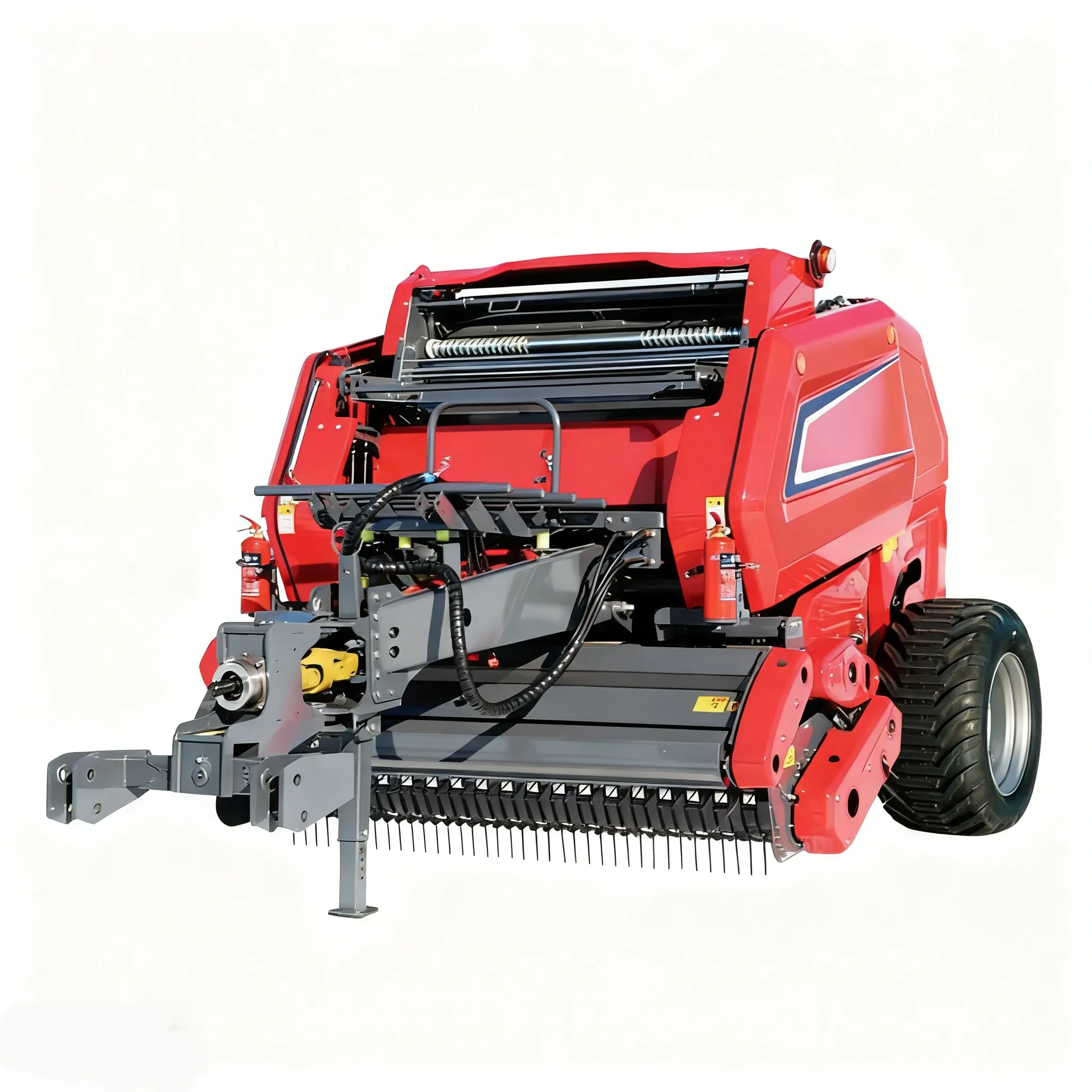
The target bale density for commercial Bermuda grass round hay is 130 to 160 kg dry matter per cubic metre. At 15% moisture, a 1.25 m round bale in this density range weighs 260 to 370 kg — handleable with most farm front-end loaders rated at 500 kg on the bale spike. Higher density bales (above 180 kg/m³) store better outdoors and shed water more effectively, but they increase the load on the tractor PTO and hydraulic system and require net wrap with higher tensile strength to maintain shape under transport stress. For most farm-scale operations, the 140 to 160 kg/m³ range is the practical optimum.
Pickup Tine Height — The Soil Contamination Risk
Bermuda grass windrows are lower-lying than alfalfa or ryegrass windrows because the crop grows horizontally as well as vertically and lies flat after raking. Setting pickup tines too low — below 3 cm above the soil surface — causes soil and stubble to enter the bale chamber alongside the hay. Soil contamination in horse hay is a serious quality defect: it introduces silica, soil microorganisms, and grit that reduce palatability, increase the risk of sand colic in horses, and visually discolour the hay in ways that buyers immediately identify as a management problem. Set tines at 4 to 6 cm and do not reduce this to chase the last few kg of windrow material per pass.
Net Wrap vs. Twine for Outdoor Storage
For Bermuda grass bales that will be stored outdoors — the standard on most subtropical farms where barn capacity is limited — net wrap is the correct binding choice over twine. Net wrap covers 85 to 95% of the bale surface area including the cylindrical face, compared to 55 to 65% for twine-tied bales. The improved end coverage of net wrap maintains the rounded dome shape of the bale that sheds rainfall rather than pooling it at the bale ends. In climate trials in Queensland and the US Gulf Coast, net wrap has consistently shown 4 to 8 percentage points lower dry matter loss than twine over 6 to 9 month outdoor storage periods.
Die 9YG-1.25A ronde baler met veranderlike kamer offers net wrap as standard and handles Bermuda grass at 14 to 18% moisture at forward speeds of 7 to 10 km/h in standard windrow conditions. Reduce speed to 5 to 6 km/h in heavy first-cut windrows from a post-rain growth flush where material density is above average.
Outdoor Storage: Minimising the Inevitable Weathering Loss
Site Selection and Bale Orientation
All outdoor-stored round bales lose dry matter to weathering. The outer 5 to 10 cm of each bale is the most exposed layer: it absorbs and re-releases moisture with every rain-dry cycle, supports mould and yeast growth during wet periods, and degrades structurally from UV exposure over months. Good outdoor storage management cannot eliminate these losses, but it can keep them below 10% over a 9 to 12 month storage period on a well-managed site.
Never store Bermuda grass bales on bare soil. Bare soil in subtropical summer humidity creates a persistent moisture interface at the bale base that initiates rot within 4 to 6 weeks. A 10 cm base of compacted road planings, crushed limestone, or recycled concrete allows air movement under bales and drains surface water away from the contact zone. The difference between ground-level storage and elevated storage is 3 to 6% additional dry matter loss over a full season.
North-south row orientation ensures that both curved sides of each round bale receive sun exposure through the course of the day. East-west orientation leaves the north-facing surface of each bale in shade for most daylight hours — this side remains consistently damp after rainfall events and develops mould and weathering at 2 to 3 times the rate of the sun-exposed side.
Bales in direct contact with each other maintain a persistently wet contact zone — essentially a micro-environment where moisture cannot evaporate because it is trapped between two bale surfaces. This contact zone supports mould growth that spreads inward into both bales over weeks. Maintain 30 cm of air space between adjacent bales in every row and stack configuration.
All hay bales go through a passive respiratory heating phase in the first 24 to 72 hours as plant enzymes complete their activity and residual moisture redistributes within the bale. Stacking bales within 24 hours traps this heat and concentrates it in the lower bales of a stack, creating conditions for mould initiation at the core of every bottom-tier bale. A single flat-layer cooling period of 48 hours before stacking eliminates this risk entirely.
Commercial Quality Standards and Market Specifications
| Grade | Ru-proteïen (DM) | Vog | Visueel | Typical Buyer | Price Relative |
|---|---|---|---|---|---|
| Premium Horse | >15% | <15% | Heldergroen, uniform | Horse stables, export | +20–35% |
| Good Hay | 12–15% | 14–18% | Green, minor yellowing | Dairy supp., cattle | Standard |
| Commercial Beef | 9–12% | <20% | Yellow-green acceptable | Beef cow hay | −10–20% |
| Utility | <9% | Any | Weathered, yellow | Compost, poor roughage | −30–50% |
Commercial hay testing via near-infrared reflectance (NIR) analysis is the standard in US and Australian horse hay markets. Japanese and Korean export buyers require forage analysis certificates showing crude protein, acid detergent fibre (ADF), neutral detergent fibre (NDF), and moisture for every shipment. Operations selling into these markets should build forage testing into every cutting programme — the cost of a $25 NIR test is insignificant against the value of correctly identifying premium-grade bales and pricing them accordingly.
When to Switch to Baleage Instead of Dry Hay
Bermuda grass baleage — baled at 45 to 55% moisture and immediately wrapped in silage stretch film — is not a mainstream practice but is the correct alternative in two specific situations: when a rain event has re-wetted a windrow that was approaching baling moisture and additional drying beyond 24 hours is not possible without further quality loss, and when persistent high humidity during a cutting period prevents the crop from drying below 20% in the available weather window.
At 50% moisture with a homofermentative LAB inoculant applied at the baler pickup, Bermuda grass baleage ferments reliably to pH 4.5 to 5.0 within 21 to 28 days and stores for 12 months without further degradation. Cattle palatability of well-fermented Bermuda baleage is consistently higher than that of weather-damaged or over-mature dry hay from the same cutting — the fermentation process preserves sugars and protein fractions that are lost in poorly dried hay.
Die 9YCM-850 bundelfilm-wikkelmasjien applies 6 layers of silage stretch film with programmable revolution control, eliminating manual counting across a high-volume baleage day. For farms that routinely encounter late-season wet periods, having the wrapper available as a contingency alongside the baler for dry hay is standard equipment planning in subtropical hay operations.
Common Mistakes: What Separates Commercial-Grade From Reject Hay
The outer surface of these thick-stemmed varieties dries 6 to 10 hours ahead of the core. A windrow that passes the surface squeeze test may still have 22 to 25% stem core moisture. In large round bales (1.25 m diameter), this trapped stem moisture cannot escape after binding — it equilibrates inward into the bale centre over 2 to 4 weeks, raising the average bale moisture above the safe storage threshold. Test from the base of the windrow where stems lie, not the top layer.
Raking Bermuda grass at 15 to 20% moisture before it has fully dried to below 25% from the inside of the stems causes leaf shatter at the rake tine contact points. Each raking pass at this moisture stage can remove 8 to 18% of the leaf fraction from the windrow — the highest-quality, highest-protein component of the final hay. Rake once at 25 to 30% moisture, then leave the windrow alone until baling.
The respiratory heat peak in a correctly made Bermuda grass bale occurs at 24 to 48 hours after baling and generates core temperatures of 35 to 45°C. This is normal and harmless. Stacking before this peak has completed and dissipated prevents the heat from escaping and concentrates it in the lower bales of a stack, raising core temperatures above the 55°C threshold where mould initiation accelerates. A 48-hour flat-layer period after baling before stacking is not optional — it is the standard of care.
Bermuda grass hay quality varies significantly between cuttings within the same season. Second and third cuttings in a drought year may test 8 to 9% crude protein — below any horse or dairy specification — while first cuts test 15 to 17%. Commingling or marketing late-season low-protein bales as uniform lots risks both buyer relationship damage and legal exposure. Test every cutting, label bales by lot, and price each lot at its tested specification.
Gereelde vrae

Discuss Your Bermuda Grass Operation With Our Team
Tell us your cutting programme, annual volume target, and tractor horsepower — we’ll specify the right baler configuration for your subtropical hay market.