
The Crop Residue Nobody Wants — and the Three Outlets That Change the Calculation
Why tobacco stalk is uniquely difficult to manage, how composting competes with baling, and what biomass and substrate markets make commercial baling worthwhile in Yunnan, Brazil, and Zimbabwe.
Tobacco Stalk: A Specialised Residue Management Problem
Tobacco (Nicotiana tabacum) is harvested by successive leaf removal — lower leaves removed first as they mature, upper leaves removed 3 to 5 weeks later — leaving a standing stalk of 1.2 to 1.8 m height that is removed from the field after the final leaf harvest. In China’s Yunnan and Guizhou provinces — together producing 45% of the world’s tobacco leaf — this represents approximately 500,000 to 700,000 tonnes of stalk dry matter annually. Brazil’s tobacco-growing states of Rio Grande do Sul and Santa Catarina generate another 150,000 to 250,000 tonnes. Zimbabwe, Malawi, and Tanzania, as the primary African tobacco producers, contribute further substantial volumes.
Tobacco stalk presents residue management challenges that are different from any other crop residue. The stalks contain residual nicotine, alkaloids, and organic compounds that make the material toxic to humans in concentrated form and that complicate composting (nicotine is antimicrobial and suppresses the composting process at high concentrations). Open-field burning of tobacco stalks is prohibited in China’s Yunnan and Guizhou provinces under national anti-burning regulations, and the material cannot simply be left to decompose in the field because it harbours Phytophthora nicotianae and tobacco mosaic virus inoculum that significantly increases the following year’s disease burden.
Commercial baling for biomass combustion, compost feedstock, or as a substrate component for specialist mushroom cultivation are the three exit pathways that convert the tobacco stalk problem into a managed, revenue-generating process. This guide covers all three, along with the safety considerations specific to tobacco residue handling. For the regulatory context on crop residue utilisation requirements in China, our article on what silage is and how it differs from other preservation methods covers the broader framework within which stalk management programmes operate.

Tobacco Stalk Characteristics and Management Challenges
Physical and Chemical Properties
Tobacco stalks at harvest carry 60 to 78% moisture and stem diameters of 20 to 45 mm at the base. Like sunflower stalks, they cannot be directly baled without pre-shredding. The pithy internal structure of the tobacco stalk resists compression even more than sunflower, producing very low bale density from intact stalks. Pre-shredding to 30 to 60 mm is the prerequisite for any commercial baling operation.
The chemical challenge is residual nicotine and related alkaloids in the stalk tissue. Fresh tobacco stalks contain 0.3 to 1.5% nicotine (dry weight basis) in the stalk and root tissue — lower than the leaf (2 to 5% nicotine DM) but sufficient to make the material toxic to humans at direct contact concentrations and to suppress microbial composting processes. Workers handling large volumes of fresh tobacco stalk material should wear gloves and avoid prolonged skin contact — nicotine is absorbed efficiently through the skin and can cause acute nicotine poisoning at high exposure levels.
| Property | Value | Implication for Management |
|---|---|---|
| Nicotine content (DM) | 0.3–1.5% | Worker protection required; composting inhibited |
| Moisture at harvest | 60–78% | Pre-shred then field dry to 18% before baling |
| Main stem diameter | 20–45 mm | Must pre-shred — direct baling not feasible |
| NDF (DM) | 55–68% | Roughage-grade fibre |
| Calorific value | 14–16 MJ/kg DM | Suitable biomass but lower than wood |
| Ash content | 8–14% | Higher than cereal straws — limits pellet quality |
The Composting Challenge
Traditional advice for tobacco stalk management is composting — shredding the stalks and composting for 3 to 6 months before returning to the field as organic matter. This is agronomically sound but operationally slow: nicotine at stalk concentrations significantly suppresses the microbial activity of the composting process, extending composting time from the 6 to 8 weeks typical for cereal straw to 4 to 6 months for tobacco stalk without nitrogen supplementation and microbial accelerator additions. Operations that start the composting process but underestimate the timeline often find themselves with partially composted material when the next season’s planting date arrives — at which point the unfinished compost may be applied to fields and create emergence problems for the following tobacco or vegetable crop from residual phytotoxic compounds.
Three Commercial Outlets for Baled Tobacco Stalk
Outlet 1: Biomass Combustion
Tobacco stalk baled at 14 to 18% moisture can be supplied to biomass boiler operations as an agricultural biomass feedstock. The calorific value of 14 to 16 MJ/kg DM is acceptable for co-firing with other agricultural biomass, though the elevated ash content (8 to 14% DM, varying by variety and growing conditions) limits acceptance in dedicated biomass systems with strict grate performance specifications. Industrial boilers at tobacco processing factories — where tobacco stalk is generated on-site as factory waste — are the most direct biomass outlet, burning the stalk material for process heat within the factory energy balance. This integrated approach (tobacco processing factory burning its own stalk for steam generation) is used at several large tobacco manufacturers in Yunnan and Guizhou.
Outlet 2: Specialist Mushroom Substrate
Tobacco stalk substrate is used for specialist mushroom cultivation in China — specifically for Pleurotus eryngii (king oyster mushroom) and Flammulina velutipes (enoki mushroom) production, where the tobacco stalk’s moderate cellulose content and specific trace mineral profile have been shown to support good fruiting body development. The nicotine content, surprisingly, is not a barrier for the fungal cultivation process — Pleurotus species produce nicotine-degrading enzymes and can tolerate and metabolise the alkaloid fraction during the growing cycle. Substrate buyers in Yunnan’s mushroom industry specify tobacco stalk bales at 12 to 15% moisture, free of visible mould, with consistent bale weight.
Outlet 3: Commercial Composting Operations
Large-scale commercial composting operations that handle mixed agricultural residues — common in Yunnan’s agricultural waste management sector — accept pre-shredded tobacco stalk bales as one component of a mixed compost feedstock. The nitrogen-rich addition of green plant material (vegetable waste, food processing residue) to the composting mix neutralises the nicotine inhibition problem by diluting the tobacco stalk fraction to below the microbial-suppression threshold. Commercial compost operations typically specify tobacco stalk at no more than 25 to 30% of the incoming biomass mix for this reason.
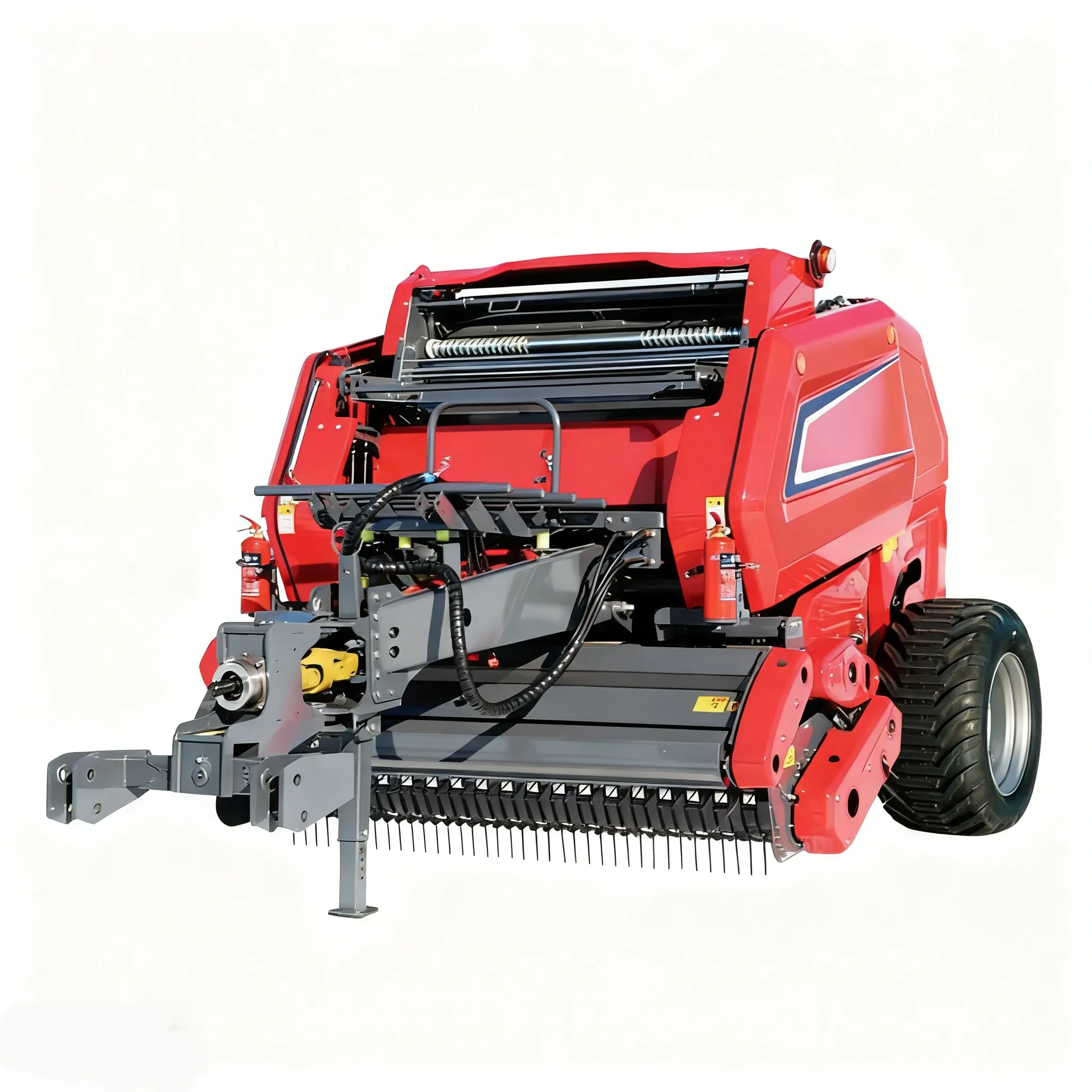
The 9YG-1.25A variable-chamber round baler handles pre-shredded tobacco stalk (30 to 60 mm fragments) in standard round bale format for all three market channels. The low nicotine residue on equipment surfaces after tobacco stalk baling is manageable with standard washing — no special decontamination protocol is required between tobacco stalk baling runs and other crop baling operations.
Disease Management: The Hidden Benefit of Baling Over Field Burning
Tobacco fields in Yunnan and Guizhou face chronic pressure from Phytophthora nicotianae (black shank), Peronospora tabacina (blue mould), and tobacco mosaic virus (TMV) — all of which overwinter in standing stalk material and soil-incorporated stalk fragments. Field burning, where still practised, kills surface stalk tissue but drives disease inoculum deeper into the soil with the ash. Field incorporation chops stalk material but distributes it throughout the rooting zone, maximising soil contact for disease organism proliferation.
Baling and physically removing stalks from the field — to biomass, substrate, or composting outlets — is the only residue management method that actually reduces the field-level disease inoculum load from season to season. Field trials in Yunnan’s Lijiang and Chuxiong tobacco growing areas have documented 20 to 35% reductions in black shank incidence in fields where stalk baling and removal were practised for two or more consecutive seasons compared to field-burning control plots. This disease management benefit is increasingly cited by Yunnan’s provincial tobacco bureau as a justification for subsidy support for stalk baling equipment purchase.
Common Mistakes
Tobacco stalk nicotine content of 0.3 to 1.5% DM is sufficient to cause acute nicotine poisoning symptoms (nausea, dizziness, elevated heart rate) in workers handling large volumes of fresh cut stalk material with bare hands. Always wear gloves when handling freshly cut tobacco stalks. Dried stalk (below 15% moisture) at these nicotine concentrations presents a much lower acute exposure risk but gloves are still recommended for extended handling sessions.
Tobacco stalks at 1.2 to 1.8 m height and 30 to 45 mm stem diameter cannot be baled without pre-shredding. The outcome of direct baling attempts is identical to sunflower stalk — chamber plugging, tine damage, and structurally unstable bales at unacceptably low density. Pre-shred to 30 to 60 mm before baling.
Tobacco stalk at 25 to 30%+ of the composting mix suppresses the thermophilic bacterial activity that drives commercial composting through nicotine’s antimicrobial effect. Composting operations that accept pure tobacco stalk loads without adequate nitrogen-rich dilution material will experience composting failures — low temperatures, failure to sanitise disease organisms, and excessive composting duration.
Tobacco stalks left standing in the field after the final leaf harvest begin lignifying further and drying rapidly in Yunnan’s post-monsoon dry season. After 10 to 14 days, stalks below 15% moisture become increasingly brittle and fragment unevenly during pre-shredding, producing an inconsistent particle size that reduces bale density and complicates substrate buyers’ processing. Bale within 7 to 10 days of the final leaf harvest for the most consistent pre-shredding outcome.
Frequently Asked Questions

Discuss Your Tobacco Stalk Residue Management
Tell us your production area, available pre-shredder, and target outlet — we’ll help specify the right baler configuration for your tobacco stalk programme.