
Millions of Tonnes Burned Every Harvest Season — Here Is How to Ferment Them Instead
Harvesting, wilting, chopping, and wrapping sugarcane tops and trash for cattle silage across Thailand, Brazil, India, and Guangxi.
The Scale of the Opportunity: Sugarcane Tops as a Silage Crop
Every tonne of sugarcane grain harvested leaves behind 100 to 200 kg of dry matter in the form of tops (the green leaf sheaths and growing tip), trash (dry dead leaves), and ratoon stubble. At global sugarcane production of 1.9 billion tonnes per year — with Brazil at 700 million, India at 340 million, China’s Guangxi at 80 million, and Thailand at 90 million tonnes annually — the volume of above-ground residue generated at harvest season is staggering: an estimated 150 to 250 million tonnes of fresh biomass per year, concentrated in a 3 to 5 month harvest window and available in contiguous blocks of tens of thousands of hectares adjacent to sugar mills.
In most sugarcane regions, this residue is managed in one of two ways: burned in the field immediately before mechanical harvest (pre-harvest burning, which improves harvester efficiency by removing leaf material but creates severe air quality episodes in cane-growing regions), or left as trash mulch on the soil surface after green harvesting (which improves soil organic matter but generates waste heat as it decomposes and can harbour disease vectors). Neither approach captures the significant feed value contained in the fresh green tops — material that carries 7 to 12% crude protein and 50 to 60% total digestible nutrients on a dry matter basis and ferments reliably into an acceptable silage when properly wilted and wrapped.
Commercial-scale sugarcane top silage production has been demonstrated in Thailand, Brazil, India, and China’s Guangxi province, consistently showing that the baled and wrapped tops from 1 hectare of sugarcane can produce 800 to 2,000 kg of silage dry matter at a cost significantly below equivalent commercial roughage purchases. For beef cattle feedlots and dairy operations situated near sugar mills — which is standard across the cane-growing regions of all four countries — sugarcane top silage represents the lowest-cost fermented forage option available locally. For a detailed introduction to how silage baling systems work across different forage types, our article on what a silage baler is and how it works provides useful technical background.
Understanding Sugarcane Tops: Nutritional Profile and Fermentation Characteristics
Green Tops vs. Dry Trash — Two Different Products
The residue left after sugarcane harvest is not a single uniform material — it is a mixture of two fractions with very different moisture content, nutritional value, and fermentation behaviour. The green tops — the growing tip and the youngest 3 to 5 leaf sheaths at the crown of each stalk — are cut at 50 to 60 cm from the stalk tip and carry 72 to 80% moisture at the time of harvest. These green tops have 9 to 13% crude protein, acceptable WSC content for fermentation, and ferment reliably when wilted to 60 to 65% moisture. The dry trash — the lower dead leaves that have senesced and dried on the standing stalk — carries only 15 to 25% moisture at harvest and adds structural fibre but minimal protein to the silage mixture.
The mixture of green tops and dry trash that a commercial sugarcane harvester deposits in the windrow has an average moisture content of 50 to 68% depending on the ratio of fresh tops to dry trash and the amount of rainfall prior to harvest. Baling this mixture immediately after harvest (without additional wilting) is often feasible — particularly in the drier harvest conditions of northeast Brazil and Thailand’s Central Plain — because the trash fraction buffers the average bale moisture into the acceptable silage range even when the green tops alone would be too wet.
| Material | Moisture at Harvest | Crude Protein (DM) | WSC (DM) | Ferment Behaviour |
|---|---|---|---|---|
| Green tops only | 72–80% | 9–13% | 8–14% | Needs wilting to 62–68% |
| Dry trash only | 15–25% | 4–6% | 3–6% | Too dry for silage alone |
| Mixed tops + trash | 50–68% | 6–10% | 6–10% | Good — often bale-ready |
| Tops + trash + 24hr wilt | 45–60% | 7–10% | 7–11% | Optimal silage range |
Sugar Content and Fermentation Substrate
Sugarcane is — by definition — a high-sugar crop. The sucrose that accumulates in the mature stalk is not present in significant quantities in the tops, but the green top tissue carries substantial water-soluble carbohydrates in the form of glucose, fructose, and structural sugars released from the actively growing leaf tissue. WSC content in fresh green tops is typically 8 to 14% DM — comparable to first-cut ryegrass — providing a meaningful fermentation substrate that, combined with a homofermentative LAB inoculant, drives rapid pH drop to 3.8 to 4.5 within 14 to 21 days in sealed bales.
Harvest Logistics: From Cane Field to Bale in One Day
The Timing Constraint: Harvest Season Is Short
Sugarcane harvest in each growing region occurs in a 4 to 6 month window determined by the sugar mill’s crushing season. Thailand’s central plain harvests November to May; Guangxi’s main harvest runs November to April; northeastern Brazil’s main cane belt harvests April to November; India’s Maharashtra and UP cane belt harvests October to March. Within these windows, individual fields are harvested on a schedule determined by the mill, and the farmer or contractor typically has 24 to 48 hours from combine harvest to collect and bale the tops before the material dries beyond the manageable moisture range or is destroyed by field operations preparing the ratoon crop.
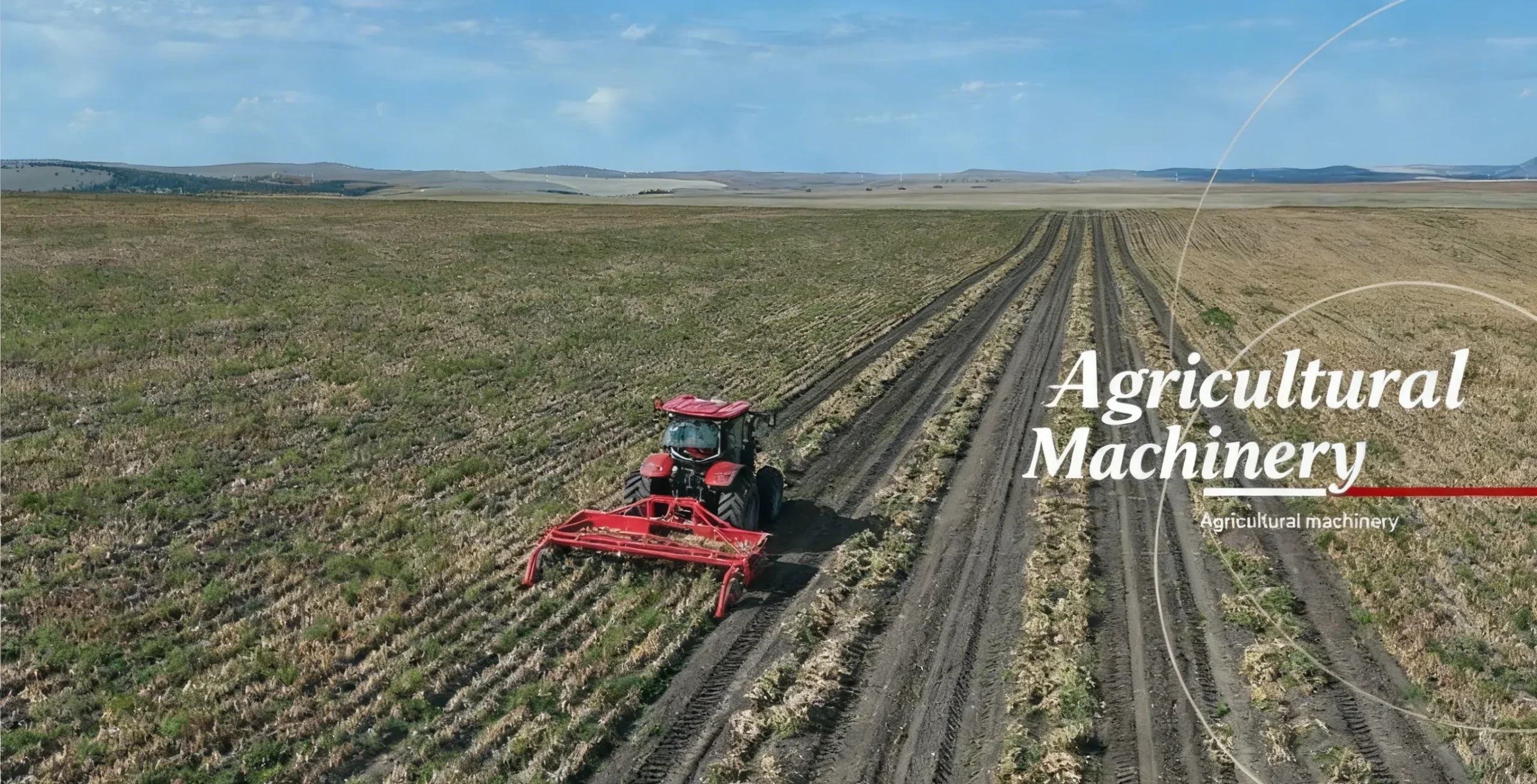
Modern sugarcane harvesters equipped with a top cutter deposit green tops in a side windrow separate from the main stalk. This windrow — containing 1 to 3 tonnes of fresh tops per hectare depending on variety and maturity — should be collected and baled within 24 hours of deposition. In hot, dry conditions (Thailand dry season, northeast Brazil), tops wilt from 75% to 62% in 6 to 12 hours of field exposure, making same-day baling feasible.
Sugarcane tops at 40 to 80 cm length and 10 to 15 mm diameter cannot be directly baled without prior chopping — the stiff, fibrous stems cause chamber plugging and produce low-density bales with poor anaerobic conditions. Pre-chop with a stationary or in-field forage chopper to 30 to 50 mm particle length before gathering into baling windrows.
If the tops fraction is visibly very fresh (bright green, dripping sap from cut ends), allow an additional 4 to 12 hours of field wilting on a dry surface before baling. In hot, dry conditions this is usually not needed — the tops lose moisture rapidly. In humid conditions (Thailand wet-season harvest, Guangxi late-season harvest), additional wilting is more important.
Apply a homofermentative LAB inoculant at the standard recommended rate for high-moisture grasses. In tropical ambient temperatures (28–38°C), aerobic deterioration begins faster than in temperate climates — wrap within 1 hour of baling and store wrapped bales in shade immediately after wrapping.

Regional Perspectives: Thailand, Brazil, India, and China’s Guangxi
Thailand: The Pioneer of Commercial Sugarcane Top Silage
Thailand’s Central Plain and Kanchanaburi province have the most developed commercial sugarcane top silage industry outside of Brazil. Several large beef feedlot operators in the Suphanburi and Nakhon Sawan provinces now operate dedicated baling and wrapping lines during the November to April harvest season, producing 5,000 to 20,000 bales per season for on-farm dairy and beef cattle use and for sale to neighbouring livestock operations. The Thai Department of Animal Husbandry has supported sugarcane top silage adoption with extension programmes and subsidy access for baling equipment since 2016.
Brazil: Integration with Ethanol and Sugar Mills
In Brazil’s São Paulo state — the world’s largest sugarcane producing region — sugarcane tops and trash have historically been the primary fuel source for mill boilers (burned on-site for process energy). Surplus tops beyond boiler requirements are now increasingly baled as silage by beef cattle operations in the Mato Grosso do Sul and Minas Gerais states, where the combination of large beef feedlot operations and seasonal pasture deficits creates strong demand for low-cost fermented roughage during the dry season (April to September).
Guangxi: China’s Largest Cane Zone
Guangxi accounts for approximately 60% of China’s domestic sugarcane production. With anti-burning regulations tightening across the province since 2018, and with the expansion of beef cattle and dairy farming in Guangxi’s mountainous interior driven by poverty reduction programmes, sugarcane top silage has emerged as a commercially significant forage option. Local baling contractors operating 9YG-1.25A and larger-format balers service multiple mills and farms during the November to March harvest window.
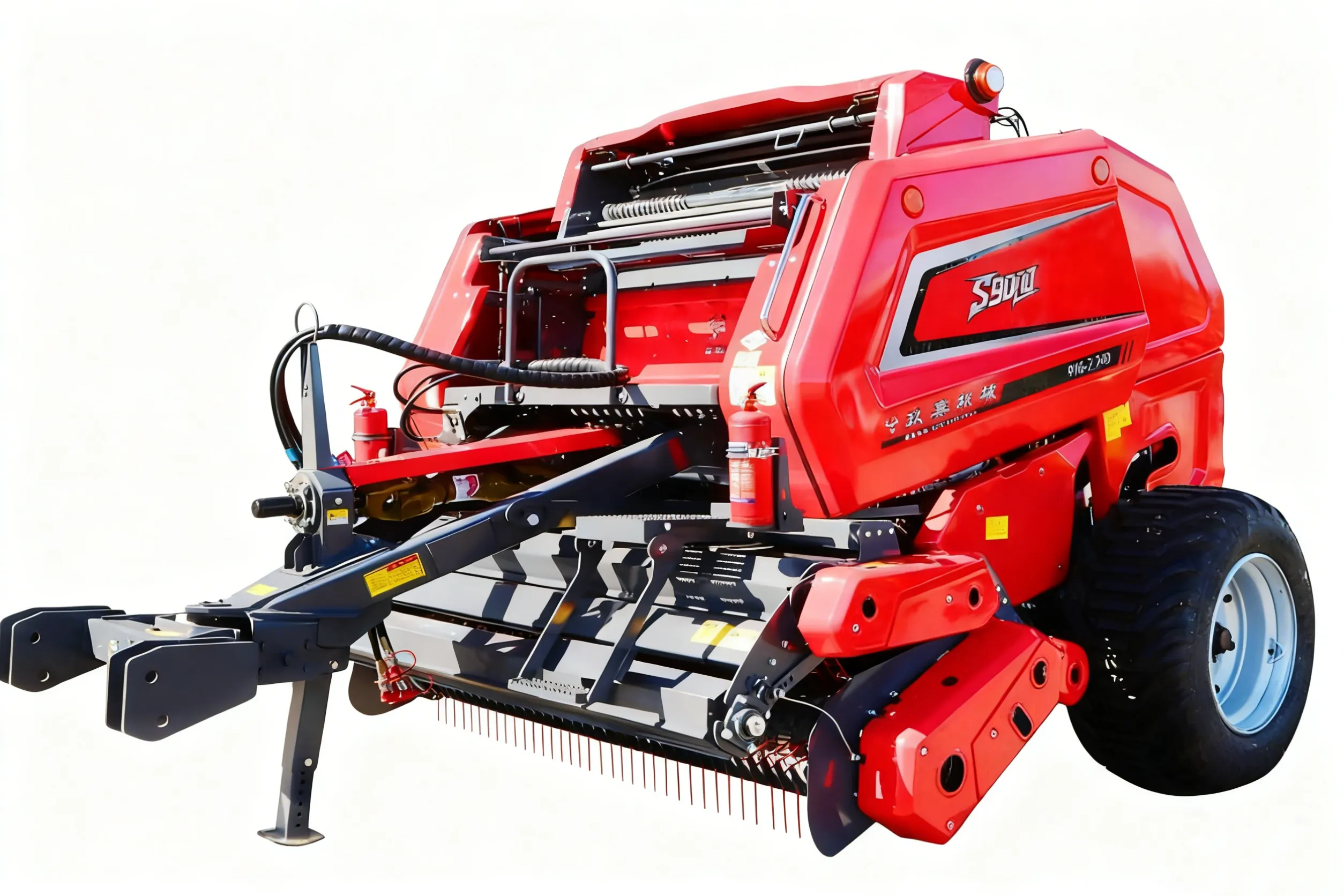
The 9YG-1.25A variable-chamber round baler handles pre-chopped sugarcane tops at the moisture and density levels typical of the mixed green-top-plus-trash windrow. For operations producing at higher volumes — 50+ bales per day during the peak harvest window — the 9YG-2.24D S9000 Beyond round baler provides the throughput and wider pickup needed for efficient commercial-scale sugarcane top silage production.
Storage, Fermentation Quality, and Feedout in Tropical Climates
White Film and Shade Storage
White or silver silage stretch film is strongly preferred for sugarcane top baleage stored in tropical conditions. At ambient temperatures of 30 to 38°C in Thailand, Brazil, and Guangxi during harvest season, black film absorbs solar radiation and raises bale core temperatures to 50 to 60°C — high enough to kill the LAB population and drive aerobic deterioration before fermentation can be completed. White film at the same ambient temperature produces bale core temperatures of 38 to 46°C — within the acceptable range for homofermentative LAB strains.
Shade storage — under a tarpaulin, open-sided shed, or palm-frond cover — reduces bale core temperature by a further 6 to 12°C and is the standard practice in commercial operations across all four sugarcane regions. Bales stored in direct tropical sun show measurably higher aerobic spoilage rates at feedout than shade-stored bales from the same batch, reflecting the UV film degradation and internal heat stress that sun exposure creates during the 14 to 28 day active fermentation period.
Fermentation Timeline and Opening Protocol
Sugarcane top baleage in tropical temperatures ferments rapidly — pH typically falls to 3.8 to 4.5 within 10 to 16 days in well-sealed bales at 28 to 35°C ambient, compared to 14 to 21 days in temperate conditions. Bales can be opened for feeding after 21 days minimum. Well-fermented sugarcane top silage has a clean, sweet-acidic smell, olive-green to yellow-green colour, and firm texture. Poor fermentation (butyric/clostridial) produces the rancid-ammonia smell and brown-black coloration characteristic of protein degradation — this outcome is rare in properly wilted, inoculated cane top silage at the correct moisture range.
Common Mistakes
Intact sugarcane tops at 40 to 80 cm length plug the bale chamber, produce low-density bales with large air pockets, and ferment unreliably. Pre-chopping to 30 to 50 mm is essential — not optional — for sugarcane top silage baling with a standard round baler.
Black silage film raises bale core temperature by 8 to 15°C above ambient through solar radiation absorption. At tropical ambient temperatures of 32 to 38°C, this produces bale cores above 50°C — lethal for the LAB fermentation population and a direct cause of aerobic spoilage in the active fermentation phase. Always specify white or silver film for tropical sugarcane baleage.
In northeastern Brazil and Thailand’s dry-season harvest conditions, green tops can dry from 75% to below 50% moisture within 18 to 24 hours of deposition in the field. Below 50% moisture, fermentation completeness decreases and the silage pH plateau rises above 5.0 in some batches. Monitor moisture actively and bale on the same day where conditions allow.
In regions where partial pre-harvest burning still occurs (some Thai and Brazilian operations where mechanical harvesting is incomplete), the burned trash residue mixed into the top windrow reduces silage quality by increasing ash content (>12% of DM) and introducing combustion products that inhibit LAB activity. Source sugarcane tops from green-harvested fields for the best fermentation outcomes.
Frequently Asked Questions

Discuss Your Sugarcane Top Silage Operation
Tell us your harvest volume, mill proximity, and available tractor — we’ll specify the right baler and wrapper setup for your tropical silage programme.